Authenticating Investment Coins: Simple and Reliable Methods
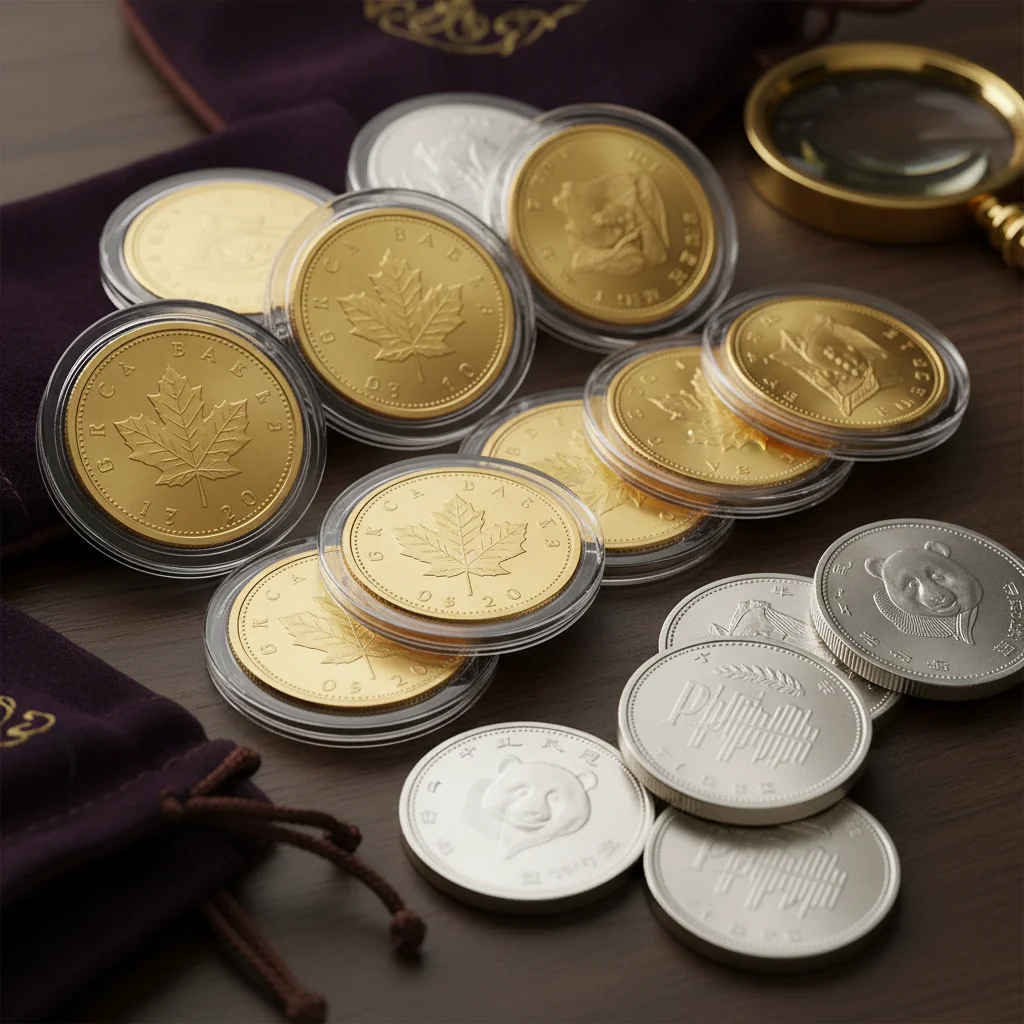
The authenticity of gold and silver coins is a concern for many investors, especially amidst numerous rumors online. However, it's worth noting that among standard bullion coins, counterfeits, most often of Chinese origin, are extremely rare.
The authenticity of gold and silver coins is a concern for many investors, especially amidst numerous rumors online. However, it's worth noting that among standard bullion coins, counterfeits, most often of Chinese origin, are extremely rare.
Nevertheless, isolated cases of forgery are known. For example, about three years ago in New York, a dealer was offered 150-gram gold bars for sale that seemed suspicious. After he cut them open, tungsten rods were found inside.
American Silver Eagles.
Painted Chinese silver bars.
Despite these cases, counterfeits remain a great rarity in the world of investment coins. The main safety rule is to buy standard coins and bars from dealers with a good reputation, avoiding dubious offers on online platforms like eBay or from random sellers.
Why Investment Coins Are Difficult to Counterfeit
Property
Gold
Tungsten
Density
Very high
Very high (almost identical to gold)
Malleability
Very malleable, soft
Very brittle
Standard investment coins have a high degree of protection against counterfeiting due to two key factors: their complex design and the unique physical properties of precious metals. They are very difficult to copy with high precision.
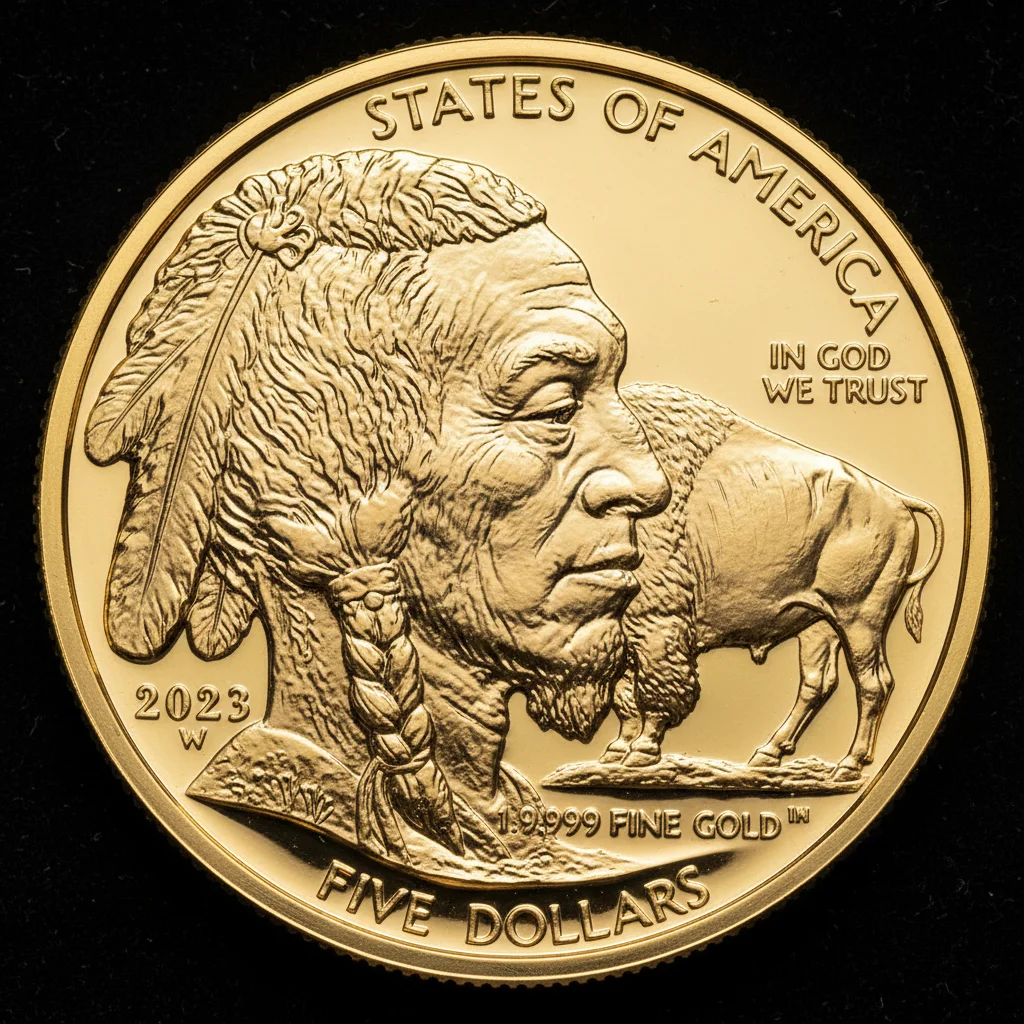
As an example, consider the 'American Buffalo' coin. It has a very complex and detailed design that is nearly impossible to reproduce under makeshift conditions. This makes visual identification quite reliable.
The second aspect is physical properties. The only metal with a density similar to gold is tungsten. It is used in rare cases of counterfeit bars. However, there is a significant difference between these metals.
Due to tungsten's brittleness, it is extremely difficult to strike a coin from it with a complex and clear image like the original. This makes the production of high-quality counterfeit coins a technologically complex and expensive process.
Why investment coins are difficult to counterfeit
Simple At-Home Verification Methods
You don't always need complex equipment to verify a coin's authenticity. You can start with simple steps accessible to everyone.
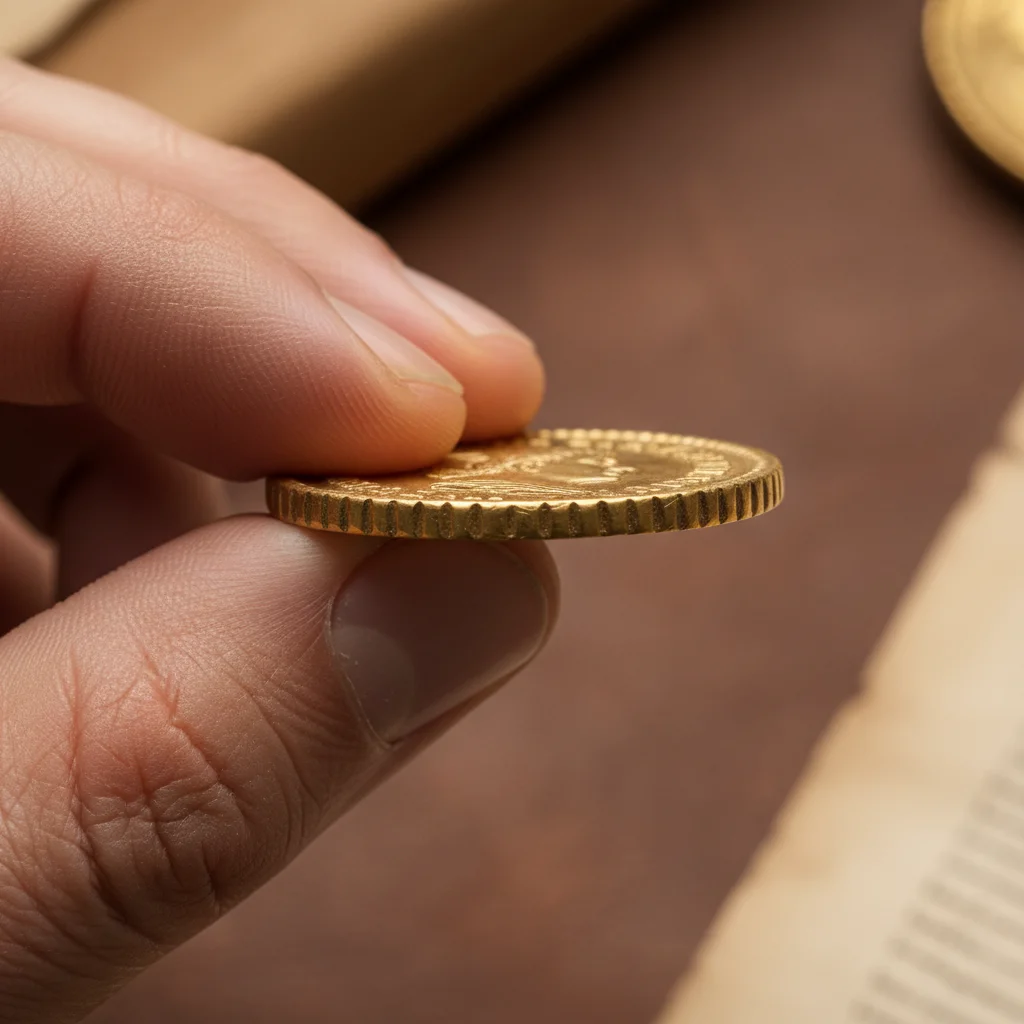
The first thing to do is to hold the coin for a careful inspection. You should hold it by the rim (edge) to avoid leaving fingerprints or smudges on the surface. This is especially important for coins made of pure fine gold, as it is a very soft metal that is easily damaged.
Next, you should visually compare the coin with a reference image. Simply find high-quality photos of the coin online. Check all the details of the design, inscriptions, and overall appearance. There is a wealth of information available online for standard investment coins.
Simple at-home verification methods
Weight Check: The Most Reliable Method
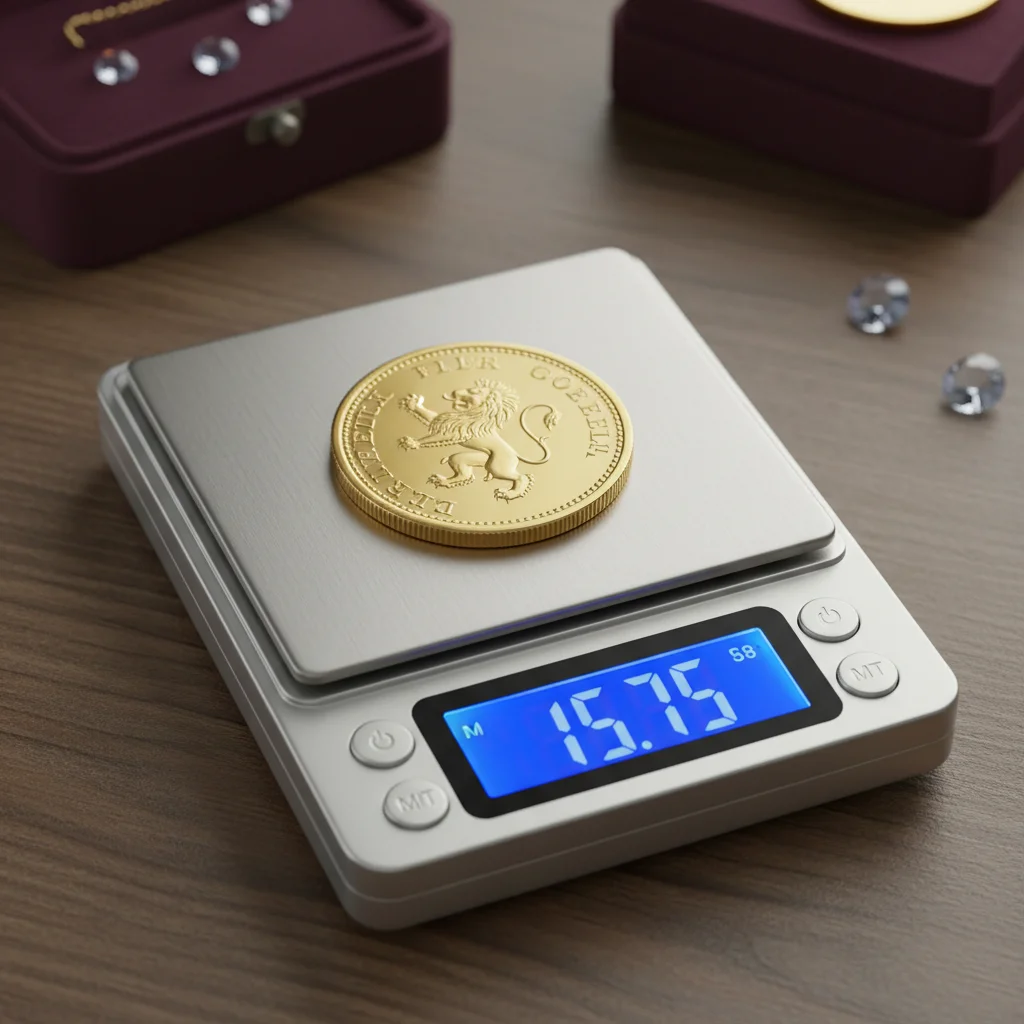
The primary and simplest tool for authentication is an accurate scale. It is recommended to use a jewelry scale with an accuracy to the hundredth of a gram (0.01 g) to get a reliable result.
A standard one-ounce coin contains 31.1 grams of pure gold. When weighed, its weight should not be less than this value. For example, when checking an 'American Buffalo' coin, the scale showed 31.22 grams, which is normal.
Don't worry if the weight of your coin differs slightly from that of another identical coin. The weight can vary by hundredths of a gram (e.g., 31.19 g vs. 31.22 g). This is an acceptable tolerance for items produced by a mint and is not a sign of a counterfeit.
Weight check: the most reliable method
Using Special Templates for Verification
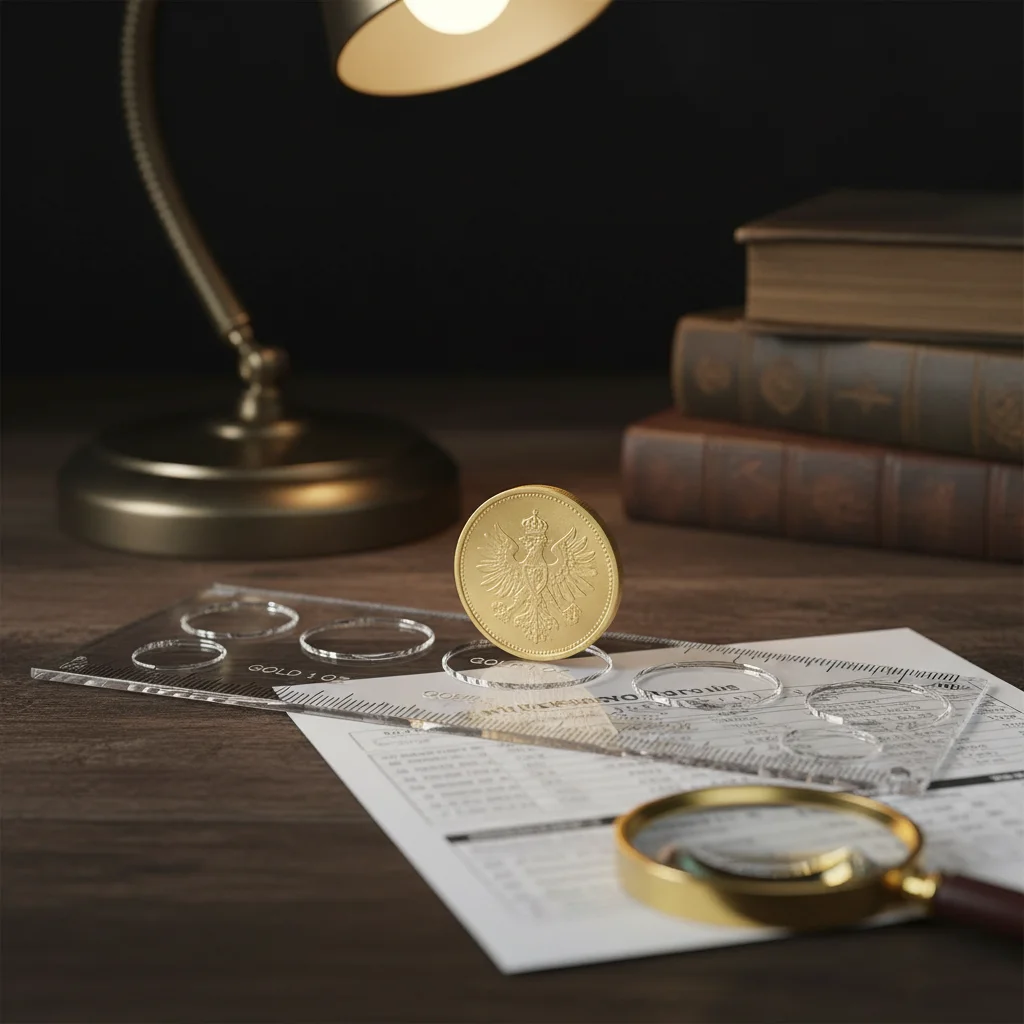
Besides scales, there are other convenient tools for a quick check. One of them is a special plastic ruler-template designed to verify seven main types of one-ounce gold investment coins.
Weight. The ruler has a counterweight. If you place a genuine one-ounce coin on it, it should outweigh it.
Thickness. The ruler has a special slot that the coin must pass through.
Diameter. The coin must fit precisely into its corresponding hole on the template.
A check using such a ruler takes only a few seconds. For example, the 'Buffalo' coin successfully passes all three tests on the template: it outweighs the balance, and it also matches the specified thickness and diameter. Although this tool is not absolutely perfect, it serves as a good additional verification method.
Using special templates for verification
Counterfeit Risks: Bullion vs. Numismatics
The probability of encountering a counterfeit bullion (non-numismatic) coin is tens of times lower than receiving a fake one-hundred-dollar or five-thousand-ruble bill. This is primarily explained by economics.
The premium on investment coins generally does not exceed 10% of the value of the metal they contain. This makes their mass and high-quality counterfeiting unprofitable. Production requires complex technology and does not pay off with such a low margin.
The situation is completely different in numismatics. Rare collectible coins can be worth tens, hundreds, or even thousands of times more than the value of the metal in them. A silver coin weighing a few grams can be sold for millions of dollars. In this case, creating a convincing copy becomes very economically viable, which gives rise to a market for fakes.