Golden 5 Rubles: How to Distinguish a Nearly Perfect Fake from an Original - AUCBURG | AUCBURG
Golden 5 Rubles: How to Distinguish a Nearly Perfect Fake from an Original
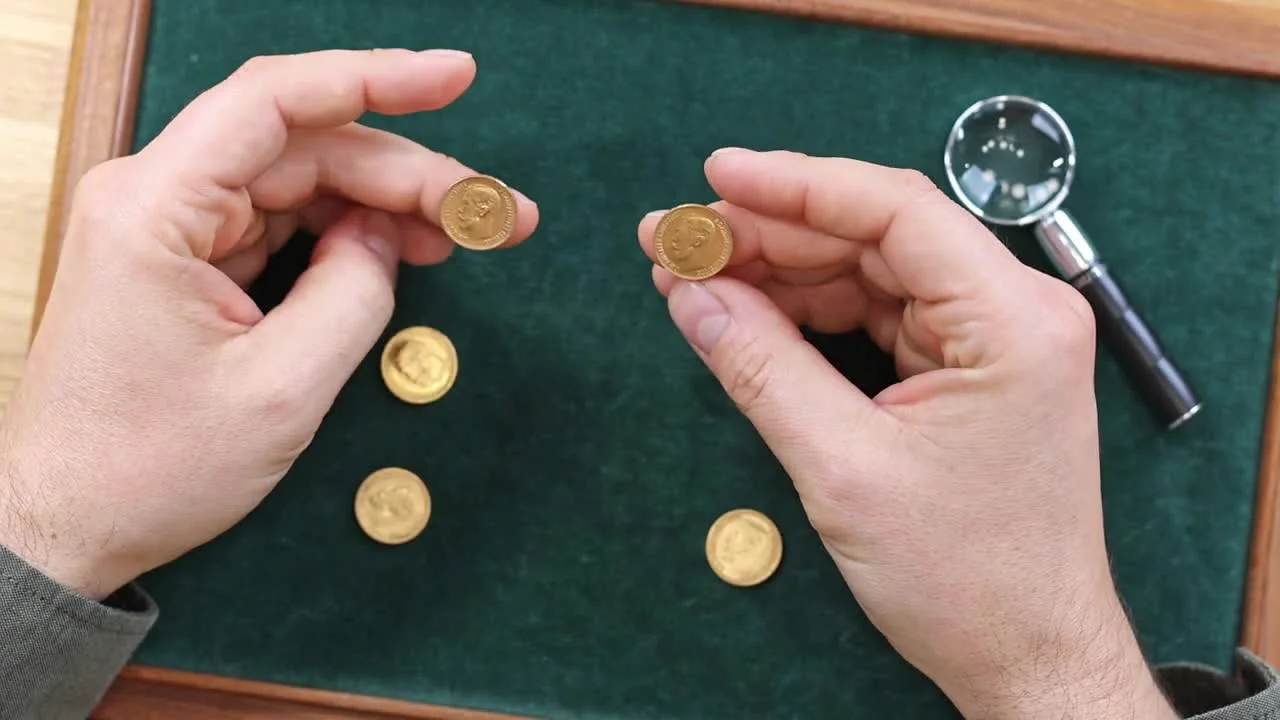
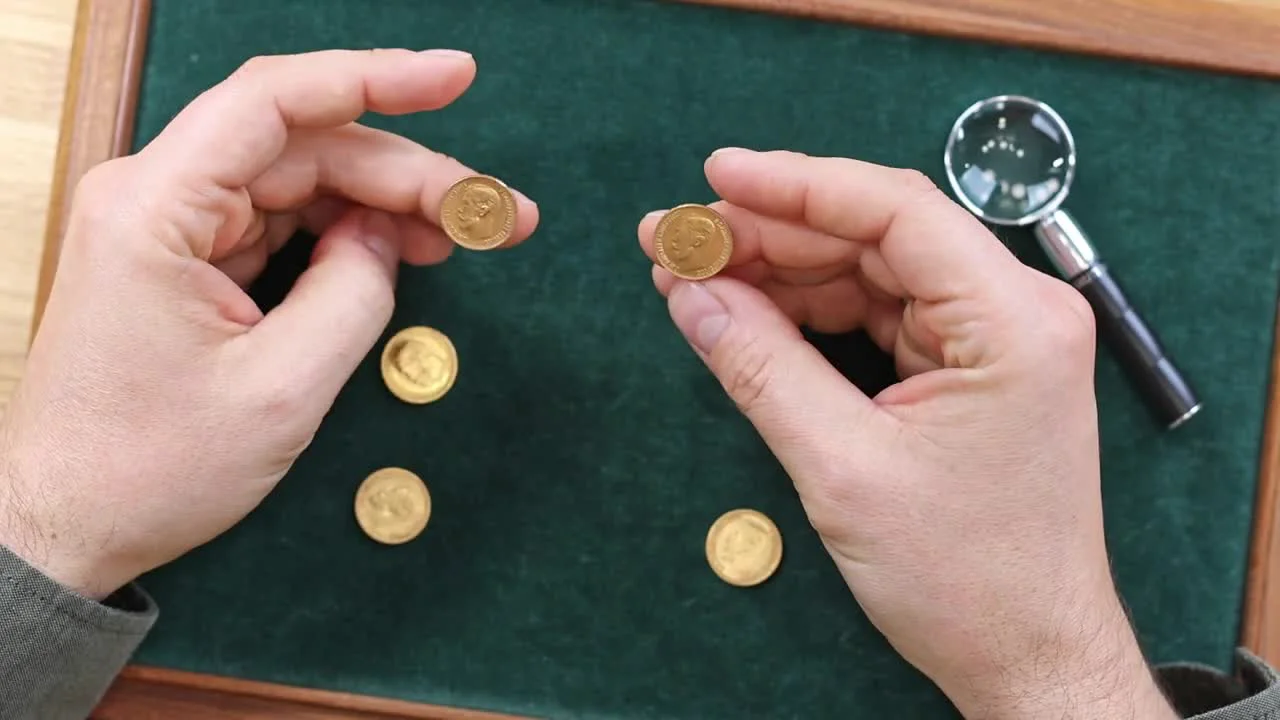
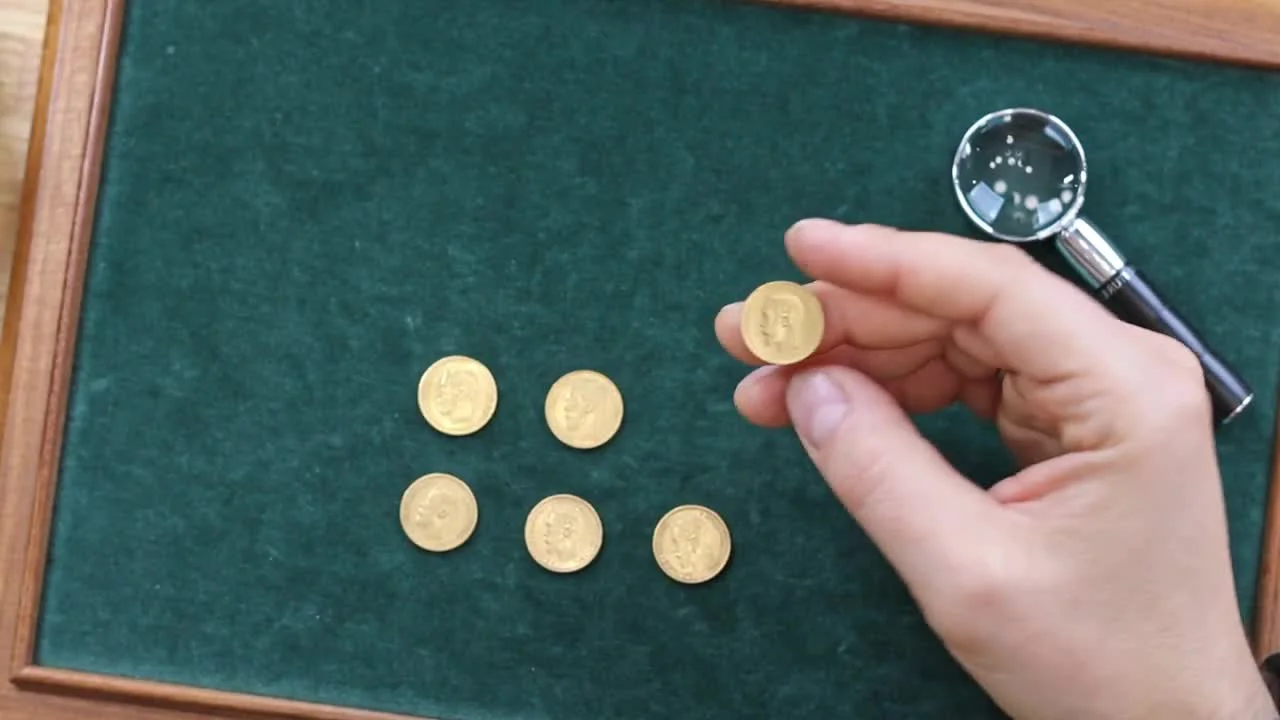
To conduct an expert examination, it is important to know the standard physical parameters of original coins. In this case, three types of fakes, made in different workshops, are examined and compared with genuine specimens.
To conduct an expert examination, it is important to know the standard physical parameters of original coins. In this case, three types of fakes, made in different workshops, are examined and compared with genuine specimens.
An original 5 ruble gold coin from the time of Nicholas II must meet the strict standards set by the mint. Any deviation from these norms, especially in weight, is a serious reason to doubt its authenticity.
Forgery #1 (1897): Obvious Visual Differences
The first forgery under review is a 5 ruble coin from 1897. This fake can be considered the easiest to recognize. An original coin from the same year of issue is used for comparison.
The main feature that immediately catches the eye is the color. The counterfeit coin has a noticeably lighter and more yellowish hue compared to the original. When weighed, the fake shows 4.27 grams, which is within the acceptable margin of error for a genuine coin.
However, the deciding factor is the diameter. The fake is approximately 1 mm larger than the original. Such an increase in size while maintaining the weight indicates that the coin was made from gold of a lower fineness.
Forgery #1 (1897): Obvious Visual Differences
Forgery #2 (1898): Insufficient Weight and Crude Details
The second specimen is a forgery of a 5 ruble coin from 1898. At first glance, its color is very close to the original, with only minimal differences. However, a weight check immediately reveals the deception: the coin weighs only 4.15 grams, which is clear evidence of a fake.
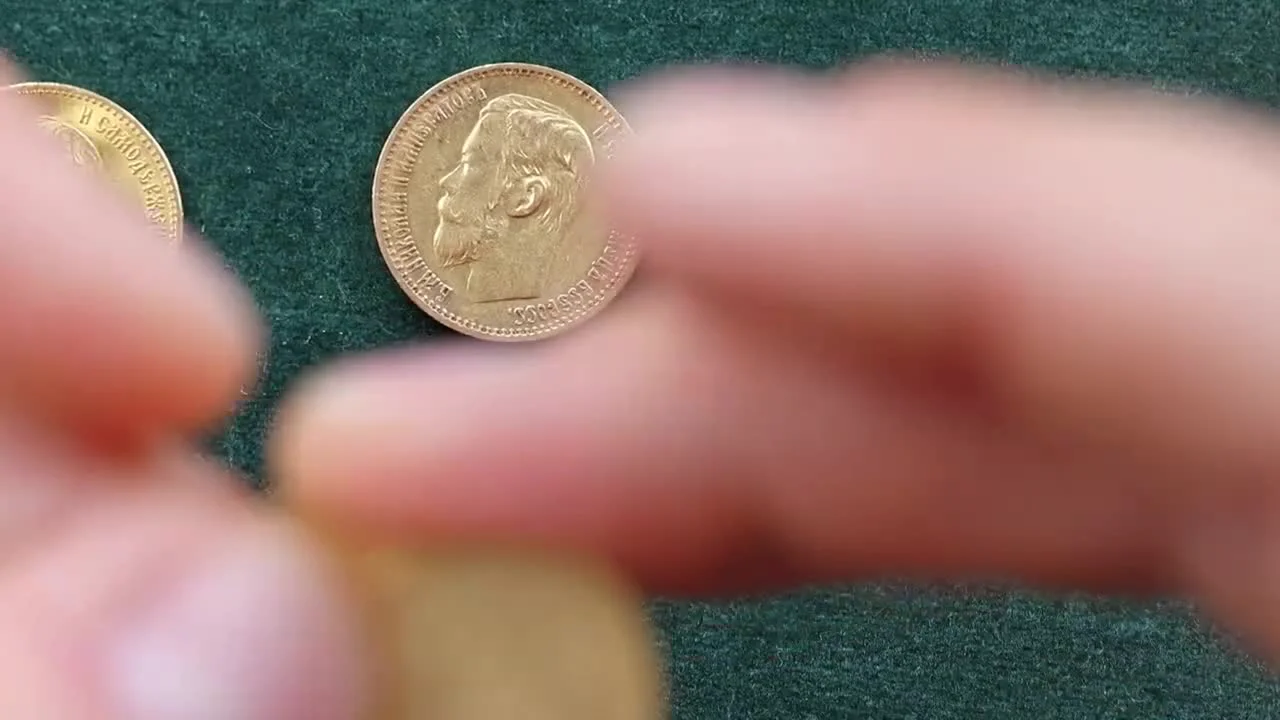
Besides the weight, there are other differences. The design on the fake coin is less precise and sharp than on the original, and it looks somewhat crude. A particularly characteristic feature of this forgery is the poorly executed ornamentation on the coin's edge (gurt).
Forgery #2 (1898): Insufficient Weight and Crude Details
Forgery #3 (1898): A Nearly Perfect Copy
The third forgery, also dated 1898, is the most difficult to recognize. Its physical parameters are almost ideal: the weight is 4.25-4.26 grams, and the diameter and thickness meet the standard. This coin was likely made from 900 fineness gold.
Despite this, there are subtle details that give away the fake. The coin seems to be struck slightly 'flatter', and the relief letters are a bit lower than on the original. Key signs to look for are:
On the reverse, in the central coat of arms with Saint George, the background behind the horseman on the original has clear vertical lines. On the fake, these lines are visible, but they disappear over a significant portion of the coat of arms.
The edge (gurt) of the coin. The ornamentation is well-executed, but its style differs from the original. Additionally, the edge itself is slightly convex and rounded, whereas on a genuine coin, it is flat.
Forgery #3 (1898): A Nearly Perfect Copy
The Counterfeiters' Motives: Profit Beyond Just the Gold
The question arises: why counterfeit coins if they are made from gold of almost the correct fineness? The reason lies in their numismatic value. In the case of the first two forgeries, the counterfeiter's profit came from saving on pure gold by using a lower-fineness alloy.
However, in the case of the high-quality third forgery, the motive was different. For many years, golden 5-ruble coins were sold at a significant premium to the value of the metal they contained—the markup could reach 30-40%. By creating an exact copy from gold of the correct fineness, the counterfeiter profited from this numismatic premium.
A similar scheme was used for counterfeiting other popular gold coins, such as the American $20 gold pieces. Today, when these coins are sold with only a small premium over the price of gold, producing such high-quality forgeries would be unprofitable.
The Counterfeiters' Motives: Profit Beyond Just the Gold
Final Verification: Analysis at the Assay Office
Despite visual inspection and checking physical parameters, a laboratory analysis is required for a precise determination of the metal composition. A decision was made to send all the counterfeit coins being studied, both the 5-ruble and the 10-ruble coins from previous investigations, to the assay office.
Only after receiving the official analysis results will it be possible to say with complete certainty what the actual gold fineness is in each of these forgeries. This data will allow for a final understanding of what exactly the counterfeiters' calculations were based on in each specific case.