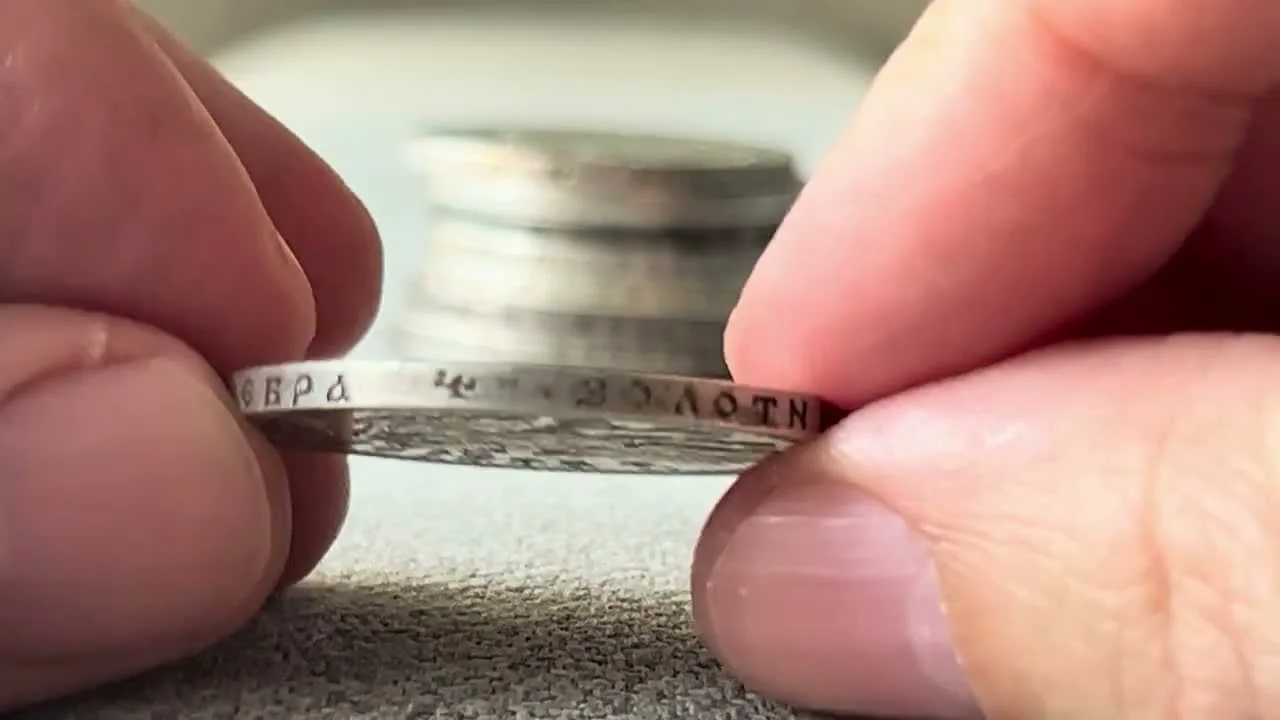
Edge Variety of the 1896 Coronation Ruble
The study of edge inscriptions on silver rubles of the Russian Empire from the late 19th century reveals interesting nuances for collectors. In particular, coins from the reigns of Alexander III and Nicholas II have differences that allow for the identification of rare varieties. One of the key markers for identifying such varieties is the style of the numerals in the edge inscription.
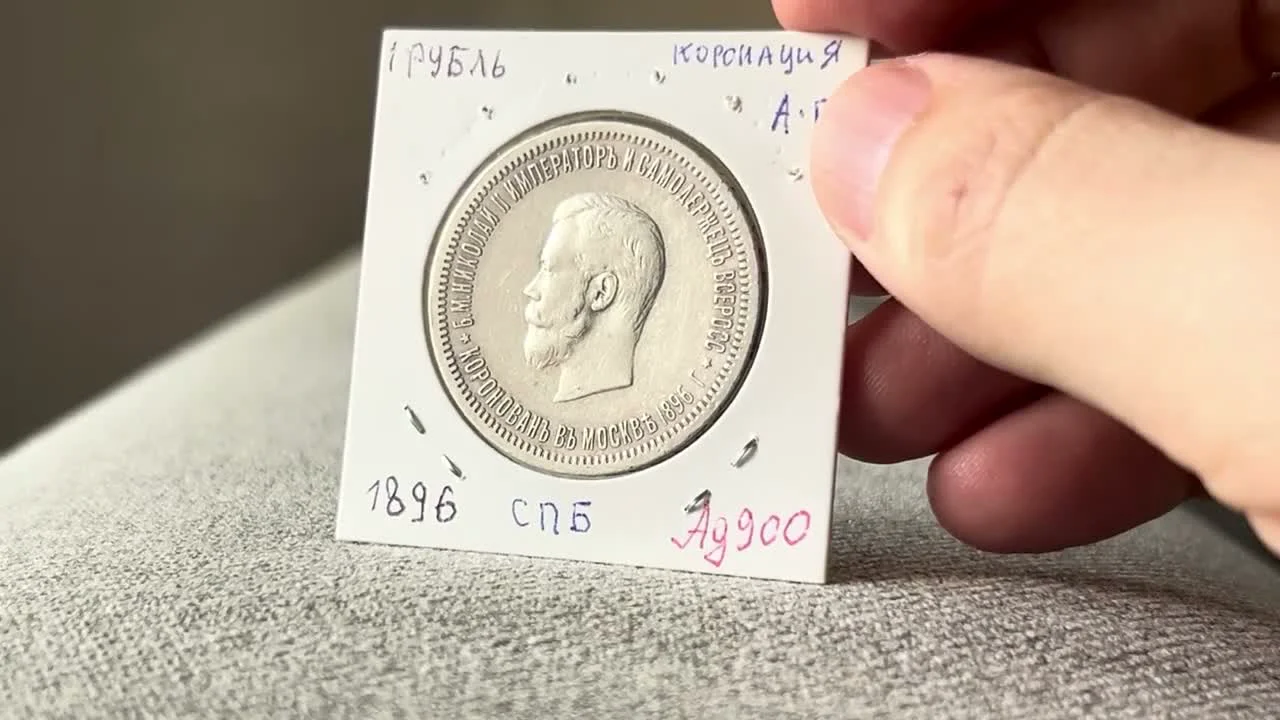
Features of Edge Inscriptions on Late 19th Century Rubles
The study of edge inscriptions on silver rubles of the Russian Empire from the late 19th century reveals interesting nuances for collectors. In particular, coins from the reigns of Alexander III and Nicholas II have differences that allow for the identification of rare varieties. One of the key markers for identifying such varieties is the style of the numerals in the edge inscription.
The Edge Standard during the Reign of Alexander III
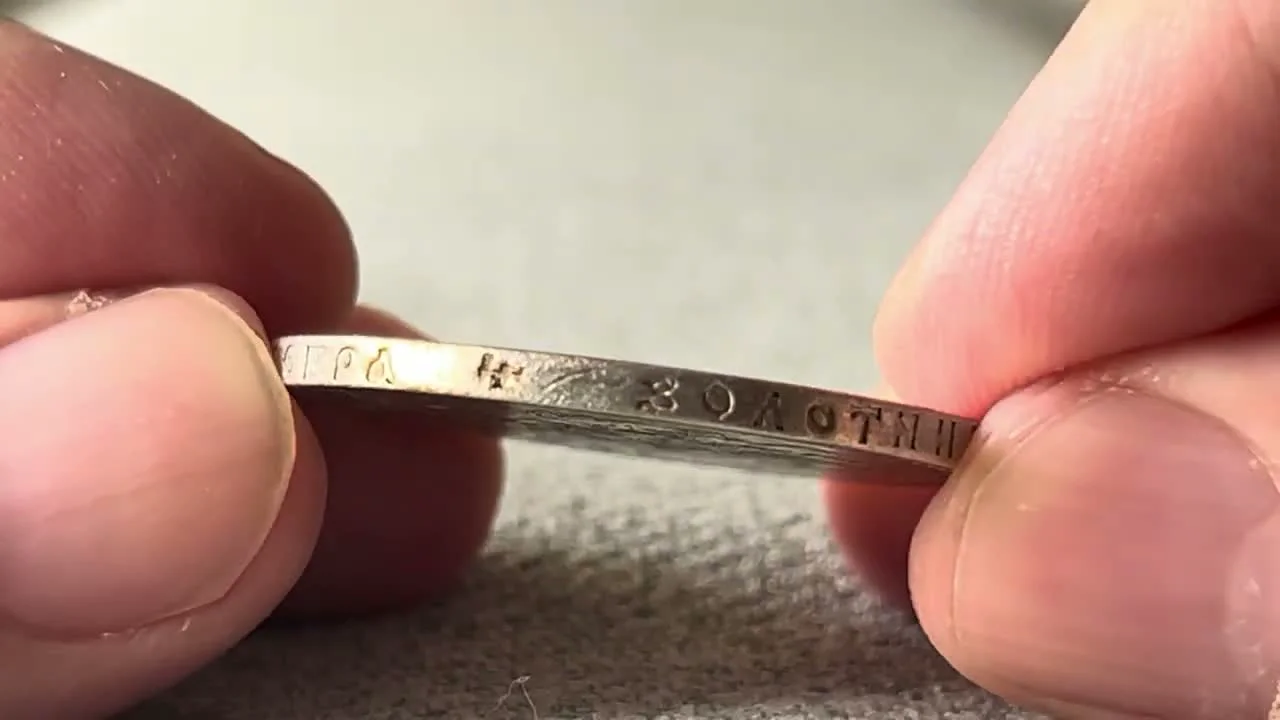
The edge inscription on the rubles of Alexander III is used as a starting point for comparison. Using an 1891 coin as an example, we can see the standard inscription for that period: 'OF PURE SILVER 4 ZOLOTNIKS 21 DOLYAS.' The initials of the mintmaster – 'AG' (Apollon Grashof) – are indicated in parentheses.
A key feature is the style of the numeral '4'. It has a distinctive shape with a slanted crossbar, resembling a 'tail.' This style of the numeral was characteristic of the equipment used during the reign of Alexander III.
Evolution of the Numeral '4' on the Edge of Nicholas II Rubles
| Type of Numeral '4' | Description | Period of Use |
| 'Alexandrian' | Has a characteristic 'tail' or slanted crossbar | Rubles of Alexander III, early rubles of Nicholas II (until 1896) |
| 'Nikolaevan' (standard) | Has a straight horizontal crossbar | Rubles of Nicholas II (from 1896 onwards) |
With the beginning of Nicholas II's reign, the old equipment for applying the edge inscription continued to be used for some time. For example, on the 1895 ruble, we see the same 'Alexandrian' numeral '4' with a slanted crossbar. However, starting from the next year, 1896, a new standard style appears on most coins.
On the rubles of 1896, 1897, and 1898, the numeral '4' in the edge inscription already has a straight, standard horizontal crossbar. This change indicates that the mint transitioned to new edging equipment. Thus, we can distinguish two main types of the numeral '4' style on the edge.
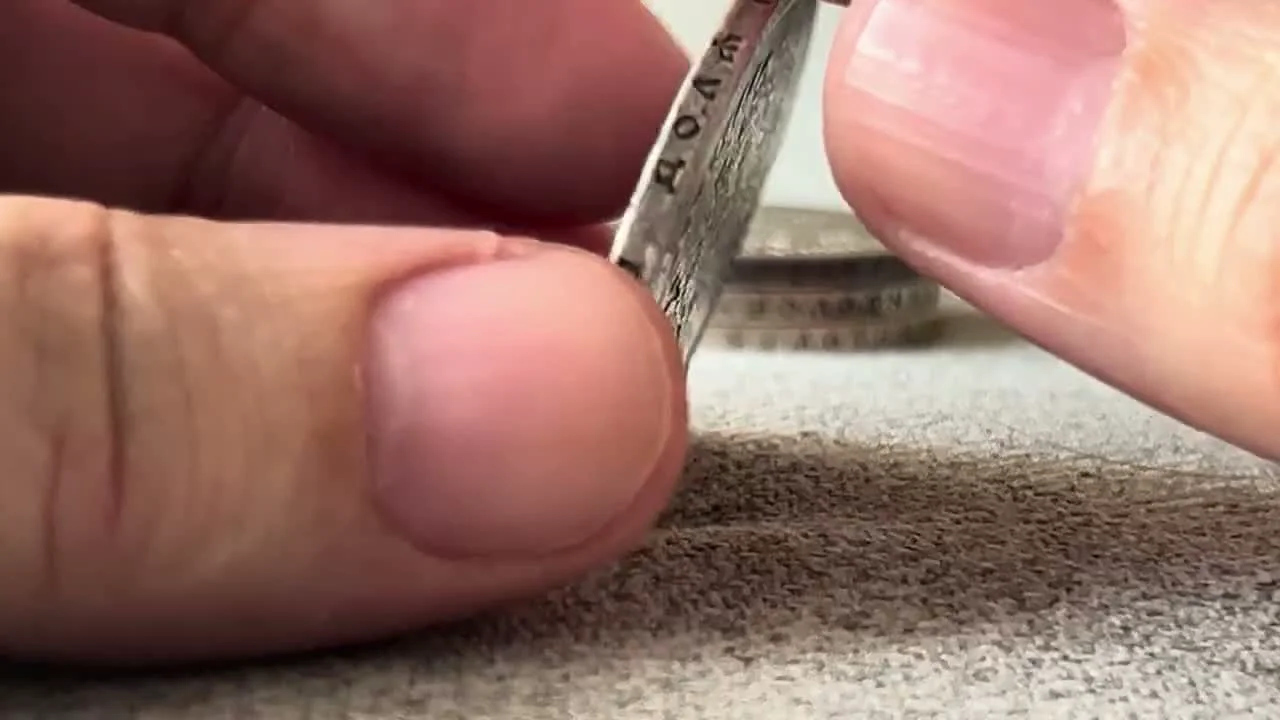
The 1896 Coronation Ruble: A Hidden Edge Variety
The commemorative 1896 ruble, issued to honor the coronation of Nicholas II, traditionally had no known varieties other than standard differences in the obverse and reverse dies. Most of these coins have an edge inscription with the 'Nikolaevan' numeral '4', that is, with the standard straight crossbar.
However, another, rarer variety of this coin exists. It consists of a portion of the mintage being struck using old edging equipment. As a result, the edge of these coins features the 'Alexandrian' numeral '4' with a slanted crossbar, inherited from the rubles of the previous reign.
Thus, the 1896 Coronation Ruble has two edge varieties:
- Variant 1 (Standard): Edge with the 'Nikolaevan' numeral '4' (straight crossbar).
- Variant 2 (Variety): Edge with the 'Alexandrian' numeral '4' (slanted crossbar).
According to observations, both variants are found in roughly equal proportions, 50/50. This nuance allows collectors to distinguish two different types of the same commemorative coin, differing only in a detail on the edge.