The Morgan Silver Dollar: History and Characteristics of the Famous US Coin - AUCBURG | AUCBURG
The Morgan Silver Dollar: History and Characteristics of the Famous US Coin
One of the most famous US coins is the silver 1 dollar, known as the 'Morgan dollar.' This name is associated with its creator—designer and engraver George T. Morgan, who designed the coin's appearance.
One of the most famous US coins is the silver 1 dollar, known as the 'Morgan dollar.' This name is associated with its creator—designer and engraver George T. Morgan, who designed the coin's appearance.
On the coin's obverse, at the base of Lady Liberty's neck, you can find a small monogram of the designer in the form of the letter 'M.' This is a distinctive feature and confirmation of George T. Morgan's authorship.
Minting History: From the 19th Century to 1921
The minting of the Morgan dollar began in 1878 and continued primarily through the 19th century. The main production period lasted until 1904. After that, production was suspended due to a surplus of silver money in circulation.
Production was resumed only in 1921. Coins from this year are among the most common. Thus, the minting history of the Morgan dollar has two main periods with a long break in between.
Minting History: From the 19th Century to 1921
Characteristics of the Silver Coin
Parameter
Value
---
---
Silver fineness
900
Pure silver weight
24 g
Total catalog weight
26.73 g
Thickness
~3 mm
Edge
Reeded
The Morgan dollar is made of 900 fineness silver and has impressive specifications, making it a pleasant and hefty coin. The coin is quite thick, almost 3 millimeters, and the edge has a standard reeded design without any inscriptions.
The main technical specifications of the coin are presented in the table.
These parameters are important for collectors, including for determining the coin's authenticity, as deviations from the standard can indicate a counterfeit.
Characteristics of the Silver Coin
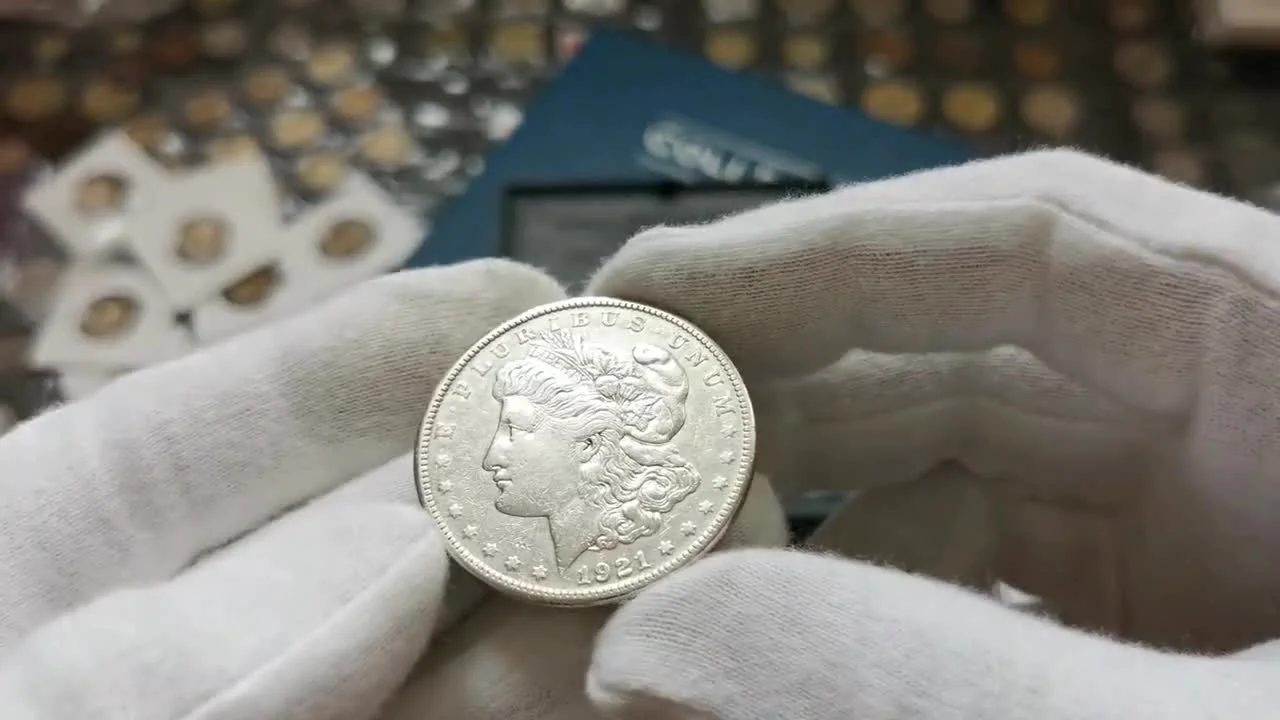
Obverse Design: Head of Liberty
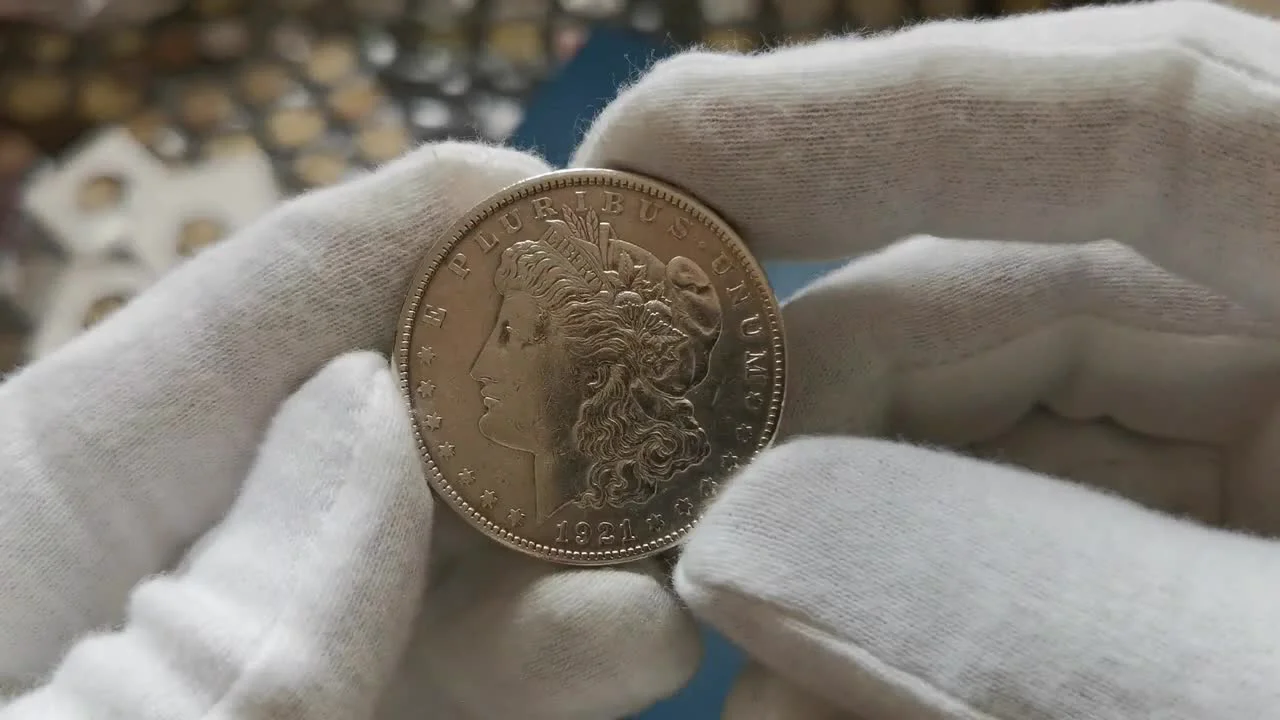
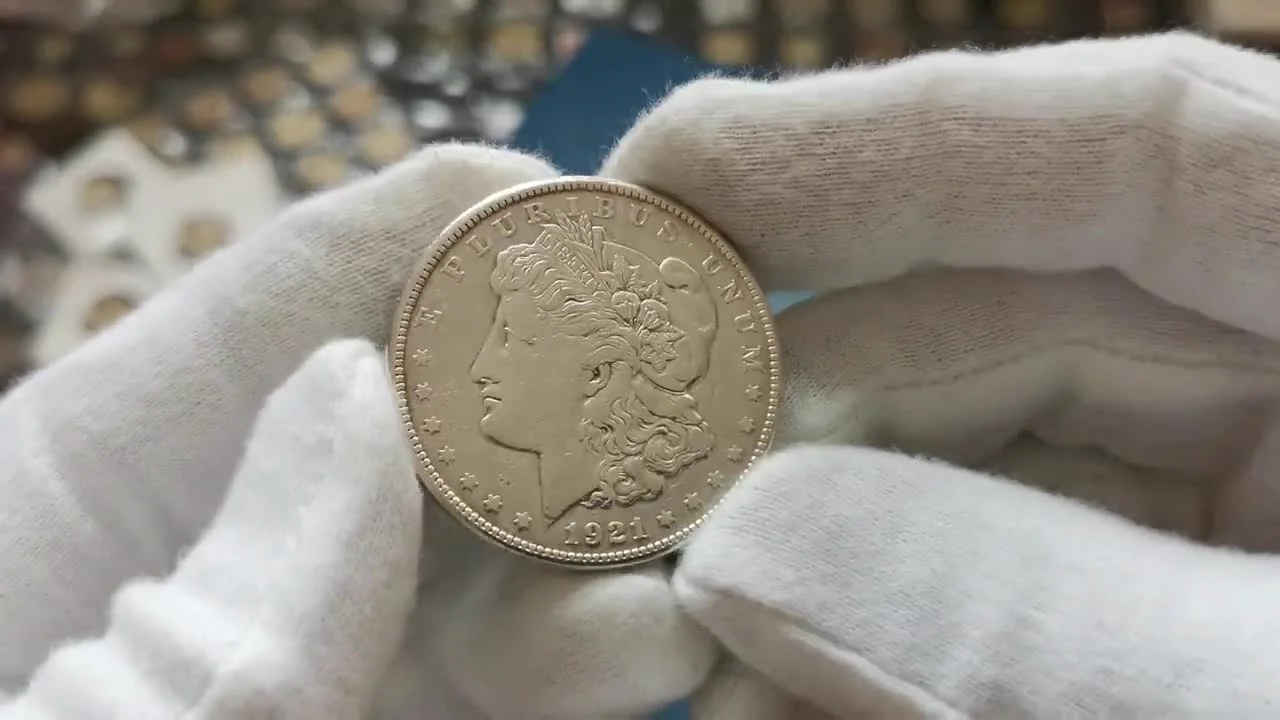
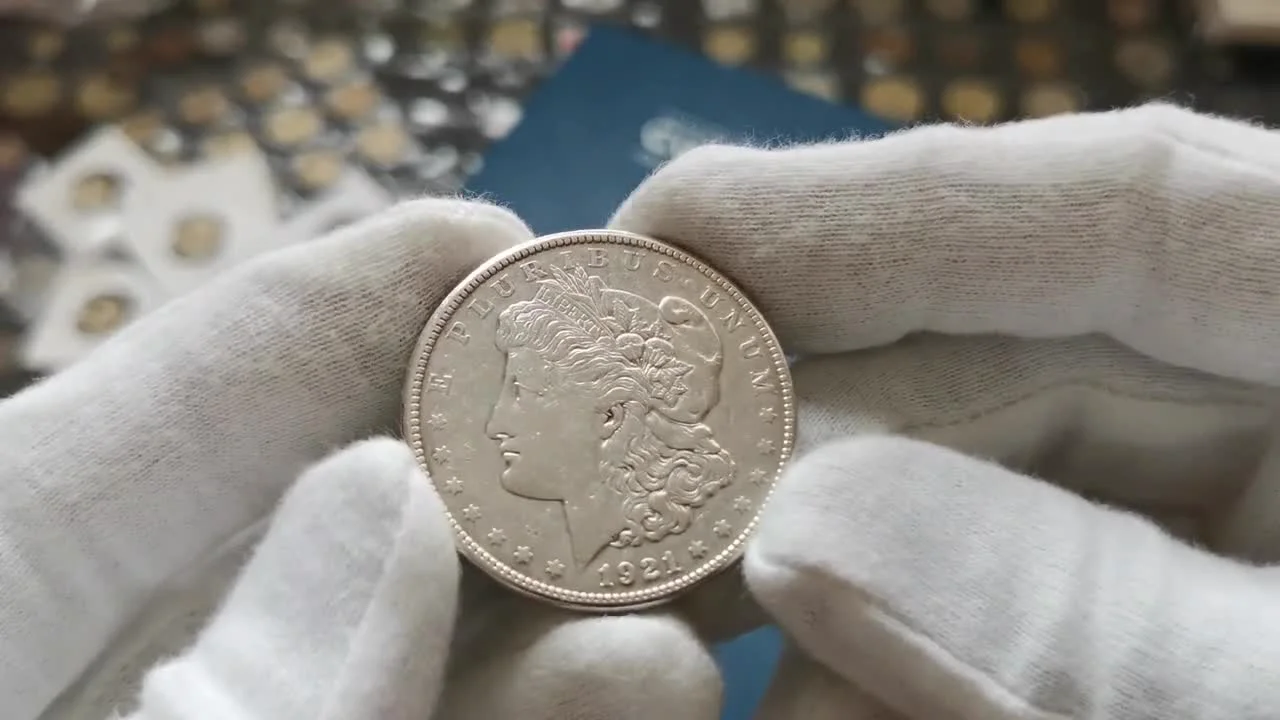
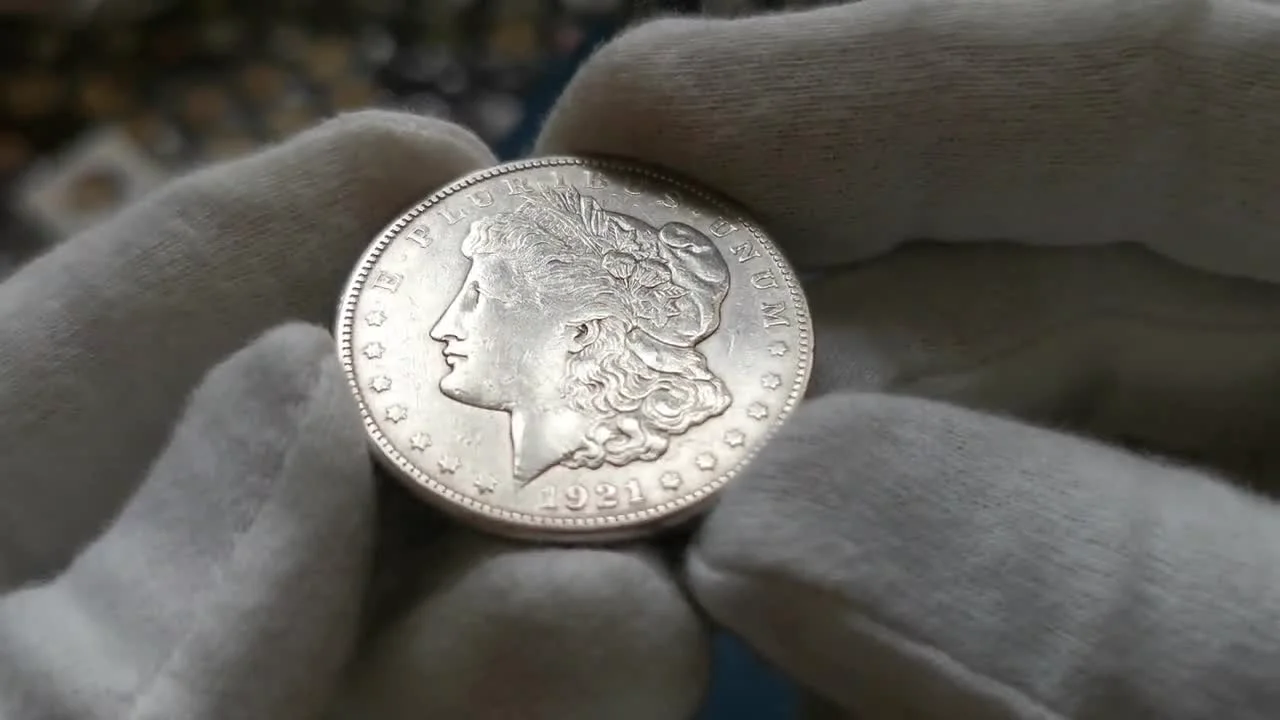
The obverse of the coin depicts a female head in profile—an allegorical representation of Liberty. One of the features of the portrait is the smooth transition from the line of the nose to the forehead. The head is adorned with a wreath and a Phrygian cap, on which the inscription 'LIBERTY' is placed.
Interestingly, the model for this image was a real woman, not the head of the Statue of Liberty, as one might assume. Around the portrait is the Latin inscription 'E PLURIBUS UNUM,' which translates to 'Out of many, one.' This phrase, attributed to Cicero, symbolizes national unity in its modern interpretation. The year of minting is indicated at the bottom of the obverse.
Obverse Design: Head of Liberty
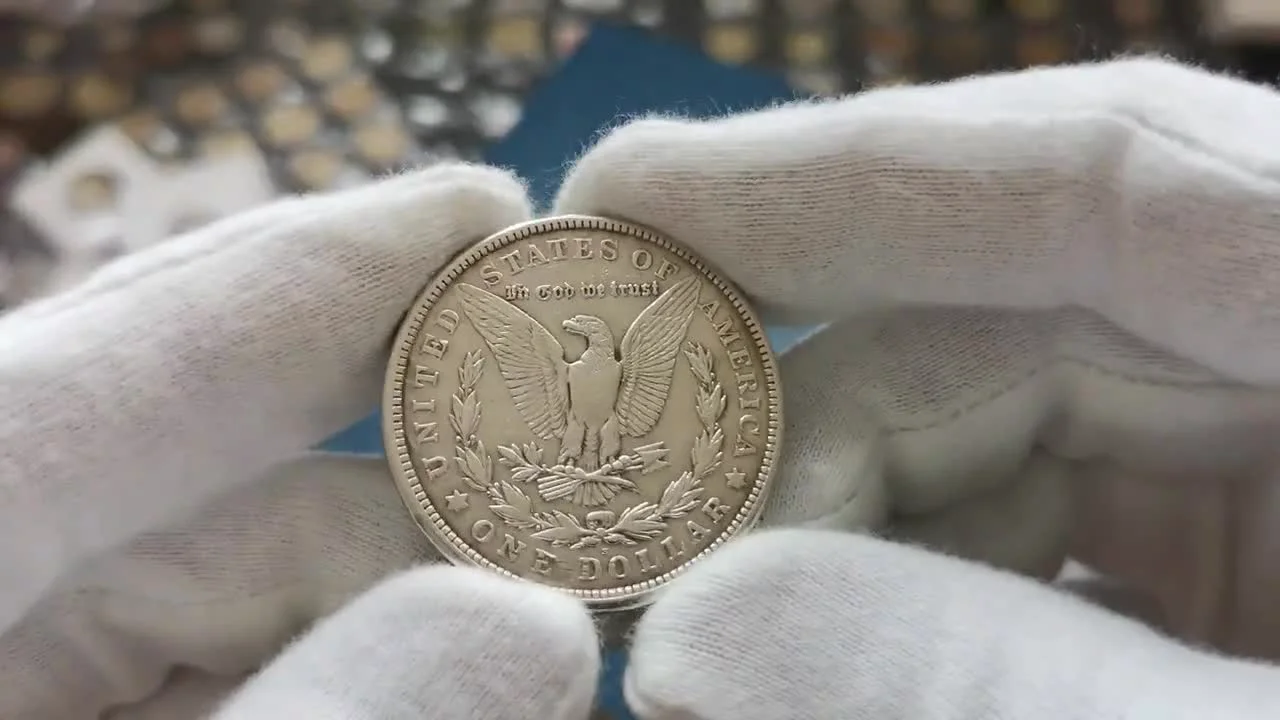
Reverse Design: Bald Eagle
The reverse of the coin features a bald eagle—the national symbol of the USA. The bird, with its wings spread, holds arrows and an olive branch in its talons, symbolizing readiness for war and a desire for peace. The eagle is surrounded by an olive wreath.
Along the coin's circumference are the inscriptions 'UNITED STATES OF AMERICA' and the denomination 'ONE DOLLAR.' Above the eagle's head is the motto 'In God We Trust.' Between the words 'ONE' and 'DOLLAR,' there may be a letter indicating the mint. For example, the letter 'S' indicates the San Francisco Mint. Coins were also minted in Philadelphia (no mint mark) and Denver (mint mark 'D').
Reverse Design: Bald Eagle
Mintage and Collectible Value
Despite its popularity, the Morgan dollar is not a rare coin in most cases. Due to enormous mintages, its value is relatively low and can be around 1500–2000 rubles for a specimen in average condition.
In San Francisco ('S'): 21 million pieces.
In Denver ('D'): approximately the same.
In Philadelphia (no mint mark): 45 thousand pieces.
Mintage and Collectible Value
Authenticity Issues
Due to its high popularity, the Morgan dollar is very often counterfeited. Many copies of varying quality are found on the market, so one should be careful when buying. One of the first verification steps is weighing.
The standard weight of the coin is 26.73 grams. When a specific 1921 specimen was weighed, the scale showed 26.75 grams. This raises suspicion because the coin shows signs of circulation and should have lost weight over time, not gained it. Such a result may indicate that the coin is a counterfeit.