Gold Coins of Nicholas II: How to Avoid Buying a Sophisticated Counterfeit - AUCBURG | AUCBURG
Gold Coins of Nicholas II: How to Avoid Buying a Sophisticated Counterfeit
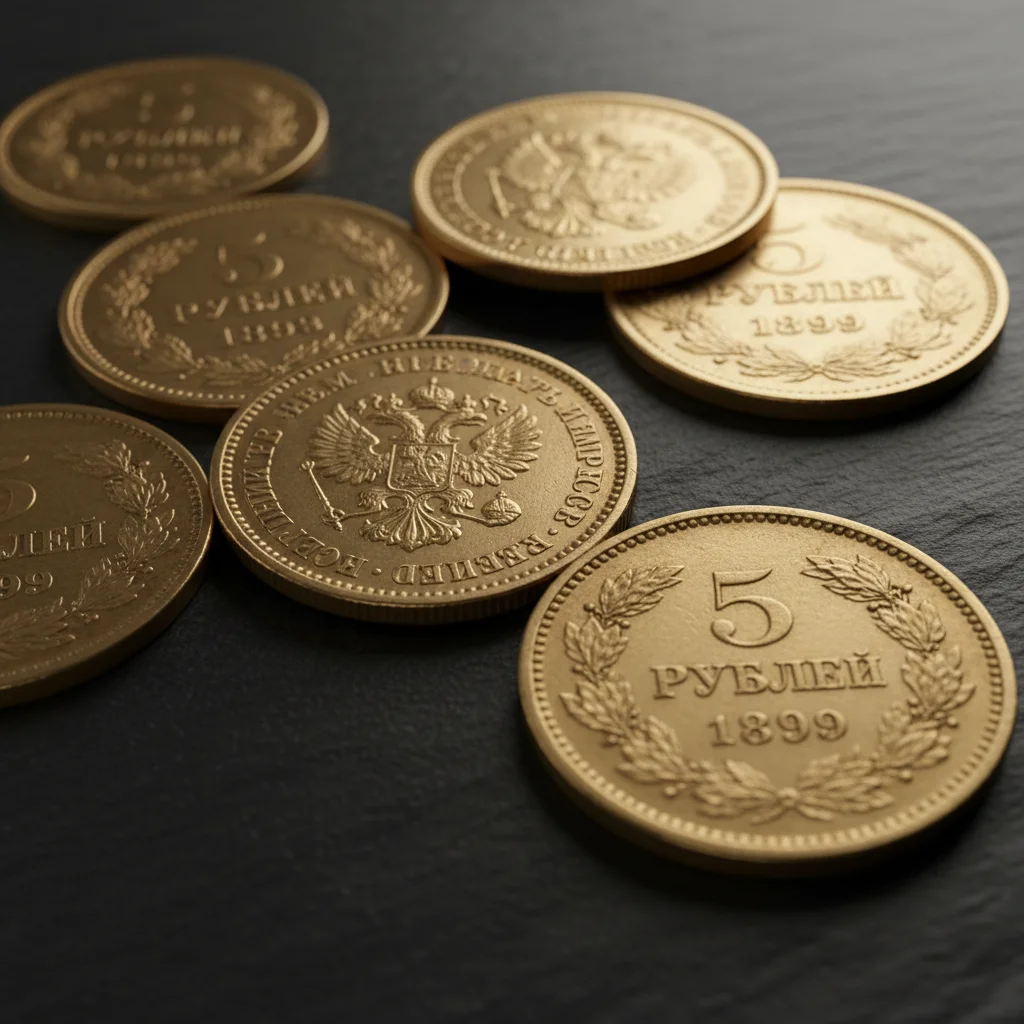
For collectors of gold coins from the era of Nicholas II, one of the most serious problems is the risk of acquiring sophisticated counterfeits. This is a challenging task, as it involves not crude copies, but skillfully altered genuine coins that require careful examination and specialized knowledge for their detection.
For collectors of gold coins from the era of Nicholas II, one of the most serious problems is the risk of acquiring sophisticated counterfeits. This is a challenging task, as it involves not crude copies, but skillfully altered genuine coins that require careful examination and specialized knowledge for their detection.
The New Portrait Type from 1903
Term
Description
Late Portrait
A portrait variant of Nicholas II that appeared on 5-ruble coins starting in 1903.
1903 Pattern Portrait
An alternative name for the 'late portrait'.
Obverse Die No. 3 according to Kayumov
The catalog designation for this portrait type.
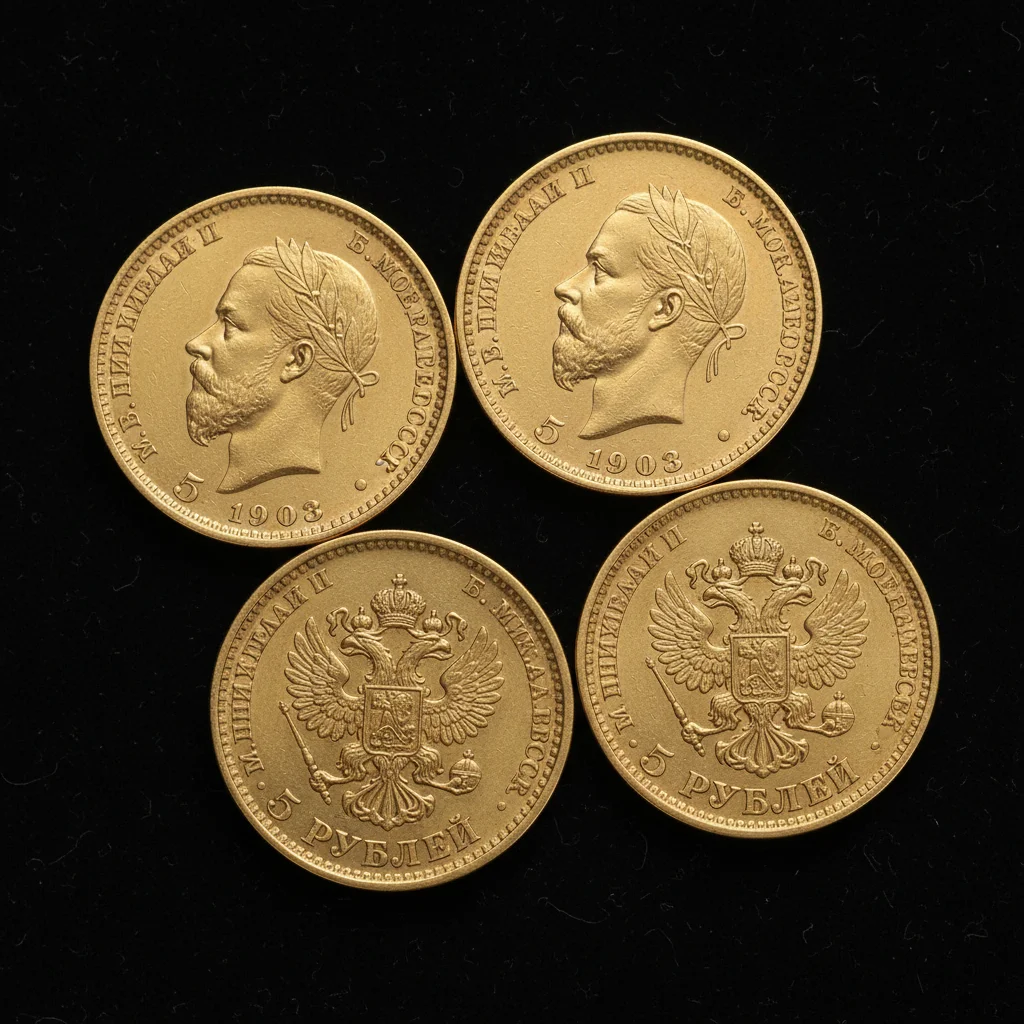
Starting in 1903, a new variant of the emperor's portrait appeared on five-ruble gold coins. In numismatic circles, it is commonly called the 'late portrait' or the '1903 pattern portrait'. Although minor die differences may be found in each subsequent year, this is the primary definition.
According to common classifications, this portrait type has its own designation.
The new portrait type from 1903
Rarity and Value of 'Late Type' Coins
After 1903, a whole series of coins with the new portrait was issued. There is a pattern: the further the year of mintage is from 1903, the rarer and more expensive the coin becomes. This is clearly seen in the example of several key issue years.
5 rubles 1904
5 rubles 1909 (significantly rarer and more expensive)
5 rubles 1911 (the rarest of the available annual coins, not counting the unique issues of 1906-1907)
Rarity and value of 'late type' coins
The Unique 1899 'Mule' Coin
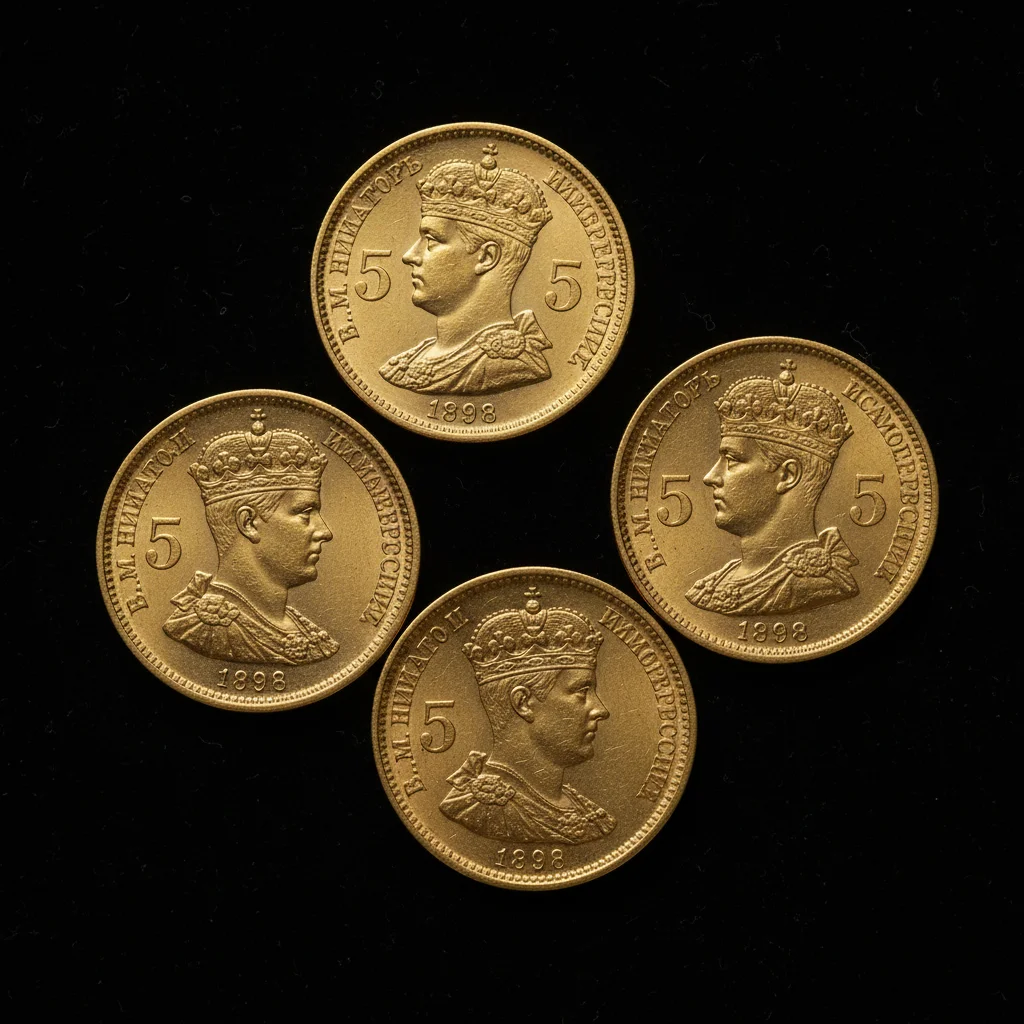
There is another variant where the 'late' portrait is found—a complex and rare 'mule' coin. This specimen has the date 1899 and the mintmaster's mark 'ЭБ' (Elikum Babayants) on the edge, but the obverse features the 1903 pattern portrait, which logically could not have appeared at that time.
The appearance of such a coin is difficult to explain. There are various theories, from the accidental use of incorrect dies to the simultaneous production of several tool variants. The result was a unique combination of three elements: the 1899 reverse, the edge with the 'ЭБ' mark, and an obverse with the later portrait type.
The unique 1899 'mule' coin
Date Alteration: A Temptation for Forgers
Coin Year
Approximate Value (as of early 2021)
1903-1904
25,000 - 30,000 RUB
1909
50,000 - 80,000 RUB
1911
300,000 - 400,000+ RUB
The rarer the coin, the fewer genuine examples collectors see, which complicates the detection of forgeries. This creates a great temptation for forgers, who use the method of 'date alteration'—changing the date on a genuine but more common coin to a rarer one. For example, a 1904 coin can be turned into a 1909 or 1911 coin.
The difference in value makes such manipulations very profitable. Even if a jeweler confirms the authenticity of the gold, it does not guarantee the authenticity of the coin itself as a numismatic object, as it may have been altered.
Date alteration: a temptation for forgers
The Key to the Puzzle is on the Reverse Side
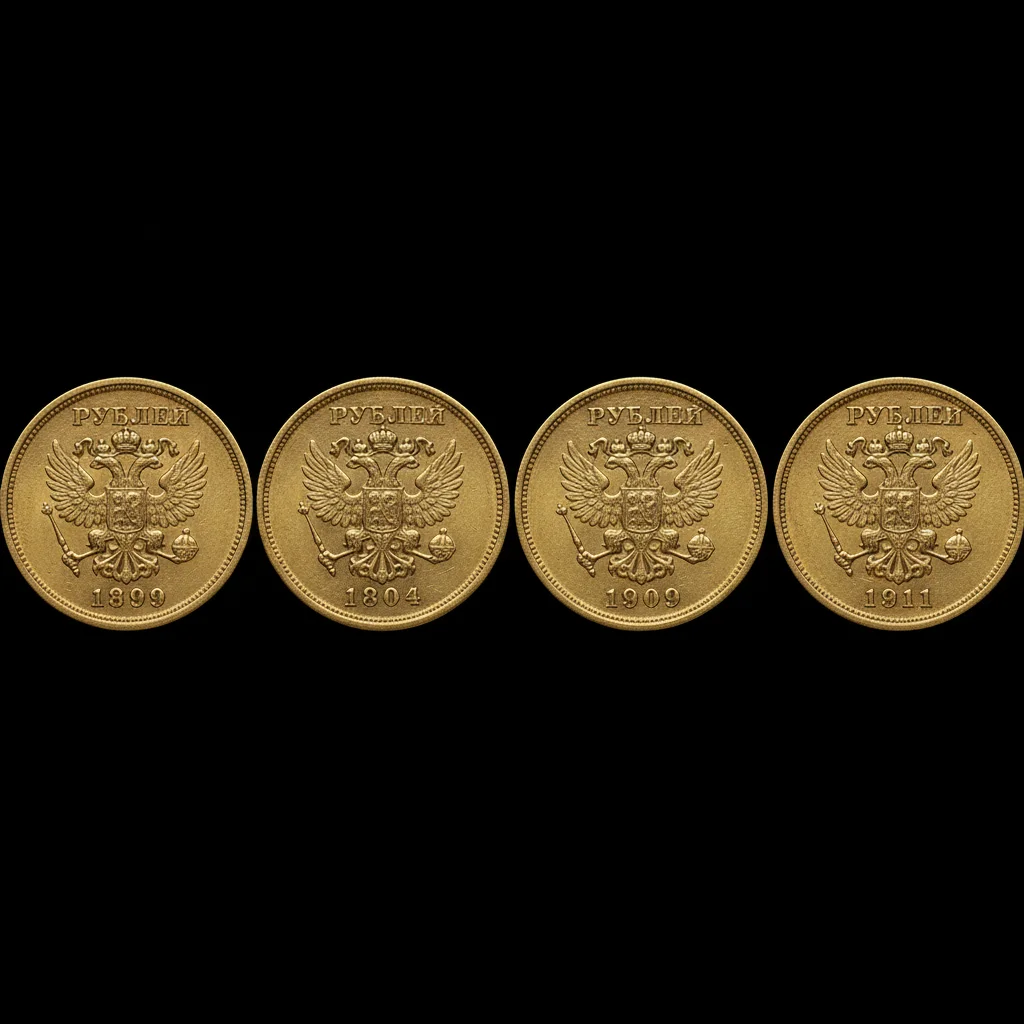
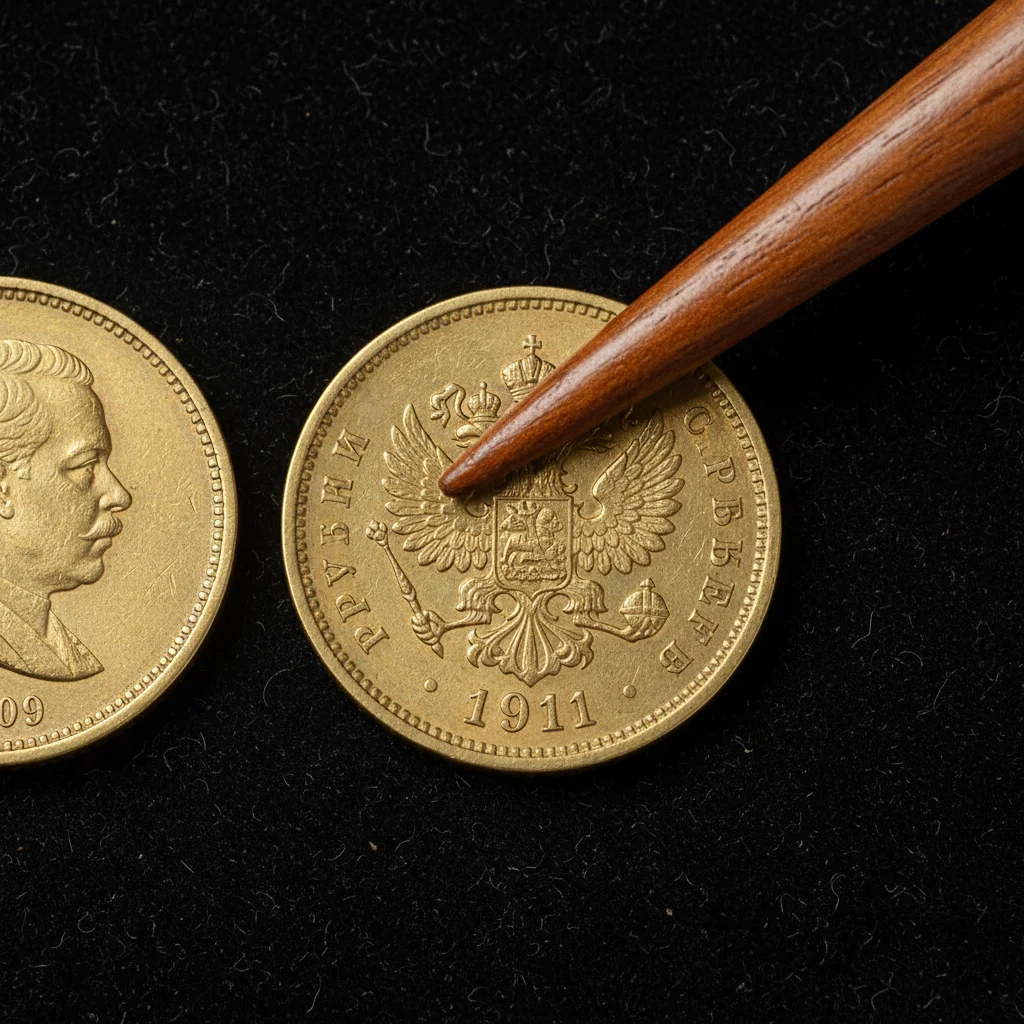
So, how can you identify a skillful forgery created by altering the date? The main focus should be not only on the portrait, which can be the same for several years, but also on the reverse—the side with the image of the double-headed eagle.
It is on the reverse that small but important details, characteristic of a specific year of mintage, are hidden. Forgers, when altering the date, often overlook the fact that the image of the eagle must also correspond to the new, rarer year. Knowledge of these features helps to expose the deception.
The key to the puzzle is on the reverse side
Comparing the Eagles of 1909 and 1911
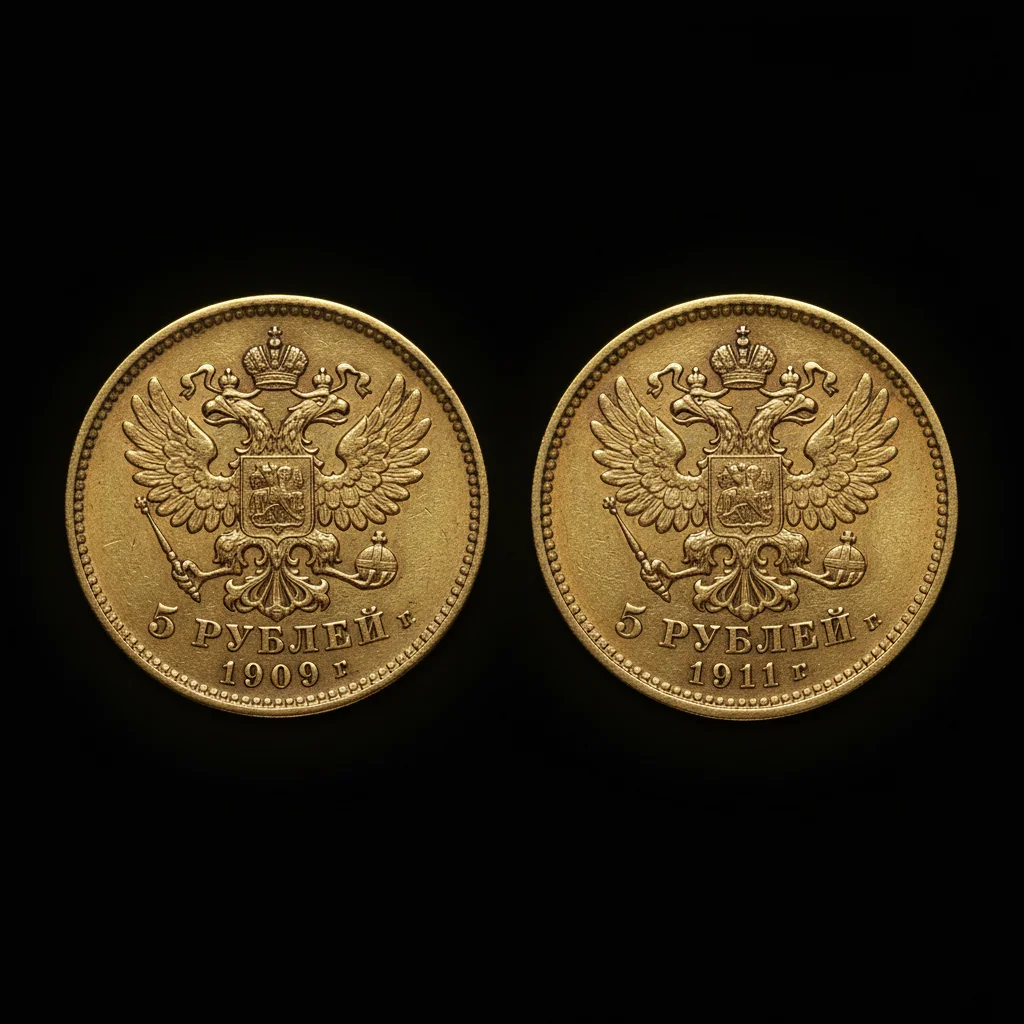
Let's consider a specific example: how to distinguish a genuine 1911 coin from one altered from a 1909 coin. To do this, you need to compare the details of the eagle's image on the reverse.
Volume. On the 1909 coin, the eagle is more voluminous and has a higher relief; it is raised more prominently from the coin's field.
Central Crown. The eagle on the 1909 coin has a larger one.
Orb. On the 1909 coin, the orb is also larger and has a more rounded shape.
Tail. The shape and arrangement of the tail feathers differ between the 1909 and 1911 eagles. On the 1911 coin, the lower feathers are positioned differently.
Comparison of the 1909 and 1911 eagles
How a Collector Can Avoid Mistakes
To avoid falling victim to fraudsters, it is important to be extremely careful and follow a few rules when purchasing rare and expensive coins. These steps will help minimize risks and protect your collection from forgeries.
Study the details. Don't limit yourself to checking the portrait and date. Carefully examine the features of the reverse (the eagle) that are characteristic of each specific year.
Build a reference base. Save high-quality photographs of genuine rare coins from catalogs and reputable sources. This will help you have a standard for comparison.
Consult experts. If you are unsure about a coin's authenticity, do not hesitate to seek help from experienced specialists and numismatists.
Be cautious with remote purchases. Avoid buying expensive specimens based on photographs, especially from unverified sellers. A personal inspection of the coin is the most reliable method of verification.