Restrike, Not a Counterfeit: Understanding Numismatic Terms - AUCBURG | AUCBURG
Restrike, Not a Counterfeit: Understanding Numismatic Terms
In numismatics, there's a sensitive topic concerning the misuse of the term 'restrike.' Many people indiscriminately apply this word to any counterfeit coin, which is a completely incorrect approach.
In numismatics, there's a sensitive topic concerning the misuse of the term 'restrike.' Many people indiscriminately apply this word to any counterfeit coin, which is a completely incorrect approach.
It's important to remember the key rule: a restrike is not a counterfeit. These two concepts have fundamental differences, and confusing them creates turmoil in understanding the value and origin of collectible items.
What is a Restrike, Really?
Term
Definition
Restrike (Novodel)
A coin or monetary token produced at an official mint, but at a time other than the date indicated on the item itself.
To correctly use numismatic terminology, it is essential to clearly understand the meaning of each concept. A restrike has a strict definition that distinguishes it from any other coin surrogates.
A simple example would be a coin dated '1902' that was actually minted much later, for instance, in the 1990s. Such an issue is produced officially by special order.
What is a Restrike, Really?
Purposes and Characteristics of Restrike Coins
Restrike coins are completely authentic items, as they are struck at a state mint. Their main purpose is to satisfy the demand from collectors, including high-ranking ones, who wish to add rare, high-quality specimens to their collections.
Often, original coins are either unavailable or have survived in poor condition. In such cases, a special order for a restrike is placed. The key characteristics of restrike coins are:
They are made at an official mint.
They can be struck with original dies, if they have been preserved, or with newly made dies that are nearly identical to the originals.
Sometimes they have small additional marks to distinguish them from the original issue.
They are often produced in a higher quality, such as 'Proof' (a polished finish).
Their main purpose is for collecting, not for deception.
Purposes and Characteristics of Restrike Coins
Example #1: The 1834 Kopek Restrike
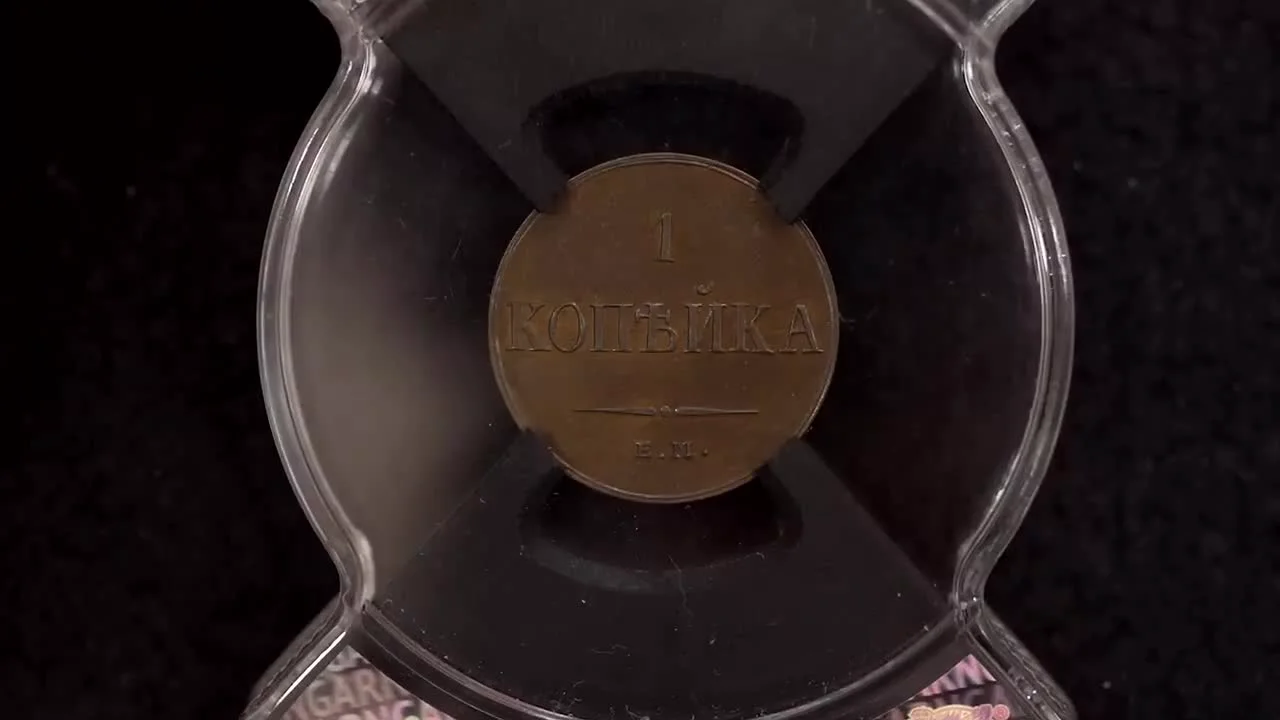
A striking example of a restrike is the oval-shaped 1 kopek coin of 1834. This specimen was produced long after its indicated date by special order for a high-ranking collector.
A special feature of this restrike is its enhanced, polished quality, close to Proof-like. This was done specifically to adorn the collection and present the coin in the best possible condition, which is often not possible with original coins from that period due to their state of preservation.
Example #1: The 1834 Kopek Restrike
Example #2: The '37 Rubles 50 Kopeks – 100 Francs' Coin of 1902
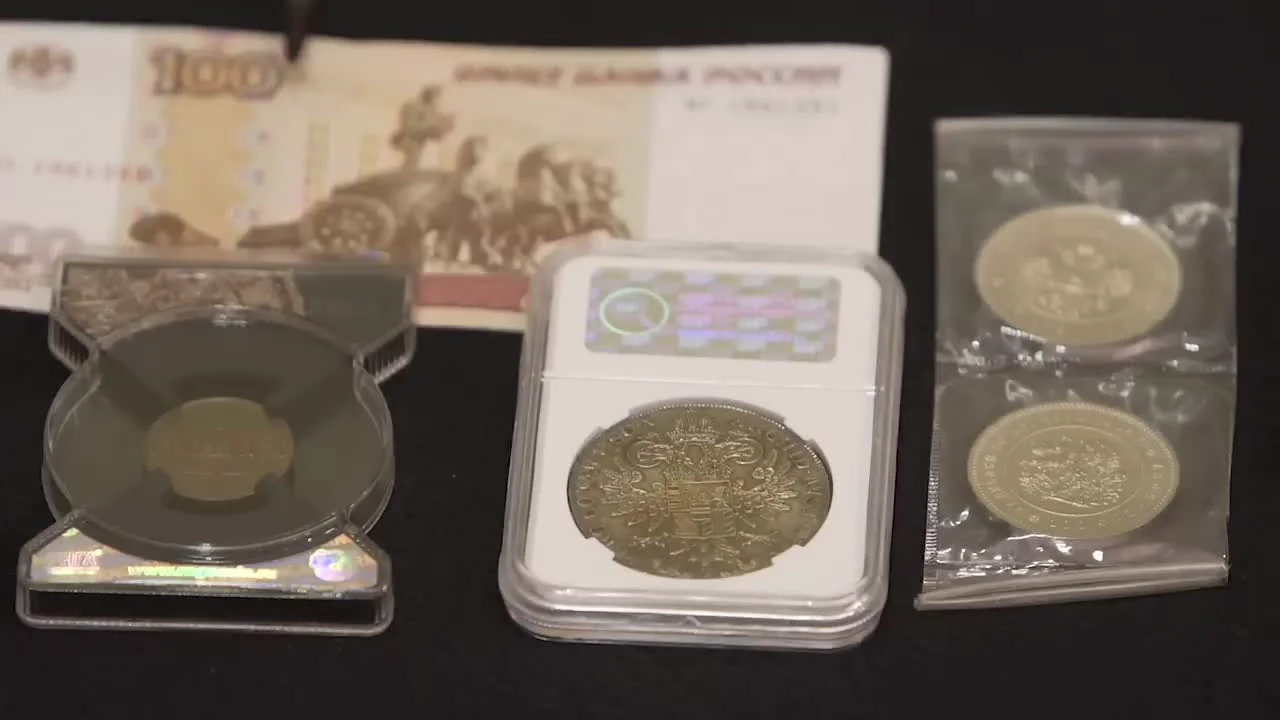
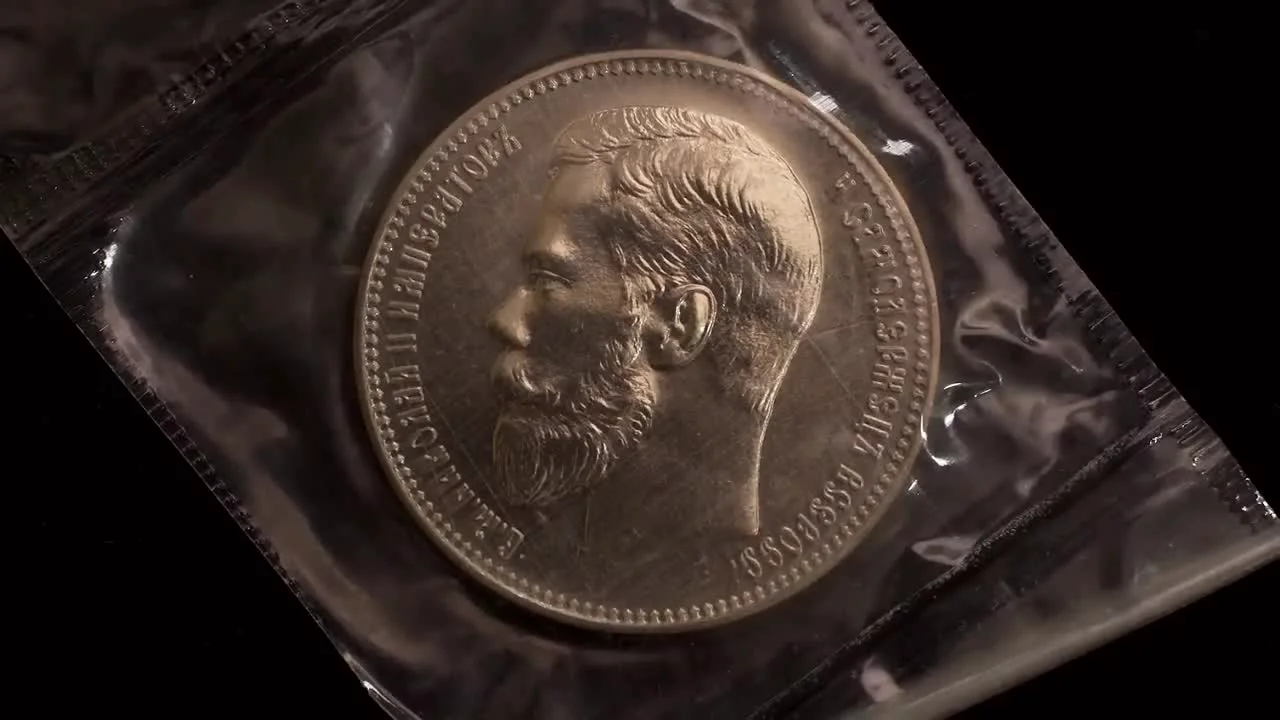
One of the most famous restrikes is the coin with a dual denomination of 37 rubles 50 kopeks and 100 francs from 1902. The original coins were issued in a limited mintage (about 200 pieces) specifically for a Russo-French conference and were intended for its participants. The coin was later restruck by special order and to commemorate anniversaries of the event, bringing the total mintage to 330-350 examples.
The odd denomination is explained by Russia's participation in the Latin Monetary Union since 1886. Before Witte's reform, 5 Russian rubles were equivalent to 20 French francs, thus 100 francs were equivalent to 25 rubles. After the reform, the weight parameters of gold coins changed by a factor of 1.5, and the equivalent of 100 francs became 37.5 rubles.
There are restrikes of this coin issued in the Soviet era or in the 1990s. They differ from the original in material—they were struck from a copper-nickel alloy, not gold. This is a key difference that prevents collectors from being deceived, as the coin does not imitate a precious metal.
Example #2: The '37 Rubles 50 Kopeks – 100 Francs' Coin of 1902
The Key Difference from a Counterfeit
A restrike made at a mint from a non-precious metal does not aim to deceive. However, other versions exist: for example, gilded variants of such copper-nickel restrikes. These items, altered by non-official means, are already considered counterfeits, as their purpose is to pass off a cheap metal as gold.
Furthermore, there are outright forgeries—high-quality counterfeits of the original gold coin made by private craftsmen. Such examples are very dangerous for collectors. Therefore, when purchasing rare and expensive coins, it is crucial to seek advice from trusted specialists and experts.