A Collector's Puzzle: Originals or Skillful Fakes? - AUCBURG | AUCBURG
A Collector's Puzzle: Originals or Skillful Fakes?
A controversial situation arose on an online marketplace concerning several lots. After public comments pointed out signs of forgery, the sellers, lacking counterarguments, blacklisted the commenter and relisted the items. This allowed them to eliminate critical comments and hide information from potential buyers.
A controversial situation arose on an online marketplace concerning several lots. After public comments pointed out signs of forgery, the sellers, lacking counterarguments, blacklisted the commenter and relisted the items. This allowed them to eliminate critical comments and hide information from potential buyers.
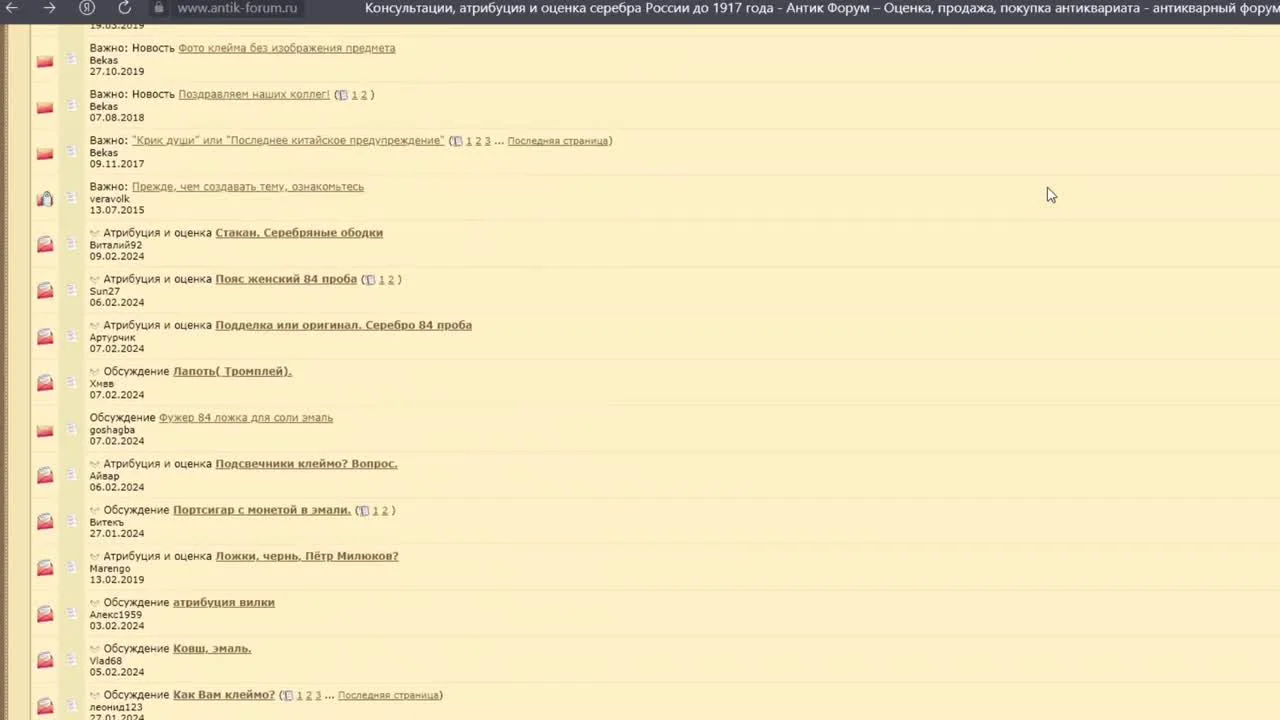
In one instance, messages about the forgery and the seller's response disappeared from under the listing. Subsequently, two disputed items—a silver goblet and a spoon—were submitted for authentication on the 'Antik-Forum.' There, active experts confidently declared both items to be genuine.
Moreover, one expert quickly identified the maker as Itsko Lozinsky. The seller likely used a link to this assessment to convince the marketplace moderators of the items' authenticity, after which the critical comments were removed. This situation sets a precedent that demands a more thorough examination of the items themselves.
Analysis of the 1883 Silver Goblet: Issues with Hallmarking
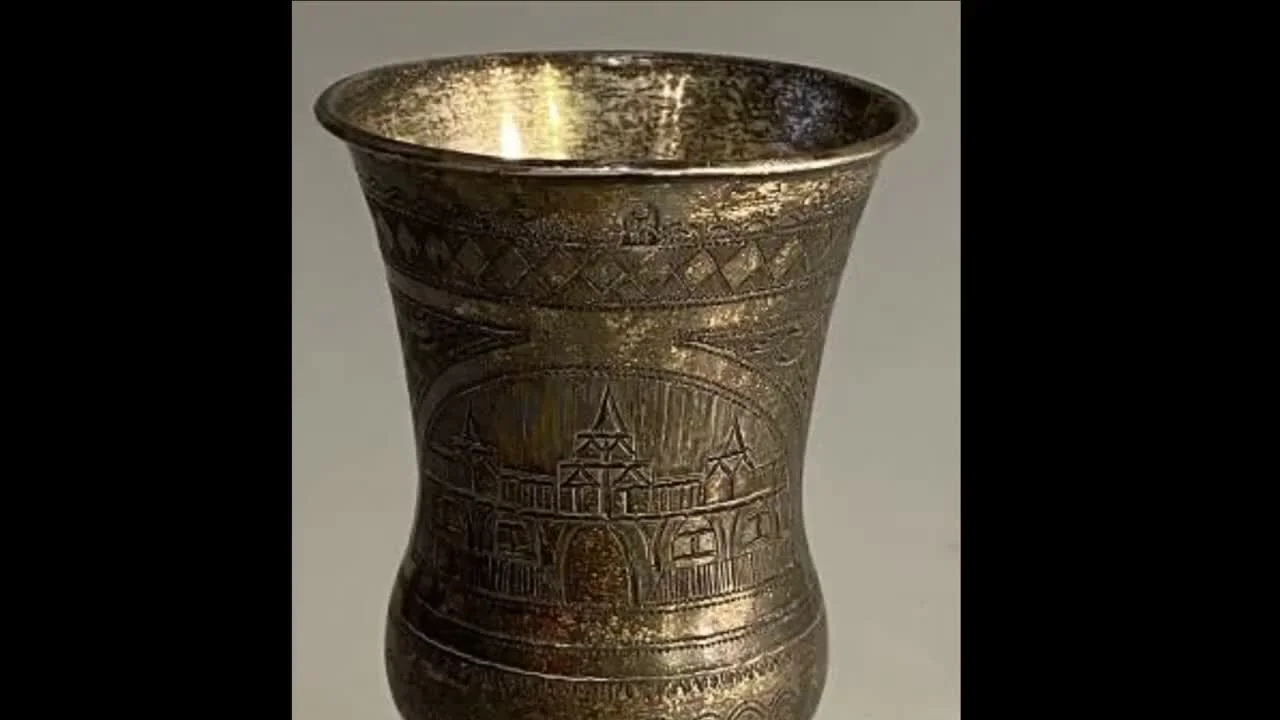
The first item is an antique 84 zolotnik silver goblet, dated 1883. On its side, directly on the carved pattern, there is a hallmark of the Moscow assay office, which was in operation from 1883 to 1886. However, a detailed examination reveals serious inconsistencies with the hallmarking rules of the period.
The main signs that cast doubt on the authenticity of the hallmarks are:
The mandatory assayer's mark is missing. In 1883, this position was held by Viktor Savinkov, and his mark 'V-S' should have been present.
The jeweler's maker's mark is missing. According to the rules, the assay office mark and the master's mark were placed next to the maker's mark.
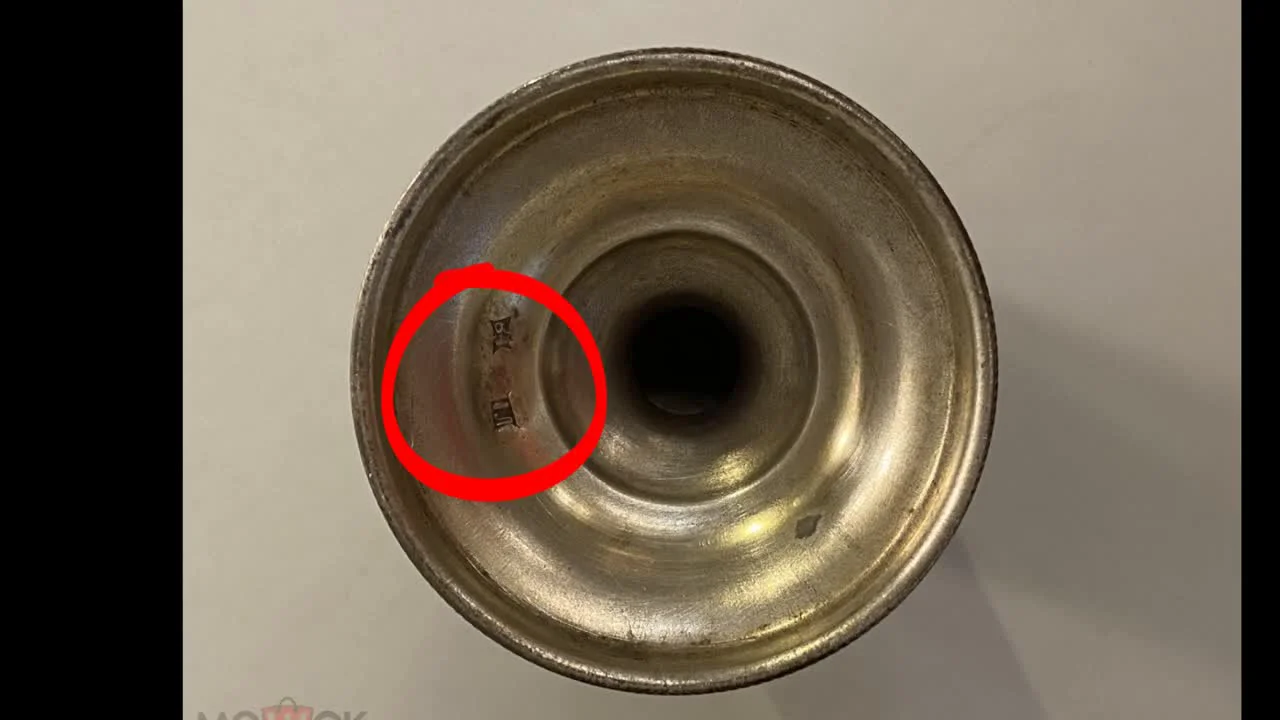
On the bottom of the goblet, there is a '84' mark and a maker's mark 'IL', but again, the assay office and assayer's marks are missing.
Thus, the marks that are supposed to confirm state quality control of the silver were applied in violation of established regulations, which is the first serious reason to doubt the item's authenticity.
Analysis of the 1883 silver goblet: issues with hallmarking
Technological Inconsistencies of the Goblet
In addition to hallmarking violations, the goblet's manufacturing technique itself suggests it is a forgery. The hallmark impression looks blurry, unlike the crisp original examples from the same period. The outlines of the letters, numbers, and the mark's border are uneven, and the top of the relief image merges with the contour. The base of the impression has convex metal bumps, which is not typical for a struck mark that leaves a flat surface.
These signs suggest the hallmark was not struck but is likely part of an electrotyped copy. This is also indicated by the uneven patina, appearing as small dots across the entire surface. The mold for the copy was probably taken from a genuine item with stippling, which turned into a bumpy surface due to low-quality production.
On the goblet's exterior, in the small details of the pattern, traces of a white substance are visible—remnants of the electrotyping mold material. The hallmarks on the base of the stem also exhibit identical distortions in the form of concave walls, which points to a distorted copying mold.
Technological Inconsistencies of the Goblet
Examination of the Salt Scoop: Production Defects
The second item, deemed authentic by experts, is an antique 84 zolotnik silver salt scoop with enamel. The pressing method for manufacturing spoons, which has been used for over 200 years, ensures perfect symmetry. However, this specimen is asymmetrical: the left and right sides of the bowl have different thicknesses.
The inner surface of the bowl is covered with pits—defects characteristic of electrotyping. An attempt was made to hide them with crude mechanical finishing, the traces of which are clearly visible. Additionally, remnants of a hallmark are visible on the right side of the bowl, which someone also tried to remove with an abrasive tool.
The outer surface of the spoon and handle is decorated with a filigree-style pattern. However, the soldering marks, mandatory for this technique, are missing. This means the pattern was not applied separately but is part of a single cast piece, which also indicates the item was made via a copying method, not with traditional jewelry technology.
Examination of the salt scoop: production defects
Signs of Forged Enamel and Hallmarks
The enamel draws particular attention. Genuine hot enamel is a glass-like powder of uniform color that maintains its color throughout when chipped. On this spoon, a cheap, light-brown epoxy resin, coated with peeling paint, was used instead of enamel. The underlying material is visible where it has chipped.
The craftsman who applied the 'enamel' was sloppy: drops of glue and fixed remnants of the white substance from the electrotyping mold, which were not cleaned off, remain on the surface. These traces can be found in the hollows of the pattern.
The blurry fake hallmark on the spoon cannot be discussed in detail due to the poor quality of the photos, but combined with the other signs, it completes the overall picture of a forgery.
Signs of forged enamel and hallmarks
Conclusions: Obvious Signs or Authoritative Opinion?
The listed signs of forgery on both items call into question the brief and confident conclusions about their authenticity made by the 'Antik-Forum' experts. Numerous technological flaws, hallmarking discrepancies, and the use of non-authentic materials clearly indicate that the goblet and spoon are fakes produced by electrotyping.
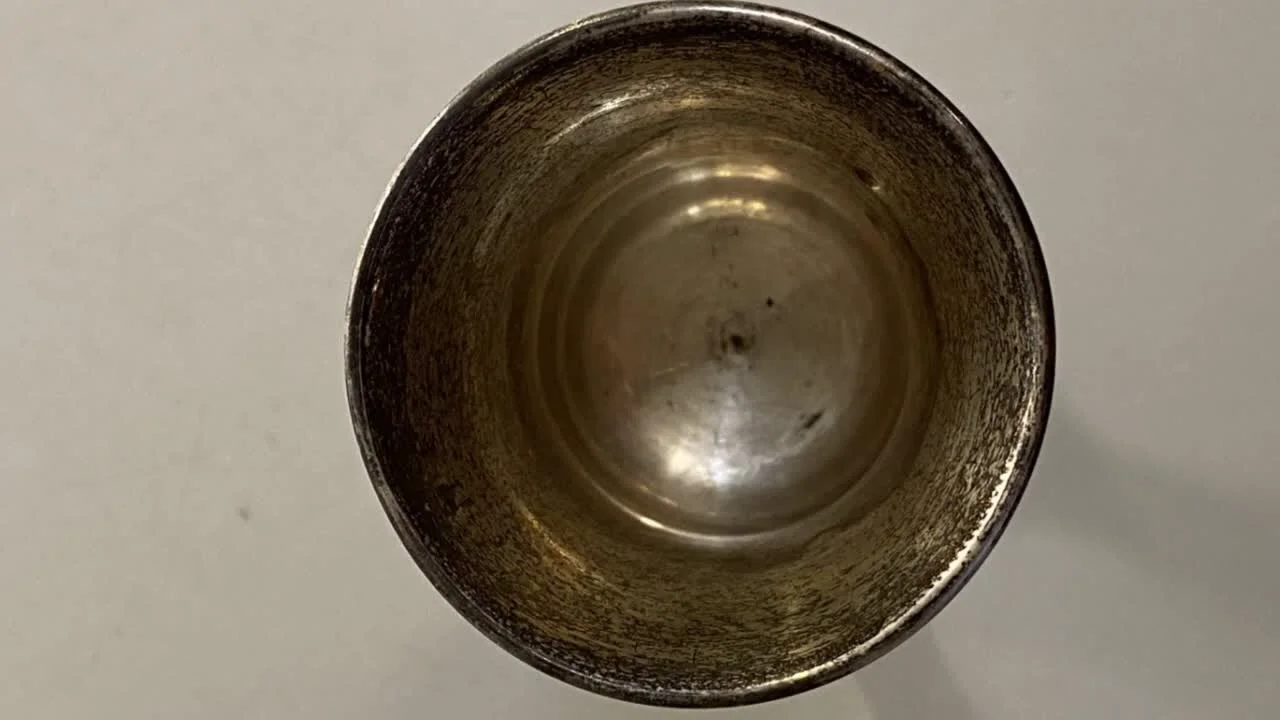
The inner surfaces of both the goblet and the spoon bear clear marks of mechanical finishing intended to conceal casting defects. Subsequent polishing failed to hide these marks on the soft and malleable pure silver, leaving behind irrefutable proof.
This presents a puzzle: what is the decisive factor in an item's attribution—a detailed technological analysis or the brief verdict of a group of respected experts? Based on the facts presented and the photographs provided, you can draw your own conclusion as to whether these lots are genuine antiques or forgeries.
Conclusions: Obvious Signs or Authoritative Opinion?