Overview of US Coins from the 1960s-1980s: From Cents to Silver Dollars - AUCBURG | AUCBURG
Overview of US Coins from the 1960s-1980s: From Cents to Silver Dollars
The review begins with the smallest denomination coins. The first one presented is a 1-cent coin from 1988. This coin was received as a gift and kept in an album. The obverse features a portrait of Lincoln. The specimen's condition is considered fair, and its edge is smooth. A distinctive feature of American coins is their 'coin alignment,' meaning the obverse and reverse are rotated 180 degrees relative to each other.
The review begins with the smallest denomination coins. The first one presented is a 1-cent coin from 1988. This coin was received as a gift and kept in an album. The obverse features a portrait of Lincoln. The specimen's condition is considered fair, and its edge is smooth. A distinctive feature of American coins is their 'coin alignment,' meaning the obverse and reverse are rotated 180 degrees relative to each other.
Next is a 5-cent coin from 1978. This specimen comes from an old collection assembled by the current owner's father in his youth. The coin depicts a portrait of Jefferson. It has a smooth edge and shows noticeable signs of long circulation.
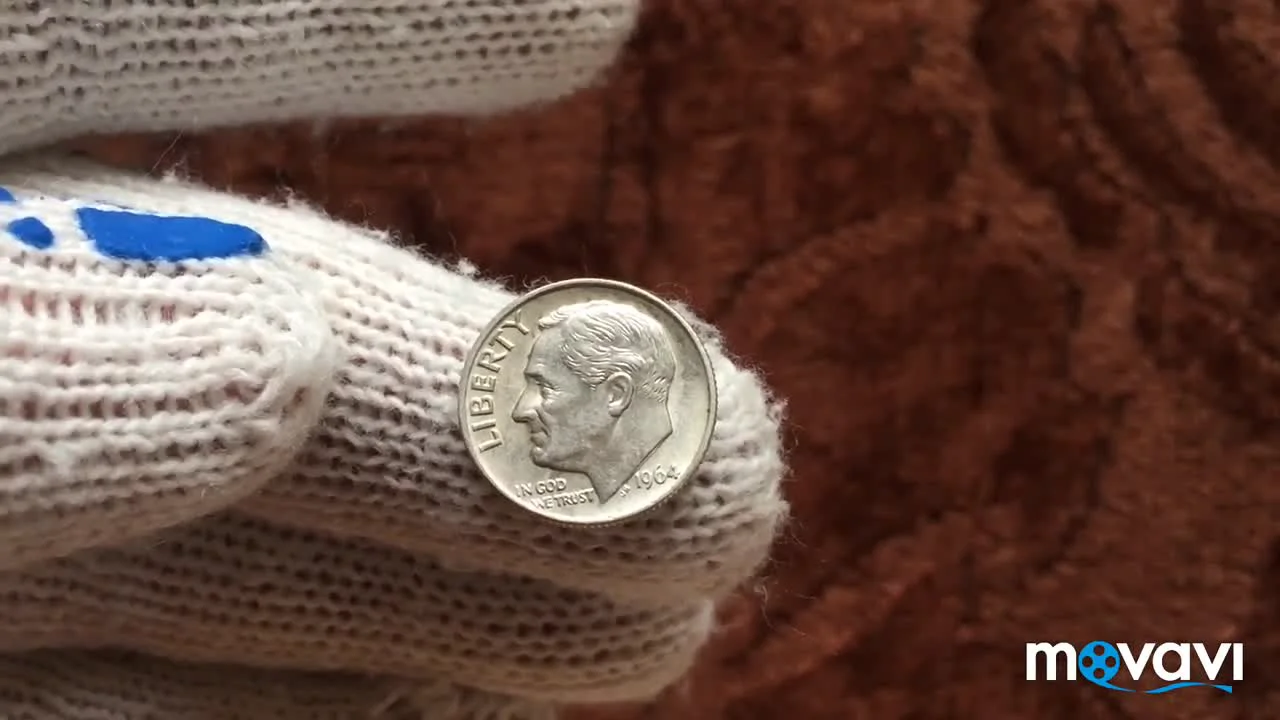
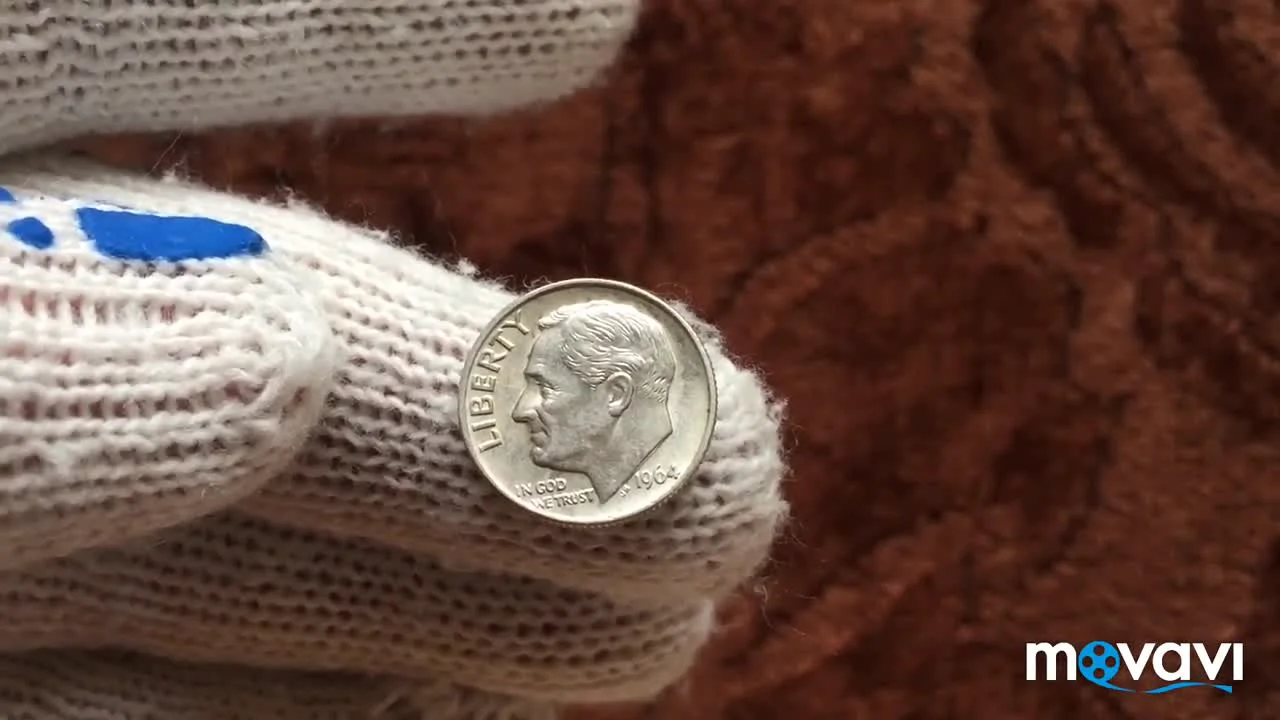
The 1964 Silver Roosevelt Dime
Characteristic
Value
Denomination
1 dime (10 cents)
Year of issue
1964
Material
90% Silver
Weight
2.5 grams
Edge
Reeded
Image
Franklin Roosevelt
The 1-dime (10-cent) coin from 1964 holds a special place in the selection. This coin was purchased at a numismatic shop for 170 rubles. Despite its small size, even smaller than a one-cent coin, it holds significant value for collectors.
The main feature of this dime is its material. The coin is made of 90% silver. The specimen is in excellent condition, with all the details of Roosevelt's portrait clearly defined. 1964 was the last year dimes were minted from silver. Starting in 1965, a copper-nickel alloy was used for their production.
1964 Silver Roosevelt Dime
The Washington Quarter and Copper-Nickel Coins
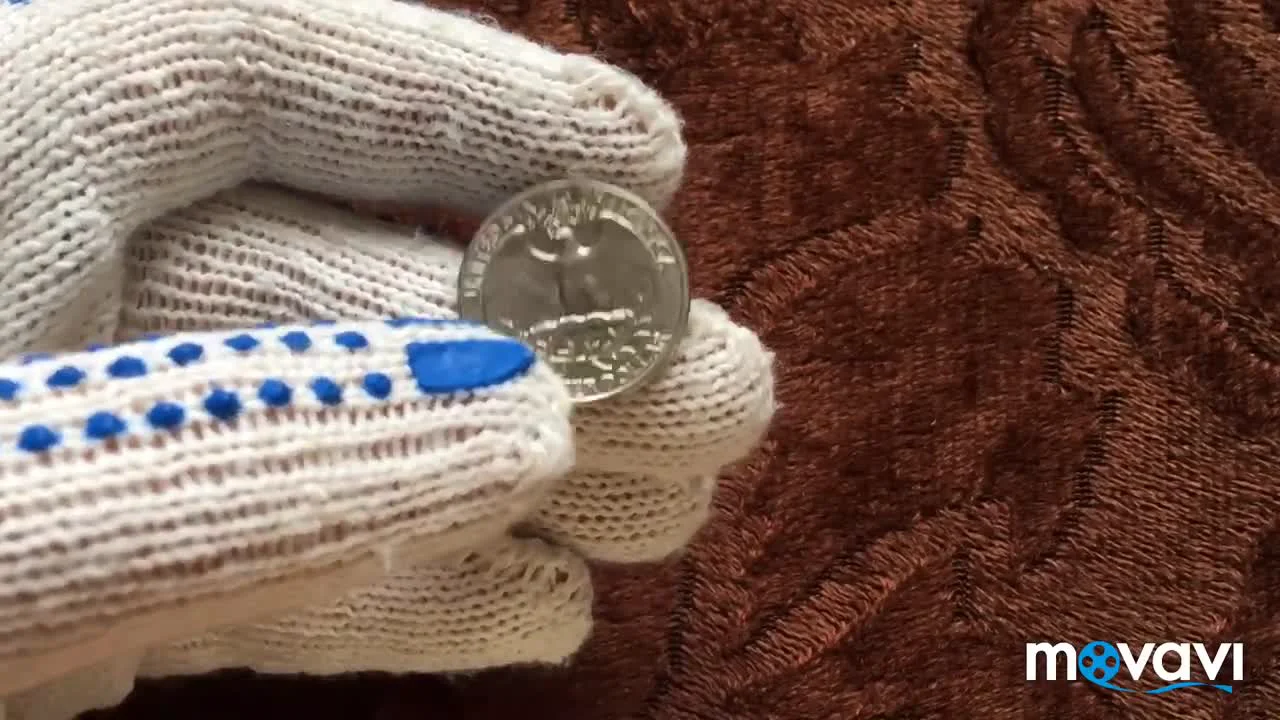
The collection also includes a quarter, or 25-cent coin, from 1977. This specimen, like some others, came from the father's collection. The obverse of the coin features a portrait of Washington, and the reverse shows a bald eagle, the symbol of the USA.
The coin is made of a copper-nickel alloy, which is typical for US circulating coins of this period. The quarter has a reeded edge. It is noted that the design of American coins featuring an eagle is particularly beautiful and appealing to collectors.
Washington Quarter and copper-nickel coins
Kennedy Half Dollars: A Comparison of Different Years
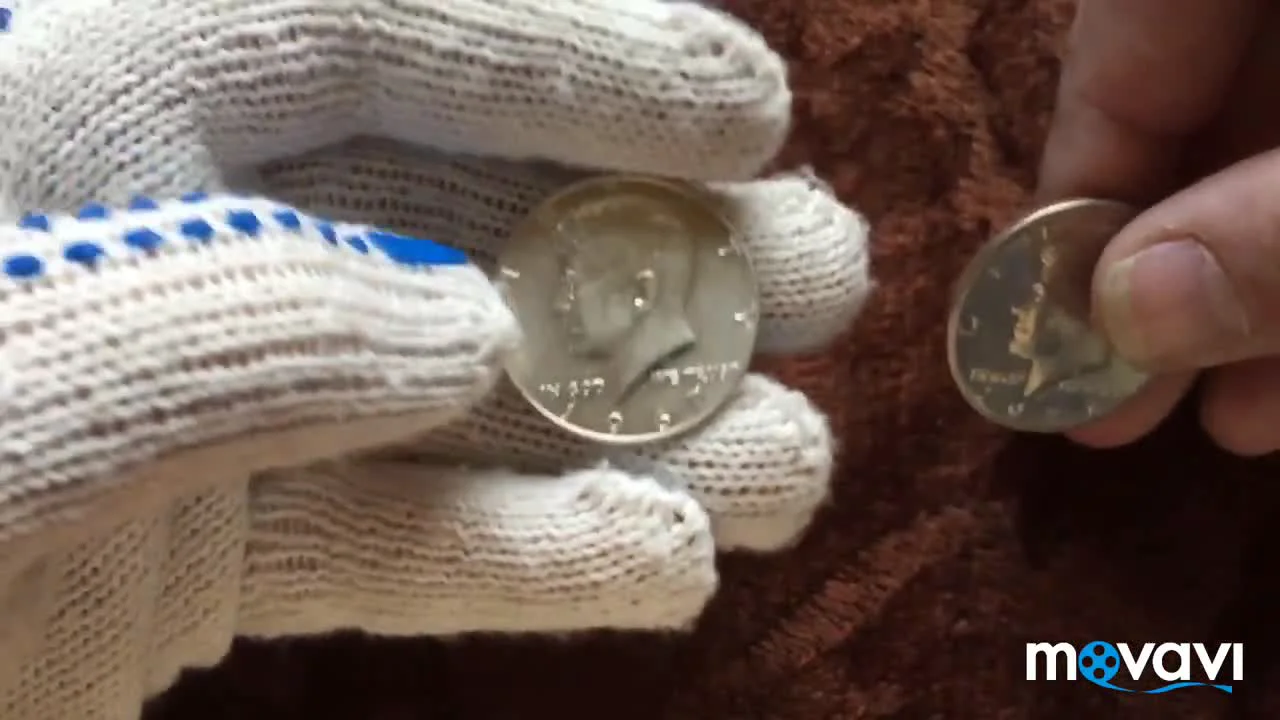
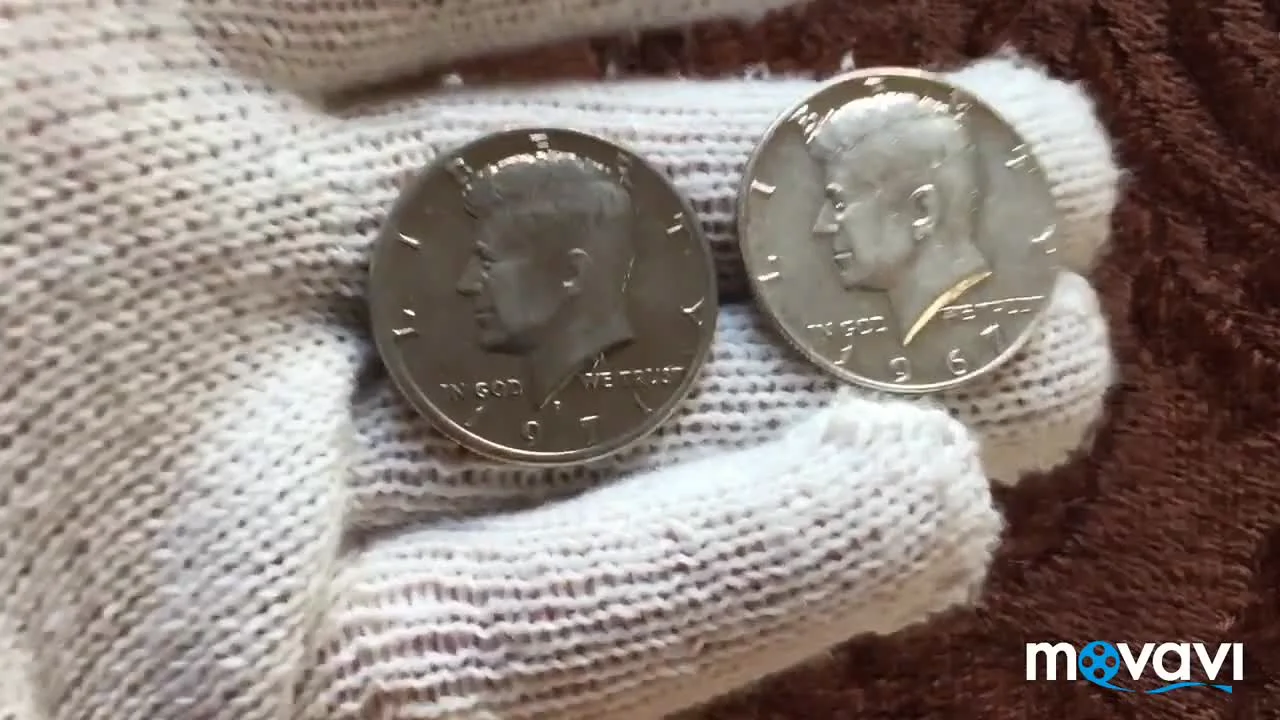
The selection includes two 50-cent coins featuring a portrait of John F. Kennedy: from 1971 and 1967. The 1971 coin, from the father's collection, is made of copper-nickel. The 1967 coin was purchased for 280 rubles and is made of 40% silver.
Comparing the two coins reveals differences in the strike. On the 1967 silver coin, Kennedy's portrait appears larger and more prominent. Meanwhile, on the 1971 copper-nickel coin, the rim is noticeably wider, and the portrait is smaller. Also, the 1971 coin has a 'D' mint mark, indicating it was minted in Denver, whereas the 1967 coin has no mint mark, which means it was struck in Philadelphia.
Kennedy Half Dollars: A comparison of different years
History of Silver Content in Kennedy Coins
The minting history of the Kennedy half-dollar is interesting from the perspective of its changing metal composition. These coins were first issued in 1964, and the first release was special.
1964: The coins were minted from 90% silver. These specimens are more valuable, with their cost potentially reaching 650-700 rubles.
1965-1970: The silver content was reduced to 40%. The 1967 coin discussed belongs to this period.
From 1971 onwards: Coins of this denomination began to be minted from a copper-nickel alloy, completely abandoning silver in regular issues.