Signs of Authenticity and Forgery of Silver Hallmarks from 1908-1917 - AUCBURG | AUCBURG
Signs of Authenticity and Forgery of Silver Hallmarks from 1908-1917
The last state hallmark of the Russian Empire, used from 1908 to 1917, is distinguished by its complex execution, which makes it difficult to forge even with modern technologies. The original hallmarks were created by engravers of the Mint, and their craftsmanship is still difficult to replicate.
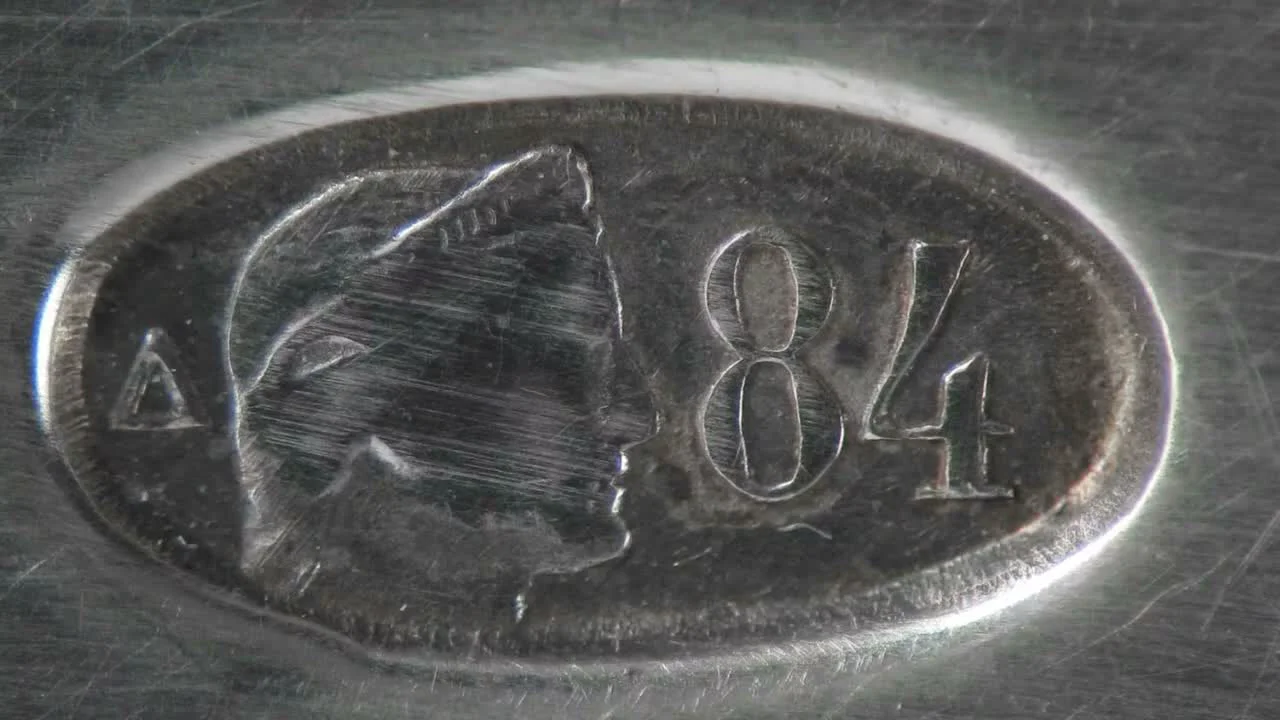
Profile of a woman in a kokoshnik, with her head turned to the right.
Assay Office Mark
Located to the left of the profile, it is one of the letters of the Greek alphabet, indicating a specific assay district.
Fineness Mark
The fineness numbers (e.g., 84) are located to the right of the profile.
Shape
An indented oval, protecting the hallmark from wear.
The last state hallmark of the Russian Empire, used from 1908 to 1917, is distinguished by its complex execution, which makes it difficult to forge even with modern technologies. The original hallmarks were created by engravers of the Mint, and their craftsmanship is still difficult to replicate.
The hallmark is an indented oval, which ensures its preservation even with prolonged use of the item, as it is recessed and less susceptible to wear. Even on worn items, the main proportions and details of the design remain distinguishable.
Geometric Rules of Authenticity
To determine the authenticity of a hallmark, there are several key rules based on the strict geometry and proportions of its elements. These rules are practically impossible to adhere to in artisanal forgeries, making knowledge of them a reliable tool for appraisal.
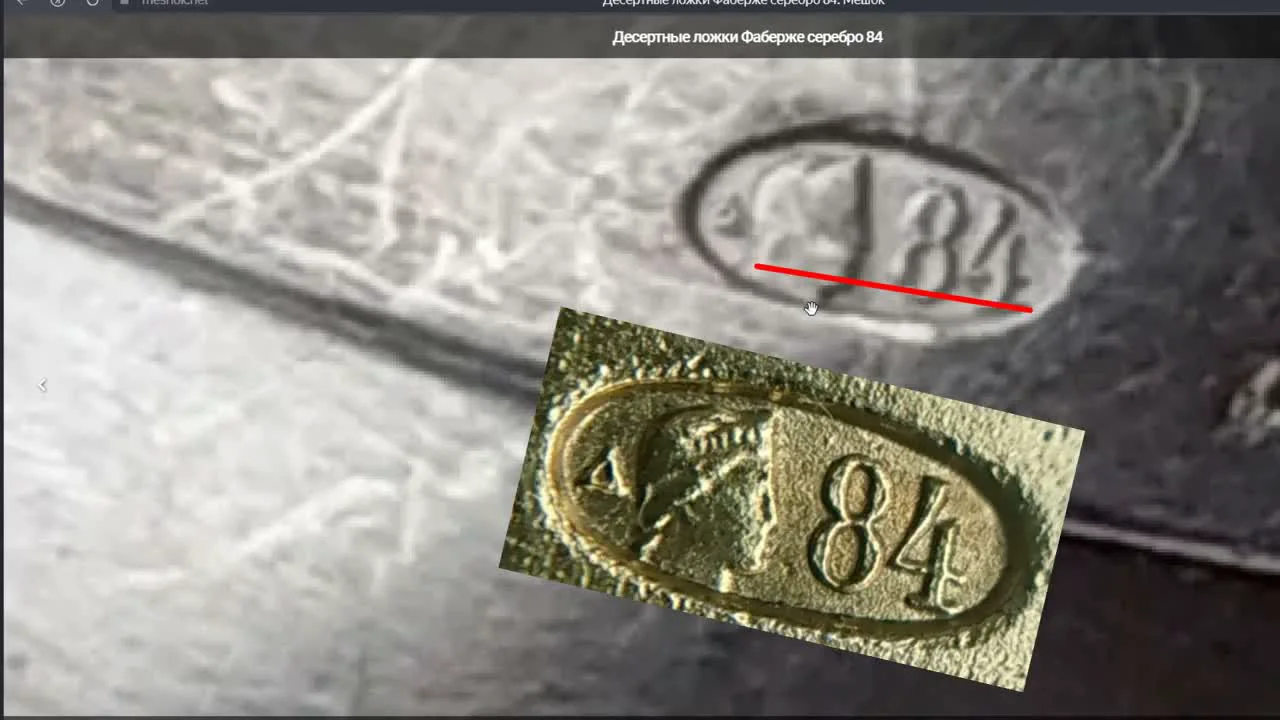
Checking the alignment of the hallmark elements along imaginary axes allows for the quick identification of inconsistencies characteristic of fakes. On forged hallmarks, these proportions are almost always violated.
Key features of an authentic hallmark:
Lower horizontal axis. The horizontal bar of the number '4' is aligned with the tip of the woman's nose and the base of the Greek letter.
Neck vertical. The right side of the woman's neck forms an almost straight vertical line, perpendicular to the hallmark's border.
Lower braid curl. The lowest curl of the woman's braid never touches the bottom border of the oval hallmark.
Geometric rules of authenticity
Common Defects in Forged Hallmarks
Forged hallmarks, despite their external similarity, always contain a number of characteristic errors that betray their origin. These defects are related to both the manufacturing technology and the forgers' inattention to detail.
One of the common signs of forgery is the distortion of numbers. For example, the number '8' on fakes often has a noticeable curve along its vertical axis, which is impossible to achieve with a state-issued punch.
The number '4' is often positioned lower than it should be, its crossbar not aligning with the woman's nose line.
On forgeries, the top of the number '4' lacks the characteristic cut, and the lower part has no volume.
On forged hallmarks, the five raised vertical lines in the woman's kokoshnik are often missing, or conversely, extra lines are engraved.
On forgeries, the woman's facial features are often distorted: the nose might appear to 'grow' out of the eye, and the chin juts out disproportionately, resembling a boxer's mouthguard.
Common defects in forged hallmarks
Technological Discrepancies in Forged Items
Besides fake hallmarks, forged items often have other technological discrepancies. Producers of forgeries often use electrotyping or casting, which leads to characteristic defects.
For example, the surface of items made by electrotyping is often porous, with pits and cavities. To hide these defects, the surface is subjected to harsh mechanical processing, the traces of which are clearly visible. The relief on such items also appears 'blurry,' without sharp contours.
Another example is a glass holder (podstakannik). Authentic items of this shape were made by pressing, and the handle was an integral part of the body. On the forgery, however, the handle is crudely soldered on, violating symmetry and style, which is technologically incorrect. The forgers were also unable to bend the handle to the shape of the item due to the brittleness of the electroplated silver and left it hanging in the air.
Technological discrepancies in forged items
Fake Enamel and Other Tricks
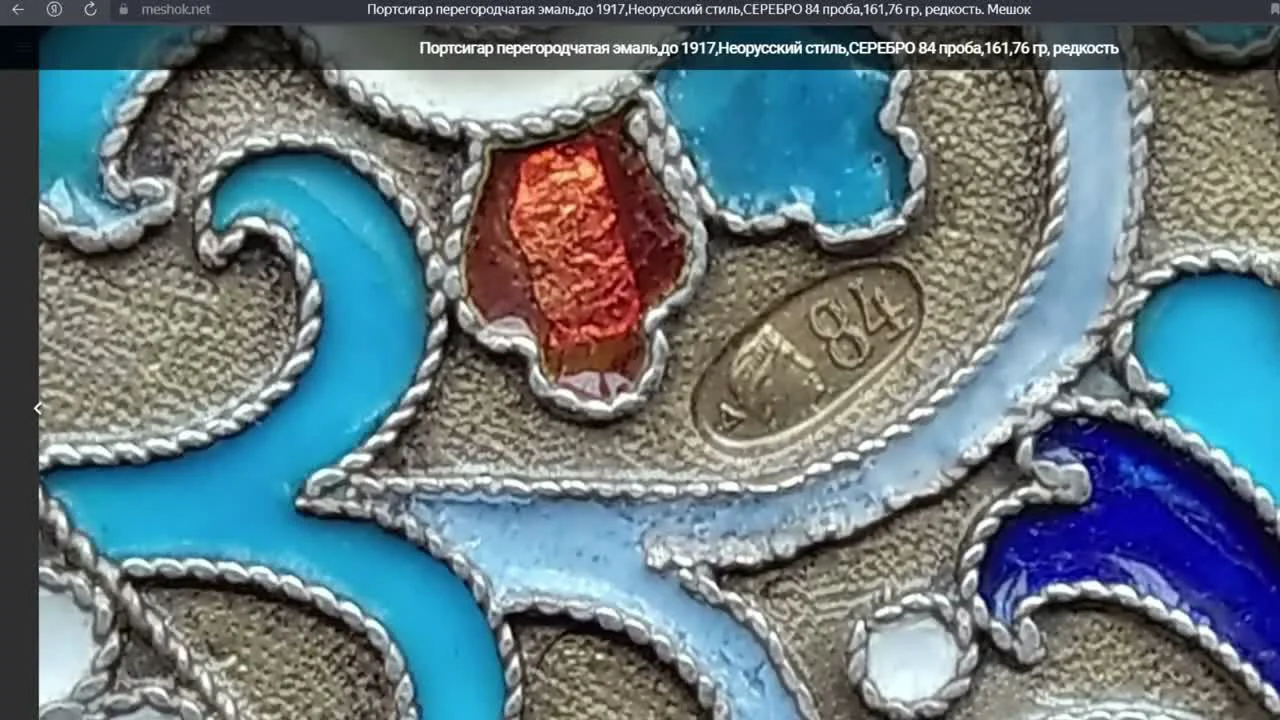
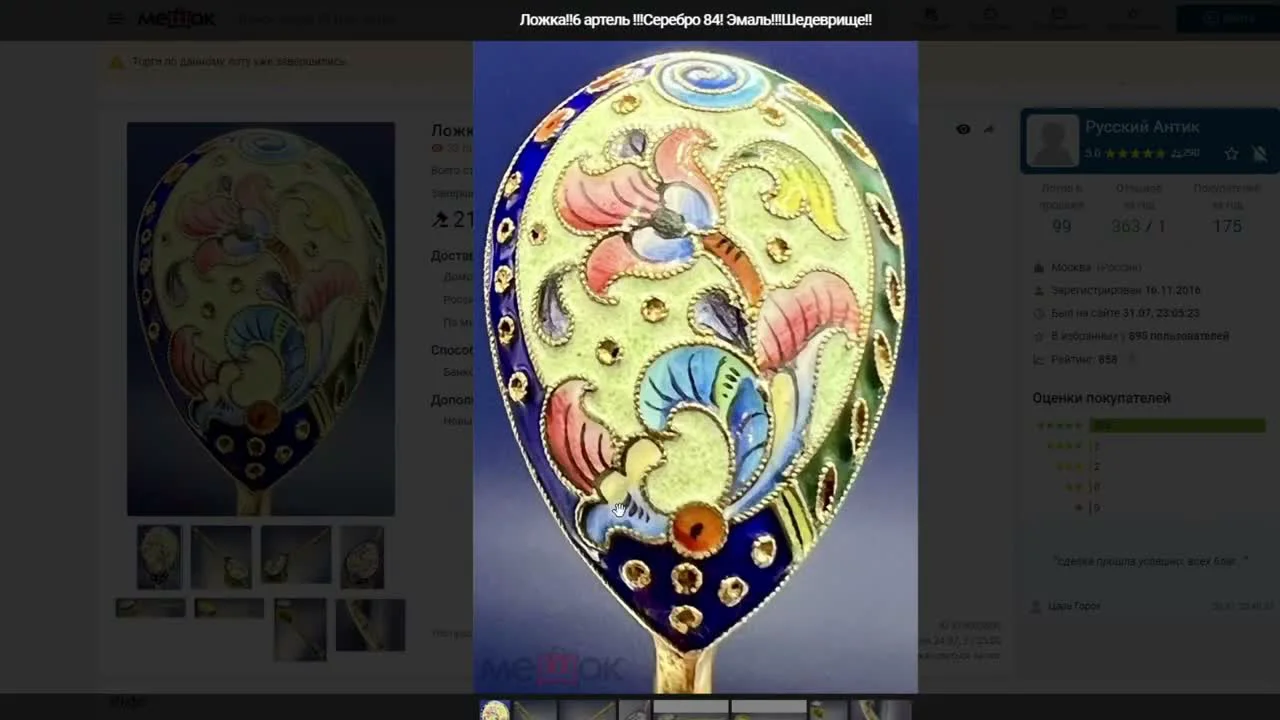
Forgeres often fake silver items with enamel, but instead of the laborious and expensive hot enamel, they use cheap substitutes, such as colored epoxy resin or polymer paint. Such material is easy to distinguish from genuine enamel.
Hot enamel is comparable in hardness to glass, and it is quite difficult to leave mechanical damage on it. Epoxy resin, on the contrary, is a soft and pliable material on which scratches and marks from any impact are easily left. Furthermore, liquid paint or resin often bleeds over the partitions, which does not happen when working with powdered hot enamel.
'Assembled' fakes are also common. For example, to create a fake icon, authentic but trimmed halos (venets) are used, which do not fit the size of the newly made oklad (icon cover). In the process, part of the canonical inscriptions is cut off, which is a gross violation and a clear sign of a forgery.
Fake enamel and other tricks
How the Forgery Market Operates
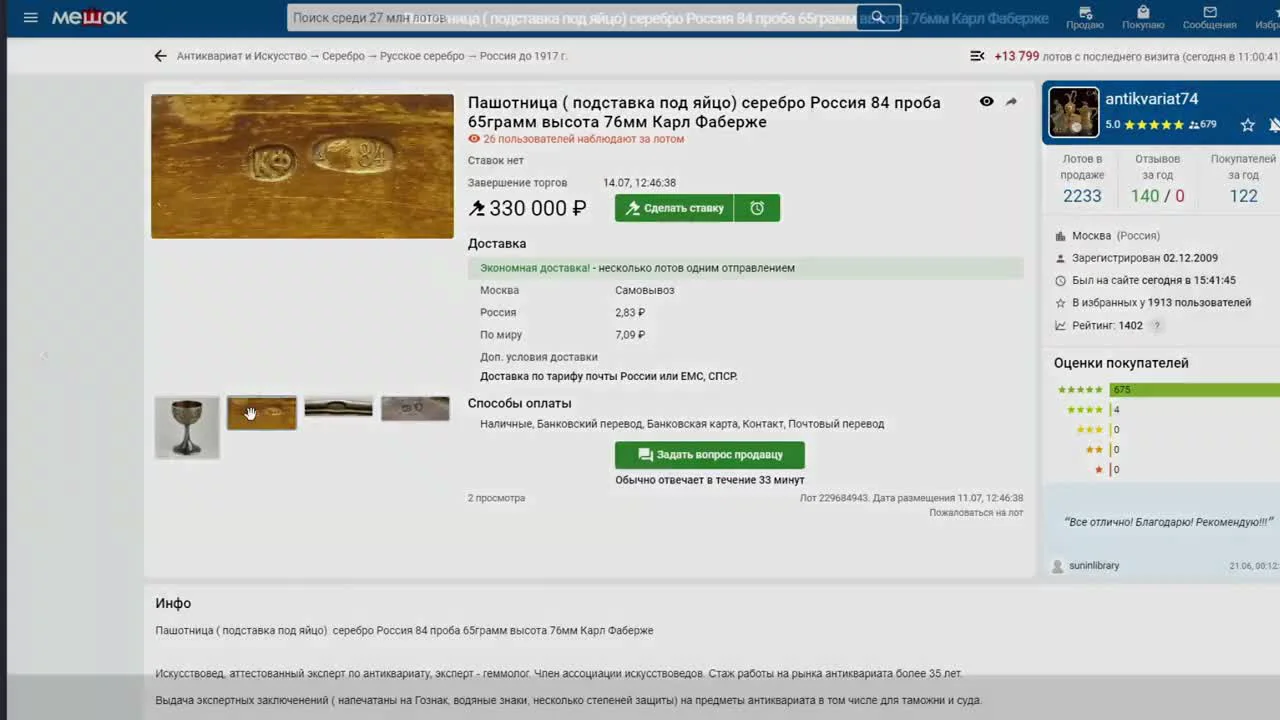
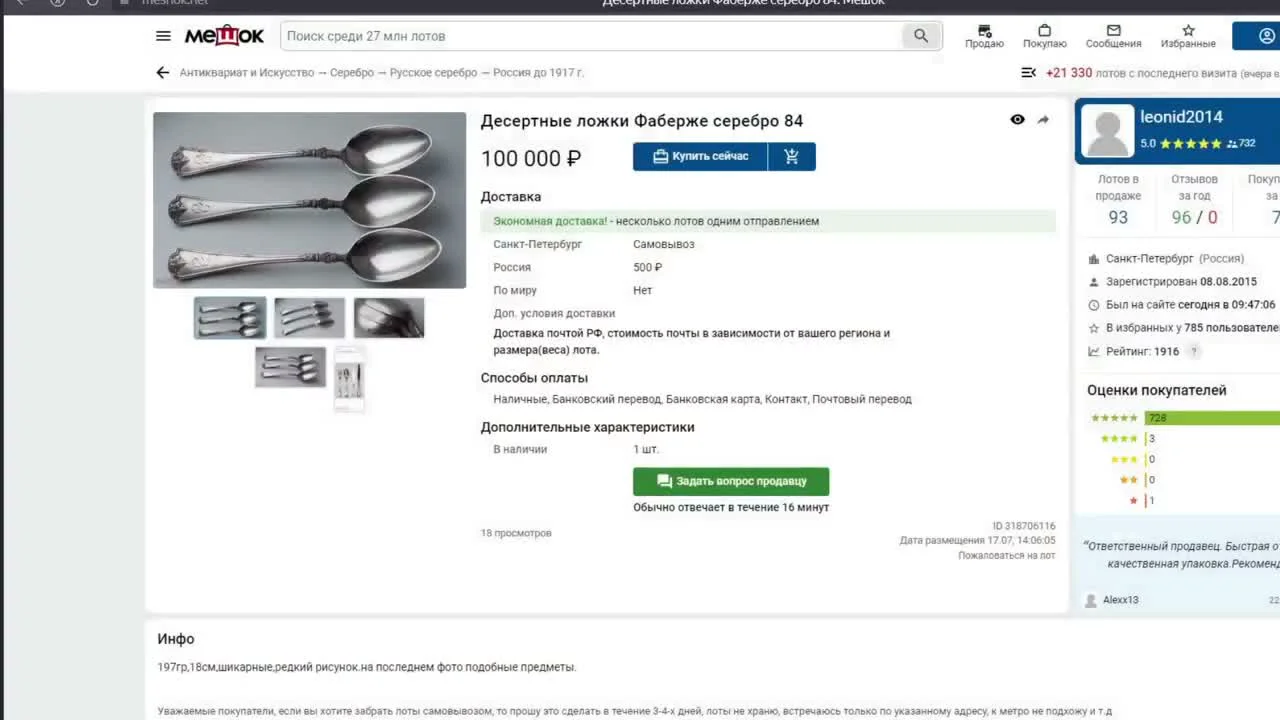
Dealers in forgeries often use grand words in their lot descriptions, such as 'masterpiece,' 'rarity,' 'tsarist,' 'top,' 'museum quality.' These terms are a kind of code, signaling that the buyer is most likely looking at a fake.
Often, such sellers disguise their goods by stating 'imitation hallmarks' in the description. This is a legal loophole to avoid fraud accusations, but the essence remains the same—a fake antique is being sold. The administration of trading platforms often supports such sellers, as they pay to advertise their lots (promo-lots).
Buyers of such 'antiques' are often people looking to purchase an exclusive gift for high-ranking individuals. Assistants, who are not knowledgeable on the subject, search the internet for 'antique gift' and find such offers, unaware that they are buying a crude forgery at an inflated price.