Investing in Historical Weapons: A Collector's Guide - AUCBURG | AUCBURG
Investing in Historical Weapons: A Collector's Guide
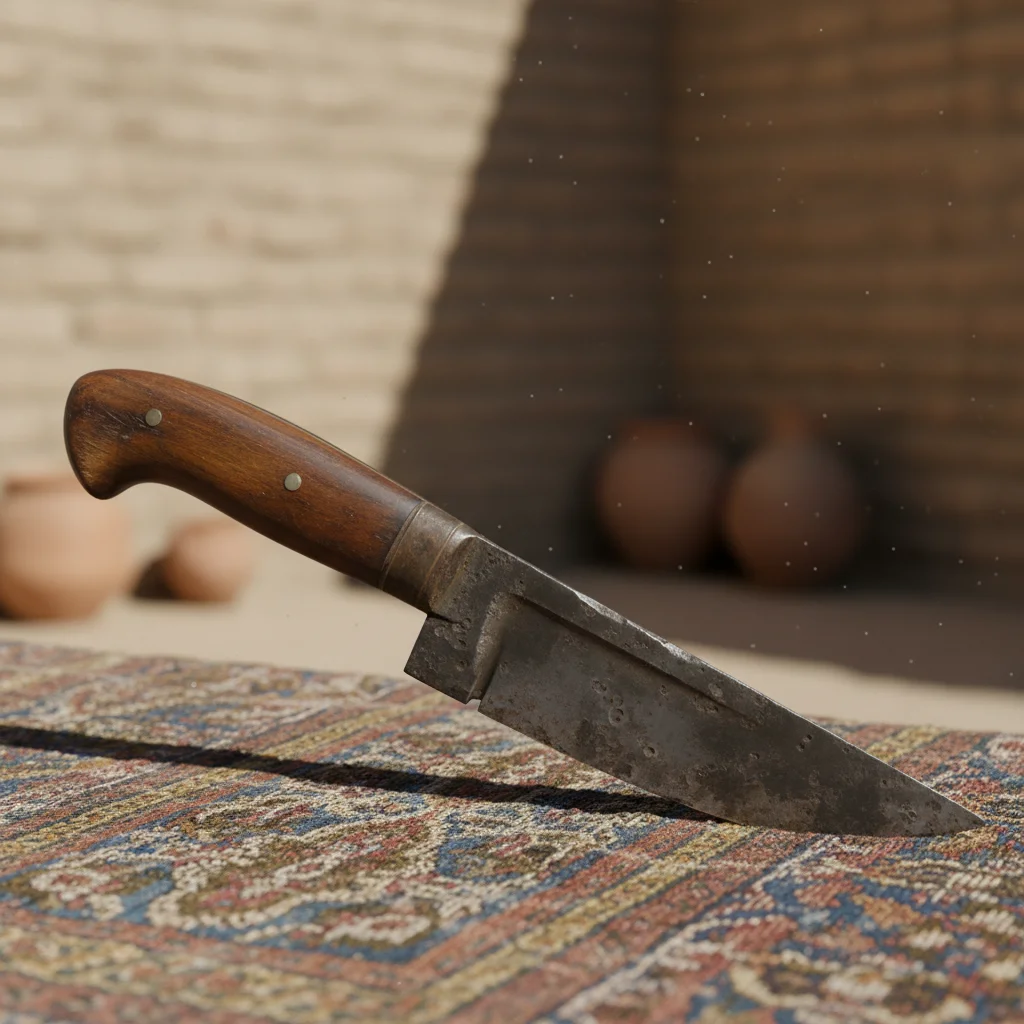
A passion for antique weapons often begins with a personal story. For example, the starting point for a large collection could be an Uzbek 'pchak' knife, a gift from a father in 1974 to celebrate starting first grade. Such an item, received during a trip to the city of Osh in Kyrgyzstan, in the Fergana Valley, becomes more than just an object—it becomes a symbol.
A Personal Story: How One Knife Started a Collection
A passion for antique weapons often begins with a personal story. For example, the starting point for a large collection could be an Uzbek 'pchak' knife, a gift from a father in 1974 to celebrate starting first grade. Such an item, received during a trip to the city of Osh in Kyrgyzstan, in the Fergana Valley, becomes more than just an object—it becomes a symbol.
Although the pchak is essentially more of a kitchen knife for cutting vegetables than a combat weapon (due to its off-center balance and obstructing 'heel'), its symbolic value can be immense. It is precisely such a personal item, the first in a collection, that can spark a lifelong passion for collecting historical weapons.
Lost Treasures: The Story of the Destruction of Historical Weapons
History knows many cases of the irreversible loss of valuable artifacts. One such episode occurred in Nagorno-Karabakh, where during a mission, weapons were confiscated from the local population for subsequent destruction.
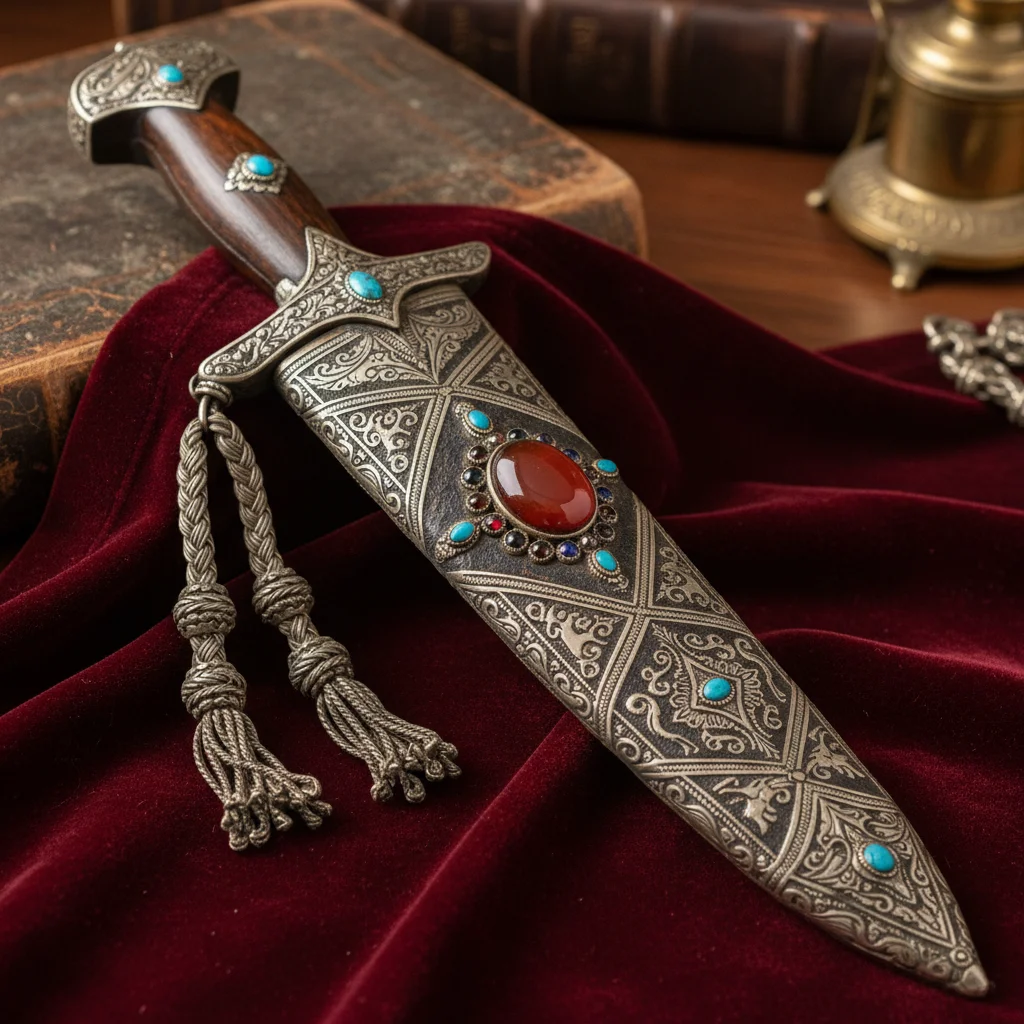
Next to the headquarters, which was located in a DOSAAF school building, a whole mountain of confiscated weapons was gathered. Unfortunately, along with modern models, a large number of historical treasures were also seized, which by today's standards would be worth a fortune. Among them were Caucasian daggers, ancient pishchals, and fusils.
Subsequently, all of this was destroyed in a barbaric manner—a T-55 tank drove over the pile of weapons several times. This incident clearly demonstrates how many unique historical items can be irretrievably lost due to a lack of understanding of their cultural value.
Lost Treasures: The Story of the Destruction of Historical Weapons
Classification of Antique Weapons
Weapon Type
Categories
Firearms
Handguns, long guns, flintlock, percussion, centerfire
Edged Weapons
Long-bladed, short-bladed
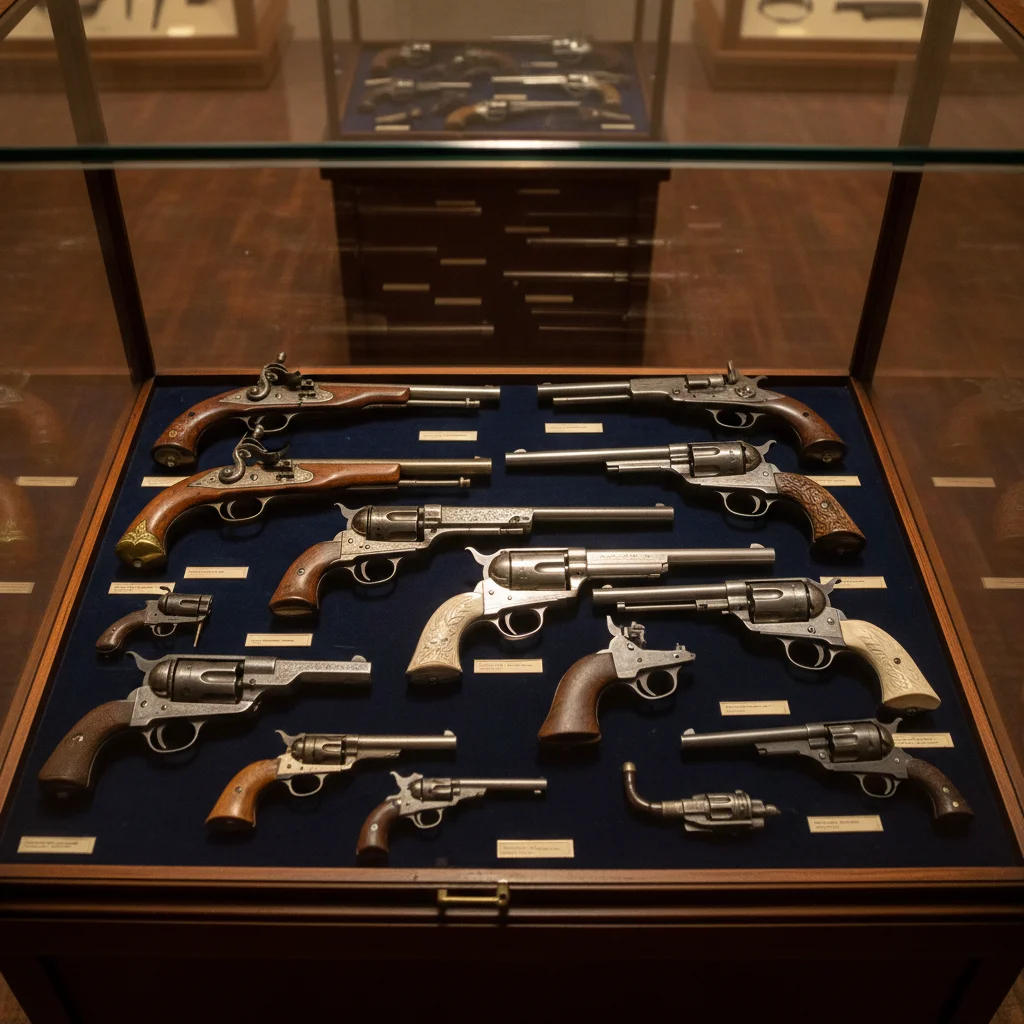
To systematize and understand the market, historical weapons can be conditionally divided into several main types and categories. This classification helps investors and collectors better navigate the wide variety of items.
The main division is between firearms and edged weapons, each of which has its own subcategories.
Additionally, weapons can be classified by other criteria: by manufacturer, country of origin, or their intended purpose. This diversity allows collectors to choose narrow and interesting areas for investment.
Classification of Antique Weapons
The Key Investment Factor: The Item's Condition
When investing in antique weapons, especially if you do not specialize in a narrow theme (such as the Caucasus or the Third Reich), the main rule is to buy items in very good condition. The condition of the item plays a decisive role in its future liquidity and value appreciation.
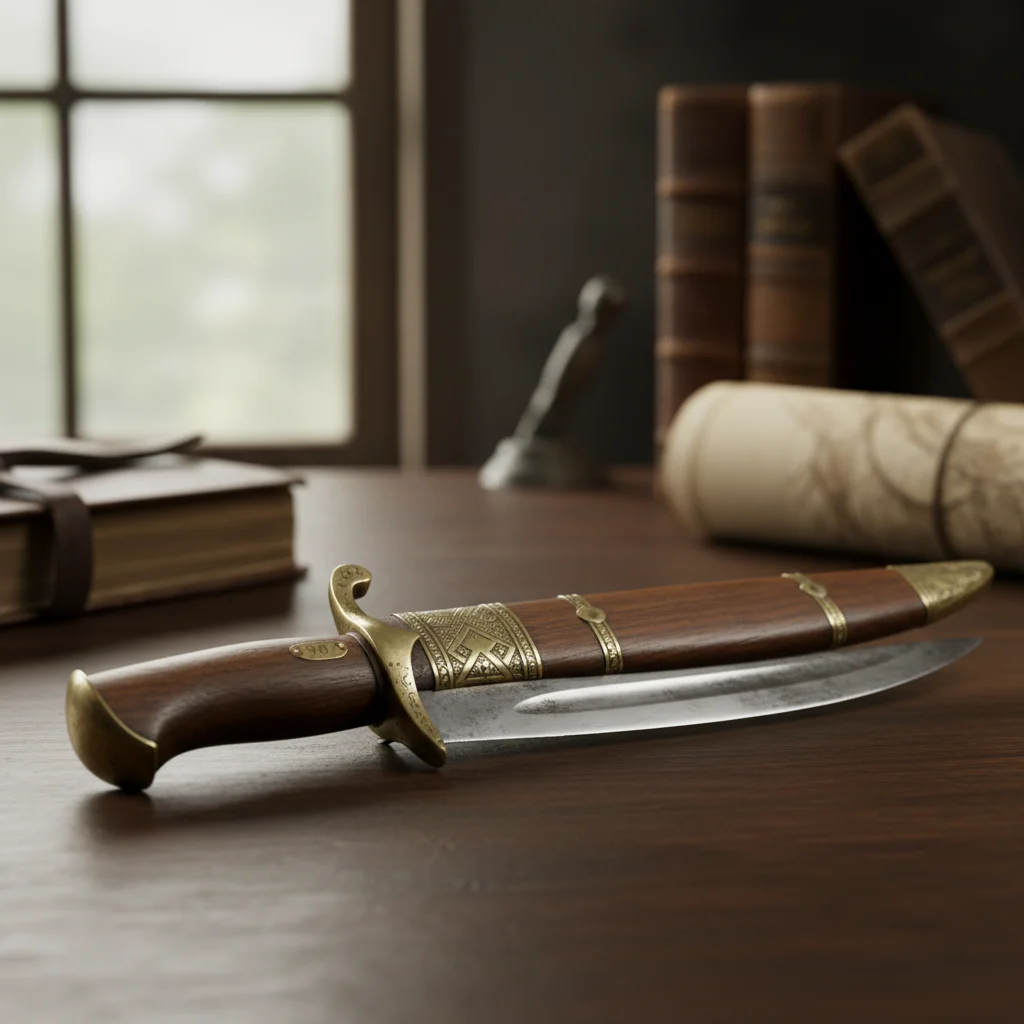
A bebut dagger, purchased at auction for 280 euros, serves as an example of a successful investment. This piece, made in Zlatoust in 1914, is in excellent condition: the blade and scabbard have acceptance marks, and even the original sword knot has been preserved. As a standard-issue weapon for privates and non-commissioned officers in the artillery and gendarmerie, its state of preservation makes it a profitable investment.
In contrast, a late 19th-century Prussian broadsword, purchased for 80 euros, is in poor condition—it is heavily rusted, and the maker's mark is illegible. Such a purchase will, at best, only allow you to recoup the initial investment but will not yield a profit. This underscores the importance of choosing items in the best possible condition.
The Key Investment Factor: The Item's Condition
Valuation and the Role of Provenance
There is no single catalog with fixed prices for antique weapons. Value is determined based on the results of past auctions and prices at arms fairs. By observing sales chronologically, one can determine an approximate price range for standard, mass-produced models.
The situation is completely different for one-of-a-kind, unique items. Weapons with carved stocks, silver fittings, gilding, or dedicatory inscriptions are valued erratically, and their price depends on many factors. In such cases, the value can be unpredictable.
Provenance—the history of an item—adds special value. If a weapon is accompanied by supporting documents, such as award certificates, excerpts from orders, historical photographs, or postcards, its investment appeal and value increase significantly.
Valuation and the Role of Provenance
Military Uniforms and Paraphernalia as Collectibles
Besides the weapons themselves, military uniforms and paraphernalia are of great interest to collectors and investors. Extremely rare and historically significant lots sometimes appear at auctions. For example, the uniforms of Cossack troops who served in the Wehrmacht and SS during World War II. These volunteer units had their own distinct uniforms.
One auction featured the uniform of a Wehrmacht Cossack troops general, as well as a colonel's uniform with a kubanka hat. Catalogs may feature uniforms of captains and esauls from Terek, Kuban, and Siberian Cossack units. Although this represents a 'dark chapter' of history, such items have high collectible value.
In addition to uniforms, other items related to military history are also valued. For example, propaganda porcelain from the 'Allach' company, which was owned by the SS. The products of this manufactory are distinguished by their supreme quality and detailed workmanship, making them sought after by collectors.
Military Uniforms and Paraphernalia as Collectibles
Legal Aspects of Weapon Collecting
Region
Legal Specifics
Germany
Special permits (Waffenschein, Waffenbesitzkarte) are not required for collecting and trading historical weapons.
CIS Countries
Collectors are in a high-risk zone. There are known cases of large collections being confiscated (for example, in Zaporizhia and Kazan), and owners have to fight for their return.
Legislation regarding the collection of historical weapons varies greatly from country to country. This factor must be taken into account, as it directly affects the risks and legality of owning a collection.
In some countries, the conditions for collectors are more liberal, while in others, there are serious restrictions.
Therefore, before investing in historical weapons, it is necessary to thoroughly study the legal framework of one's own country. In CIS countries, collectors and investors in this field face significant legal risks.