An Overview and Valuation of Soviet Badges: From Mass-Produced to Rare
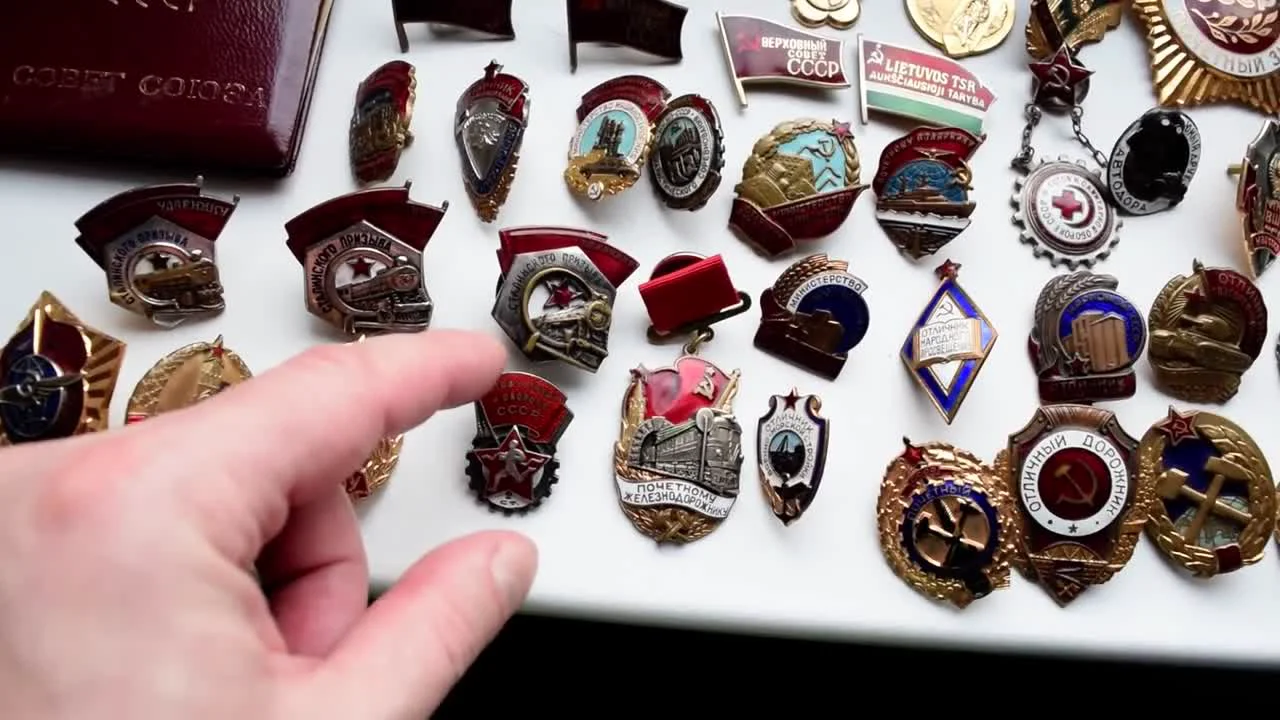
A collection of Soviet badges, primarily from the 1950s-60s, represents a broad slice of history. However, not all so-called 'heavy' badges from this period are expensive. It's important to be able to distinguish mass-produced items from genuinely valuable ones, as well as to recognize fakes.
Basics of Appraising Soviet Badges
A collection of Soviet badges, primarily from the 1950s-60s, represents a broad slice of history. However, not all so-called 'heavy' badges from this period are expensive. It's important to be able to distinguish mass-produced items from genuinely valuable ones, as well as to recognize fakes.
The price range for Soviet badges is very wide. The cheapest and most common examples can cost just a few dozen rubles. Items of interest for a serious collection typically start at a value of 100 rubles and up.
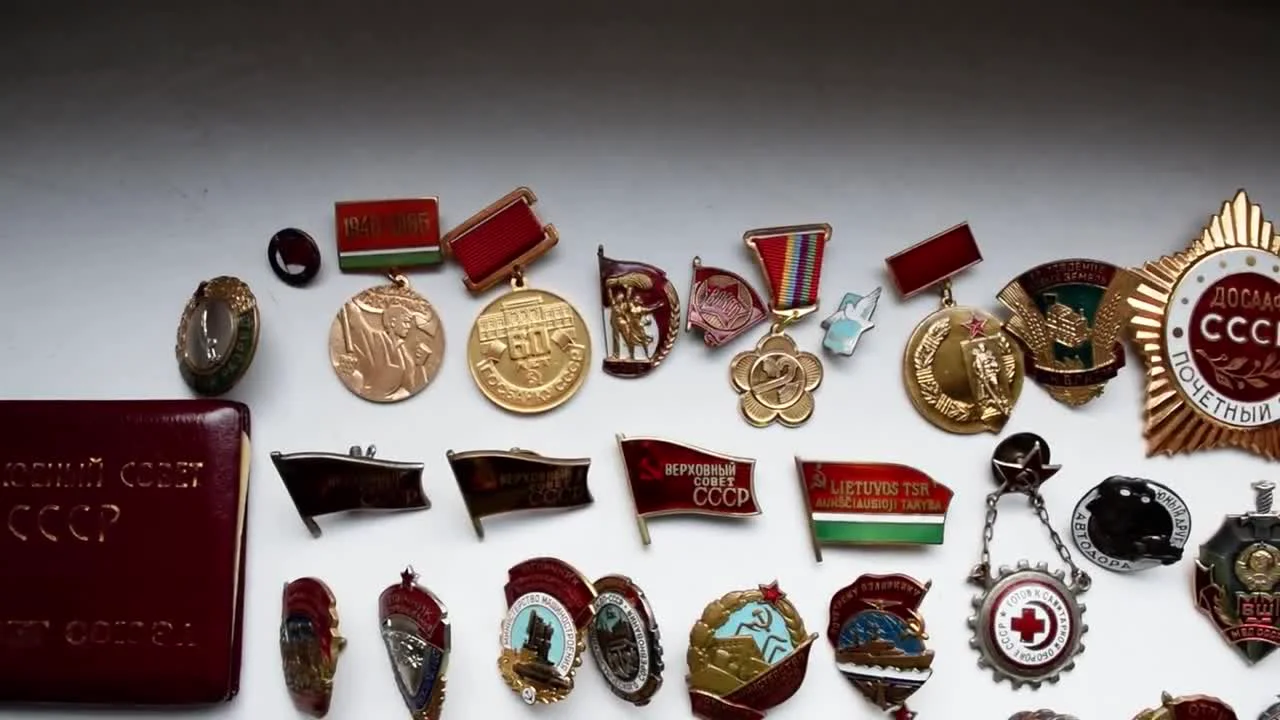
A simple 'Moscow' badge with a red flag, despite being made of heavy metal, is valued from 100 rubles. Similarly, anniversary badges, such as the '60 Years of the State Bank' from the 1980s, usually have less value due to larger production runs compared to badges from the 50s-60s.
Badges of Societies and Organizations: VDNKh, DOSAAF, GSO
Badges from various Soviet societies and organizations represent a separate area of collecting. For example, the 'VSKhV' (All-Union Agricultural Exhibition) badge from the 1940s was quite common. Its value heavily depends on its condition: a defect can reduce the price by about half. In good condition, it costs a couple of hundred rubles, but if damaged, it may not be of interest to collectors.
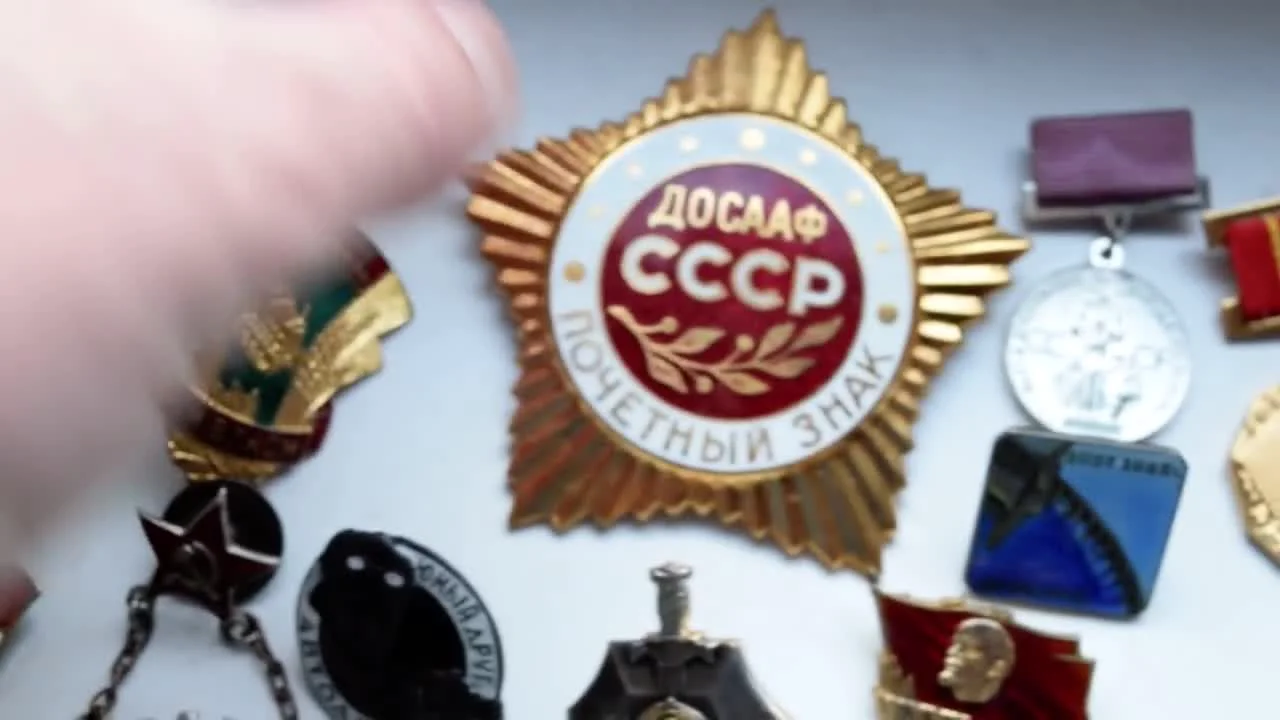
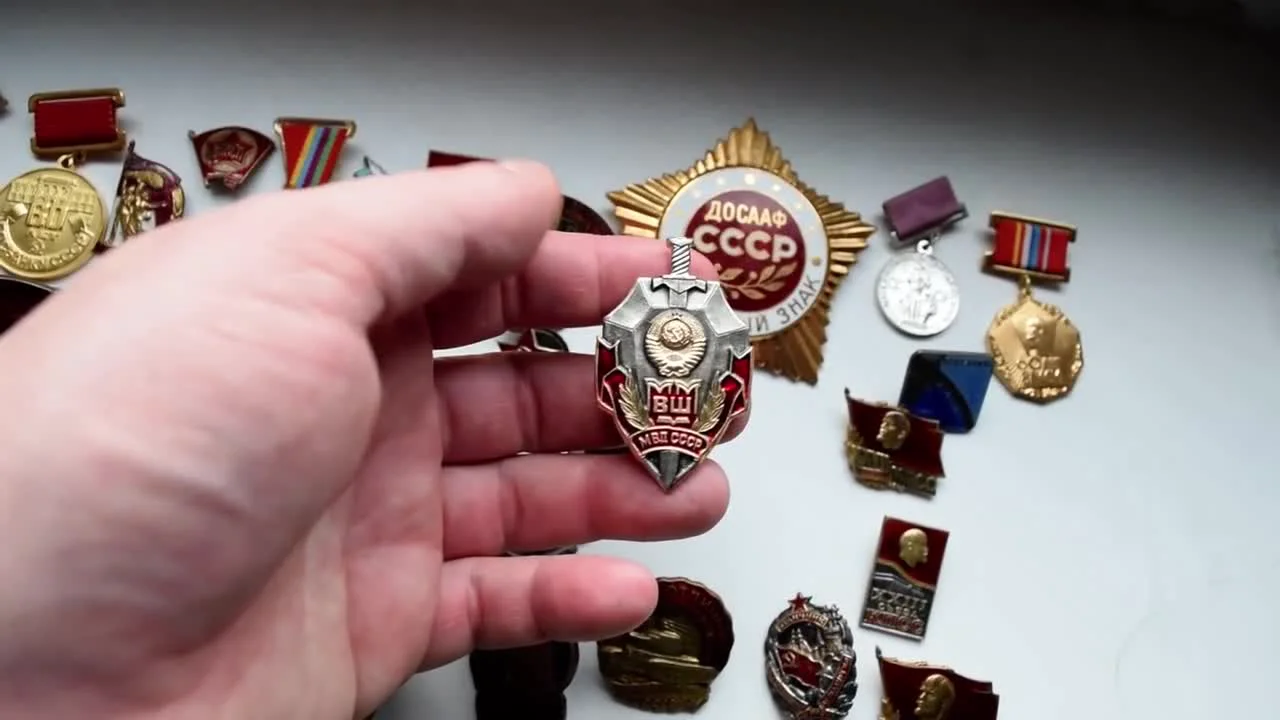
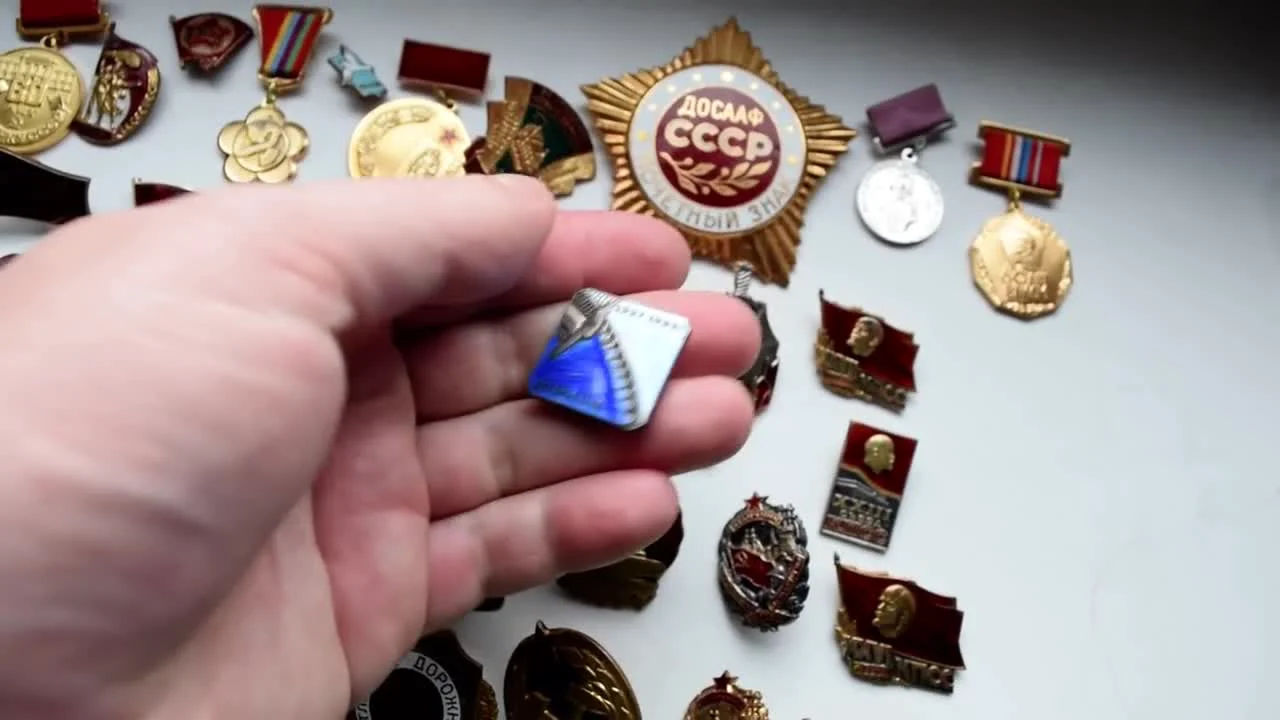
The 'DOSAAF USSR' honorary badge has many varieties, including silver-plated options and versions without a screw-back fastening. Some of them, especially those with a mint mark, can be quite expensive. However, the example shown in the photo is one of the inexpensive ones and is valued at a couple of thousand rubles.
'VDNKh' (Exhibition of Achievements of the National Economy) medals are a vast topic. Early medals from the 1930s-40s are rare and can be worth tens of thousands of rubles. However, most later medals do not contain precious metals and are valued at only a couple of hundred rubles.
Deputy Badges: Varieties and Value
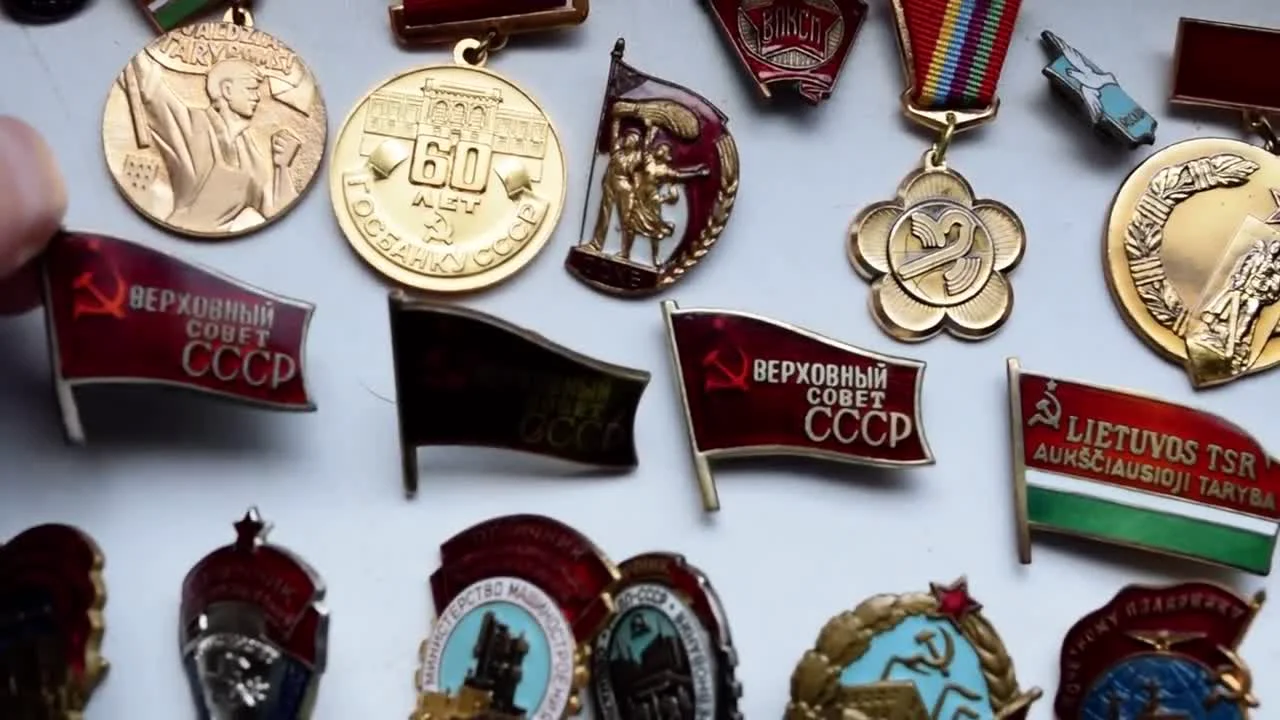
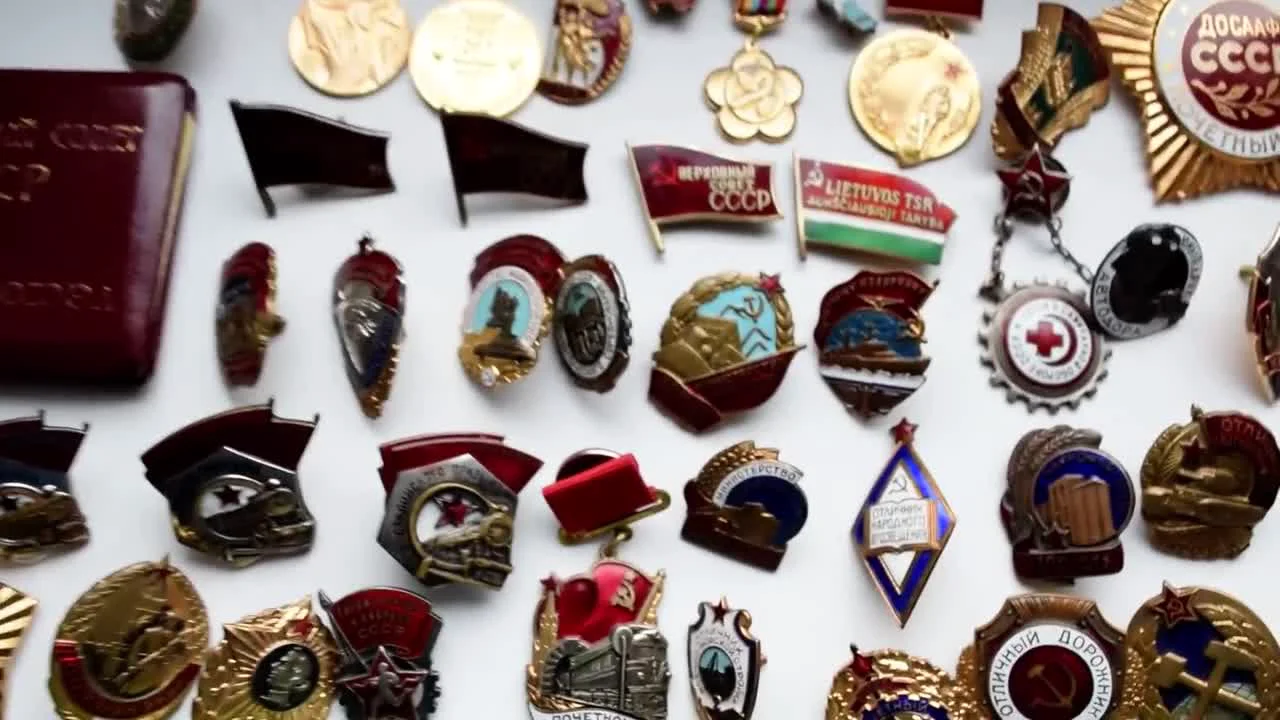
USSR deputy badges are a valuable category for collectors. At first glance, similar 'Supreme Soviet of the USSR' badges can differ significantly in value depending on their type and period of manufacture.
- Early type. Distinguished by a slightly slanted flagpole. These badges are rarer and of greater interest. Their value can exceed 10,000 rubles.
- Later types. Have a straight flagpole and can come with either a screw-back fastening or a pin. These versions are more common, and their price usually does not exceed 10,000 rubles.
The presence of an original document (certificate) significantly increases the badge's value and serves as a guarantee of its authenticity. In addition to the all-Union badges, each Soviet republic, including the Lithuanian SSR, issued its own deputy badges. Early republican badges from the 1920s can be worth hundreds of thousands of rubles, while badges from the 70s-80s are valued much lower.
Professional and Industry Awards
| Badge Name | Features and Approximate Value |
| 'For the Development of New Lands of the Central Committee of the Komsomol' | A beautiful screw-back badge, common but in demand. |
| 'Ready for Sanitary Defense' (GSO) | A badge from the 1930s with an interesting design. Price up to 2,000 rubles. |
| 'To an Honorary Polar Explorer' | Very often counterfeited. Originals with the inscription 'Stalin' are valued more highly (10,000 - 20,000 rubles) than those with 'Lenin'. |
| 'Excellent Road Builder' | Many types exist. Average price up to 10,000 rubles. |
| 'Honorary Miner' | An inexpensive and common badge. Price less than 1,000 rubles. |
| 'For Graduation from the Mining Institute' | A very common badge, value up to 1,000 rubles. |
Badges dedicated to various professions and industries are a popular collecting item. Their value varies depending on rarity, material, and condition.
Special attention should be paid to the 'Young Friend of Avtodor' badge. An original piece can be worth up to 10,000 rubles, but the presence of enamel restoration or a re-soldered screw post significantly reduces its price to a couple of thousand.
Railway Badges: 'Udarnik' and 'Honorary'
Among thematic badges, railway worker awards are particularly popular. The 'Udarnik of the Stalinist Call' badge is one of the most common. Several varieties exist, differing by time of issue and department.
- The MPS (Ministry of Railways) and NKPS (People's Commissariat of Railways) types from the 1940s are common. Their average price is around 1,000 rubles.
- The early type from the 1930s is distinguished by a cut-out overlay construction. This badge is rarer and costs several times more than its later counterparts.
Another common badge is 'To an Honorary Railway Worker'. It also has varieties. The example shown is valued at up to 3,000 rubles. There is also a rarer and more expensive version of this badge issued for CIS countries.
The 'Excellent Worker' Badge Series
The topic of 'Excellent Worker' badges is very interesting, but their popularity has been declining recently due to the large number of fakes. These badges were issued for various industries and could be made of either silver or non-precious metals, which directly affects their value.
For example, the 'Excellent Worker of Socialist Competition of Narkomlegprom' badge exists in two versions: silver (priced at 10,000 - 15,000 rubles) and brass (3,000 - 4,000 rubles). The situation is similar with the 'Excellent Worker of Narkompishcheprom' badge, where the silver version is also significantly more expensive.
Some badges, like the 'Excellent Financial Worker', have varieties with different abbreviations. The more expensive version is inscribed with 'NKRF'. 'Excellent Worker of Ferrous Metallurgy' badges also differ: early numbered examples with a counter-relief are valued several times higher than later flat ones.
Early Badges of the 1930s: GTO and 'Voroshilov Sharpshooter'
Badges from the 1930s are of particular interest to collectors. These include, for example, the 'Ready for Labour and Defence' (GTO) awards. There are many varieties of them. The example shown is made of silver, as indicated by the 'MD' (Monetny Dvor/Mint) hallmark, and its price can reach $100. Gilt and silver-plated counterparts are significantly cheaper.
Another striking example is the 'Young Voroshilov Sharpshooter' badges. There are both large numbered badges and small, unnumbered lapel pins. These are early original badges that are often counterfeited. The value of original examples, both large and small, averages around $100.
The 'Excellent Worker of the RKKA' also belongs to the early and valuable badges. An original numbered piece in good condition is valued at up to 10,000 rubles. However, due to the large number of copies, one should be careful when purchasing.