Restoration of the 1648 Apostle: The Rebirth of an Antique Book - AUCBURG | AUCBURG
Restoration of the 1648 Apostle: The Rebirth of an Antique Book
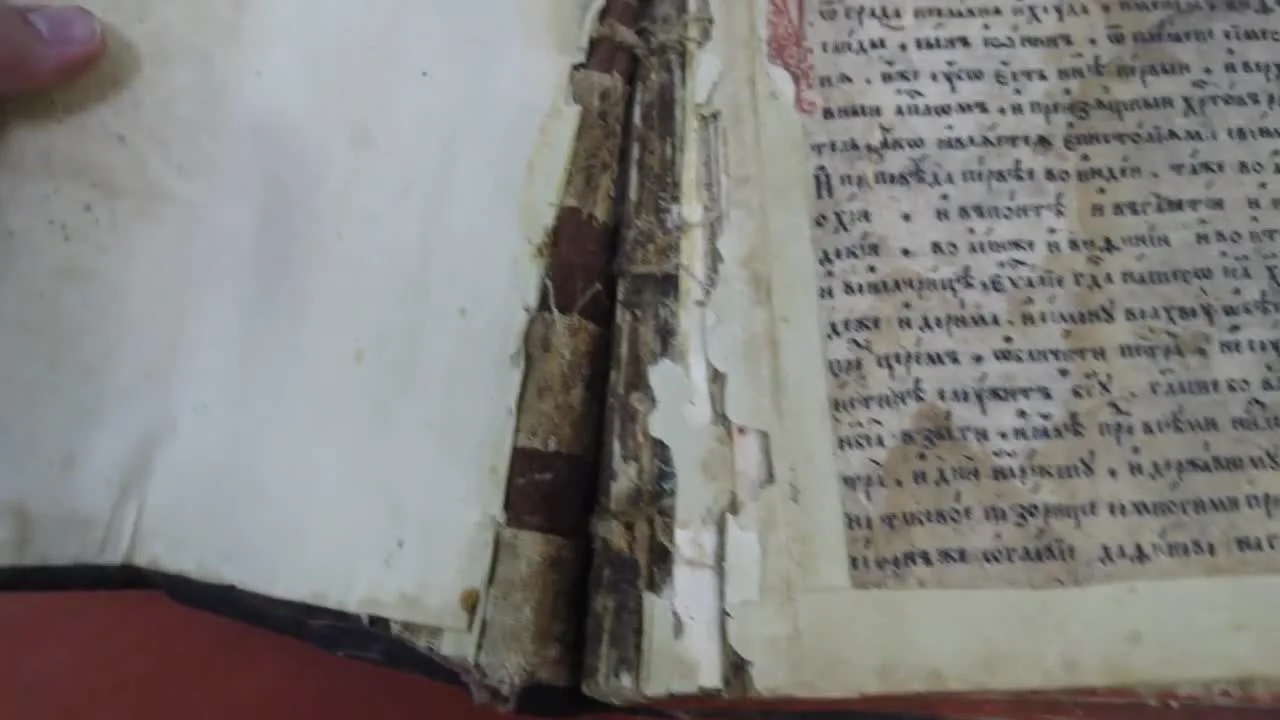
A 17th-century church publication was brought in for restoration, its condition could only be described as deplorable. The book had undergone more than one repair, which left numerous and not always high-quality traces of intervention. The initial inspection revealed a number of serious damages.
Initial Assessment: A Book in Deplorable Condition
A 17th-century church publication was brought in for restoration, its condition could only be described as deplorable. The book had undergone more than one repair, which left numerous and not always high-quality traces of intervention. The initial inspection revealed a number of serious damages.
The front wooden cover of the binding was broken in half.
The spine was completely detached from the book block.
The block had disintegrated into separate gatherings and leaves due to broken cords.
Multiple stains, water marks, and wax traces on the pages.
Additionally, the book had been heavily and unevenly trimmed during previous repairs, in some places even diagonally, which affected the text and complicated the upcoming work. The decision was made to preserve the original leather, metal bosses, and clasps, but to completely replace the later spine.
Disassembly and Cleaning: Preparing for a New Life
The restoration process began with the complete disassembly of the book. First, the binding covers were carefully detached from the book block. Then, the remnants of old glue and leather were removed from the spine of the block. To avoid damaging the gatherings, these elements were first soaked and then carefully scraped off.
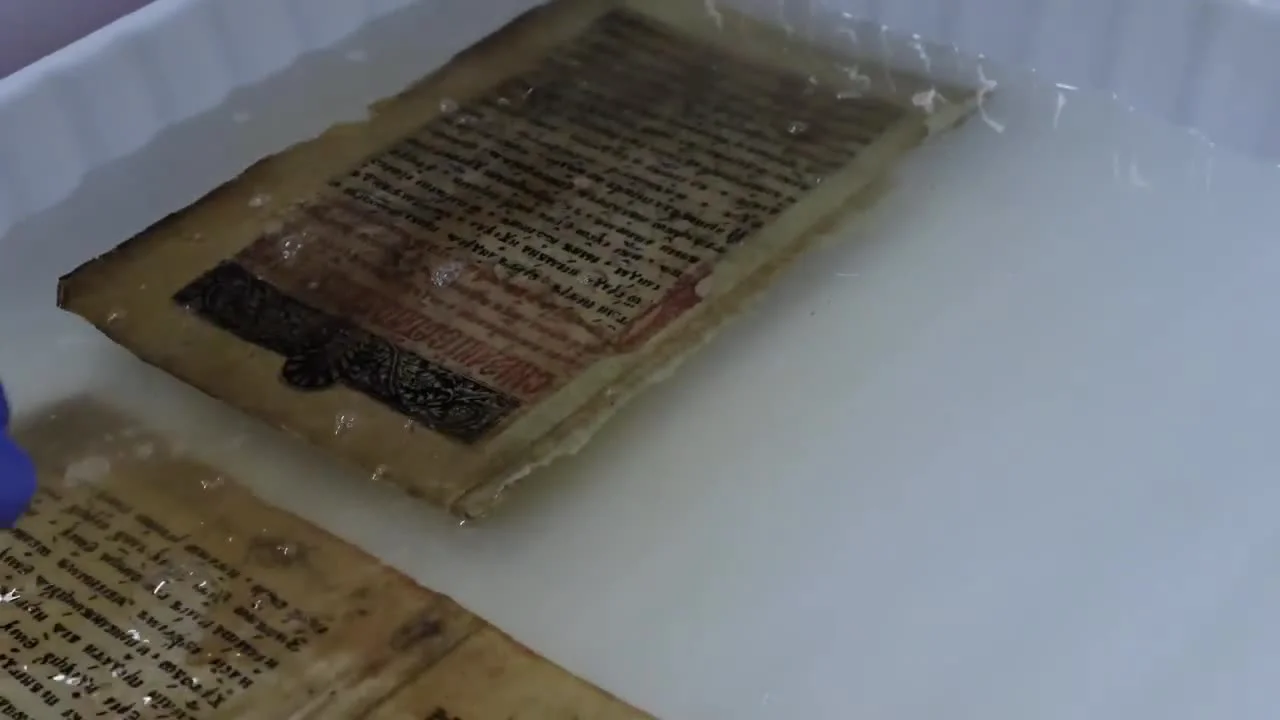
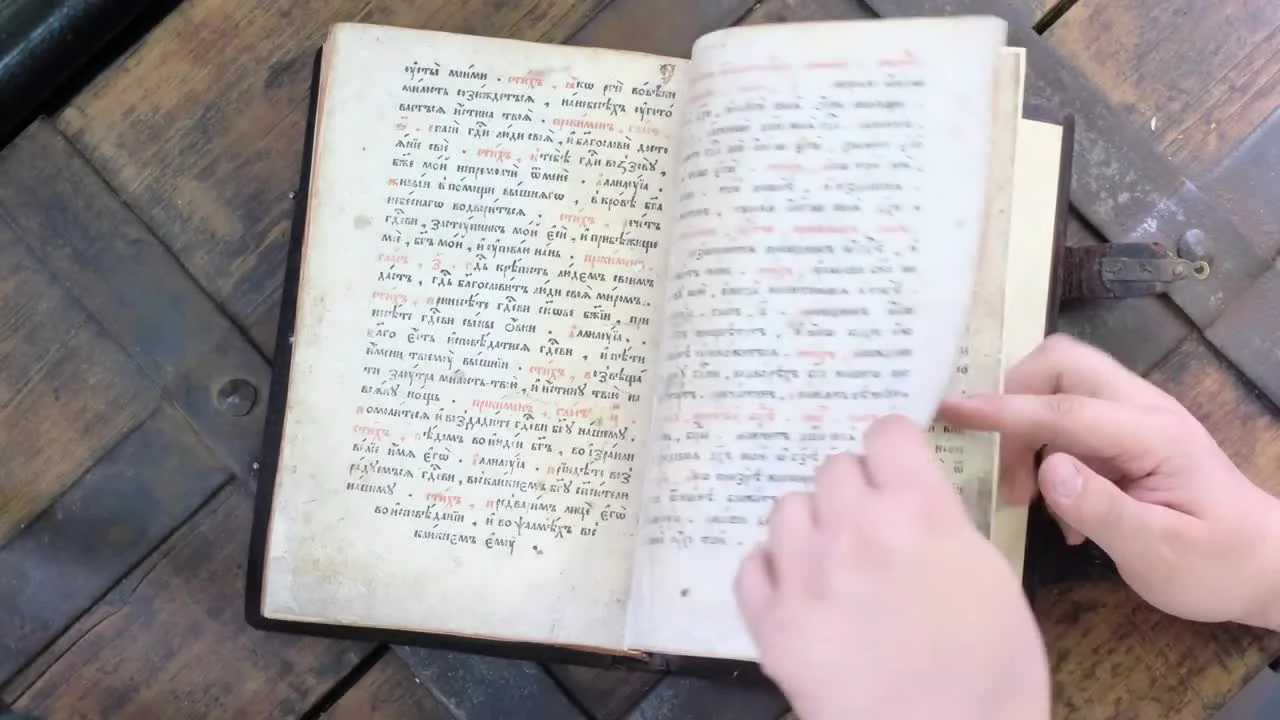
The next crucial step was washing the leaves. A preliminary test was conducted on a small area to ensure that the ink and red paint (cinnabar) would not run in water. The test was successful, and all the leaves were submerged in water for cleaning.
The water almost immediately turned a dark brown color, indicating a large amount of age-old dust and dirt accumulated in the paper. The washing not only cleaned the pages but also prepared them for further restoration work, such as removing old patches and filling in losses.
Disassembly and Cleaning: Preparing for a New Life
Page Restoration and Block Sewing
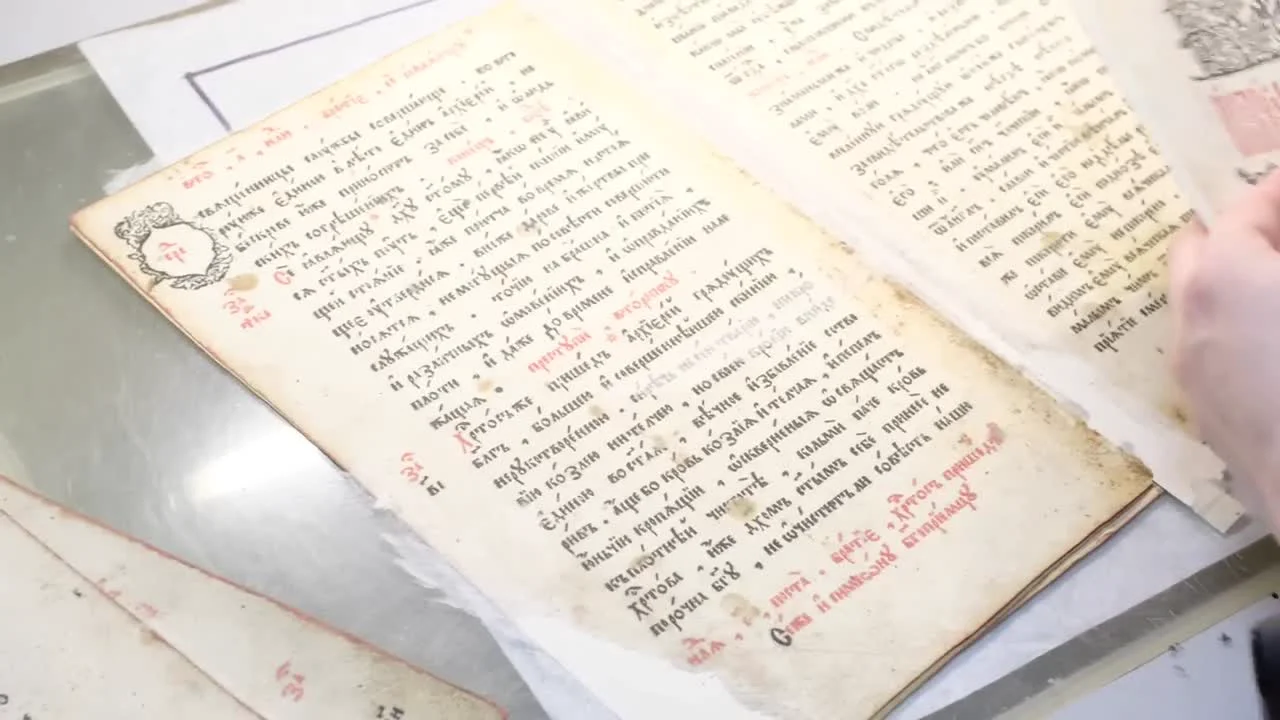
After washing, the meticulous work of restoring each leaf began. Old, coarse patches were carefully removed with a scalpel. Then, each page was restored by filling in the lost fragments with special paper. One of the main challenges was the severe and crooked trimming of the block done in the past, which had to be visually compensated for.
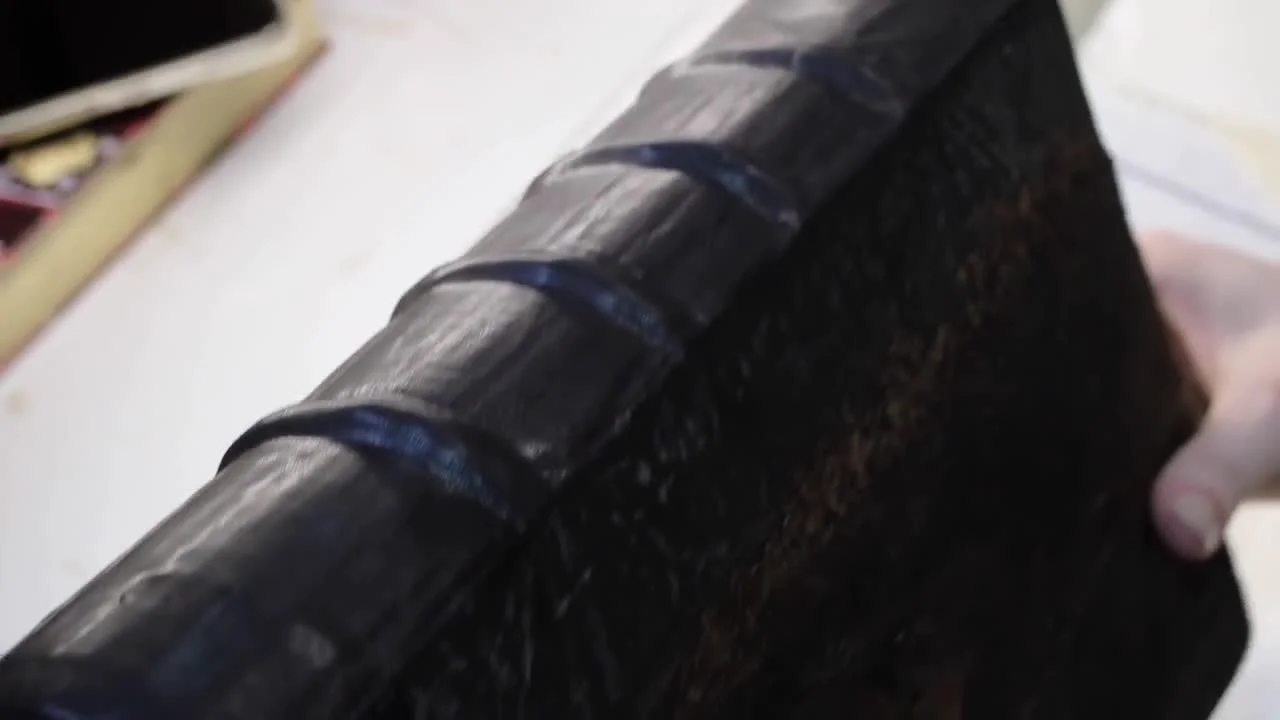
Once all the leaves were restored, they were re-folded into gatherings. Then the process of sewing the book block began. To recreate the historical technique, the sewing was done on thick double cords. Unlike modern methods, the cords were not recessed into the spine but remained on its surface, forming characteristic raised bands.
Page Restoration and Block Sewing
Binding Restoration: Working with Wood and Leather
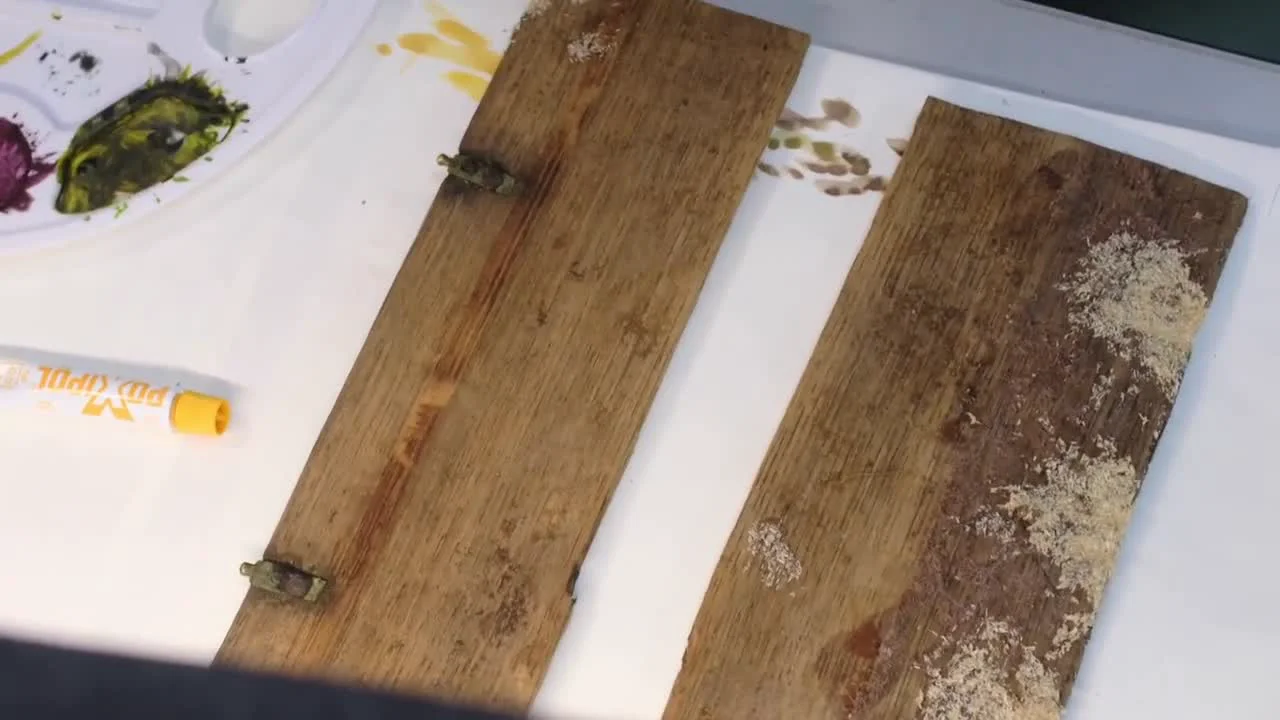
Simultaneously, work was being done on the wooden binding covers. The broken front cover was glued, and all cracks and voids, especially from wood-boring beetles, were filled with a special wood paste. After drying, the surface was thoroughly sanded.
On the back cover, the original leather was better preserved, so it was not completely removed but carefully lifted to restore the wooden base. To fill in the leather losses on the spine and corners, new material was selected and then toned to match the color and texture of the original as closely as possible.
The original fragments of the old leather also underwent treatment: they were cleaned and treated with a special compound for softening and conservation. This helped restore the material's elasticity and prepare it for mounting on the restored covers.
Binding Restoration: Working with Wood and Leather
Assembling the Book: Uniting Old and New
After all elements were prepared, the final assembly began. First, a new paper spine lining was glued to the book block, which formed the raised bands. Then, the new leather was glued onto the spine and carefully molded around the relief of the bands.
Next, the restored wooden covers were attached to the block. The preserved original leather fragments were carefully glued back into place, and the joints with the new leather were blended. After that, the original metal bosses and clasps were reinstalled.
The final stage was the finishing treatment. The entire binding was carefully toned to hide the transitions between the old and new leather and to give the book a unified, authentic look. Finally, the leather was treated with a special wax dressing, which softens the material and protects it from external elements.
Assembling the Book: Uniting Old and New
History of the Book: The Apostle of 1648
Parameter
Value
Place of Publication
The Reigning City of Moscow
Year according to the old calendar
Year 7156
Year according to the modern calendar
1648
After the restoration was completed, it was possible to accurately identify the edition. The last pages of the book contain the colophon, which indicates that it is an 'Apostle' printed in Moscow.
The publication date is given according to the old calendar, which was reckoned 'from the creation of the world' rather than from the birth of Christ. This system was used in Rus' until the reforms of Patriarch Nikon in the mid-17th century.
To convert the date to our familiar format, one must subtract 5508 years from the specified year (7156 - 5508 = 1648). Thus, the book was published in 1648, shortly before the church schism, which makes it a valuable monument of the pre-Nikonian book culture of the Old Believers.