How to Identify Counterfeit Gold Items: The Density Check Method - AUCBURG | AUCBURG
How to Identify Counterfeit Gold Items: The Density Check Method
The rings submitted for appraisal bear a hallmark indicating 750 fineness gold. An initial check using spectral analysis also confirms this high standard, which can mislead even an experienced appraiser.
Deceptive Appearances: When Fineness Marks and Analysis are Misleading
The rings submitted for appraisal bear a hallmark indicating 750 fineness gold. An initial check using spectral analysis also confirms this high standard, which can mislead even an experienced appraiser.
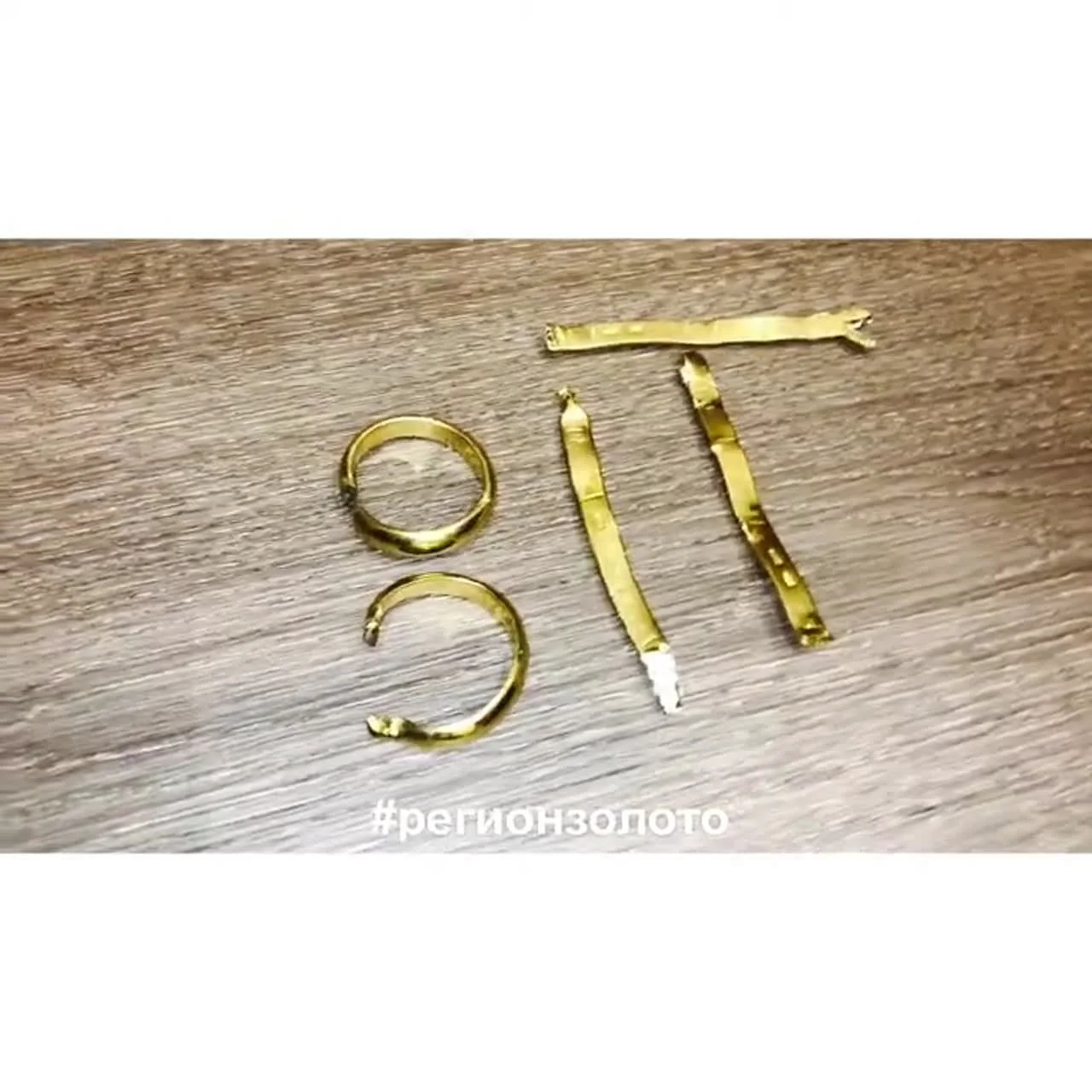
However, upon physically breaking the item, it becomes obvious that it is a counterfeit. Inside the gold plating, a metal of a completely different, white color is revealed. This indicates that the item is merely gold-plated and not made of solid precious metal.
Damage-Free Detection: How to Identify a Counterfeit Using Hydrostatic Weighing
Since items cannot be damaged in pawnshops and during appraisals, the method of determining metal density is used to identify such counterfeits. This method does not compromise the integrity of the jewelry and allows for accurately determining its composition. The procedure consists of several sequential steps.
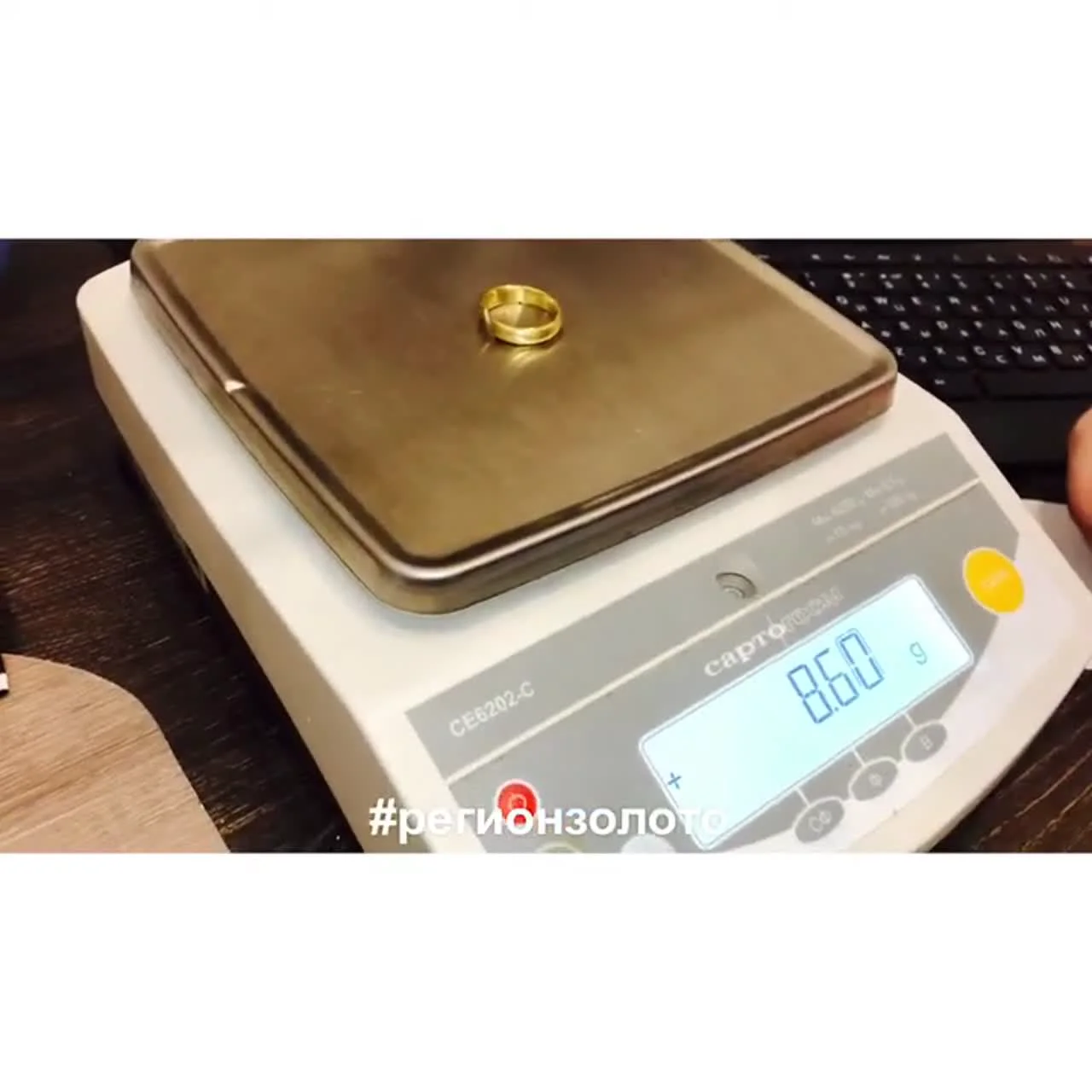
Weigh the item on a precision scale to determine its dry weight.
Place a container of water on the scale and tare it (zero out the reading).
Suspend the item by a thread and fully submerge it in the water, without touching the bottom or sides of the container. Record the weight displayed on the scale.
Divide the item's dry weight by its weight in water to calculate the material's actual density.
Damage-Free Detection: How to Identify a Counterfeit Using Hydrostatic Weighing
Math Against Fraudsters: Density Calculation and the Verdict
Density Value
Corresponding Fineness
~12.5 - 12.8
500
Claimed on the item
750
During the experiment, the following data was obtained: the ring's dry weight was 8.60 grams, and its weight in water was 0.67 grams. By dividing the dry weight by the weight in water, a density value of approximately 12.6-12.8 was obtained.
A special table correlating density and gold fineness is used to interpret the result. Comparing the obtained value with the table data shows that this density is characteristic of 500 fineness metal, not 750 fineness, as was claimed on the hallmark.
Thus, the hydrostatic weighing method unerringly detects the discrepancy, proving that the item is a counterfeit. This method is recommended for use in pawnshops to prevent fraud.
Math Against Fraudsters: Density Calculation and the Verdict