The World of Antique Prints: Engravings and Etchings as a Field for Collecting - AUCBURG | AUCBURG
The World of Antique Prints: Engravings and Etchings as a Field for Collecting
In the world of antique prints, there are two main concepts: engraving and etching. Although they may seem similar, there is a significant difference between them, which lies in authorship and technique. Understanding these nuances is the first step toward studying this art form.
An original work created directly by the artist, often with their signature.
Engraving
Typically, the work of two or more people: the artist who created the drawing, and the engraver who transferred it to the printing plate. Rarely were both roles performed by one person.
In the world of antique prints, there are two main concepts: engraving and etching. Although they may seem similar, there is a significant difference between them, which lies in authorship and technique. Understanding these nuances is the first step toward studying this art form.
The key difference lies in the artist's role in the creation process. An etching is a completely original work where the artist creates the piece independently, and many such works are signed by the author. An engraving, on the other hand, is most often the result of the creative work of several people.
Thus, an engraving represents a collaborative effort, which distinguishes it from the more personal and direct creative act of an etching.
The Emergence of Printmaking in Russia
Graphic art arrived in Russia relatively late, gaining popularity after the Patriotic War of 1812. Its emergence was closely linked to military needs and the foreign campaigns of the Russian army.
Initially, engraving was used for purely practical purposes. During military campaigns at the headquarters of the allied armies, it was used for the rapid reproduction of important documents.
Reproducing documents
Creating copies of maps
Printing terrain plans
One of the first engraving workshops in Russia appeared around 1816-1817. It was organized under the General Staff of the Ministry of Defense, which emphasizes its initial military and utilitarian significance.
The Emergence of Printmaking in Russia
Determining Age and Value
The technique of creating engravings has changed very little over time. The main innovation was the appearance of the steel plate for printing in the 19th century, which replaced the earlier wooden and copper plates. This change is one of the few markers for dating.
Determining the exact age of an engraving without accompanying data can be very difficult. In such cases, the paper becomes the main guide. Paper analysis makes it possible to distinguish an original 17th-century impression from a later 19th-century printing, or even a modern impression made from an old plate.
Authorship: the name of the artist and engraver.
Edition size: the number of impressions made.
Subject: the depicted scene or motif.
Condition: the preservation of the sheet and the impression.
Rarity and historical significance.
Determining Age and Value
Subjects and Their Historical Context
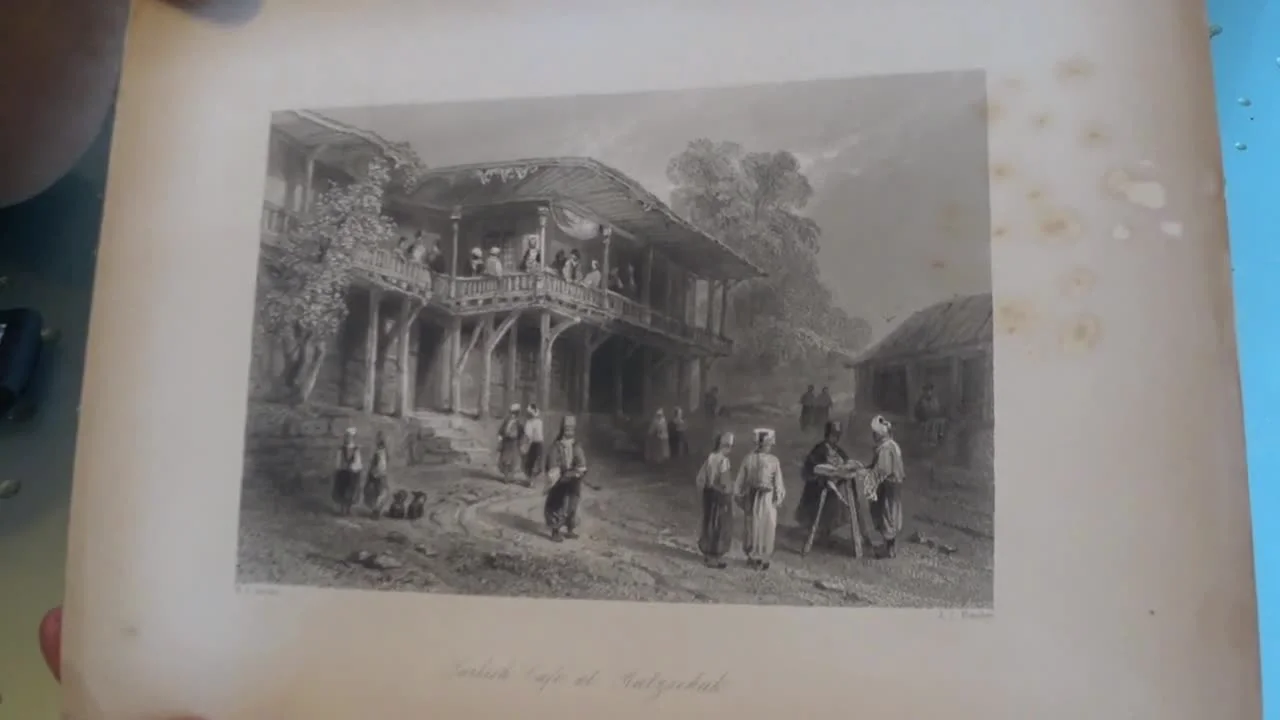
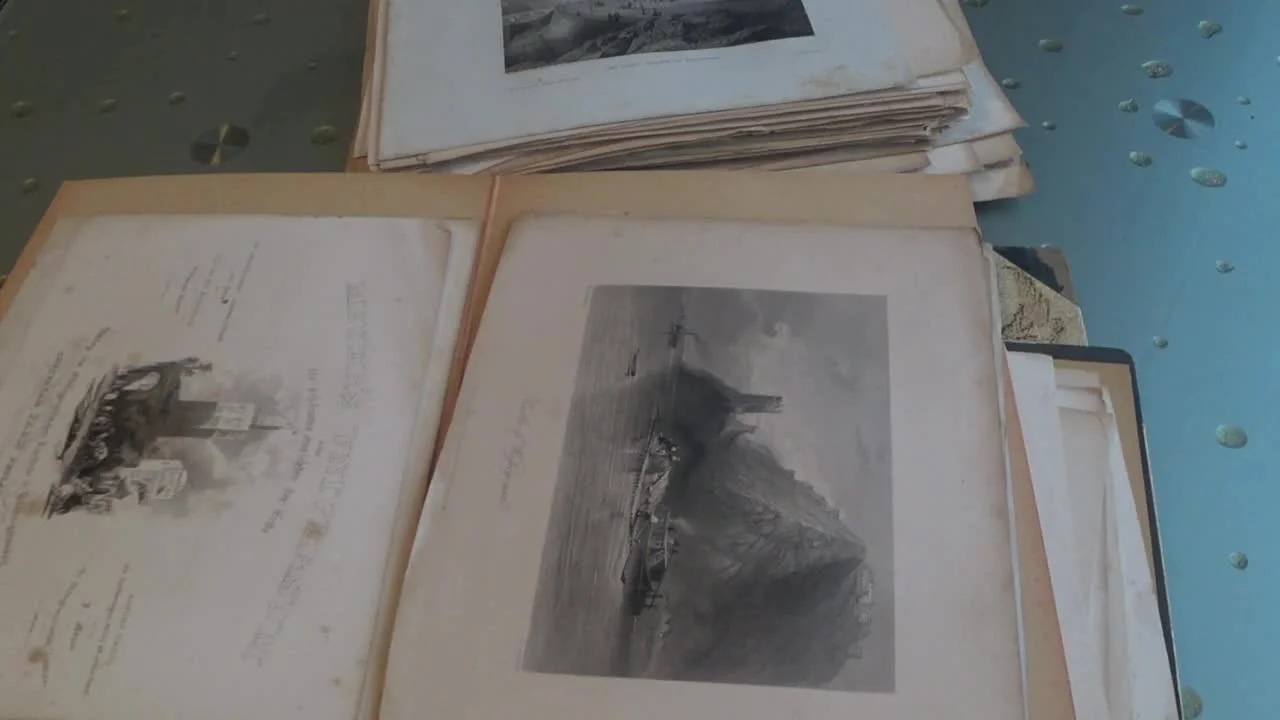
Every antique engraving is not just an image but a carrier of information about its era. The subjects often reflect historical events, culture, and daily life of the past. For example, the engraving 'Turkish Coffee House in Rutschuk' (a city in Bulgaria) illustrates an important part of Ottoman culture.
Coffee came to Turkey from Persia in the 16th century and quickly became a symbol of hospitality and social life. Later, during wars, the coffee-drinking culture spread to Europe and Russia. Thus, the engraving captured not just a daily life scene, but an entire cultural layer.
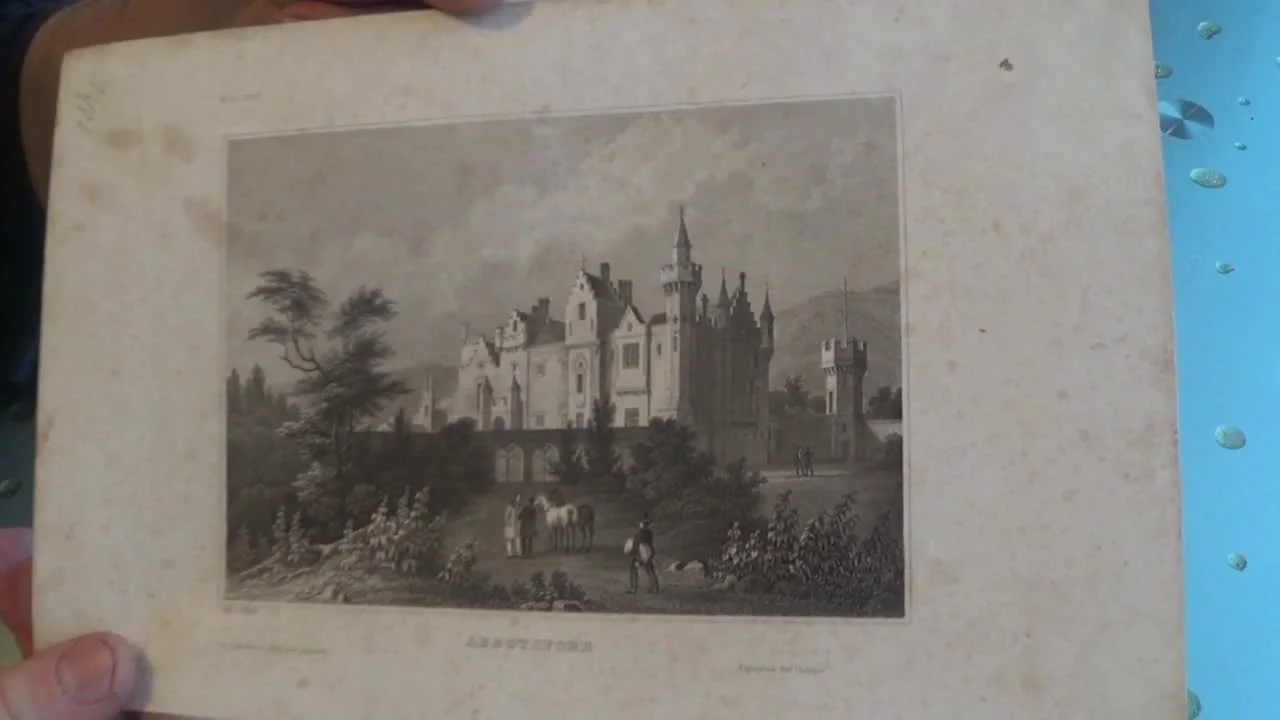
Another example is an engraving depicting Abbotsford House in the south of Scotland. This house was built by the famous writer and poet Walter Scott to his own design. Today, it houses his museum. It is worth noting that artists of that time could make their own adjustments to the image, and the subject might be slightly distorted.
Subjects and Their Historical Context
Collectible Value and Masters
The works presented in the collection are by 19th-century English masters, such as Henry Bartlett and Bentley, who were both artists and engravers. Their works are characterized by a concise style, and detailed rendering of space and scenes, making them a kind of 'photograph of the past'.
Antique prints are an undervalued area for collectors and investors. This market segment still allows for the acquisition of valuable works of art relatively inexpensively, while their growth potential is high. The value of an engraving increases if it was part of a gift and has a dedicatory inscription on the back, which adds biographical and historical information.
Battle and brutal scenes.
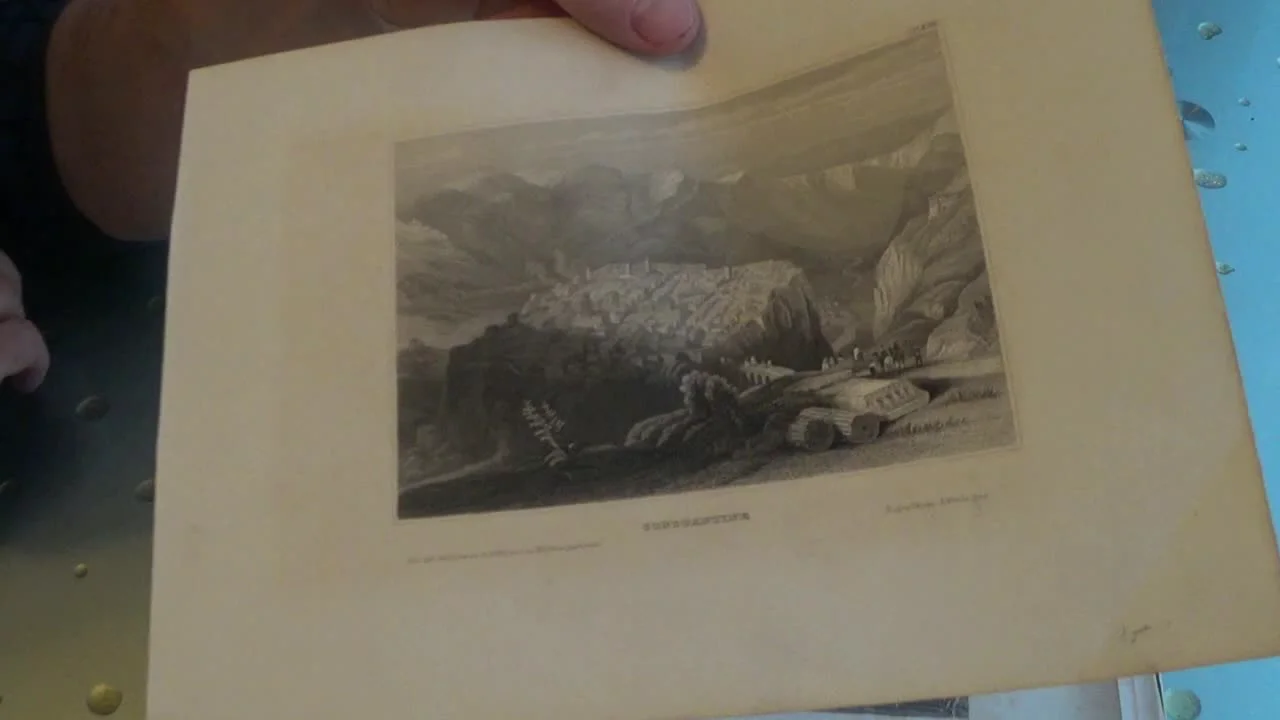
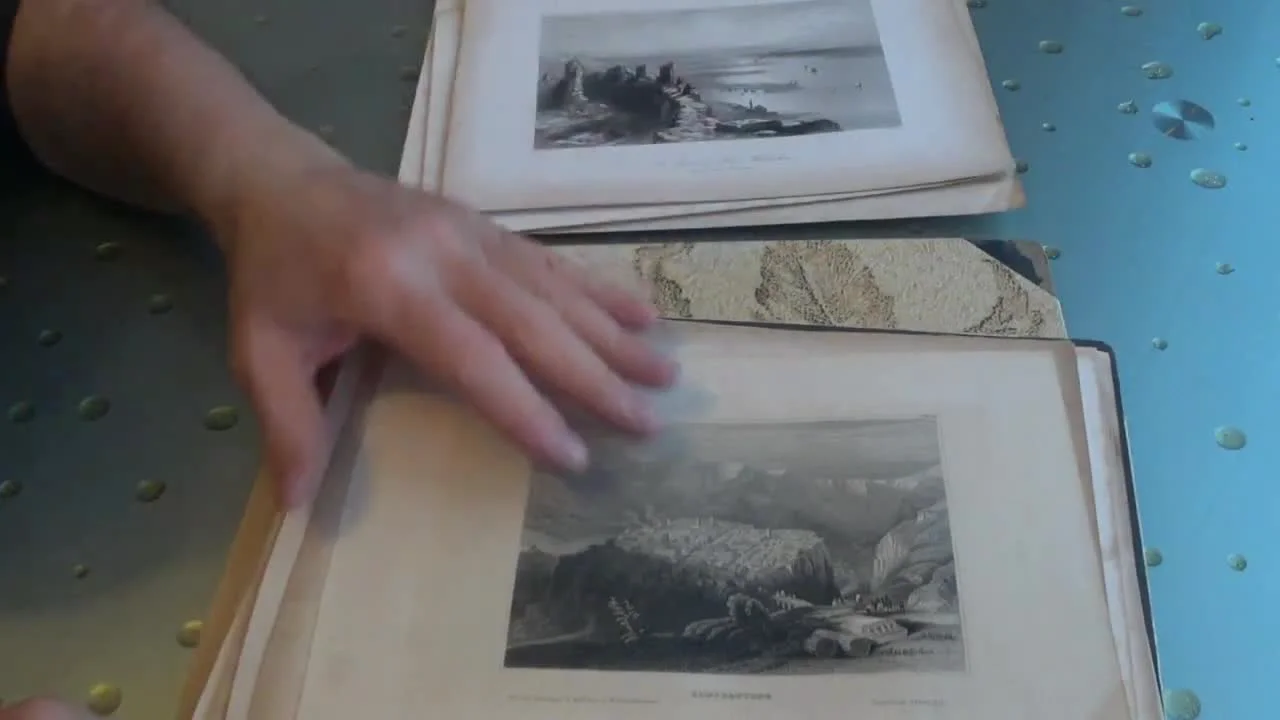
Depictions of famous cities (Rome, Vatican).
Portraits of historical figures.
Biblical scenes, depending on the author.
Images of weapons.
The collectible value increases significantly if the engraving complements a real existing object, for example, an antique weapon. Such a tandem is of particular interest.