Coins in Slabs: Why Grading is More Important Than Packaging - AUCBURG | AUCBURG
Coins in Slabs: Why Grading is More Important Than Packaging
When discussing the storage and valuation of collectible coins, the topic of slabs—special plastic containers—often comes up. However, it is important to understand that the key process is not the act of placing the coin in the packaging itself, but the grading that precedes it.
When discussing the storage and valuation of collectible coins, the topic of slabs—special plastic containers—often comes up. However, it is important to understand that the key process is not the act of placing the coin in the packaging itself, but the grading that precedes it.
Grading is the process of assigning a specific grade to a coin, which is an assessment of its condition and quality. Encapsulation in a slab is a secondary action, intended to record and confirm this grade. Thus, the most important part is the professional assessment, and the slab serves as its certificate and means of protection.
The Problem with Coins Without Official Grading
Over time, a coin that is not in a slab can face a number of problems that complicate its identification and valuation. Even if its condition has been assessed by an expert, that opinion remains merely verbal.
The coin could be swapped for another of lesser quality.
The specimen could be damaged after the assessment.
It is difficult for an expert to recall and confirm their assessment of a specific coin, as they may have seen thousands of similar ones.
Consequently, linking a verbal assessment to a specific coin without a slab is practically impossible, which creates grounds for disputes during a sale.
The Problem with Coins Without Official Grading
The Sheldon Scale: An International Standard for Grading
International Grades
Sheldon Scale Designations
Russian Designations
Uncirculated
MS 60, 61, 62, 63, 64, 65, 66, 67, 68, 69, 70
Superb
About Uncirculated
AU 50, 53, 55, 58
Almost Superb
Extremely Fine
XF 40, 45
Excellent
Very Fine
VF 20, 25, 30, 35
Very Good
Fine
F 12, 15
Good
Very Good
VG 8, 10
Satisfactory
Good
G 4, 6
Poor
A standardized system is used for the objective assessment of coin conditions. The most common is the 70-point Sheldon scale, adopted in the USA and actively used by the numismatic community worldwide, including in Russia.
For example, a coin might be assigned a grade of MS 62. This means the coin has not been in circulation, has a distinct mint luster, a strong strike on the details, and only minor storage marks. Such standardization allows collectors to speak a common language.
The Sheldon Scale: An International Standard for Grading
How a Slab Solves the Verification Problem
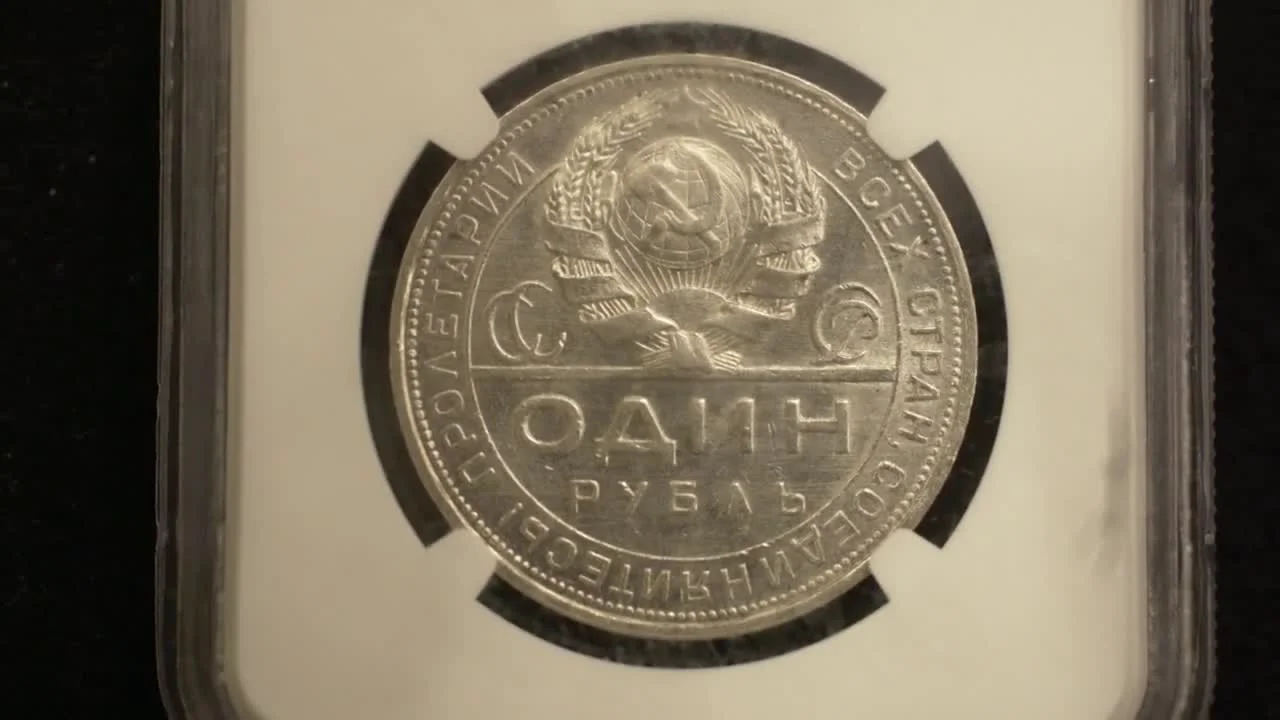
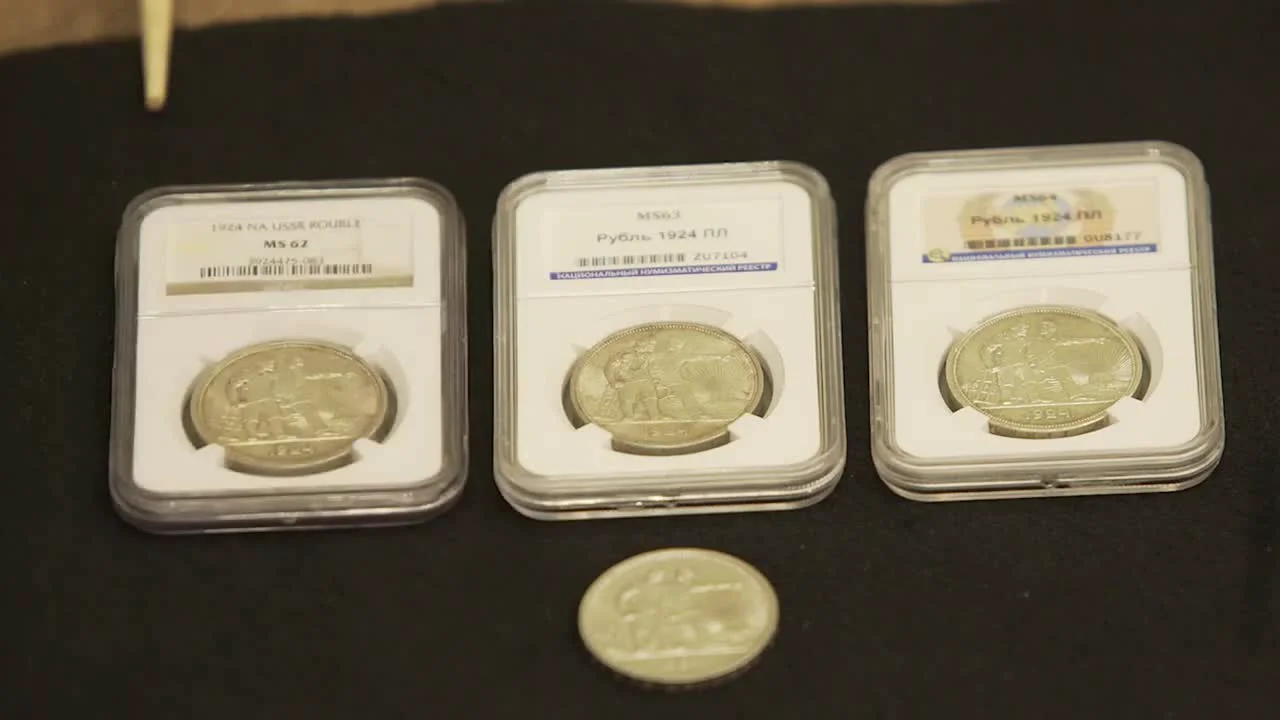
The slab was invented specifically to record the result of grading and securely link it to a specific coin. After its condition is determined, the coin is sealed in an airtight plastic case that cannot be opened without being damaged.
The name of the coin.
The assigned grade (e.g., MS 62).
A unique number for verification in the grading company's database.
A barcode.
Additionally, information about the owner or collection (provenance) may be included.
Thus, the slab guarantees that the coin inside is the exact one that was expert-graded, and its condition matches the indicated grade.
How a Slab Solves the Verification Problem
The Impact of Grade on a Coin's Value
The assigned grade has a fundamental impact on a coin's price. The higher the level of preservation, the fewer such specimens exist, and the higher their collectible value. The price difference can be several-fold.
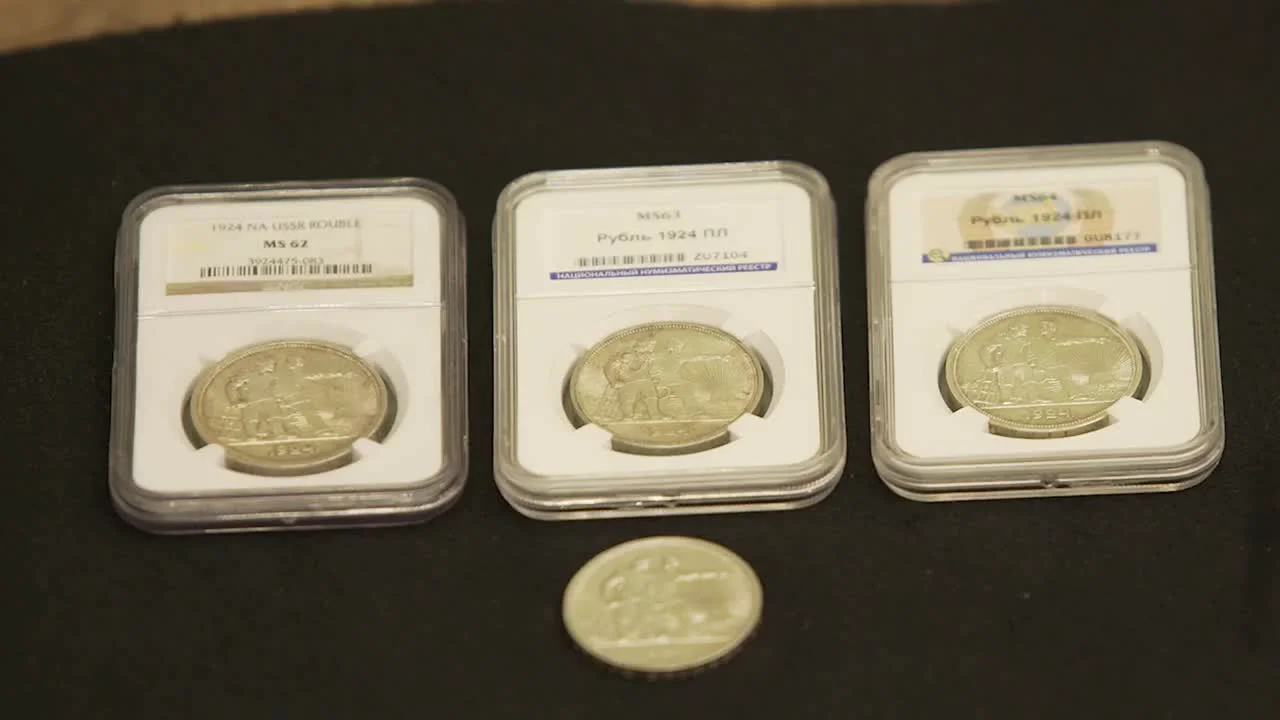
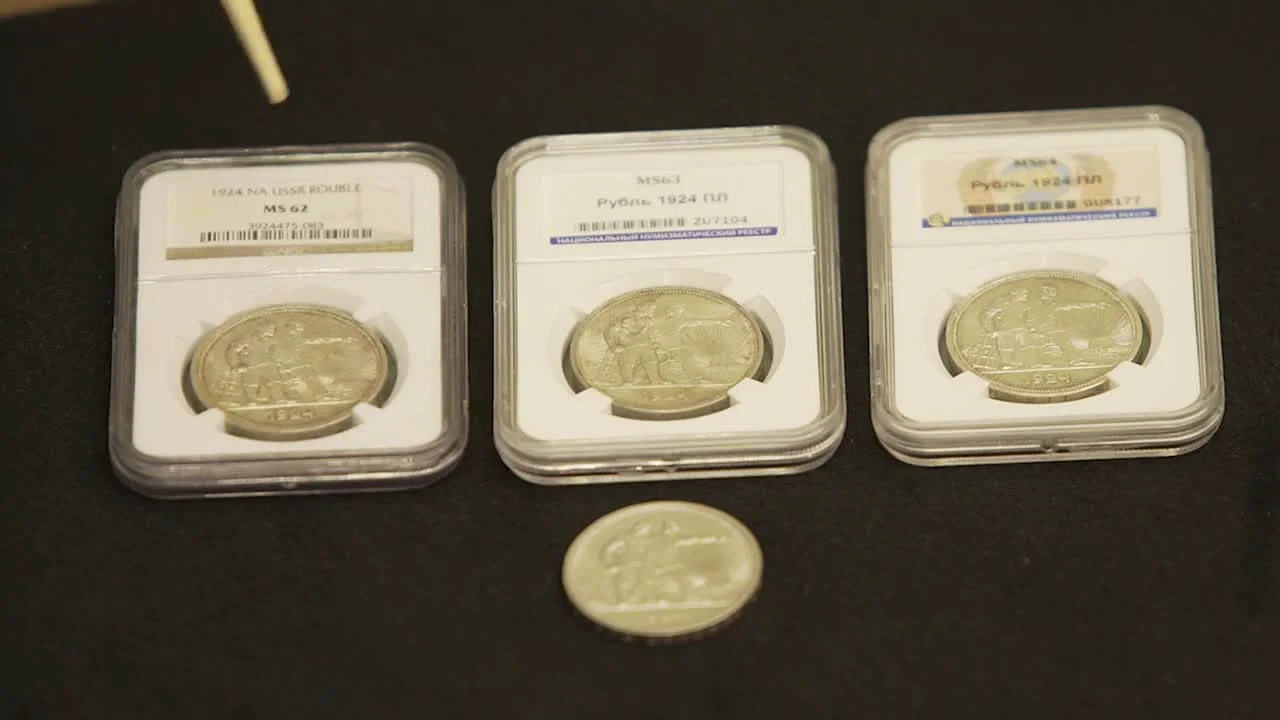
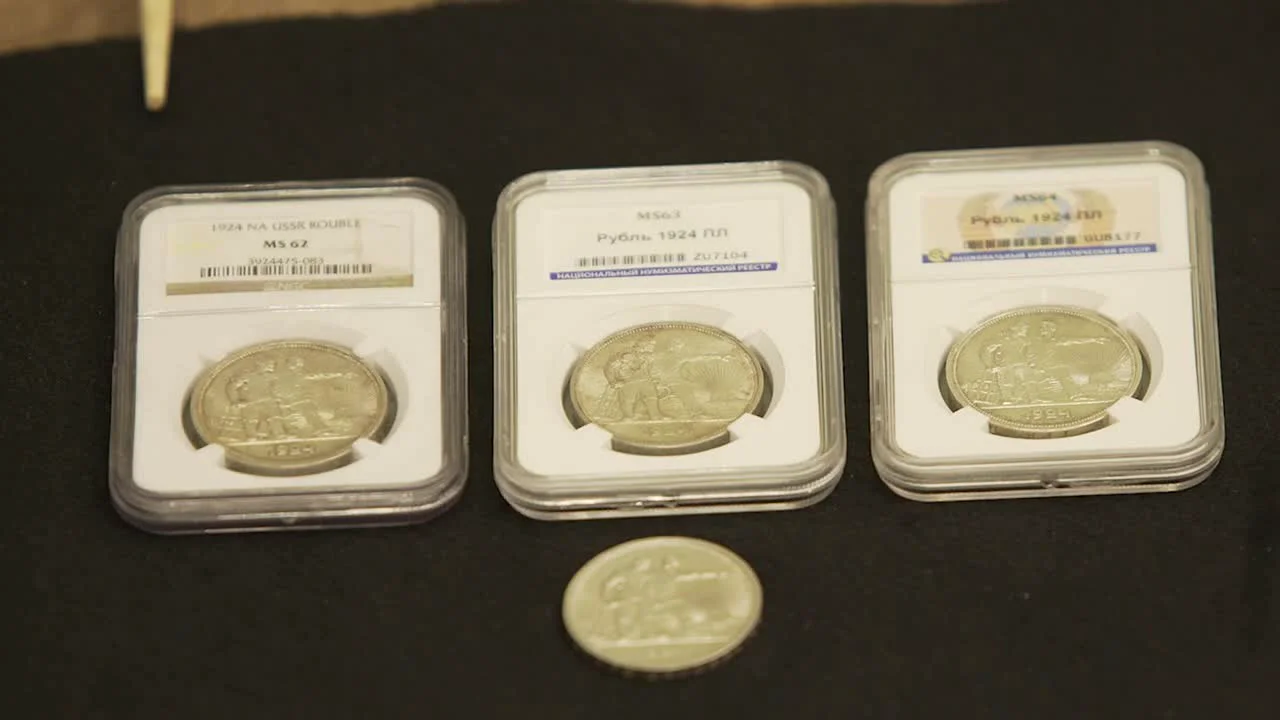
Without a slab (UNC condition) - a base price of around 3000 rubles, but the assessment is subjective and depends on the agreement between the seller and buyer.
In a slab with a grade of MS 62 - the price is at least 1.5 times higher, as the quality is confirmed by experts.
In a slab with a grade of MS 63 - the price is another 1.5 times higher than that of an MS 62 coin.
In a slab with a grade of MS 64 - the price can be 2.5-3 times higher than the base value.
The presence of a slab eliminates disputes about quality and allows for the formation of an objective price.
The Impact of Grade on a Coin's Value
Advantages and Disadvantages of Storing Coins in Slabs
Storing coins in slabs has both clear advantages and some drawbacks. The main advantage is protection and preservation. The coin is securely protected from mechanical damage, such as scratches or impacts from being dropped.
However, there are also disadvantages. The main one is that you cannot hold the coin in your hands to feel its weight and the metal. Some collectors even break open the slabs, keeping only the label with the grade. Additionally, over time, the plastic of the slab itself can get scratched and become cloudy, requiring replacement.
Advantages and Disadvantages of Storing Coins in Slabs