How to Distinguish Original Bleu De Chanel from a Fake: A Complete Guide - AUCBURG | AUCBURG
How to Distinguish Original Bleu De Chanel from a Fake: A Complete Guide
Determining the authenticity of Bleu De Chanel is a pressing issue, as the brand has left the official market, making it impossible to purchase in major retail chains. The primary purchasing platforms have become online marketplaces, where the number of fakes is enormous. Some sellers try to pass off a copy as an original, selling it at a corresponding price.
Determining the authenticity of Bleu De Chanel is a pressing issue, as the brand has left the official market, making it impossible to purchase in major retail chains. The primary purchasing platforms have become online marketplaces, where the number of fakes is enormous. Some sellers try to pass off a copy as an original, selling it at a corresponding price.
The difficulty lies in the fact that fakes of this perfume can be of very high quality. This is due to its incredible popularity: according to statistics, Bleu De Chanel is the second best-selling fragrance in the world after Dior Sauvage. Because of this, counterfeit manufacturers are constantly improving their copies, making them more and more similar to the original.
Key Feature: The Magnetic Cap
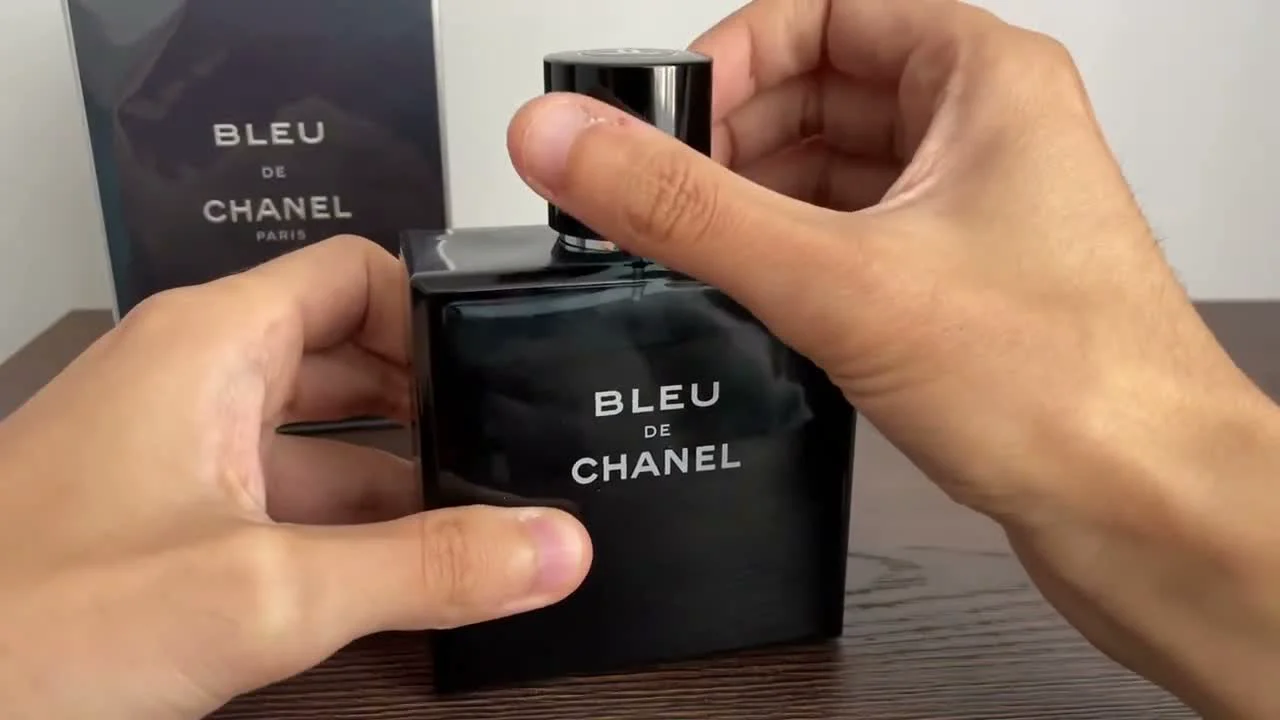
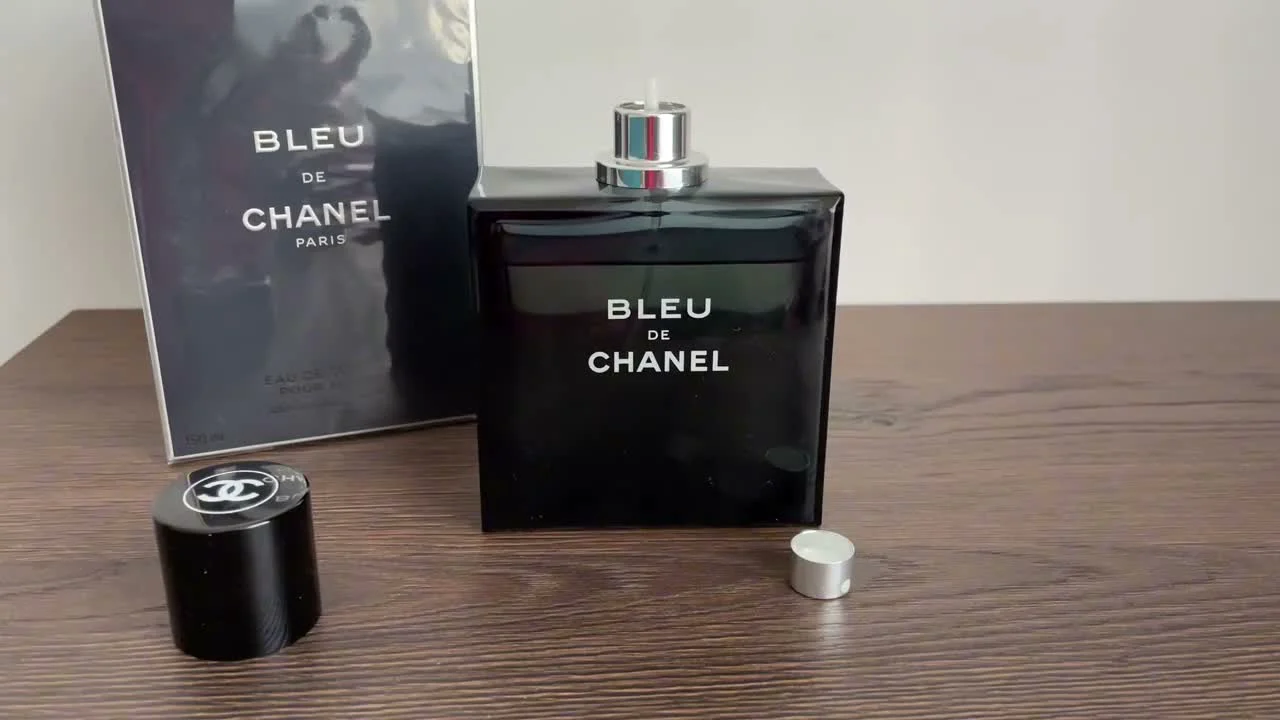
The first and most reliable verification method, similar to the one for Dior Sauvage, is the signature magnetic cap. The original has a very powerful and high-quality magnet that holds the bottle securely, even if you shake it vigorously.
The main feature of the original cap is its polarity. This means it only locks onto the bottle in one correct position. If you try to put the cap on in a different orientation or turn it, the magnet will repel it. It works like this:
When turned, the cap automatically clicks off due to the magnet's polarity.
When returned to its original position, it is pulled in and clicks into place on its own.
If the cap on your bottle can be freely rotated in a circle and is not repelled, it is a 100% fake. In this case, you don't even need to check the other signs.
Key Feature: The Magnetic Cap
Batch Code: Engraving and Matching
The second important point is the batch code. On an original bottle, it is engraved on the glass. This code cannot be rubbed off with a finger or scraped off. On fakes, the code is often just printed with ink and rubs off easily.
In addition to the application method, you must check that the batch code on the bottle and the box match. The numbers must be identical. For example, the original may have the code '8701' engraved on it, and the exact same code must be printed on the bottom of the box.
Batch Code: Engraving and Matching
Cap Details and Logo Quality
Besides the magnet, it's worth paying attention to other details of the cap. The quality of the logos is an important indicator of authenticity.
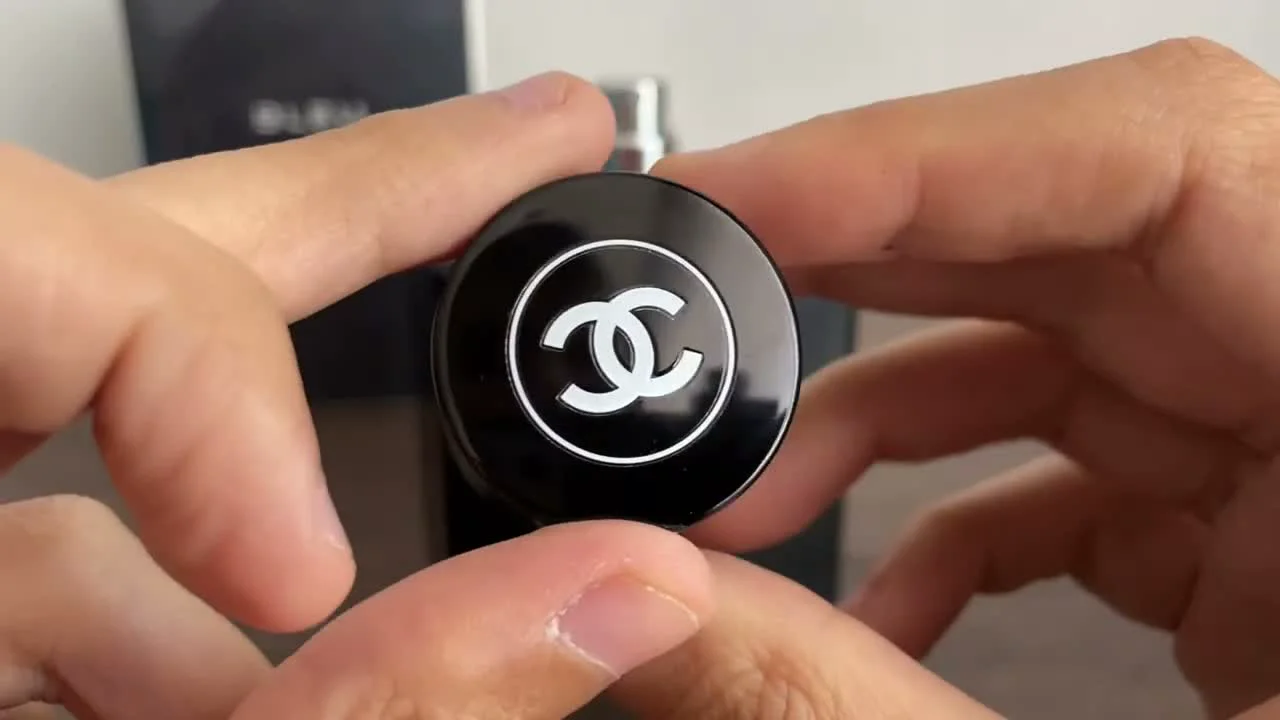
Logo on top: On the original cap, it is embossed, sharp, and very well-made, without any smudges or streaks. The distance between the intertwined letters is small, whereas on fakes it is often larger.
Logo inside: There should also be a logo inside the cap. On cheap fakes, it might be missing entirely, while on higher-quality copies it's present but often poorly executed, with incorrect spacing between elements.
The cap itself should be neatly made, without chips, scratches, or other molding defects.
Cap Details and Logo Quality
Bottle Quality: Printing and Molding Shape
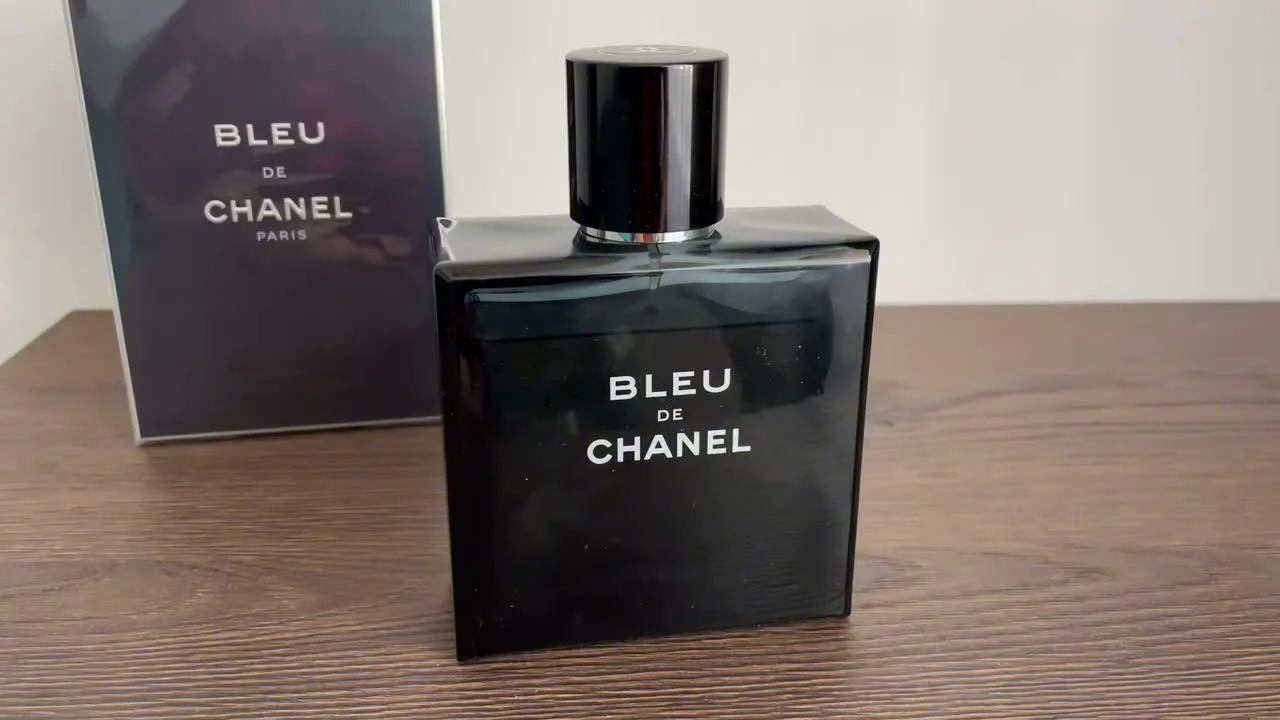
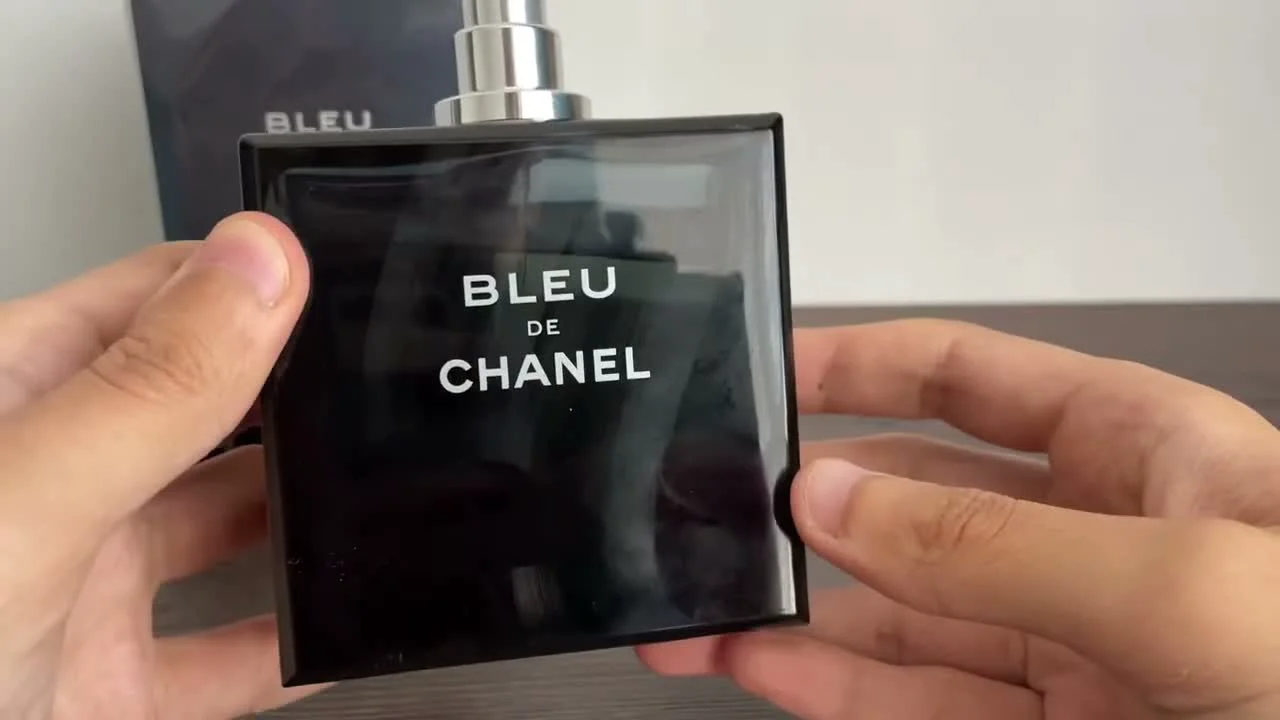
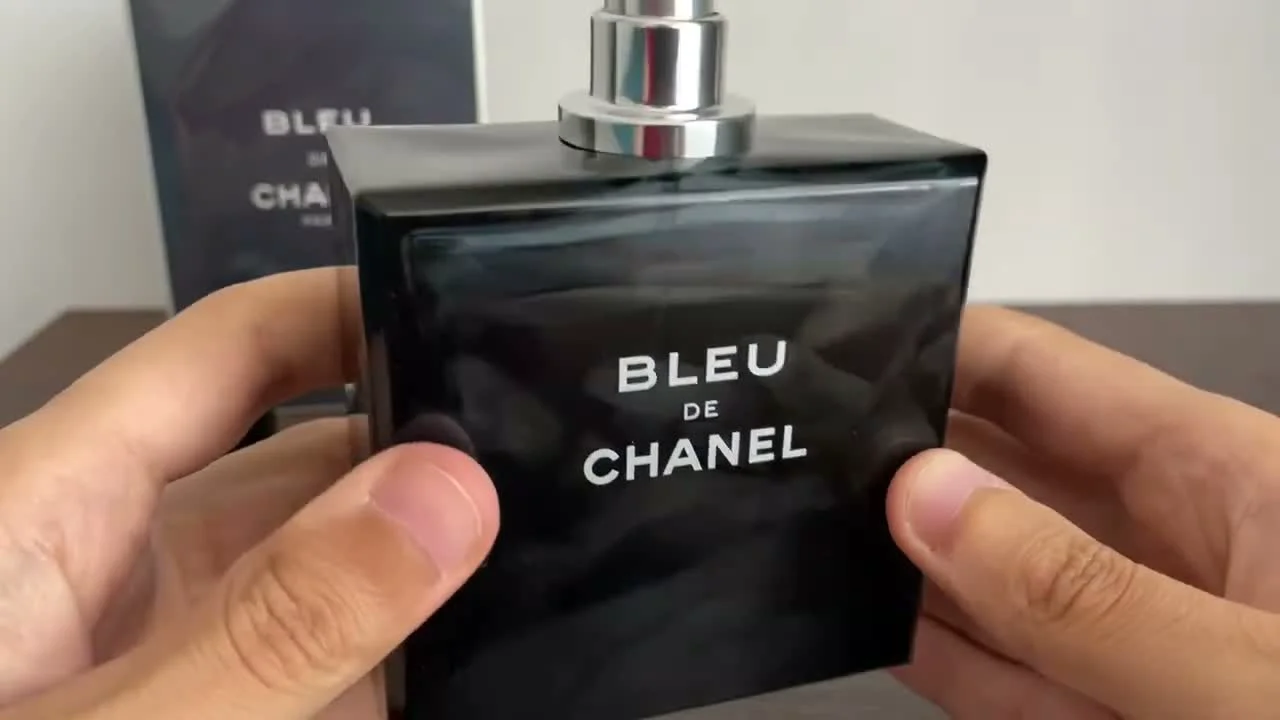
The quality of the bottle itself also reveals a fake. The 'BLEU DE CHANEL' inscription on the front should be perfect, without any smudges, streaks, or blurred letters.
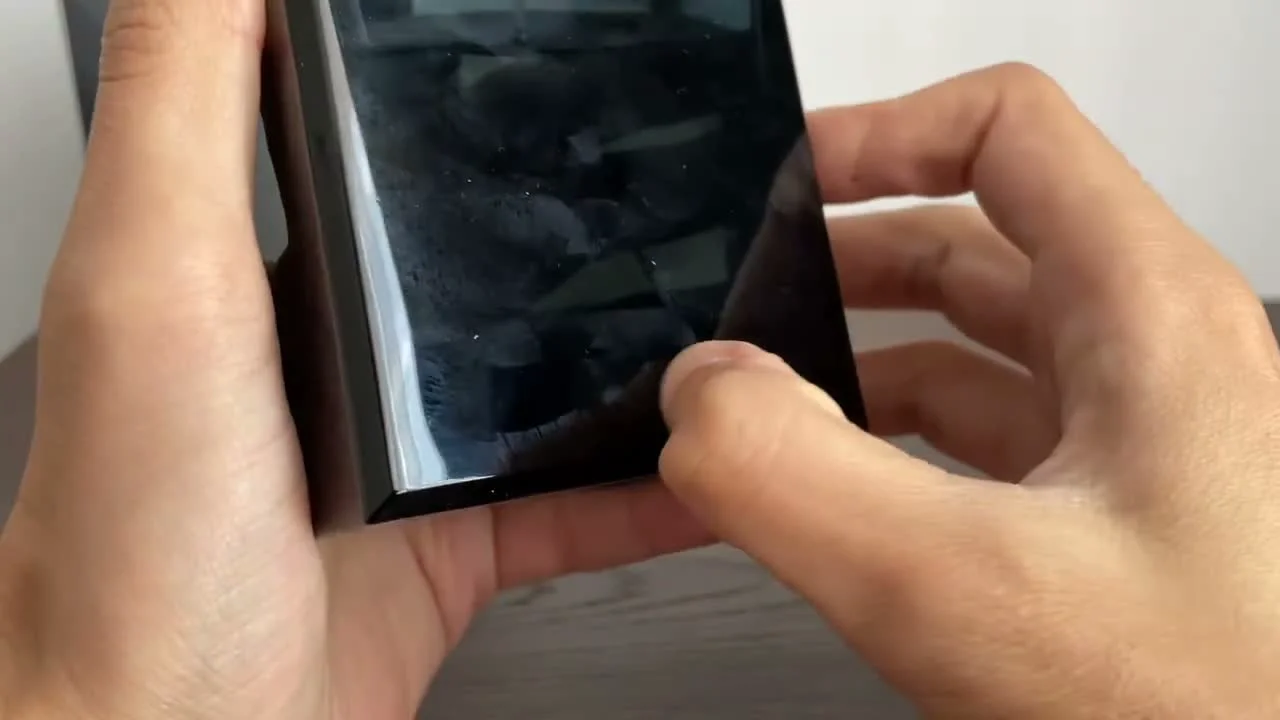
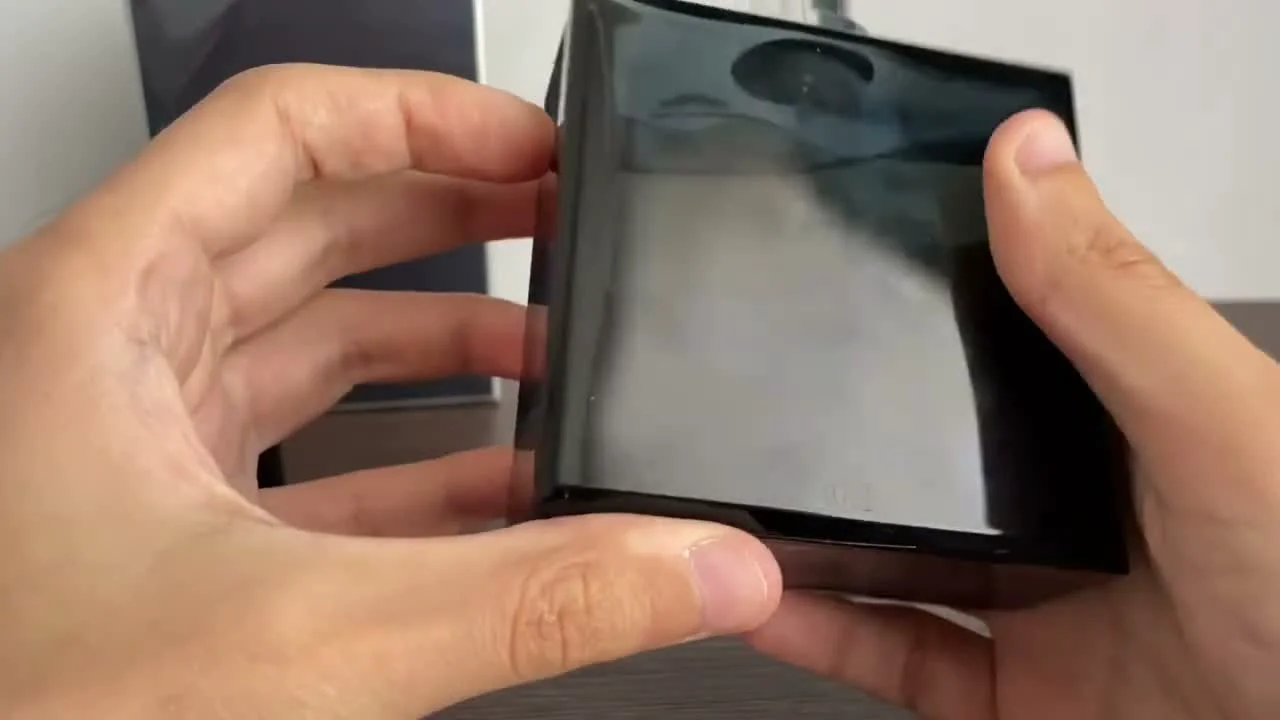
Another detail often overlooked by counterfeit manufacturers is the shape of the glass molding at the top of the bottle. The original has a complex, wedge-like shape. On many copies, especially cheap ones, this element is simplified, and the top of the bottle is just flat.
Bottle Quality: Printing and Molding Shape
Inscriptions on the Bottom of the Bottle
Volume, ml
Designation, FL.OZ.
150 ml
5 FL.OZ.
100 ml
3.4 FL.OZ.
50 ml
1.7 FL.OZ.
The information on the bottom of the bottle can also help determine authenticity. The print quality should be very high. Even the smallest elements, like the small Chanel logo, must be sharp, without details merging into a single blob, which often happens on fakes.
Also, pay attention to the correspondence between the volume in milliliters and ounces (FL.OZ.).
The presence of small glass 'feet' at the corners of the bottom is not a reliable indicator, as their presence can vary in different batches of the original.
Inscriptions on the Bottom of the Bottle
Atomizer and Tube: Small but Important Details
Next, you should inspect the atomizer. The original has its own features that are difficult to fake.
Atomizer: The nozzle should be gray. On its plastic part, there is a very fine engraving of numbers or letters that can be seen under light. On fakes, the nozzle is often deeply recessed into the metal base.
Mechanism under the atomizer: The appearance of the mechanism under the removable button can differ even among originals from different batches, so this is not the most reliable sign.
Tube: In an original bottle, the tube is very thin and almost invisible inside the liquid, especially against a dark background. Fakes often use a cheaper, thicker, and white tube that is clearly visible.
Atomizer and Tube: Small but Important Details
Conclusion: What to Pay Attention to First
In conclusion, we can highlight several key points for verification. The most reliable and revealing signs of an original Bleu De Chanel are the properties of its magnetic cap—its strength and polarity.
Other details, such as the batch code, print quality, bottle shape, and tube, serve more as additional factors for verification. Although they are important, manufacturers of high-quality fakes have already learned to copy them well.
Therefore, when buying, especially secondhand, always carefully check the cap first. This will help you filter out most of even the most convincing fakes.