The World of Vintage Brooches: From Coco Chanel to Flea Market Finds - AUCBURG | AUCBURG
The World of Vintage Brooches: From Coco Chanel to Flea Market Finds
A brooch is a piece of jewelry or costume jewelry that is pinned to clothing. However, modern fashion has expanded its use: today, this accessory can be seen on bags and even on shoes, which speaks to its versatility.
The Revival of the Brooch and the Influence of Coco Chanel
A brooch is a piece of jewelry or costume jewelry that is pinned to clothing. However, modern fashion has expanded its use: today, this accessory can be seen on bags and even on shoes, which speaks to its versatility.
The brooch owes its incredible popularity in the 20th century to the legendary Coco Chanel. It was she who asserted that one should start a jewelry collection with brooches. Without her modest but significant contribution, this elegant accessory might not have secured such a revered place in the wardrobes of fashionistas worldwide.
The Language of Love and Famous Names in the History of Brooches
Term
Description
Cameo
A piece of jewelry with a raised, relief image.
Intaglio
A piece of jewelry with a recessed, incised relief.
Another famous Frenchwoman who left her mark on the history of brooches is the Marquise de Sévigné. She is credited with inventing bow-shaped brooches. The Marquise created a whole 'language of love,' allowing people to communicate using these pieces of jewelry, giving them a special, secret meaning.
In the world of brooches, pieces with relief images are common, and they have their own names. It is important to distinguish between the two main types of such jewelry.
The Language of Love and Famous Names in the History of Brooches
How to Identify an Antique Brooch: First Steps
Identifying a vintage brooch is a fascinating process that requires attention to detail. There are several key methods that can help determine the age and origin of a piece of jewelry.
Hallmarks. The presence of a hallmark is a great stroke of luck, as it can directly indicate the manufacturer, metal purity, and even the year.
Letters and engravings. Often on the reverse side, you can find letters indicating the year of manufacture (according to special catalogs) or dedicatory inscriptions with names and dates.
Construction and materials. If there are no markings, it is necessary to study the characteristic features of the construction: materials, inlays, fastening methods, typical of different eras.
The most important element for dating is the clasp on the back of the brooch, as its design has changed significantly over time.
How to Identify an Antique Brooch: First Steps
The Key to the Puzzle: Clasps, Materials, and Styles
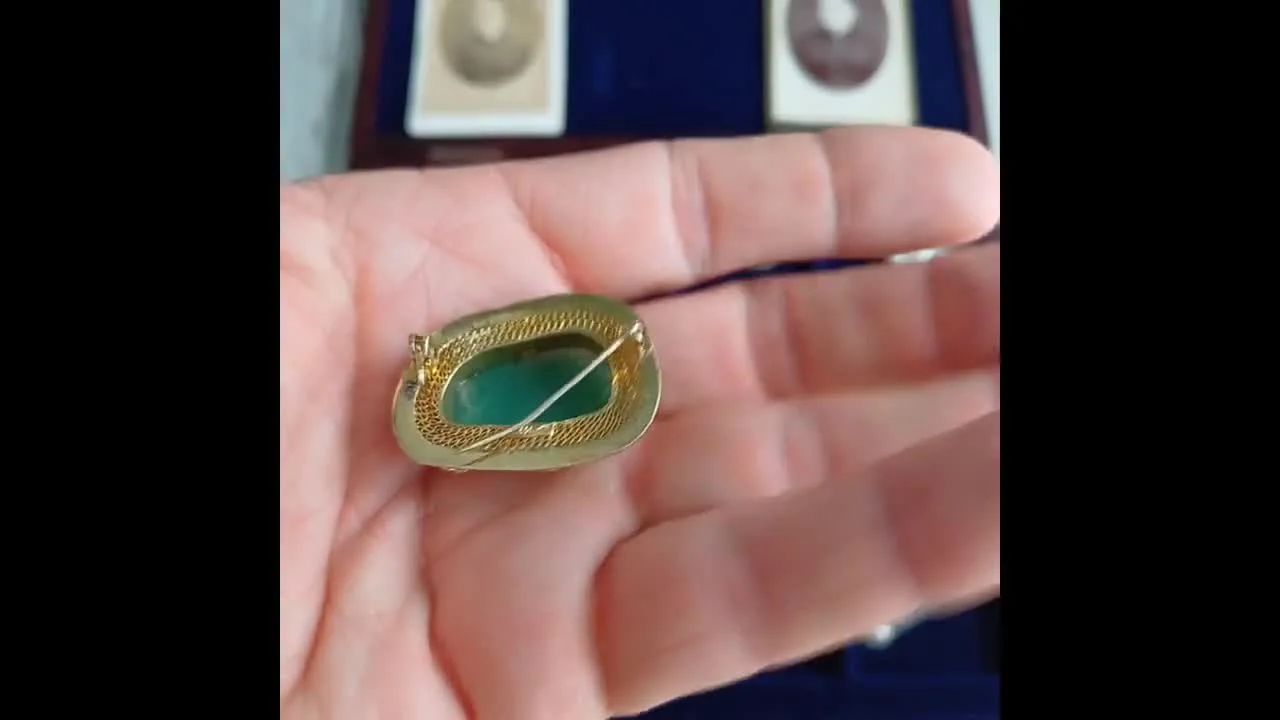
A thorough examination of the back of a brooch can reveal a lot about its age. You should pay attention to how it is finished, whether the construction is solid (cast) or soldered from several elements. The nature and quality of the workmanship are important markers of the era.
One indicative element is the 'trombone' clasp, which was common in the late 19th and early 20th centuries. It is also important to examine the stone settings: the way they are cut and the method of attachment. In antique pieces, stones were most often set using a bezel setting, whereas in cheaper and more modern jewelry, they might simply be glued on.
Art Nouveau (Modern, Jugendstil). Characterized by asymmetry, the use of natural motifs, and inexpensive materials such as semi-precious stones and bone. The main focus here is on artistic value, not the cost of the material.
Art Deco. This style, in contrast, is distinguished by strict symmetry. If you mentally divide such a brooch in half, both parts will be mirror images of each other.
The Key to the Puzzle: Clasps, Materials, and Styles
Finds from Auctions and Flea Markets
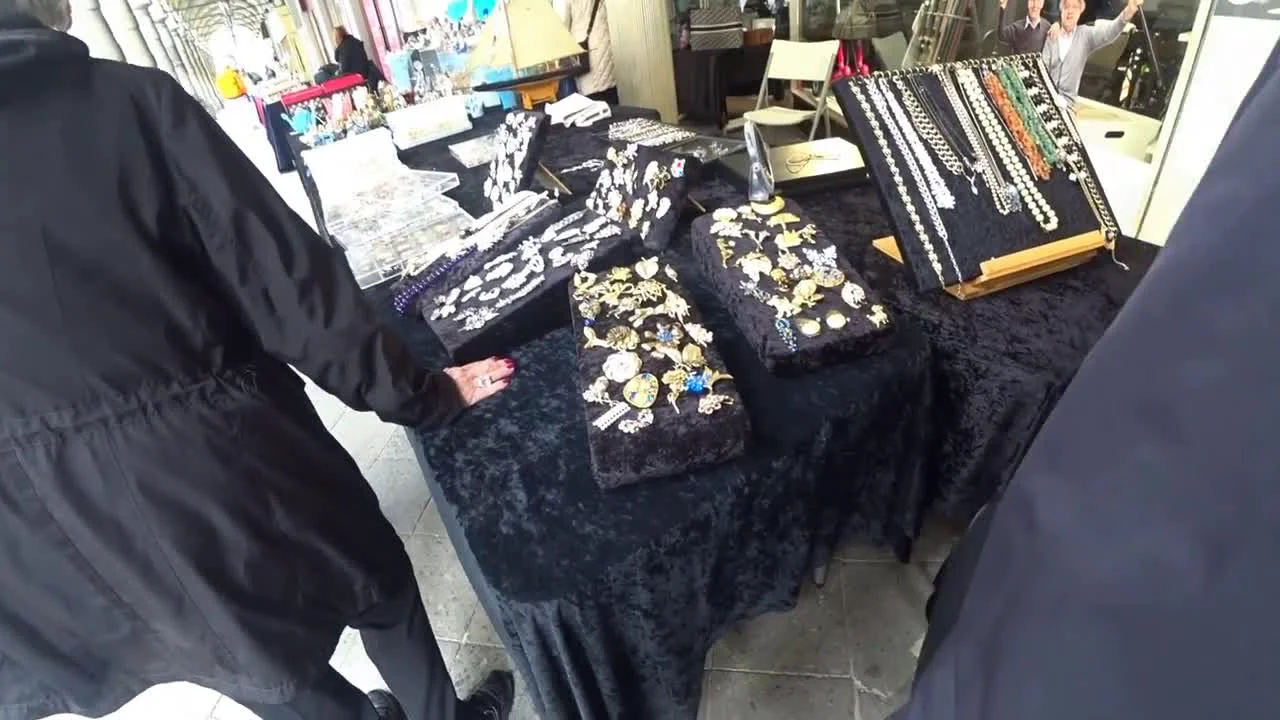
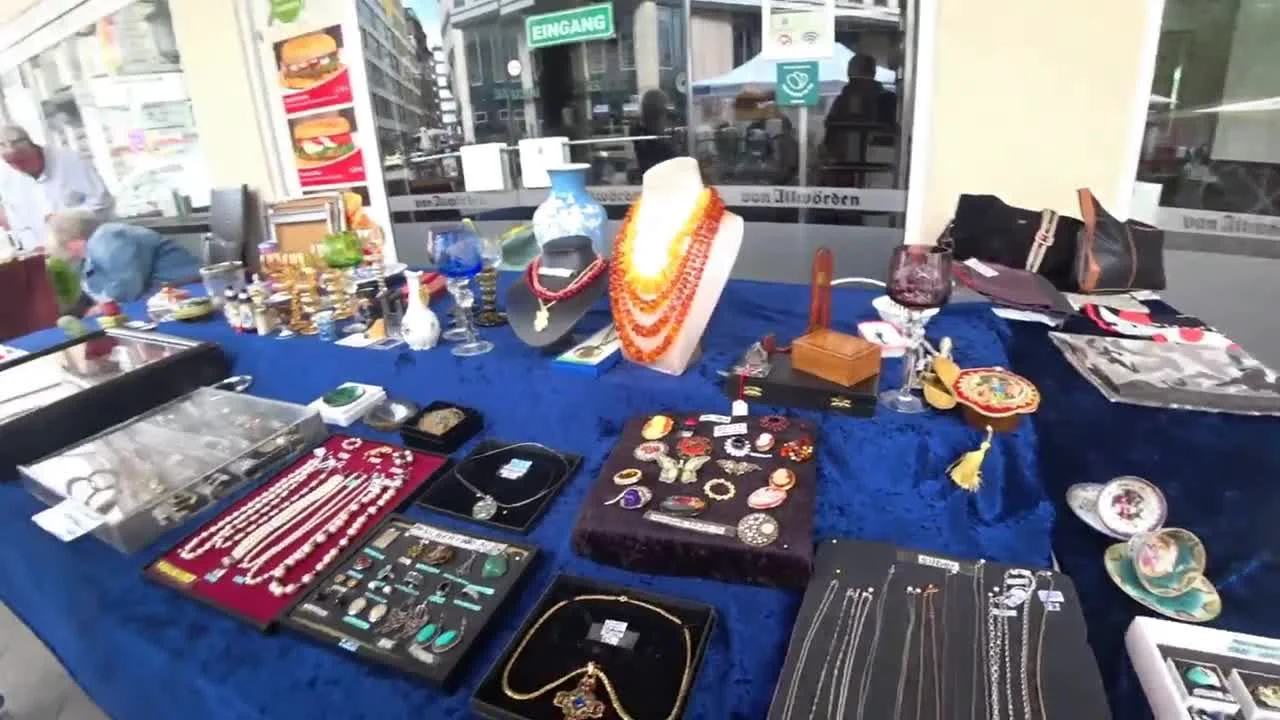
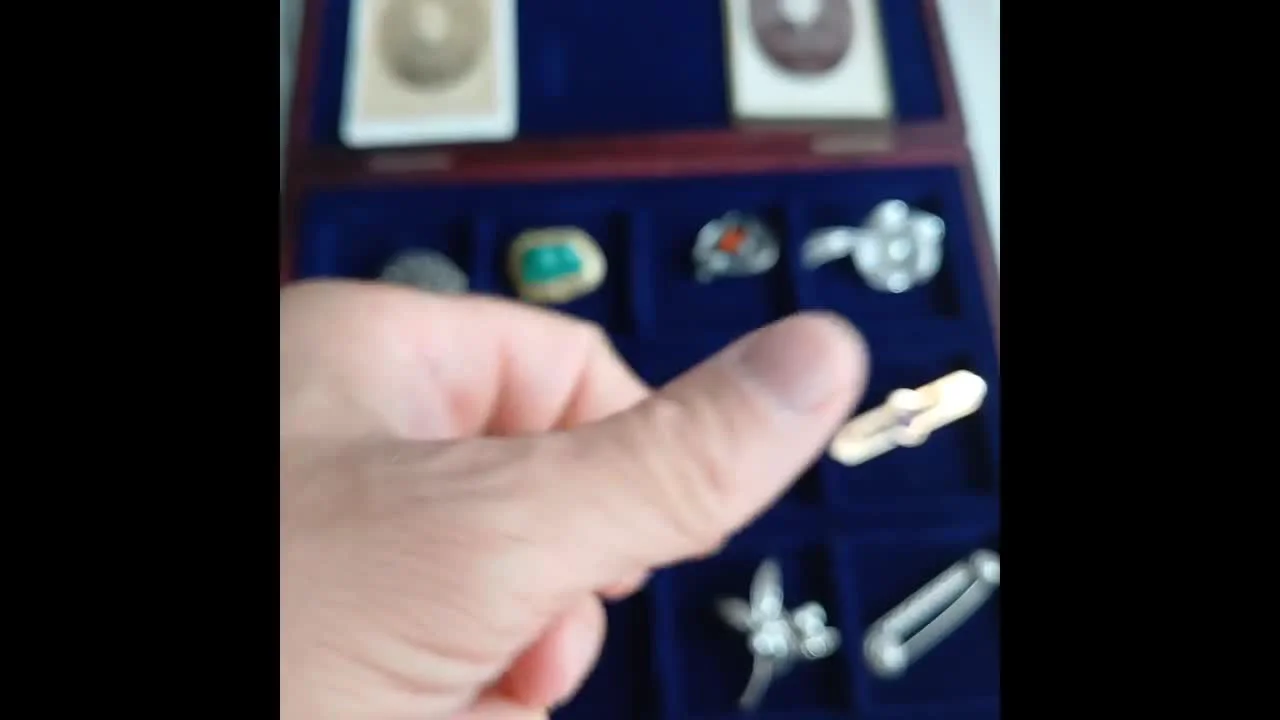
When searching for antique jewelry, precious metals can serve as a primary guide. The featured collection includes pieces made of 750-fineness gold with white gold and diamond inserts, as well as examples with pearls. There are also unique brooches, for instance, one with an Austrian ducat in a filigree setting, which can also be worn as a pendant.
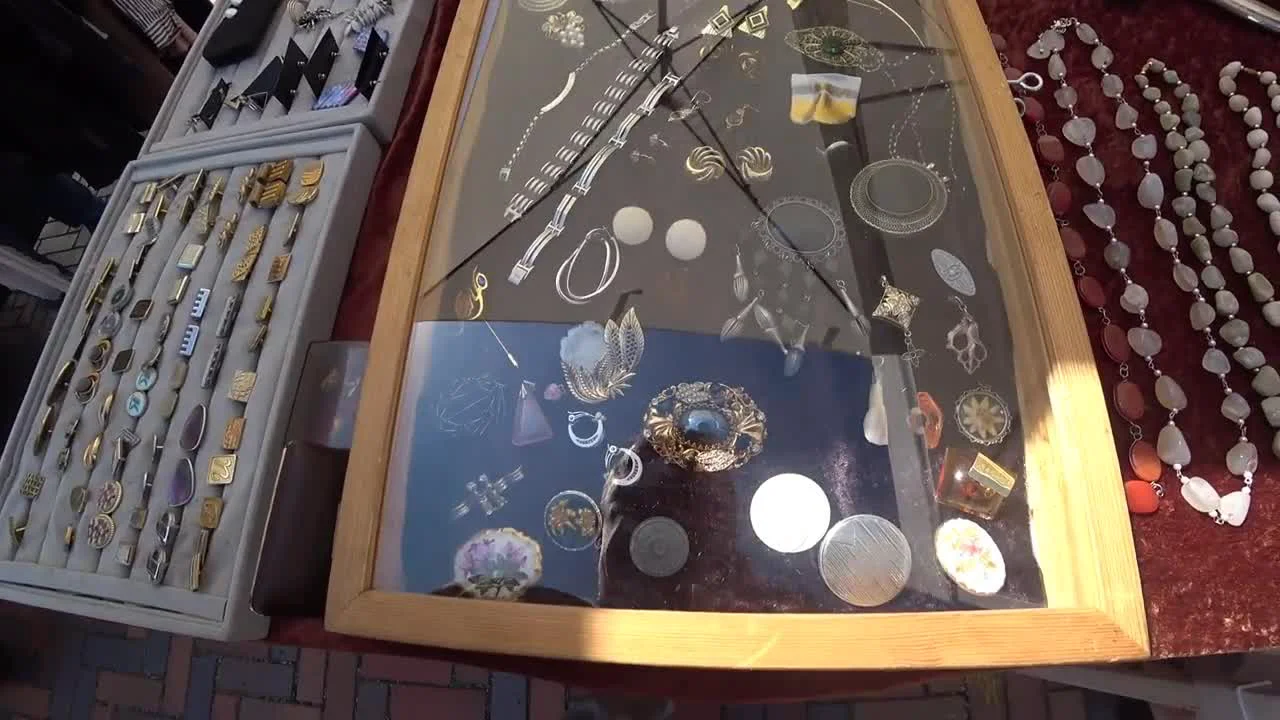
Silver brooches are also of great interest to collectors. Among them, you can find gilded items as well as jewelry with inserts of onyx, jade, marcasite, or pearls. Some pieces have a dual purpose—they can be used both as a brooch and a pendant.
Soviet jewelry, for example, with amber, holds a special place. The hallmark with a letter on such pieces ('Я' for Ya or 'К' for K) can indicate that they were produced either in Kaliningrad or in the Baltic republics.
Finds from Auctions and Flea Markets
Sizes and Purposes of Brooches
The size of a brooch often determines how and with what it was worn. There is a conventional classification that helps to understand the purpose of a particular piece of jewelry.
Small brooches. Their size is usually 1-2 centimeters.
Medium brooches. The size ranges from 3 to 5 centimeters. Such jewelry was worn on dresses, blouses, and suits.
Large brooches. Pieces larger than 5 centimeters were generally intended for outerwear, such as coats or capes.