Why Old Coins Are Worth Nothing: A Beginner's Guide to Valuation - AUCBURG | AUCBURG
Why Old Coins Are Worth Nothing: A Beginner's Guide to Valuation
Many people who find a Soviet-era coin in an old drawer or receive one as a gift believe they've struck treasure. This leads to numerous appraisal requests, but in most cases, their expectations are not met.
The Myth of USSR Coin Value: Why 95% of Them Are Worthless?
Many people who find a Soviet-era coin in an old drawer or receive one as a gift believe they've struck treasure. This leads to numerous appraisal requests, but in most cases, their expectations are not met.
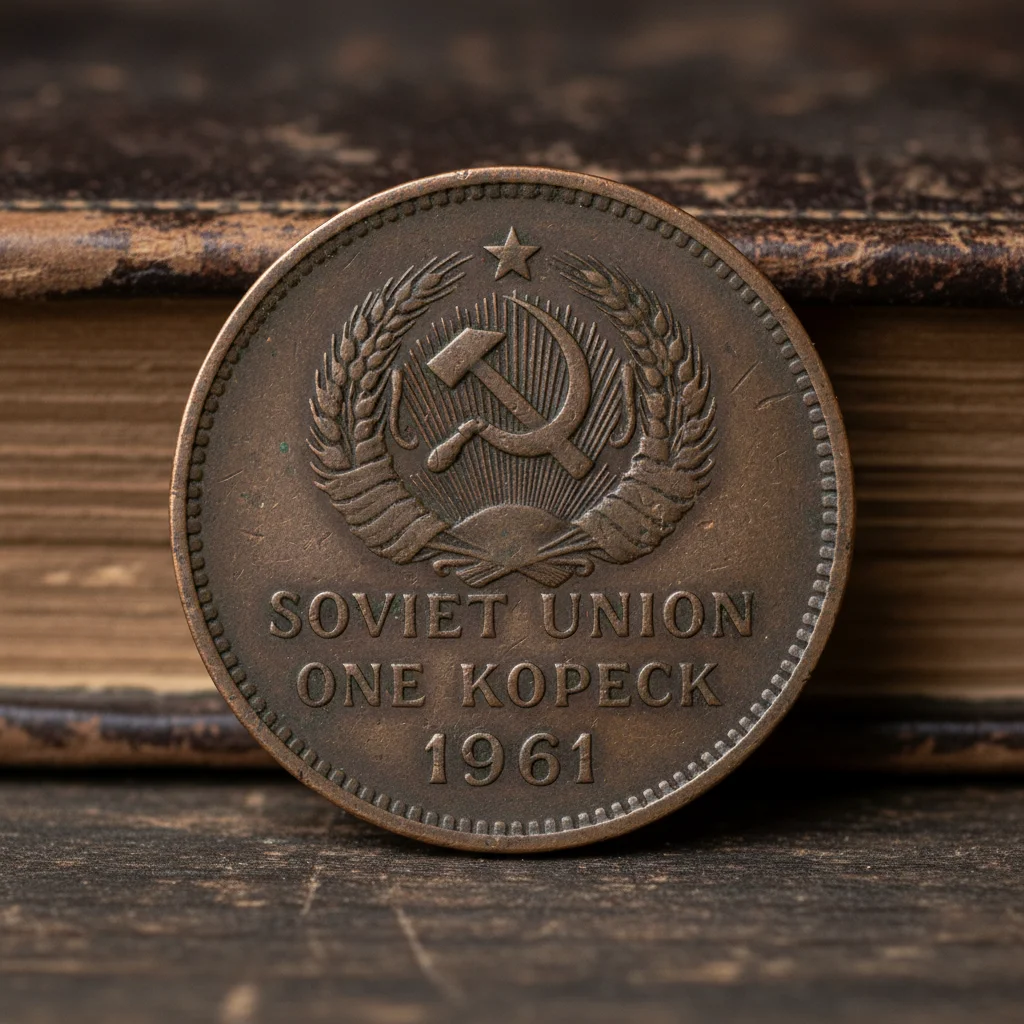
The fact is that about 95% of all coins issued in the USSR have no numismatic value. Even if a coin is dated, for example, to the 1970s, this does not mean it is rare or expensive.
The main reason for their low value is the massive mintage of circulation coins. They were intended for daily use by millions of people, so a huge number have survived, which determines their low market price today.
The Main Principle of Numismatics: Old Doesn't Mean Valuable
The key rule a beginner must learn is simple: a coin's age does not equal its value. These two concepts are not directly related. A coin's value is primarily determined by its rarity, and rarity is determined by its mintage.
A coin with a mintage of millions, even if it's 100 or 200 years old, will likely not be expensive. Meanwhile, a modern coin minted in a limited run just a year ago could be much more valuable.
Most circulation coins, whether Soviet, Tsarist, or foreign, were produced in huge quantities for daily use. Therefore, if you find such a coin, you shouldn't expect it to make you a fortune.
The main principle of numismatics: old doesn't mean valuable
Appraisal Mistakes: Why You Can't Trust Online Listings
The internet is full of conflicting information about coin values, and you should trust it with great caution. You can often find listings selling common coins for exorbitant amounts, for example, for a million. Such prices are set by people who do not understand numismatics themselves.
They, just like you, might have found a coin, considered it unique, and listed it for sale at an inflated price. This doesn't mean the coin is actually worth that much. Additionally, some websites intentionally inflate prices in their catalogs, misleading beginners.
After seeing a high price online, a person might start calling shops to offer their coin, only to be rejected. The real value is determined by collector demand, not by random listings.
Appraisal mistakes: why you can't trust online listings
The Importance of Condition: How a Coin's State Affects Its Value
Grade
Description
VF (Very Fine)
Good condition. The coin has been in circulation and shows wear, but most of the design is intact.
XF (Extremely Fine)
Excellent condition. The coin has minor traces of circulation, with over 90% of the original surface preserved.
UNC (Uncirculated)
Superb condition. The coin has not been in circulation, is virtually undamaged, and has a smooth, matte surface.
Proof
Coins specially minted for collectors. They have a mirror-like field and a detailed, frosted design.
Besides mintage, one of the most important factors affecting a coin's value is its condition. Collectors are willing to pay significantly more for specimens in perfect condition, with no signs of circulation.
Even a rare coin that is heavily worn, scratched, or damaged will be worth much less than its counterpart in superb quality. This is especially true for Tsarist copper coins, which are often found in very poor condition.
A special scale is used to grade condition. The higher the grade, the higher the price. Most coins that people find by chance show signs of long circulation and fall into low-grade categories.
The importance of condition: how a coin's state affects its value
How to Independently Determine the Value of USSR Coins
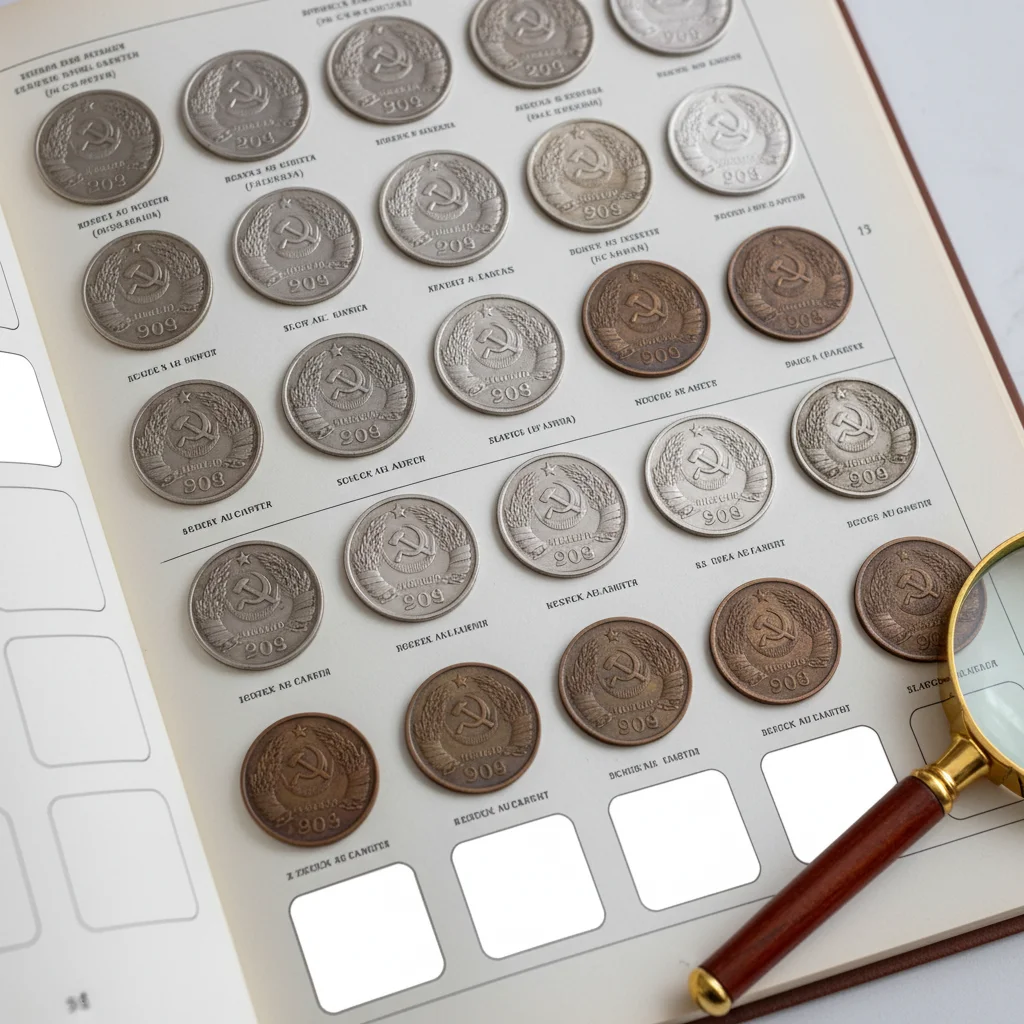
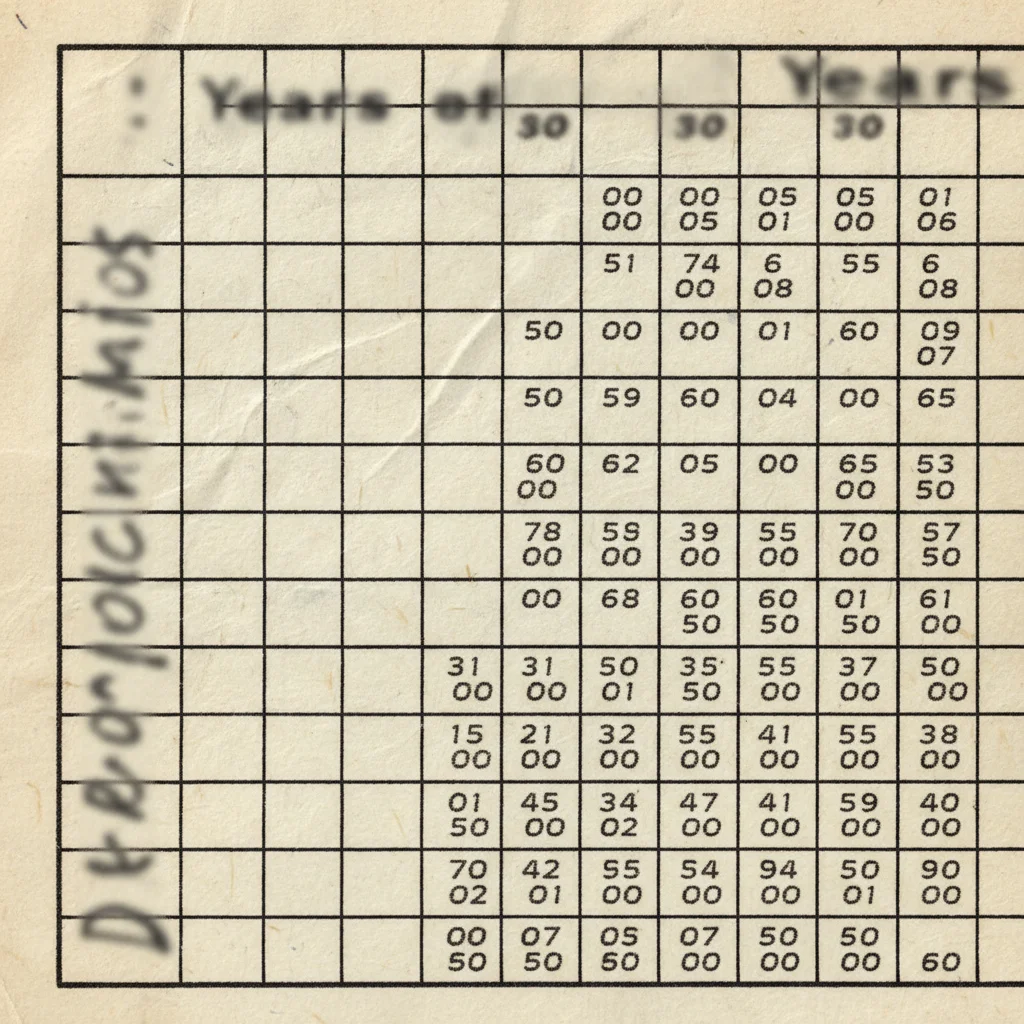
To get a rough idea of the value of Soviet coins, you can use special price guide catalogs. They contain tables listing the denomination, year of issue, and an estimated price for the coin.
To determine the price, you need to find your coin's year of issue in the table and match it with the denomination. For example, a 1977 5-kopek coin might be listed in such a guide for only 10 rubles. By studying the table, you'll notice that the vast majority of entries have a very low value.
This way, you can sort through your coins yourself and set aside those that, according to the catalog, might be of interest. Only after this, if you have indeed found something rare, does it make sense to offer the coin to collectors.
How to independently determine the value of USSR coins
Valuing Other Coins: Commemorative, Tsarist, and Foreign
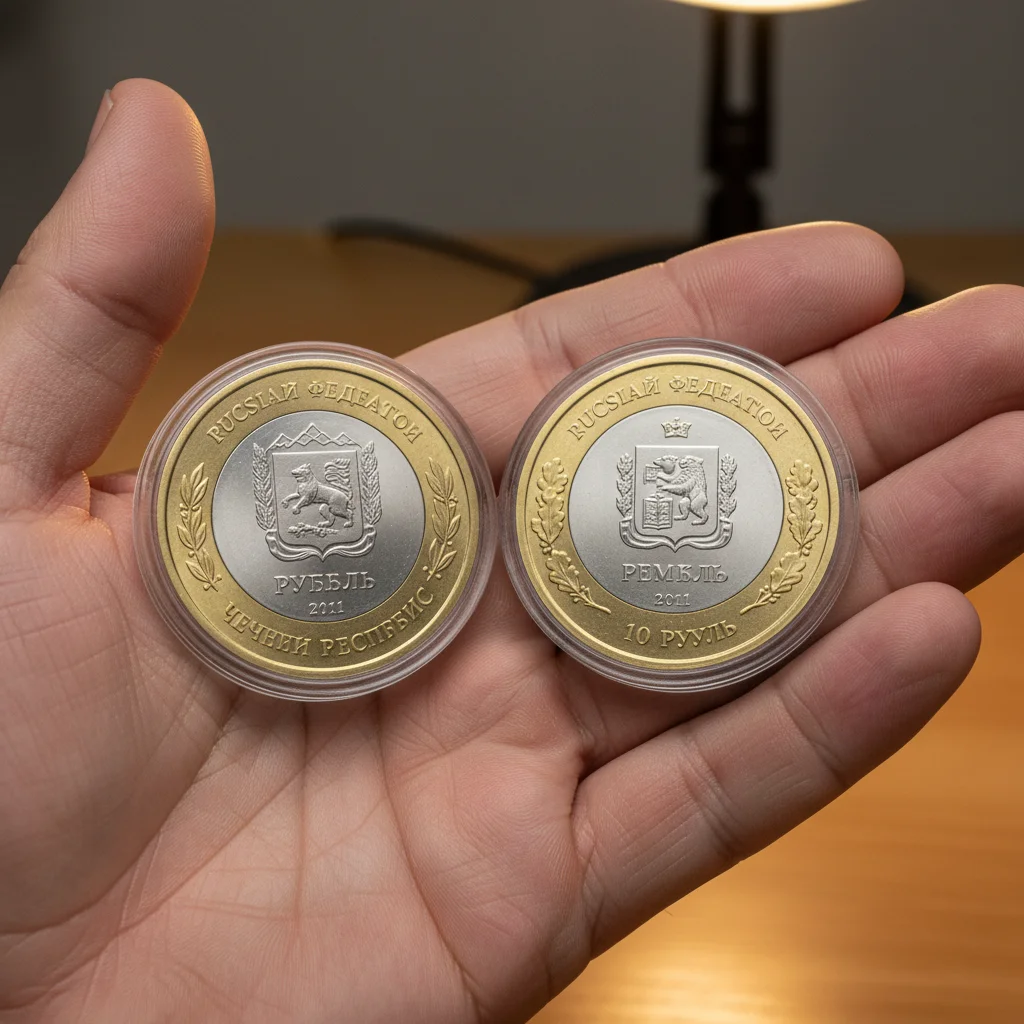
The valuation rules apply to all types of coins, whether they are commemorative issues, coins from Tsarist Russia, or foreign coins. For example, the popular commemorative USSR ruble featuring Lenin, contrary to expectations, is very cheap—around 100 tenge—because it was issued in a massive mintage.
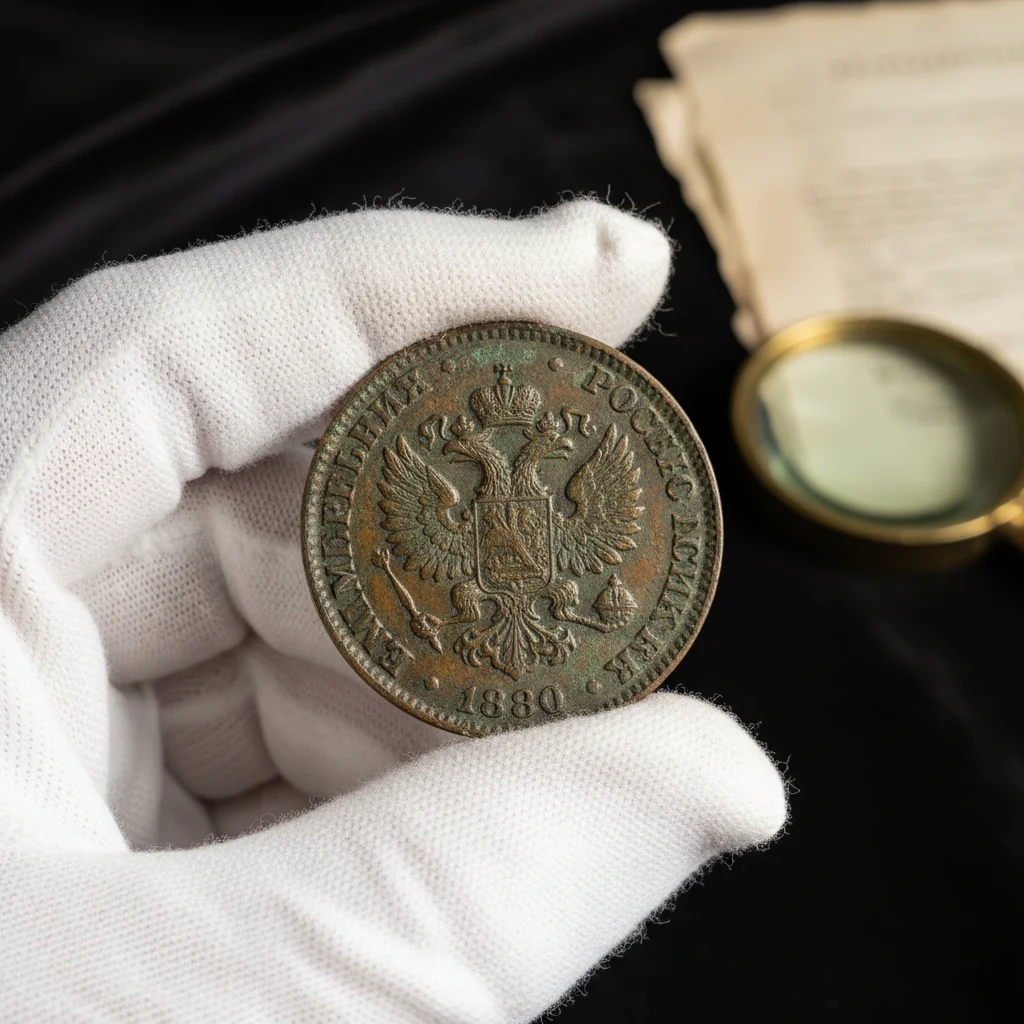
Old copper coins from Tsarist times may also not be highly valuable if they are in poor condition. A heavily worn 1-kopek coin from 1837 might be worth 500 tenge, whereas a 1/2-kopek coin from 1845 in good condition could be worth 2000 tenge.
As for common foreign circulation coins, they are usually sold by weight or individually at a very low price, for example, 50-100 tenge per piece. Beginner collectors often buy them by the kilogram to sort out the specimens that interest them.
Valuing other coins: commemorative, Tsarist, and foreign
What to Do If You Find a Truly Rare Coin?
If, after checking a catalog, you are convinced that your coin is rare and valuable, you need to approach selling it correctly. Don't just send out photos with the question 'how much is it worth?', as professionals won't waste time on an appraisal without a concrete offer.
Follow these simple steps to increase your chances of a successful sale:
Take high-quality photos. Photograph the obverse, reverse, and edge of the coin in good lighting so that all details are visible.
Do not clean the coin yourself. Improper cleaning can damage the coin and significantly reduce its value. It's best to leave it in the condition you found it.
Formulate a clear offer. After find-ing out the approximate market value, offer the coin to a collector or a specialized shop with your desired price.
Don't be discouraged by rejection. If one collector refuses, it doesn't mean the coin is worthless. They might already have that specimen, or they might not agree with the price. Simply offer it to someone else.