Patina on Coins: A Collector's Guide - AUCBURG | AUCBURG
Patina on Coins: A Collector's Guide
Many new and even experienced collectors wonder what to look for when choosing a coin. One of the most common and complex questions is the evaluation of patina. Is it worth acquiring a coin with patina, how does it affect its value, and what potential pitfalls might be associated with it?
Many new and even experienced collectors wonder what to look for when choosing a coin. One of the most common and complex questions is the evaluation of patina. Is it worth acquiring a coin with patina, how does it affect its value, and what potential pitfalls might be associated with it?
Patina is not just a tarnish, but an important characteristic that can either enhance a coin or hide serious defects. Understanding its nature and varieties helps in making the right choice and building a collection wisely.
What is Patina and How Does It Form?
Term
Description
Patina
A thin film of oxides on the surface of a coin, formed under the influence of the external environment.
Formation Factors
Humidity, soil composition, storage materials (e.g., wood), air composition.
Effect on Appearance
Patina can have different colors (from golden to dark gray), intensity, and uniformity.
Patina is a thin film of oxides that forms on a coin's surface due to the physicochemical impact of the surrounding environment. Its appearance directly depends on the conditions in which the coin was kept.
The factors influencing patina formation can vary greatly: from long-term burial in the ground to storage in a special coin cabinet (Münzkabinett) or even in the attic of an old house. It is these conditions that determine the intensity, saturation, and color of the patina.
What is patina and how does it form?
Advantages of Coins Without Patina
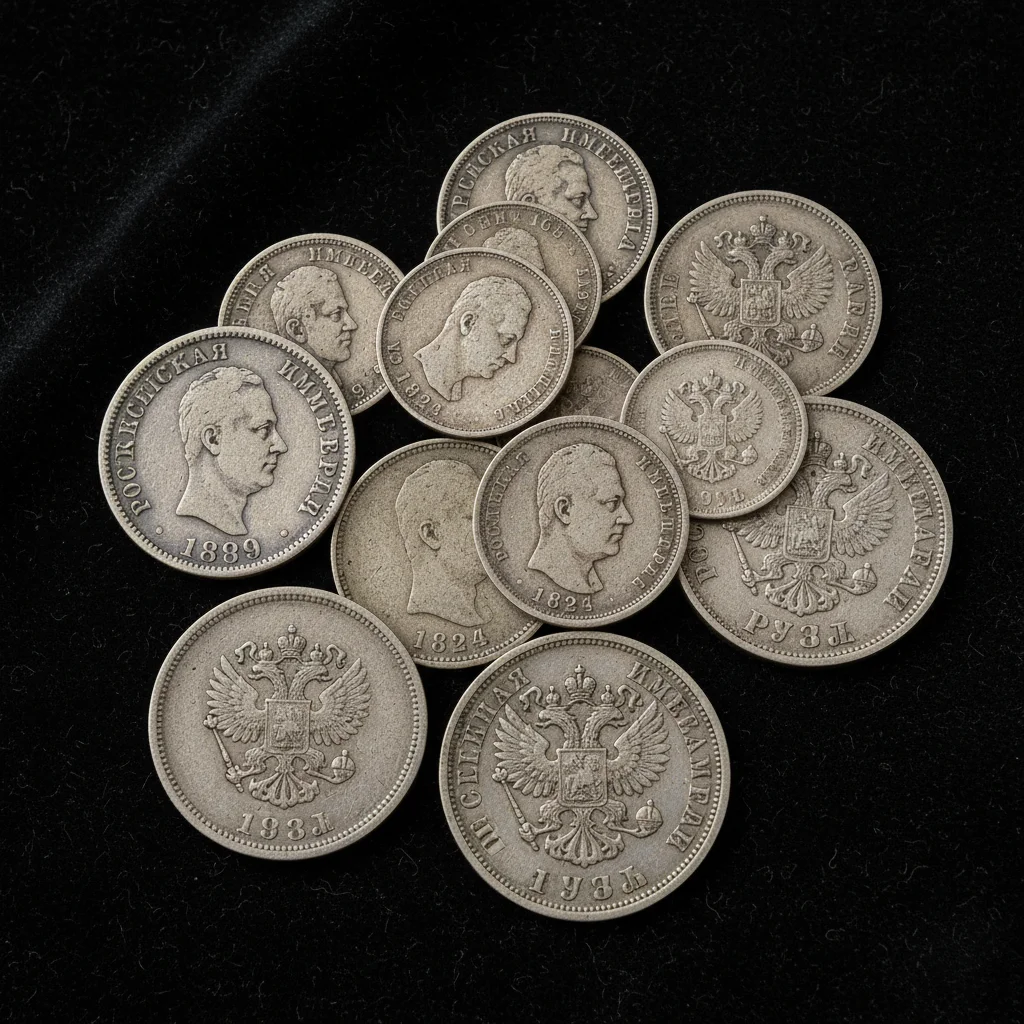
Many collectors are wary of buying coins covered with patina and prefer "clean" specimens. The main advantage of such coins is that their surface is completely open for inspection.
On a coin without patina that has been carefully cleaned, all the finest details and potential flaws are visible. This allows for an immediate assessment of its true condition: micro-scratches, small areas of corrosion, nicks, and the degree of wear. The entire history of the coin is clear to see, which eliminates unpleasant surprises.
Advantages of coins without patina
When Patina Enhances, and When It Hides Defects
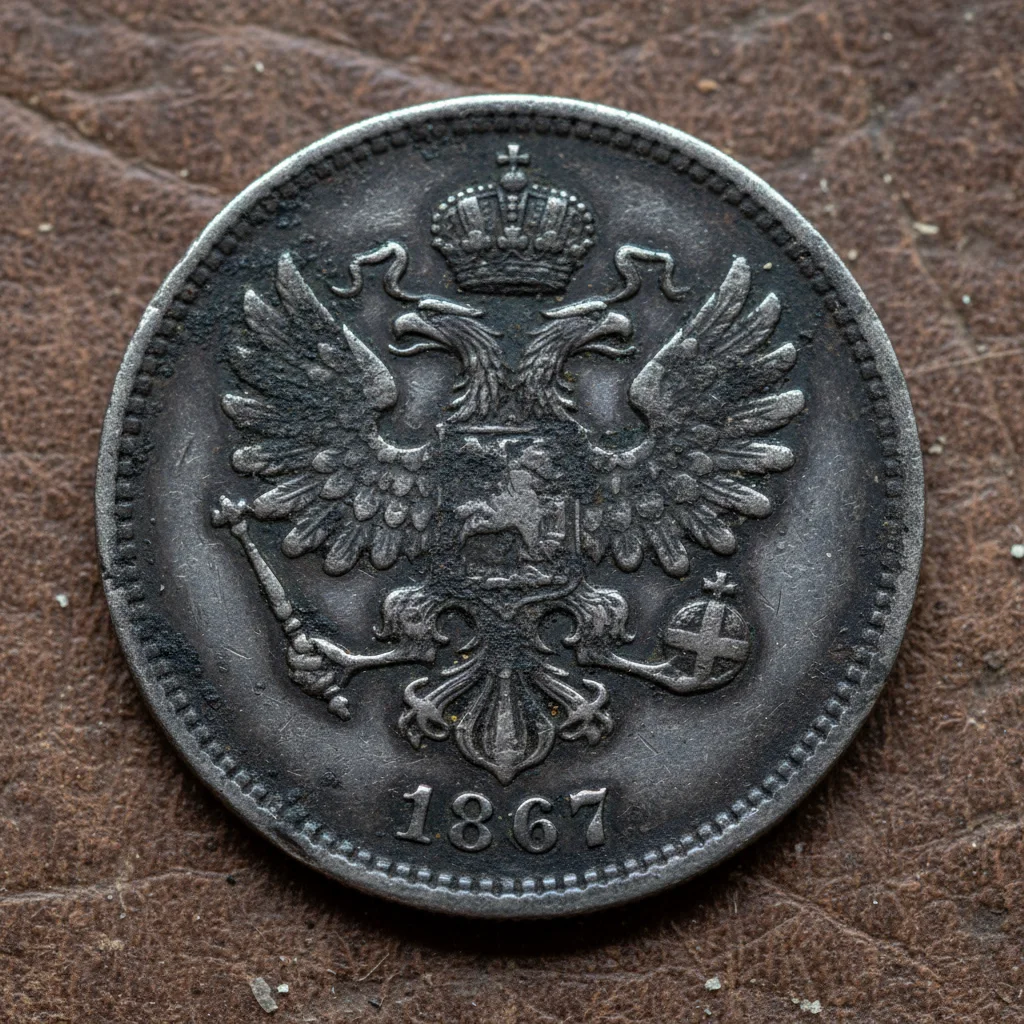
Patina varies, and its role in a coin's assessment is ambiguous. On one hand, a beautiful dark patina can accentuate the relief and give the coin a noble appearance. However, such a thick layer can hide serious defects—scratches, corrosion, or nicks—that will only become visible after professional cleaning.
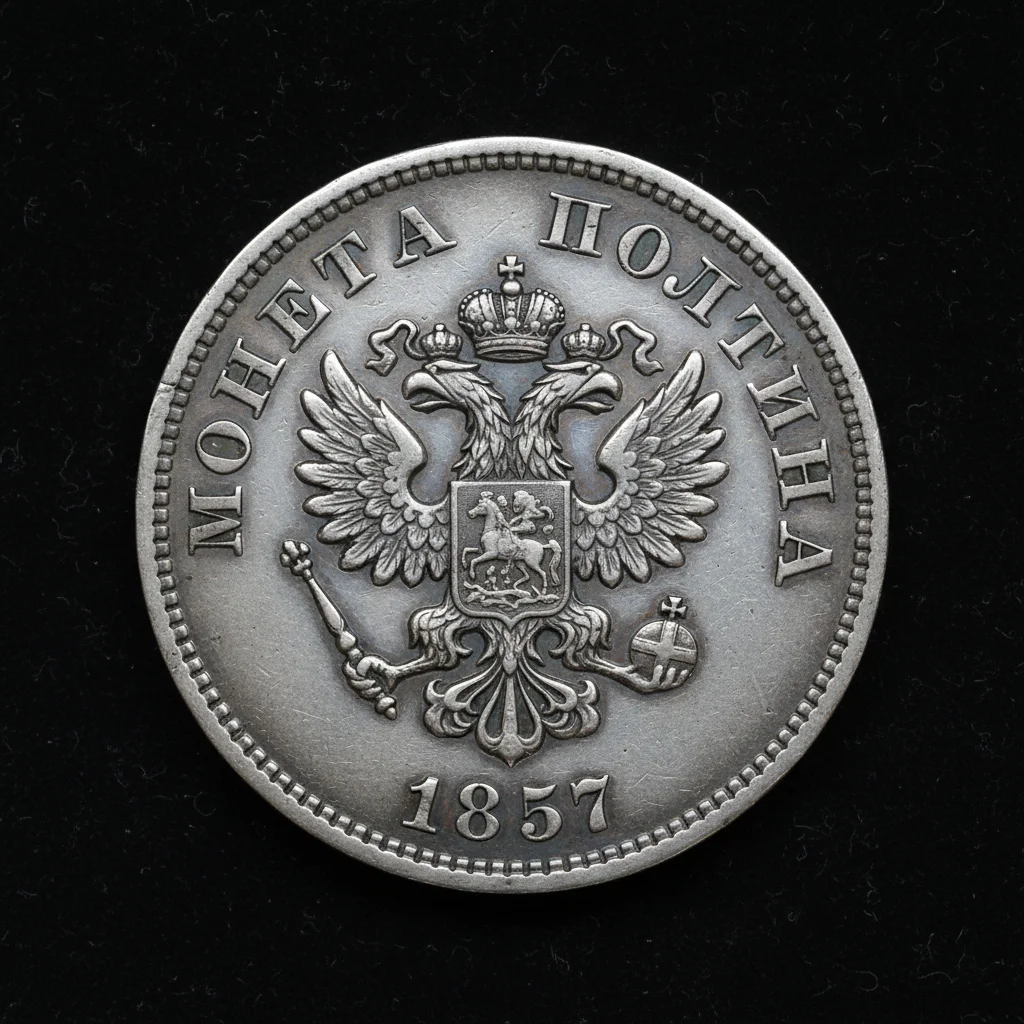
On the other hand, there is a type of patina that is prized by collectors. For example, a light, dark patina on an 1854 ruble coin, from under which the mint luster and all details of the relief are clearly visible. Such patina does not hide but rather enhances the coin, attesting to its excellent preservation and almost complete absence of circulation marks.
When patina enhances, and when it hides defects
"Earthy" Patina and the Risk of Counterfeits
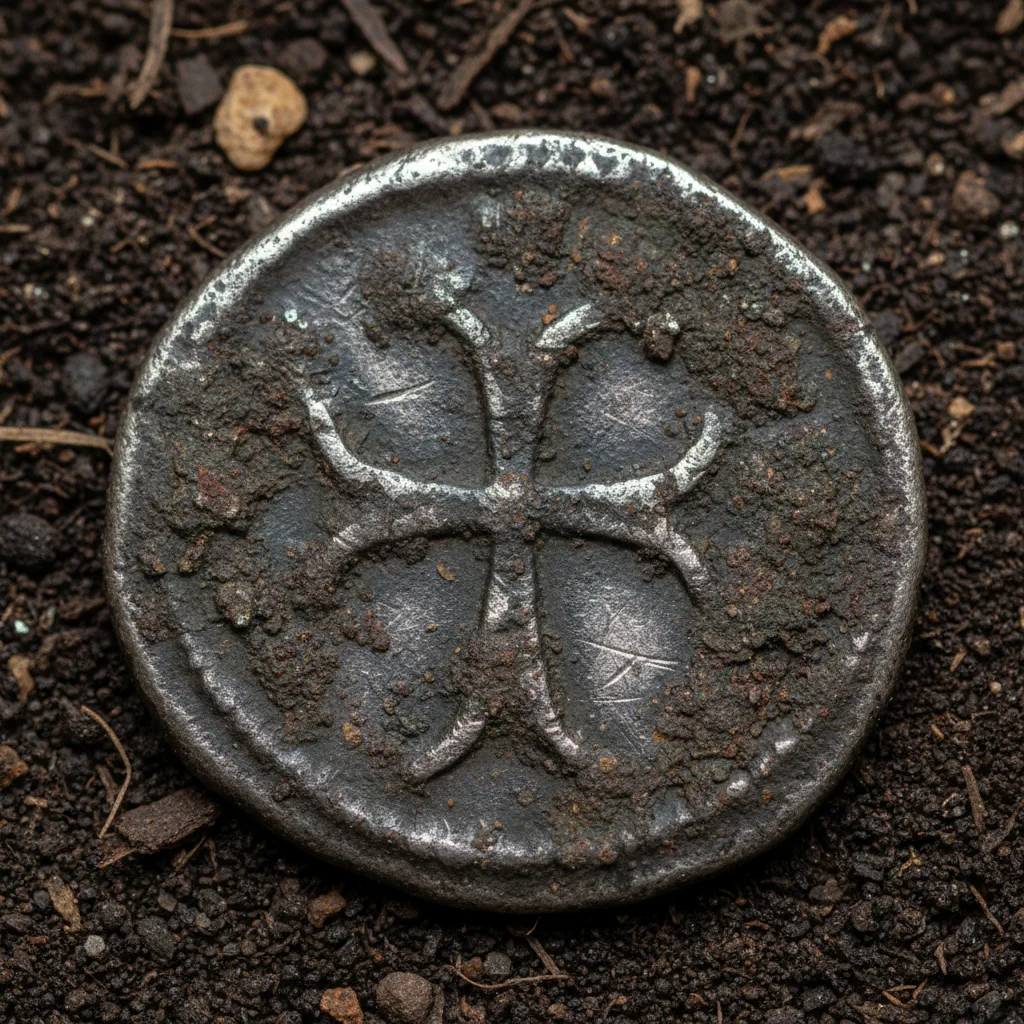
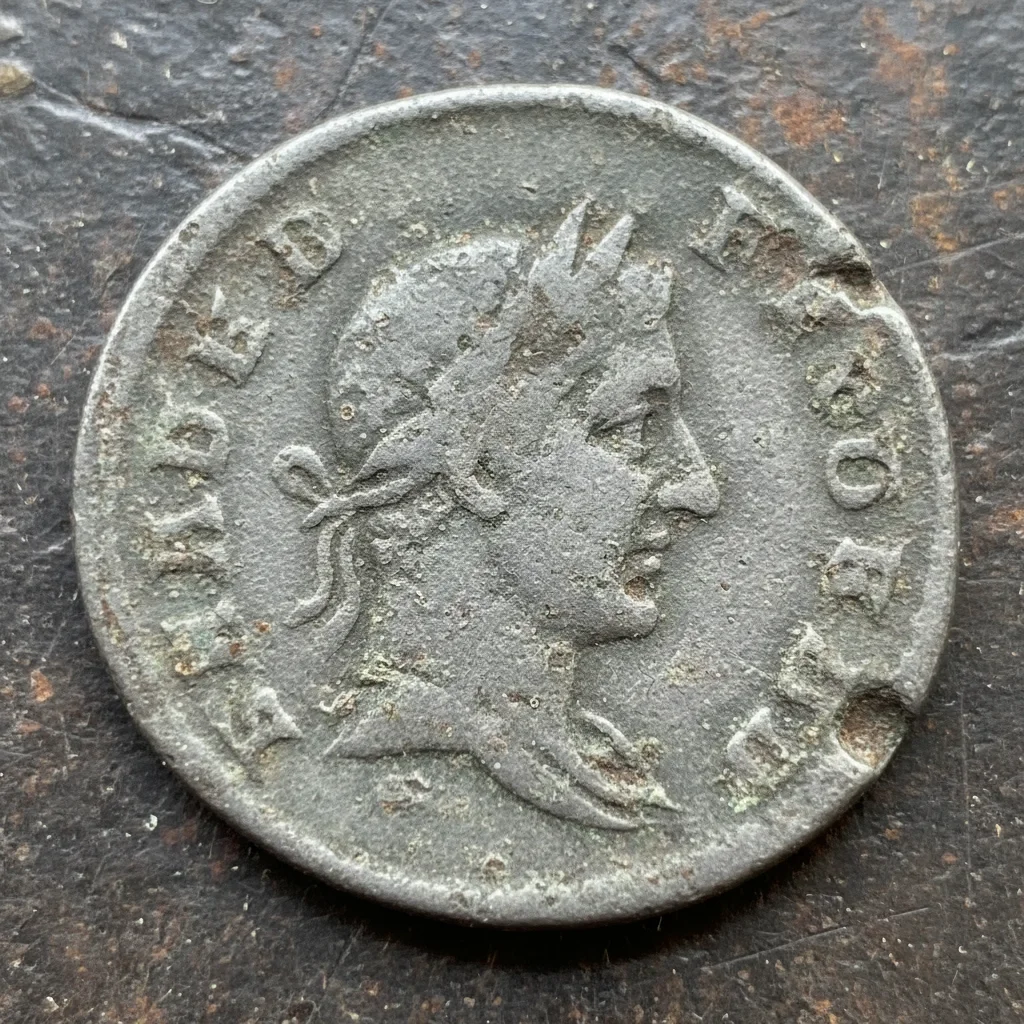
Special caution should be exercised with coins that have a gray, "earthy" patina. Such specimens have typically been found in the ground and have been in circulation for a long time. Their surface often has numerous flaws: nicks, corrosion, dings, and wear.
The light gray patina on such coins is not just oxides but also ingrained dirt that masks the true condition. After cleaning, the number of visible defects may only increase, leading to disappointment. Such coins rarely hold collection value, except for very rare specimens.
It is important to know that a similar gray patina is often artificially applied to counterfeits to hide production flaws. If mint luster is not visible underneath such a layer, the probability that you are looking at a copy is very high.
"Earthy" patina and the risk of counterfeits
Noble Cabinet Patina
A dark patina is not always a sign of an "earthy" origin or a counterfeit. There is a so-called cabinet patina, which forms during long-term storage of a coin in a collection, for example, in a special drawer—a coin cabinet (Münzkabinett).
Such a patina is typically thick, rich, and uniform. A bright mint luster and all the fine elements of the design are clearly visible underneath it. In this case, the patina does not hide but emphasizes the details, making the coin more attractive.
Interestingly, the color of the patina can even be influenced by the type of wood the coin cabinet is made from. For example, storage in a mahogany (redwood) cabinet can, over time, give silver coins a beautiful golden-brownish hue.
Noble cabinet patina
Three Rules for Evaluating Coins with Patina
When choosing a coin with patina, you can be guided by a few simple conclusions that will help you make the right decision.
A coin without patina — 'YES'. All its pros and cons are visible, allowing for an objective assessment of its condition and collectible value.
A coin with patina, under which mint luster and relief details are visible — 'YES'. Such a patina does not hide defects but only ennobles and enhances the coin's appearance.
A coin with thick, dark, uneven patina that hides mint luster and details — 'CONSULT A PROFESSIONAL'. Such patina should be a red flag. It could be a sign of a counterfeit or hide significant defects. It is worth consulting a specialist before purchasing such a coin.