Extracting Gold from Old RAM Chips: A Step-by-Step Process - AUCBURG | AUCBURG
Extracting Gold from Old RAM Chips: A Step-by-Step Process
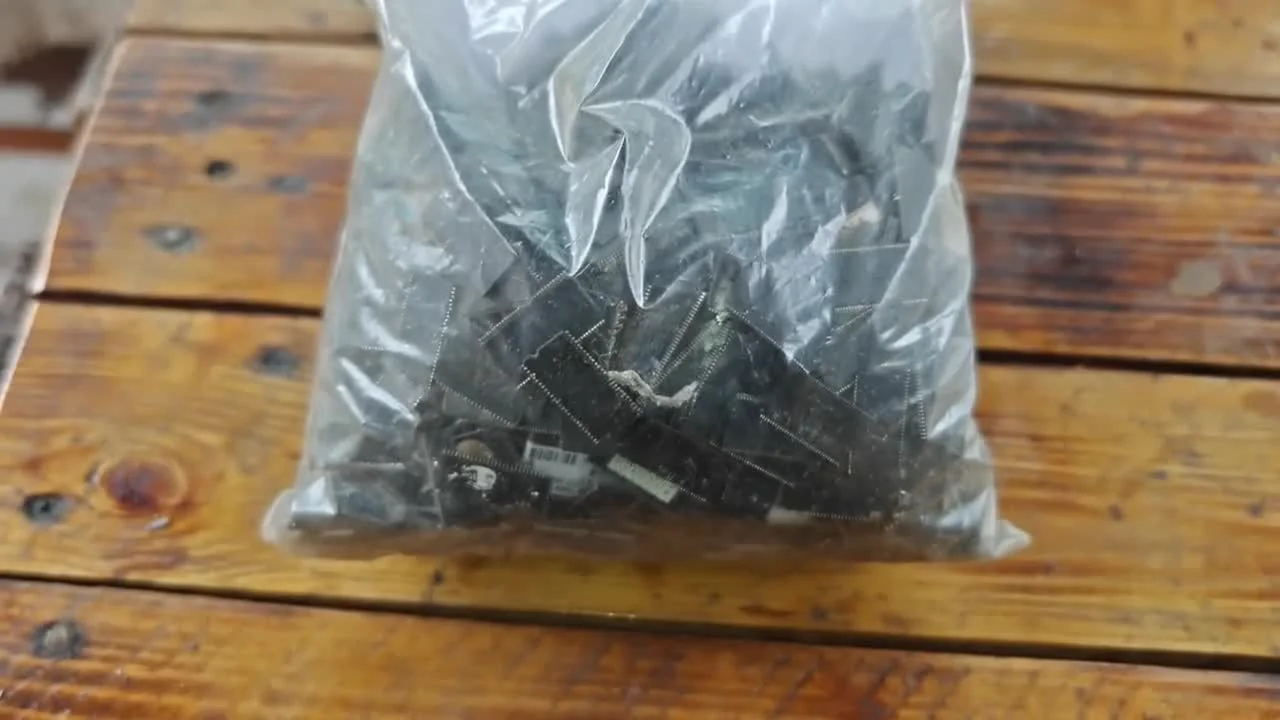
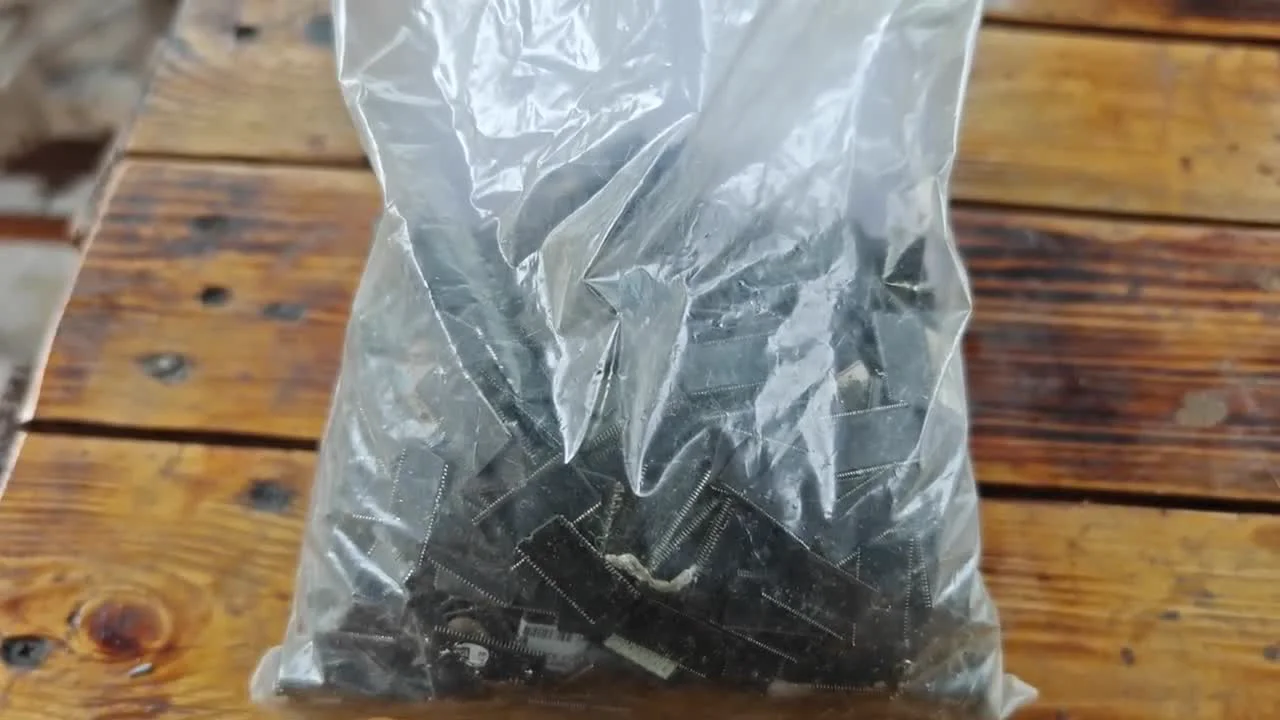
The source material for gold extraction is a batch of uniform chips removed from old RAM modules. The total weight of the material is 899 grams, which is rounded up to 900 grams for ease of calculation.
The source material for gold extraction is a batch of uniform chips removed from old RAM modules. The total weight of the material is 899 grams, which is rounded up to 900 grams for ease of calculation.
Thermal Treatment and Initial Sorting
Initially, the plan was to etch the chip pins with acid, but this idea was abandoned in favor of direct incineration. After the thermal treatment, the chips acquire a silvery-gray hue. Since the pins turned out to be magnetic, it was decided to separate them with a magnet and dispose of them to avoid complicating the subsequent process.
Thermal treatment and initial sorting
Chemical Treatment of the Ash
The incinerated material is ground into a white-gray ash. This ash is then subjected to etching in a solution of nitric acid with the addition of an electrolyte. This procedure is necessary to dissolve the residues of base and magnetic metals that were not burned off during incineration.
After the reaction is complete, the resulting precipitate is thoroughly washed to remove residual acid and dissolved salts.
Chemical treatment of the ash
Dissolving in Aqua Regia
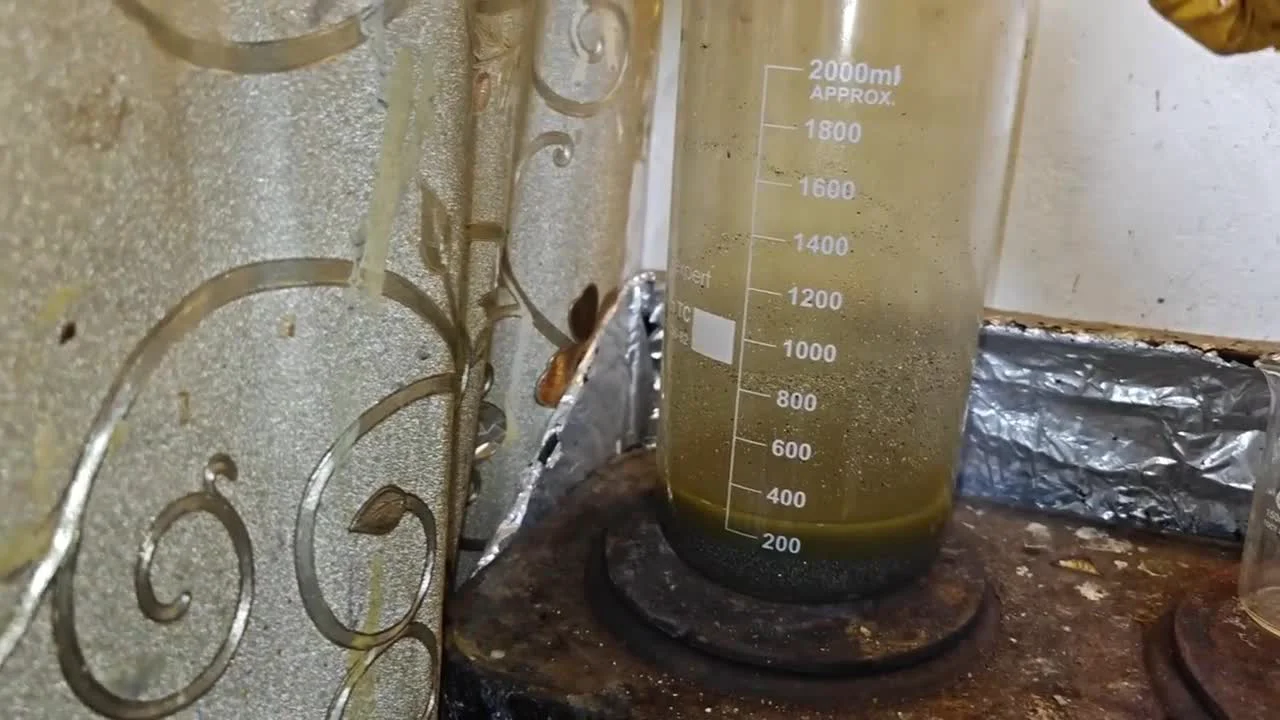
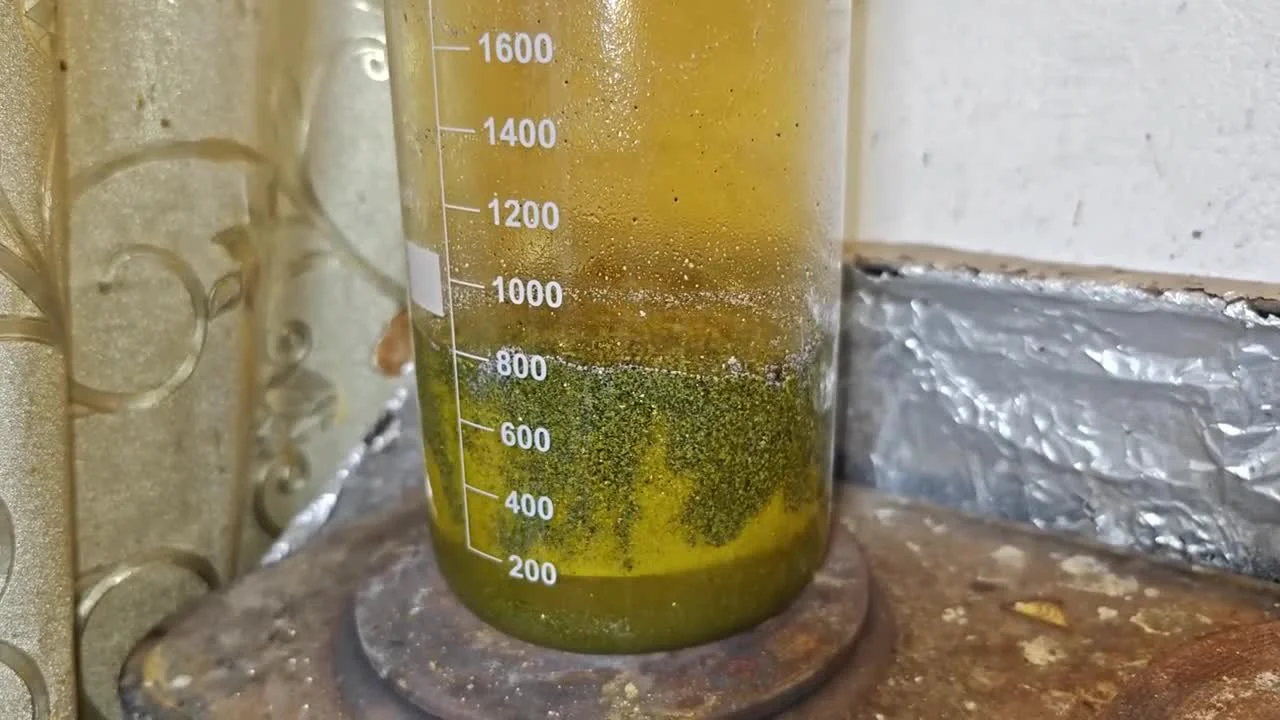
The washed precipitate, containing gold, is treated with boiling aqua regia (a mixture of hydrochloric and nitric acids). The reaction begins instantly and proceeds very violently, with abundant foaming. This intensity indicates that a significant amount of base metals remained in the material, which also react with the acid.
Dissolving in aqua regia
Filtration Problems and Crude Precipitation
After dissolving the gold, the solution turns out to be very dirty and cloudy due to the formation of a fine suspension that passes through even dense filters. After five unsuccessful filtration attempts, a decision is made to perform a preliminary, or "crude," precipitation of the gold.
To do this, ferrous sulfate is added to the solution, which results in the precipitation of unrefined gold along with a large amount of white impurities (cloudiness).
Filtration problems and crude precipitation
Final Purification and Final Result
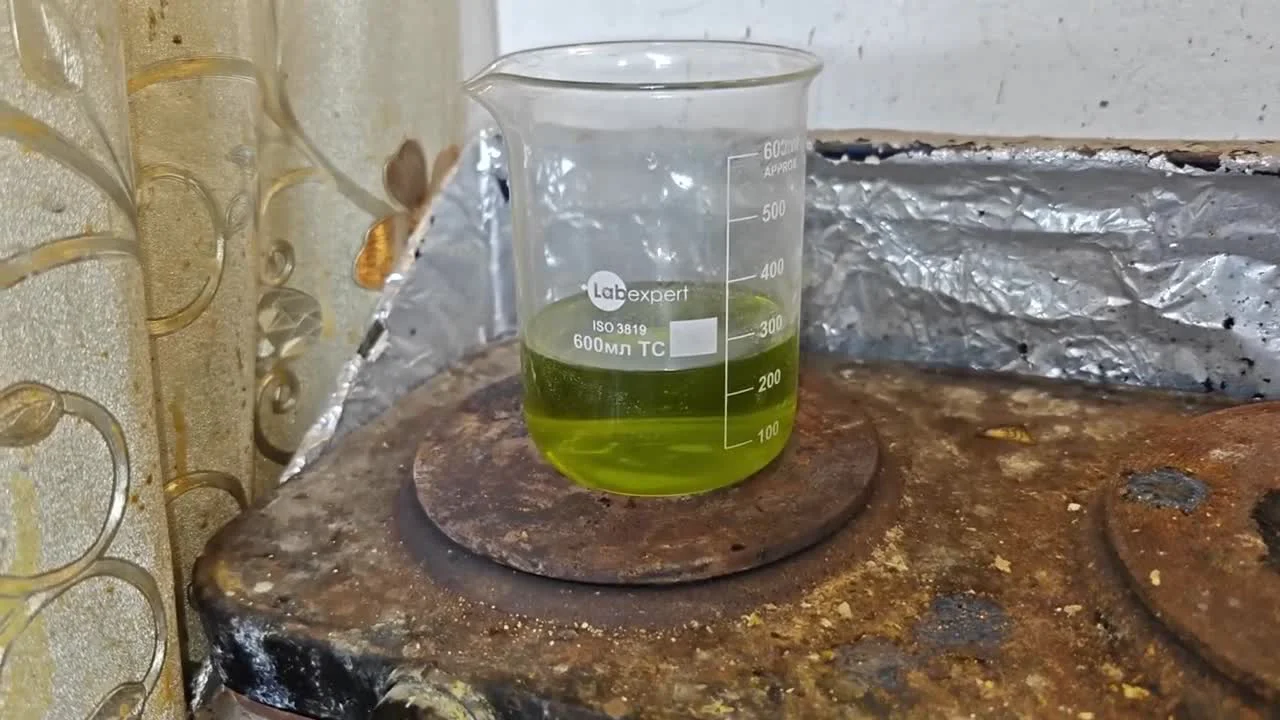
The resulting crude precipitate is dissolved again in a fresh portion of aqua regia. This time, the solution is much cleaner and can be filtered. Before the final precipitation, excess nitric acid is neutralized with sulfamic acid.
Then, fresh ferrous sulfate is added to the purified solution. The solution darkens, and a pure gold precipitate begins to form. After five minutes, a distinct layer of the dark brown precious metal powder is visible at the bottom of the beaker.
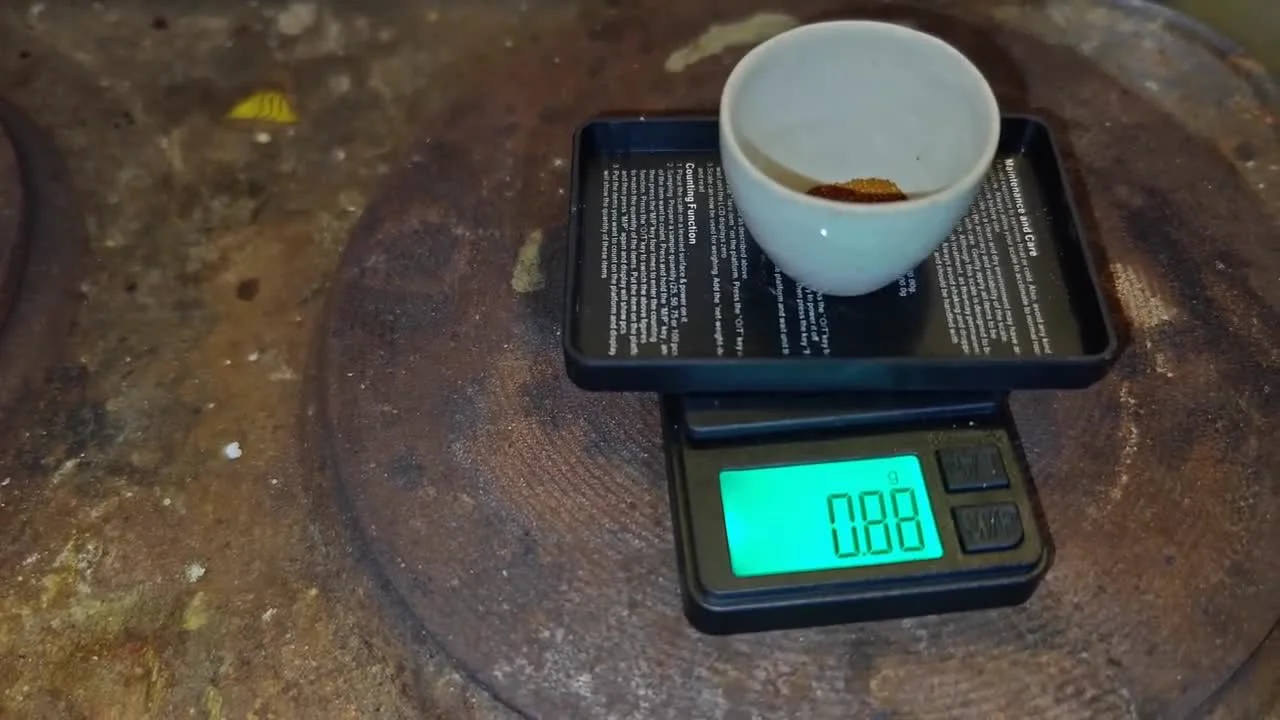
The final weight of the recovered gold was 0.88 grams, which corresponds to a yield of about 1 gram per kilogram of the source material.