US Gold Coins: History and Features - AUCBURG | AUCBURG
US Gold Coins: History and Features
American gold coins are an integral part of the global precious metals market. Thanks to their rich history, high liquidity, and recognizability, they have always been a reliable component of any investment portfolio.
American gold coins are an integral part of the global precious metals market. Thanks to their rich history, high liquidity, and recognizability, they have always been a reliable component of any investment portfolio.
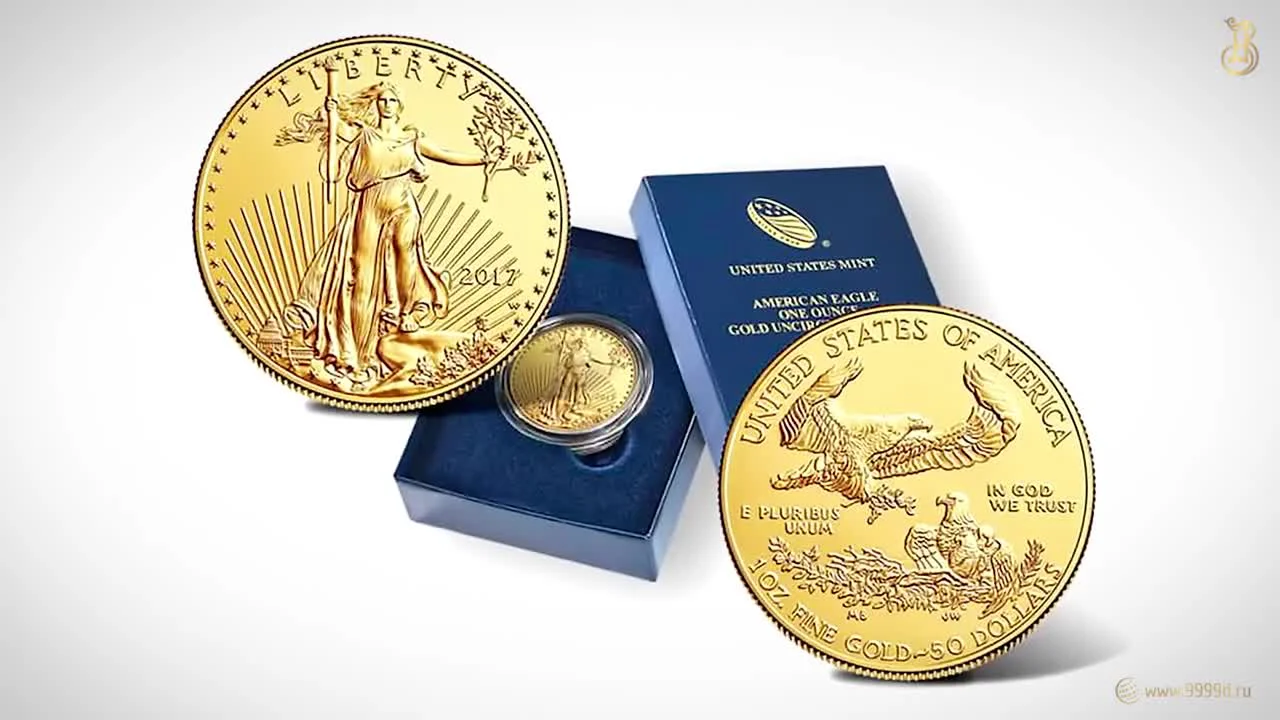
The so-called "Gold Eagles" have gained the most popularity and widespread distribution. They got their name from the image of an eagle, which symbolizes the American state. These coins have become a significant element in numismatics and investing.
The Dawn of Minting: From Gold Dust to the Coinage Act
Denomination
Mass
---
---
10 dollars
17.5 g
5 dollars
8.75 g
2.5 dollars
4.37 g
From the very beginning of statehood in the United States of America, gold was actively mined. Initially, it was used as a means of payment in the form of dust or ingots, and later, various privately minted coins began to appear.
The turning point came in 1795 when Congress passed the Coinage Act. This document established a single standard for minting, and the first official gold coins were issued. They had different denominations and weights but the same gold content.
The gold content in all these coins was 91.67%. The largest coin, with a denomination of 10 dollars, came to be called the "Gold Eagle," and the others received proportional names: "Half Eagle" (5 dollars) and "Quarter Eagle" (2.5 dollars).
The Dawn of Minting: From Gold Dust to the Coinage Act
Evolution of Design: From "Turban Head" to "Liberty Head"
The appearance of the first coins was uniform: one side depicted a bald eagle with the inscription "United States of America," and the other featured a portrait of Liberty with the inscription "Liberty." Due to the resemblance of the headdress in the portrait to a turban, these coins were nicknamed "Turban Head."
In 1808, the design changed: the female head began to be minted wearing a Phrygian cap, a symbol of freedom and revolution. Such coins came to be called "Capped Bust."
In 1834, a new Coinage Act was passed, which changed the standards. The gold content was reduced from 91.67% to 89.92%, which also affected the weight of the coins. A new image of Liberty also appeared, rendered in a classical style without a headdress, with a ribbon bearing the inscription "Liberty." These coins were named "Classic Head" but were minted for only a short period, about five years.
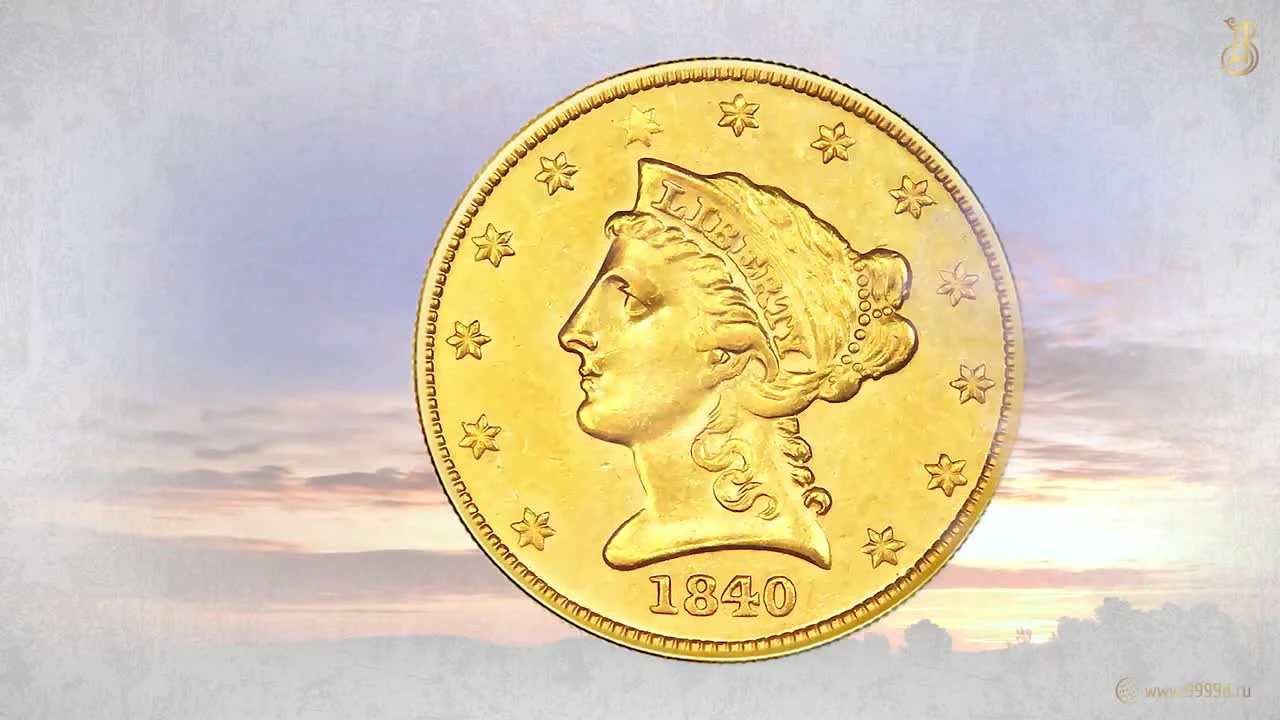
The next design, known as "Liberty Head," became more popular. Coins with this design remained in circulation for a long period—from 1840 to 1907.
Evolution of Design: From "Turban Head" to "Liberty Head"
The Gold Rush and the Appearance of the "Double Eagle"
After the discovery of rich gold deposits in California, the range of gold coins began to expand. In 1849, one-dollar coins appeared, as well as the most expensive and famous American gold coin—the "Double Eagle."
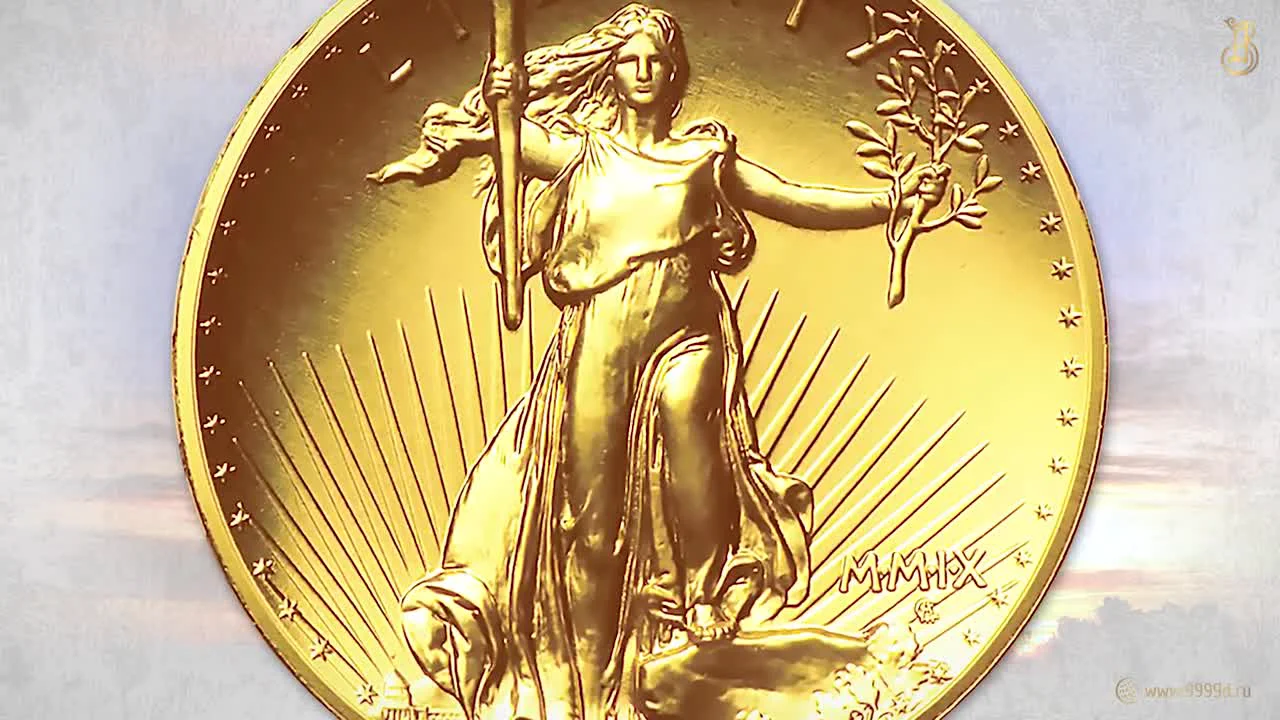
The "Double Eagle" coin had a face value of 20 dollars and contained almost a full troy ounce (0.9675 oz) of 900 fine gold. Despite a large mintage (about 150 million pieces), it is rare today. In 1933, after the US abandoned the gold standard, almost all examples were withdrawn and melted down.
During the same period, other denominations appeared. In 1854, three-dollar gold coins were issued featuring an image of a woman in a Native American feathered headdress ("Indian Princess Head"). However, the minting of these coins, as well as the one-dollar coins, was discontinued in 1889.
The Gold Rush and the Appearance of the "Double Eagle"
Modern Bullion Coins: The "American Gold Eagle"
After a long hiatus, the minting of the legendary gold coins resumed in 1986, but this time as bullion coins. The design of the new "American Gold Eagles" was based on the appearance of the famous Saint-Gaudens "Double Eagle," first issued in 1907.
1/10 ounce ($5)
1/4 ounce ($10)
1/2 ounce ($25)
1 ounce ($50)
The coins are made from 916.7 fine gold (22-karat) mined exclusively in the USA. The alloy includes 3% silver and 5.33% copper, which makes the coin more durable and gives it a reddish hue. Until 1992, the year of issue was marked with Roman numerals.
Modern Bullion Coins: The "American Gold Eagle"
The "American Buffalo" — A Pure Gold Coin
Since 2006, another iconic coin has been issued—the "American Buffalo." It is the first coin from the US Mint made of 99.99% pure gold. It was created to meet the demand from investors who prefer high-purity coins.
The appearance of the "Buffalo" replicates the design of the old 5-cent nickel coin, which was issued from 1913 to 1933. It features a composite image of a North American Indian and a depiction of a buffalo. This coin is a direct competitor to other famous bullion coins like the Canadian "Maple Leaf" and the Austrian "Philharmonic."
1/10 ounce ($5)
1/4 ounce ($10)
1/2 ounce ($25)
1 ounce ($50)
The "American Buffalo" — A Pure Gold Coin
A Unique Minting Feature
An interesting feature of American coins is the so-called "coin alignment" of the sides. The image on the reverse (back side) is flipped 180 degrees relative to the obverse (front side). This means that if you turn the coin horizontally, the design on the back will be upside down.
This method of minting is a distinctive feature of the US Mint. Therefore, to view both sides correctly, American gold coins should be flipped vertically.