Collectible Gold Coins of the USSR: Alternatives to the 'Chervonets-Sower' - AUCBURG | AUCBURG
Collectible Gold Coins of the USSR: Alternatives to the 'Chervonets-Sower'
Recently, there has been a significant increase in gold prices, which has sparked heightened interest in investment and collectible coins. One of the most popular coins in this context has become the gold 'Chervonets-Sower'. Many novice investors and collectors, after acquiring a few of these coins, wonder: what other gold coins from the Soviet period might be interesting for investment?
Recently, there has been a significant increase in gold prices, which has sparked heightened interest in investment and collectible coins. One of the most popular coins in this context has become the gold 'Chervonets-Sower'. Many novice investors and collectors, after acquiring a few of these coins, wonder: what other gold coins from the Soviet period might be interesting for investment?
The 'Sower' is often a subject of debate. Its admirers claim it is the best coin, comparable in significance to the Tsarist ten-ruble coin of Nicholas II. However, this opinion is not entirely accurate, as it fails to consider key numismatic factors that influence a coin's value and potential.
Two Types of 'Sower': Numismatics vs. Investment
Essentially, the 'Sower' coin can be divided into two different categories. The first is the 1923 'Sower'. This is a true collectible coin with a high numismatic premium, now over a hundred years old. It is desirable for most serious collectors and shows steady value growth, making it a good asset, albeit more of a collectible than a pure investment.
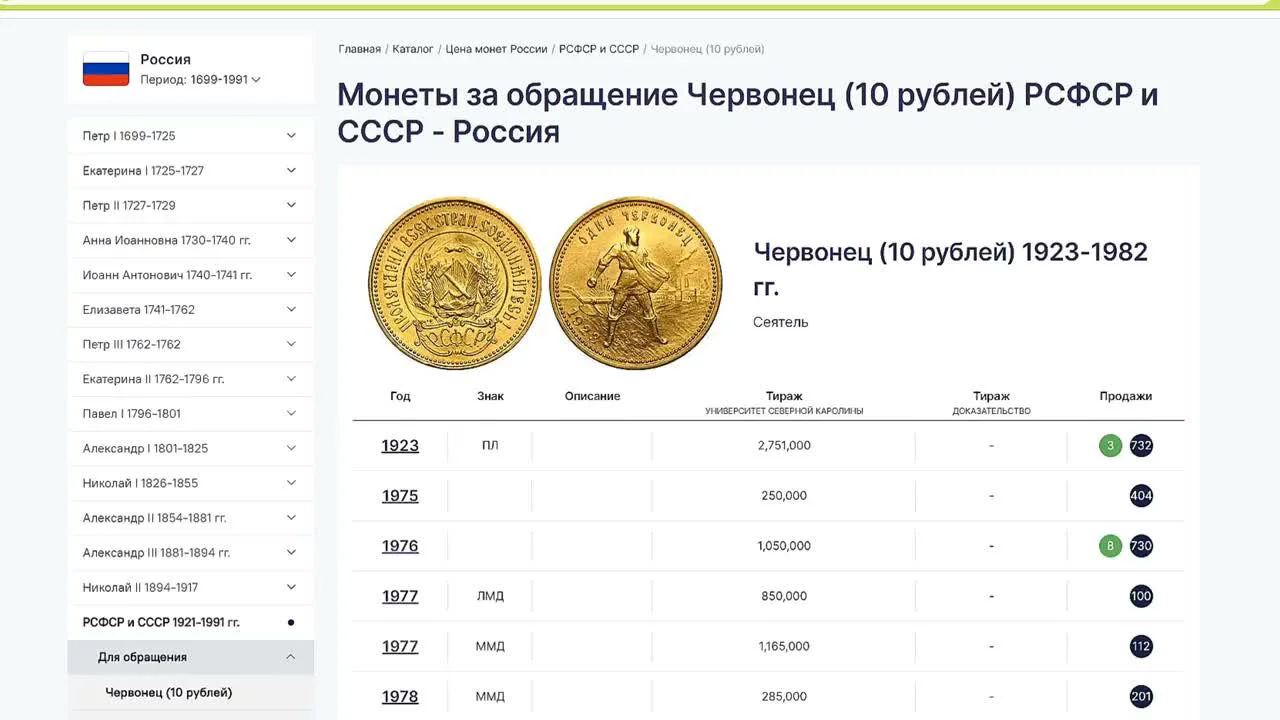
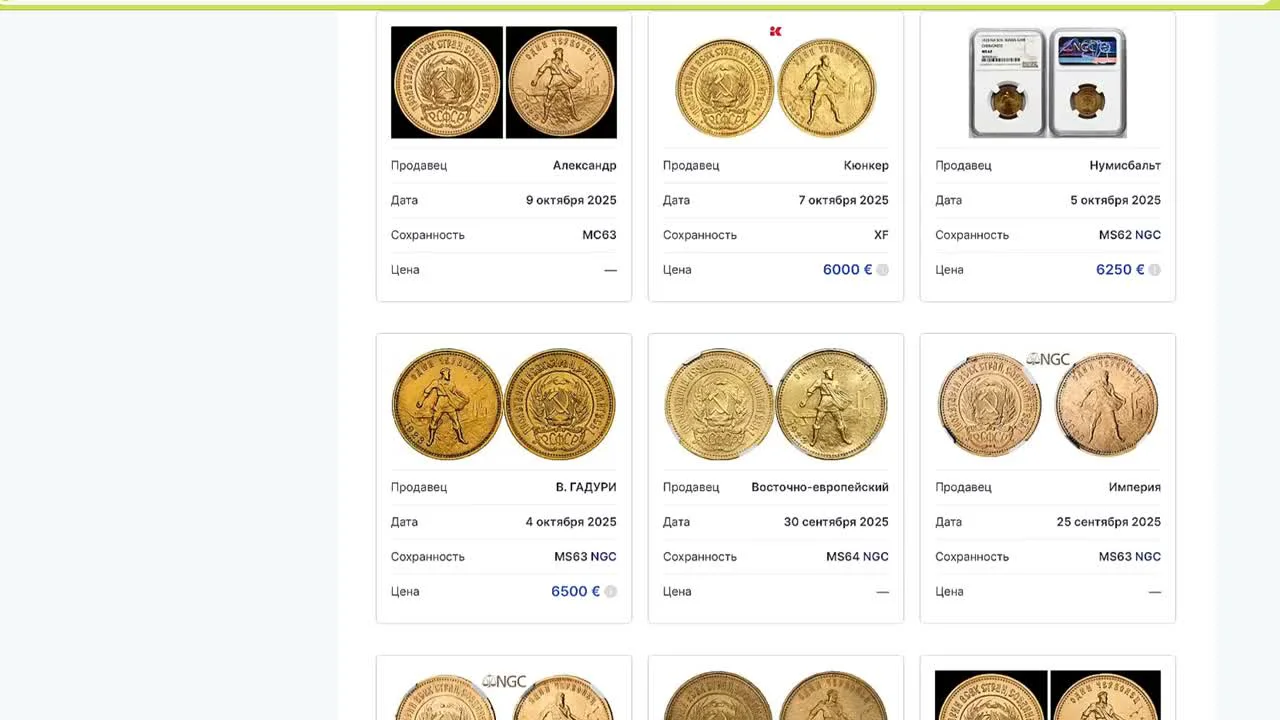
The second category consists of the so-called 'Olympic' Sowers, minted from 1975 to 1982. These coins, with rare exceptions, are primarily for investment, as their mintages run into the hundreds of thousands and even millions. For example, the 1976 mintage was 1,050,000 pieces. Due to this mass production, their collectible value only becomes apparent in exceptionally high grades, such as MS 68 and above.
Two Types of 'Sower': Numismatics vs. Investment
The Key Value Factor: Mintage
Year of Issue
Mint
Mintage (UNC)
Mintage (Proof)
1976
-
1,050,000
-
1977
MMD
1,165,000
-
1978
MMD
285,000
-
1980
LMD
50,000
-
1980
MMD
1,000,000
50,000
1981
LMD
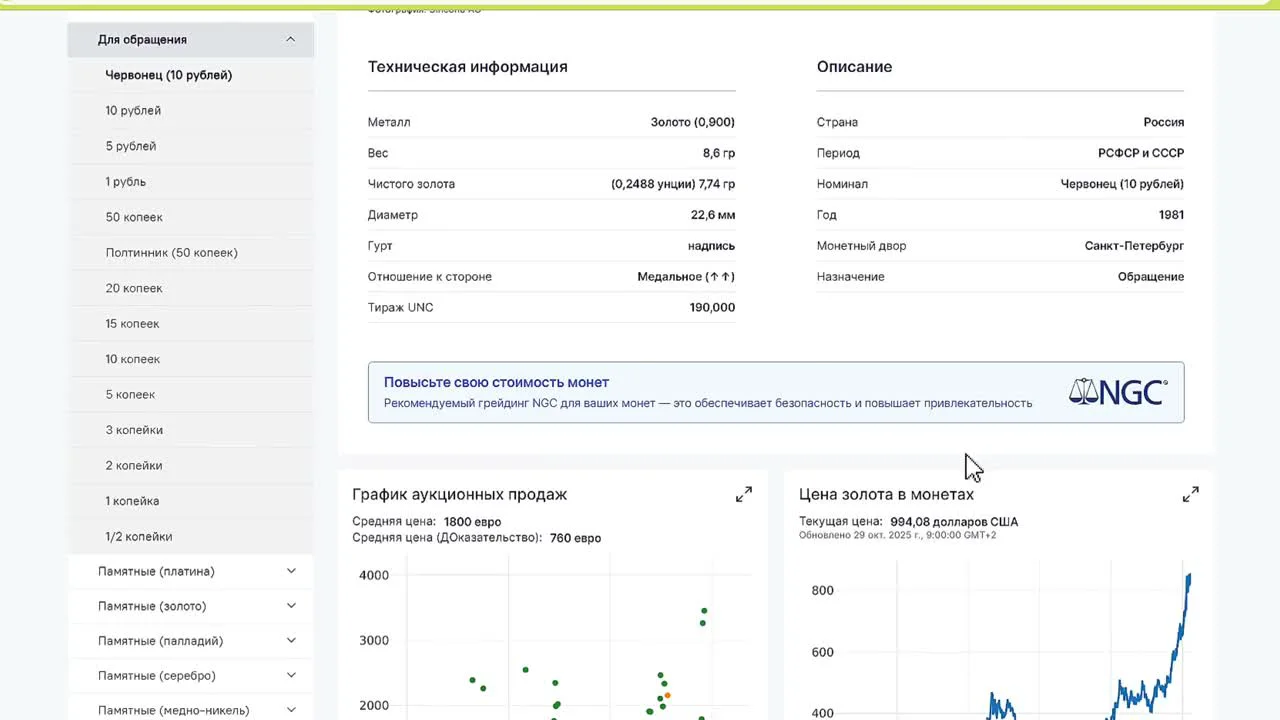
190,000
-
1982
LMD
28,000
-
1982
MMD
80,000
-
When assessing the potential of any coin, whether for investment or collection, the key parameter is its mintage. Rarity is what determines the future growth of its numismatic premium. When you buy a coin, you are not just acquiring a piece of gold, but a numismatic product whose value is directly dependent on the number of pieces issued.
The mass issues of the 'Sower' from the Olympic period have very large mintages, which limits their potential for price appreciation as collectibles. On the other hand, there are issues with much smaller mintages that are worth paying attention to.
The Key Value Factor: Mintage
Promising 'Sowers' with Low Mintage
Even among the 'Olympic' issues of the 'Sower', there are specimens that stand out due to their relatively low mintages. These are the ones to focus on if you want to diversify your collection or investment portfolio.
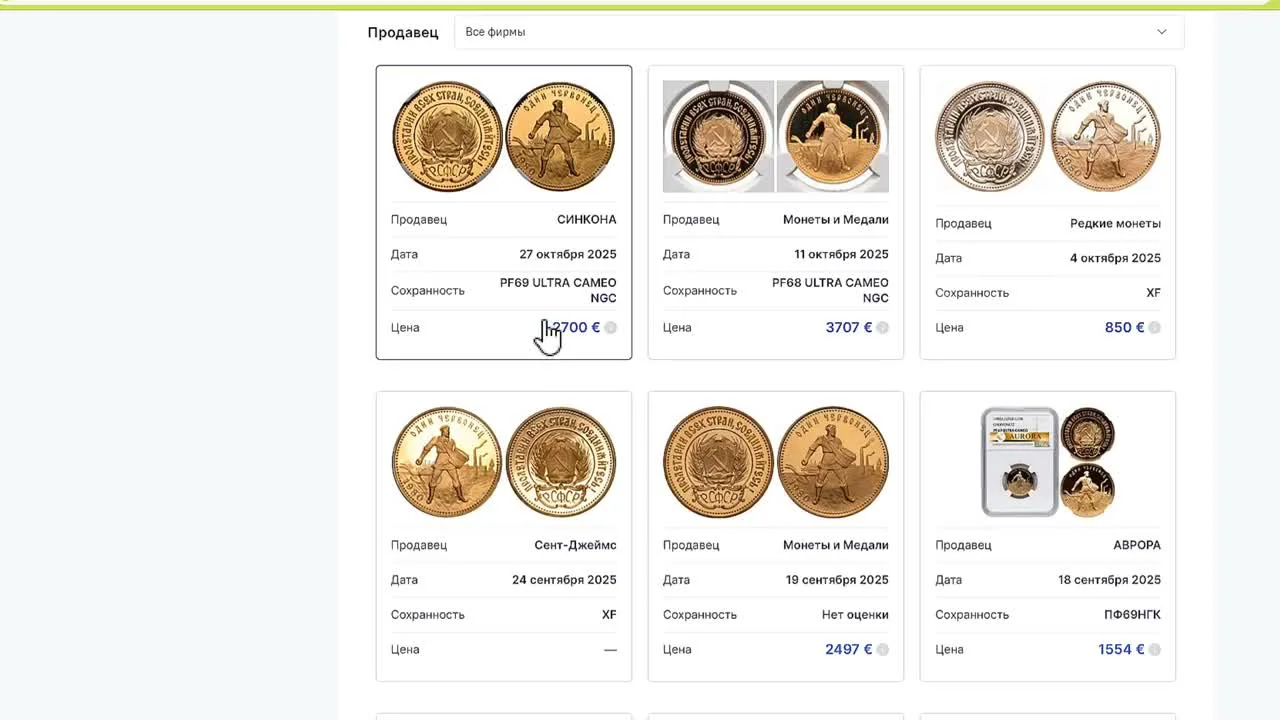
1980 MMD (Proof quality). The mintage is only 50,000 pieces. In a high grade like PF 69 Ultra Cameo, such a coin can be worth thousands of euros.
1980 LMD. Mintage is also 50,000 specimens.
1981 LMD. 190,000 coins were issued.
1982 LMD. The rarest of this group with a mintage of only 28,000 pieces.
1982 MMD. The mintage is 80,000 specimens.
These coins have significantly greater potential for numismatic value growth compared to their multi-million mintage counterparts.
Promising 'Sowers' with Low Mintage
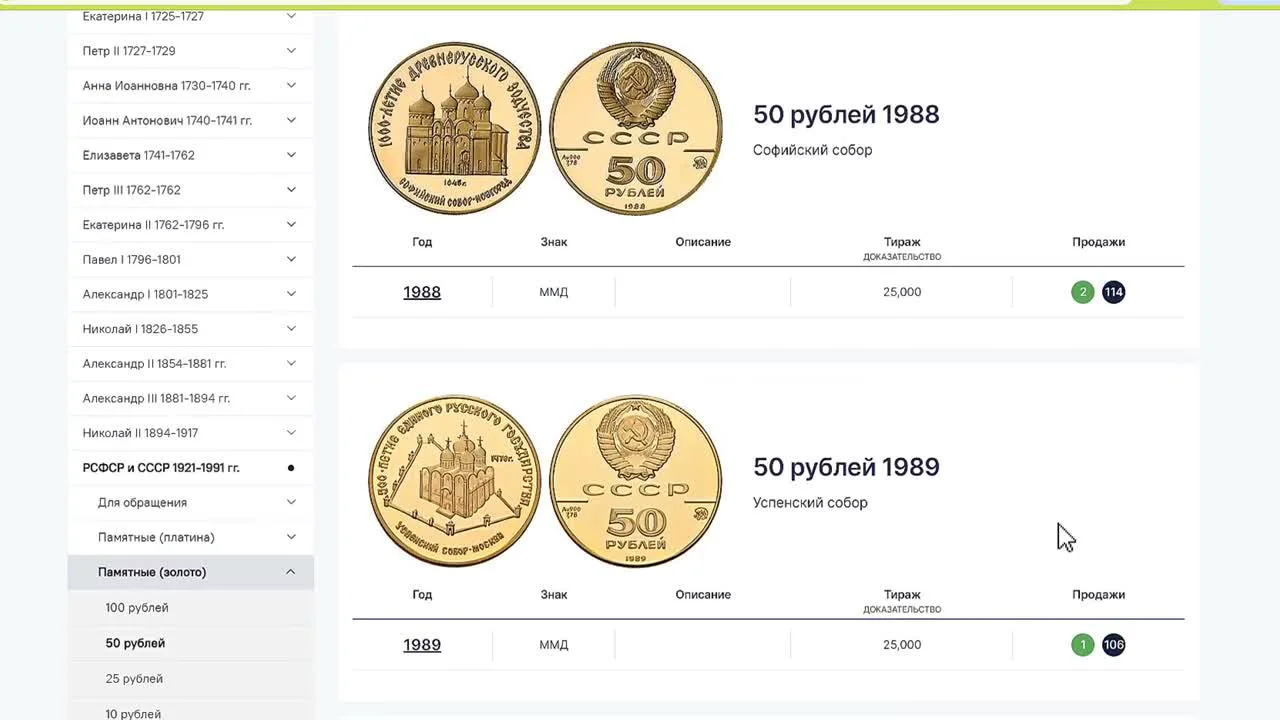
Commemorative 50-Ruble Coins: Cathedrals of the USSR
Besides the 'Sower', other gold coins were issued in the USSR that are of great interest today. Primarily, these are the commemorative 50-ruble coins dedicated to cathedrals: Saint Sophia Cathedral in Kyiv, the Cathedral of the Dormition in Moscow, the Church of the Archangel Gabriel, and Saint Isaac's Cathedral.
The key advantage of these coins is their extremely low mintage. For most of them, it is only 25,000 pieces. All coins were issued in Proof quality, which adds to their aesthetic appeal. In terms of gold weight, they are close to the 'Sower' (about 7.78 grams of pure gold).
Due to their rarity, these coins have high collectible value and are a promising tool for long-term investment. At auctions, specimens in high grades (e.g., PF 69 Ultra Cameo) sell for thousands of dollars, far exceeding the value of the gold they contain.
Commemorative 50-Ruble Coins: Cathedrals of the USSR
'Russian Ballet': Rare Coins with Investment Potential
The 'Russian Ballet' series, issued in 1991, holds a special place among rare USSR gold coins. These coins are unique because they were minted in two gold fineness options—585 and 999—and their mintages were exceptionally low.
585 fineness gold: 2,400 specimens.
999 fineness gold: 1,500 specimens.
Such low mintages make these coins extremely promising for collecting and investing. Even a raw (ungraded) 585 fineness coin can fetch around 1,500 euros at auction. These specimens are much rarer on the market than any of the 'Sowers', including those from the rarest years of issue.
There are also coins in this series of other denominations (10, 25, and 100 rubles) with similarly low mintages. It is these rare issues, not the mass-produced coins, that are of the greatest interest for long-term capital preservation and growth.