The History of the Gold Chervonets: From Ivan III to the Soviet 'Sower' - AUCBURG | AUCBURG
The History of the Gold Chervonets: From Ivan III to the Soviet 'Sower'
Chervonets is the traditional Russian name for large gold coins, both domestic and foreign. The name comes from the word 'chervonny,' which means red or crimson. The ancient minting technology involved using an alloy of gold and copper, which gave the coins a reddish hue.
Chervonets is the traditional Russian name for large gold coins, both domestic and foreign. The name comes from the word 'chervonny,' which means red or crimson. The ancient minting technology involved using an alloy of gold and copper, which gave the coins a reddish hue.
This color was associated with the natural dye carmine, which was obtained from the cochineal insect, also known as 'chervets'. Thus, high-purity gold with this characteristic hue came to be called 'chervonny,' and coins made from it, chervonets.
Initially, these were gold coins weighing around 3–4 grams, with no denomination. The alloy corresponded to fineness levels from 916 to 986.
Chervonets from Ivan III to Peter I
Coin
Period
Weight
Fineness
Feature
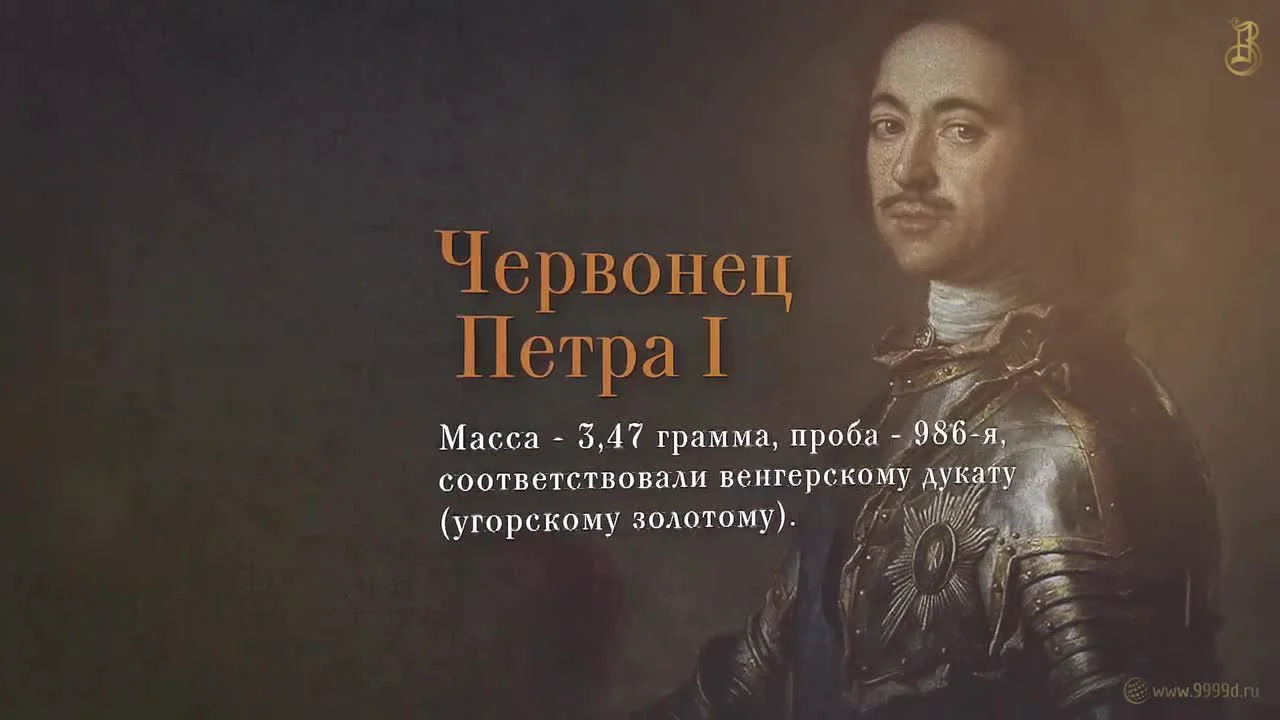
Peter I's Chervonets
1701–1716
3.47 g
986
Equivalent to the Hungarian ducat
St. Andrew's Gold Coin
from 1721
4.1 g
781
2-ruble denomination, reverse features St. Andrew the First-Called
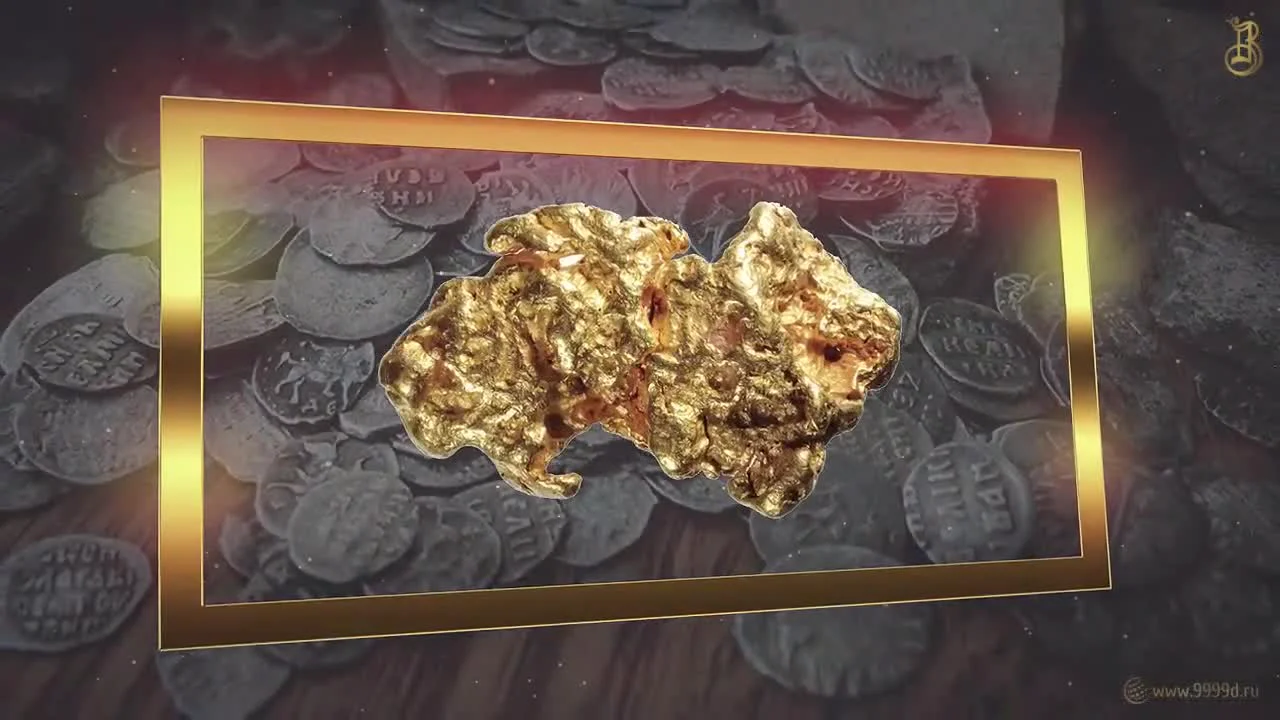
The need for regular minting of its own currency arose during the reign of Ivan III, when the unification of Russian lands began. However, at that time, there was no industrial gold mining in the country, so the first Russian chervonets were minted from melted-down foreign gold coins. They were mainly used as award tokens and did not have the status of money.
Under Peter I, chervonets were minted from 1701 to 1716. Their parameters were fully consistent with the Hungarian ducat. After their production ceased in 1717, a new gold coin with a nominal value of 2 rubles was minted in 1721.
Chervonets from Ivan III to Peter I
The Era of Palace Coups: From Peter II to Catherine II
The minting of gold chervonets was resumed by Peter II in 1729 and continued until the mid-19th century. Peter II's chervonets featured a double-headed eagle on the reverse with the Moscow coat of arms on its chest. The coin weighed 3.32 grams, the gold fineness was 981, and it had no denomination.
Under Anna Ioannovna and Elizabeth Petrovna, chervonets also had no fixed denomination, and their weight was equivalent to the European ducat. During the reign of Elizabeth Petrovna, double chervonets were also minted, weighing twice as much as the standard ones. Their reverses had different designs: featuring either St. Andrew the First-Called or a double-headed eagle.
Under Peter III, gold of 978 fineness was used for minting, and the coin's weight was also equal to the European ducat.
The Era of Palace Coups: From Peter II to Catherine II
Reforms and Platinum Coins
Historically, until 1764, gold in Russia was undervalued compared to silver, which created conditions for the secret export of gold coins abroad. To avoid imbalances in monetary circulation, Catherine II signed a decree in April 1763 to stop minting chervonets. In 1764, the European gold-to-silver value ratio of 1 to 15 was legally established.
In parallel, for the needs of the army and foreign trade, a secret minting of 'counterfeit' Dutch ducats, which were almost indistinguishable from the genuine ones, was carried out. In the 19th century, platinum coins, or 'white chervonets,' were also popular in Russia. Their minting was initiated by Finance Minister Count Kankrin, as the country lacked gold and silver, and platinum, recently discovered in the Urals, was an inexpensive raw material.
Coins made of unrefined platinum (97%) were minted from 1828 to 1845 with denominations of 3, 6, and 12 rubles. The obverse of all coins depicted a double-headed eagle with the Moscow coat of arms on its chest.
Reforms and Platinum Coins
Imperials and Half-Imperials of the 19th Century
Coin Type
Denomination
Total Weight
Pure Gold
Imperial
10 rubles
12.17 g
12.00 g
Half-Imperial
5 rubles
6.08 g
6.00 g
After Paul I ascended the throne, the ruler's portrait on the 1796 gold chervonets was replaced with a text from the Psalm of David: 'NOT UNTO US, NOT UNTO US, BUT UNTO THY NAME'. The side with the eagle became the obverse. In 1796, a uniform fineness of 986 was established for all gold coins.
Under Alexander I, gold chervonets gave way to 10- and 5-ruble coins, which were popularly called imperials and half-imperials. They were minted from gold of 986 fineness.
Later, under Alexander II, only half-imperials (5 rubles) and a new 3-ruble coin were minted, both from gold of 917 fineness.
Imperials and Half-Imperials of the 19th Century
Gold Coins of the Late 19th - Early 20th Century
Alexander III kept the 5- and 3-ruble coins but brought back the 10-ruble imperial. The ruler's image returned to the coins. The gold fineness was reduced to 900. The coin became thicker but smaller in diameter, which was in line with European tradition.
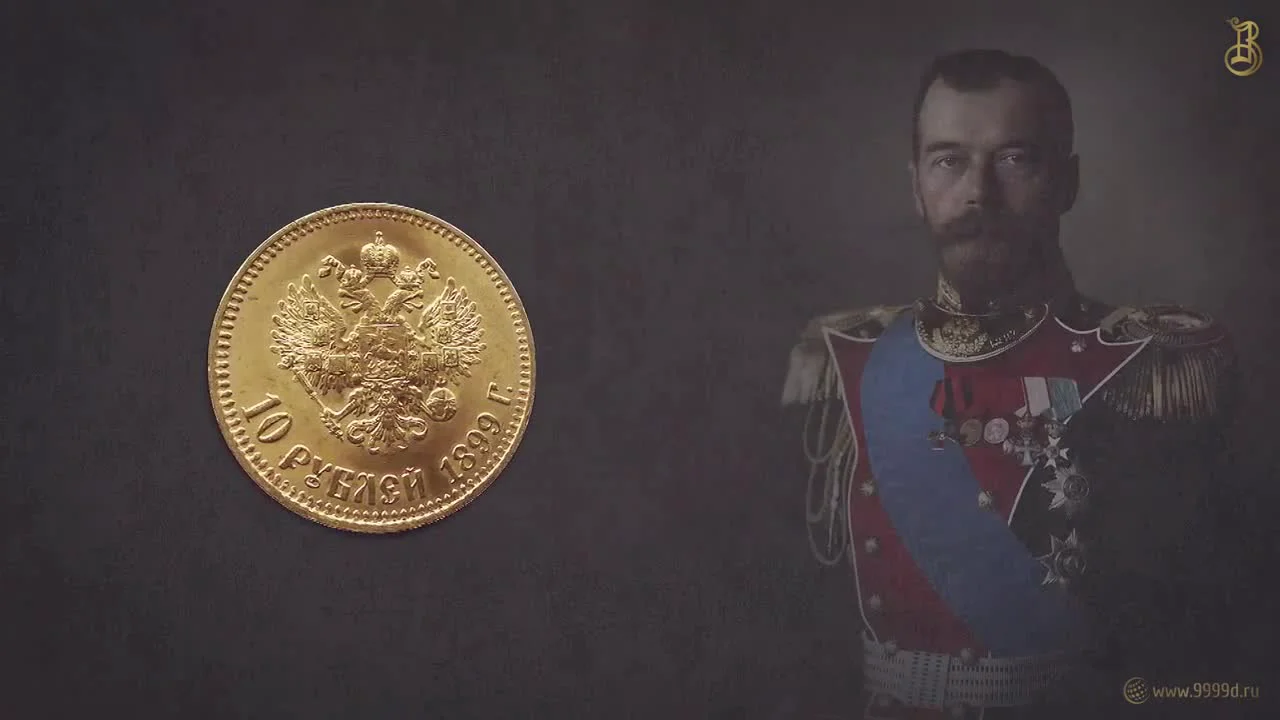
After the monetary reform of Nicholas II, the weight of the 10-ruble gold coin was reduced by one and a half times to 8.6 grams (7.74 g of pure gold). This made gold coins more accessible, and their mintage increased. New denominations also appeared: 15 rubles and 7 rubles 50 kopecks.
Gold Coins of the Late 19th - Early 20th Century
The Soviet Chervonets and the Birth of the 'Sower'
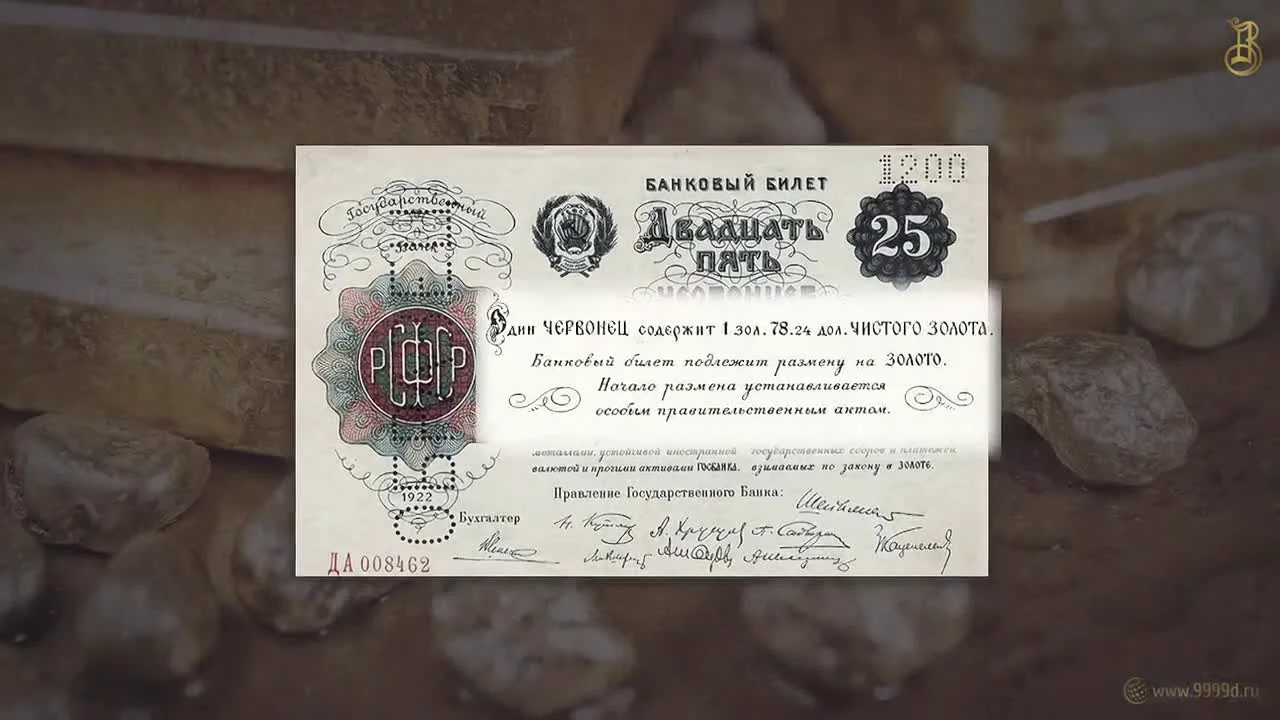
After the revolution, tsarist gold coins did not lose their value. In the early 1920s, the young Soviet republic faced severe inflation. To stabilize the economy, the State Bank of the RSFSR began issuing banknotes called chervonets in 1921. One chervonets contained 8.6 grams of pure gold, which corresponded to the tsarist imperial.
To support the new currency, it was decided in 1923 to begin minting a Soviet gold coin. Its design was a complete copy of its pre-revolutionary counterpart. The author of the design was the chief medalist of the mint, Anton Vasyutinsky. The image was based on Ivan Shadr's sculpture 'The Sower'. Thus, the coin received its additional name — the 'Sower Chervonets'.
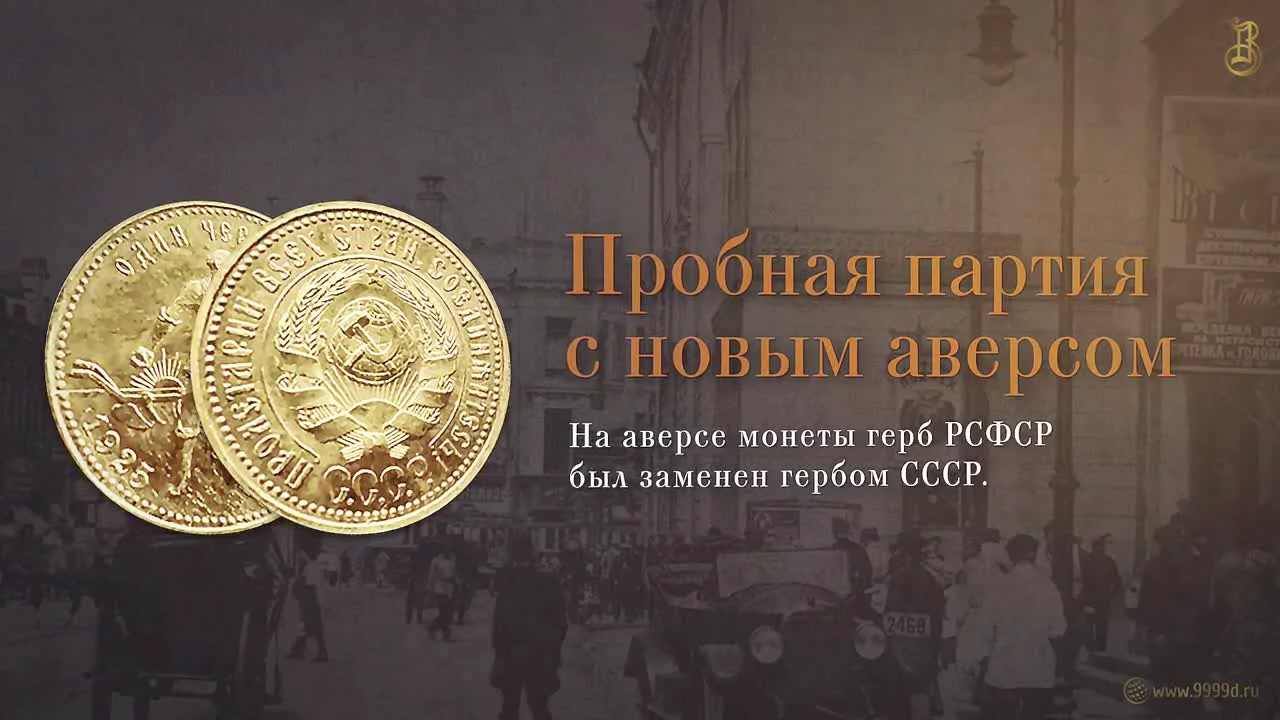
In 1924, after the formation of the USSR, the coat of arms of the RSFSR on the coin was replaced with the coat of arms of the USSR. Trial specimens dated 1925 were issued, but the production of the Sower chervonets was discontinued in the same year.
The Soviet Chervonets and the Birth of the 'Sower'
The Revival of the 'Sower'
In 1975, the Soviet government resumed the production of the 'Sower Chervonets' gold investment coins. The coins were issued from 1975 to 1982. Their design and specifications were identical to the 1923 chervonets.
In 1980, for the Olympic Games in the USSR, a limited collector's series of these coins was issued in 'proof' quality with a mintage of 100,000 pieces.
From ancient times to the present day, gold has held a strong position in the global economy. For those focused on the long term and seeking to preserve the value of their savings, the 'Sower Chervonets' gold coin, one of Russia's most popular investment coins, remains an excellent option.