Russian Icons in the West: The History of the Rise and Fall of Prices - AUCBURG | AUCBURG
Russian Icons in the West: The History of the Rise and Fall of Prices
In the mid-1980s, a unique situation developed in the Soviet Union's antiques market, especially in the icon segment. Due to the 'Iron Curtain,' the export of cultural treasures was extremely limited, and icons reached the West primarily through smuggling routes or diplomatic channels.
Shortage and High Demand in the 'Iron Curtain' Era
In the mid-1980s, a unique situation developed in the Soviet Union's antiques market, especially in the icon segment. Due to the 'Iron Curtain,' the export of cultural treasures was extremely limited, and icons reached the West primarily through smuggling routes or diplomatic channels.
This created a huge shortage in the Western market. In Europe, Germany, and America, the demand for Russian icons significantly exceeded the supply, leading to very high prices. At the same time, a shadow market flourished within the USSR, where so-called 'black buyers' purchased icons from the rural population, a process detailed in Vladimir Soloukhin's book 'Black Boards'.
Even officials were involved in processes related to icons. For example, the famous director Yulian Semyonov was a member of the commission for the return of cultural treasures taken by the Nazis during the war, which included icons.
Prices of the Past: Examples from a German Collection
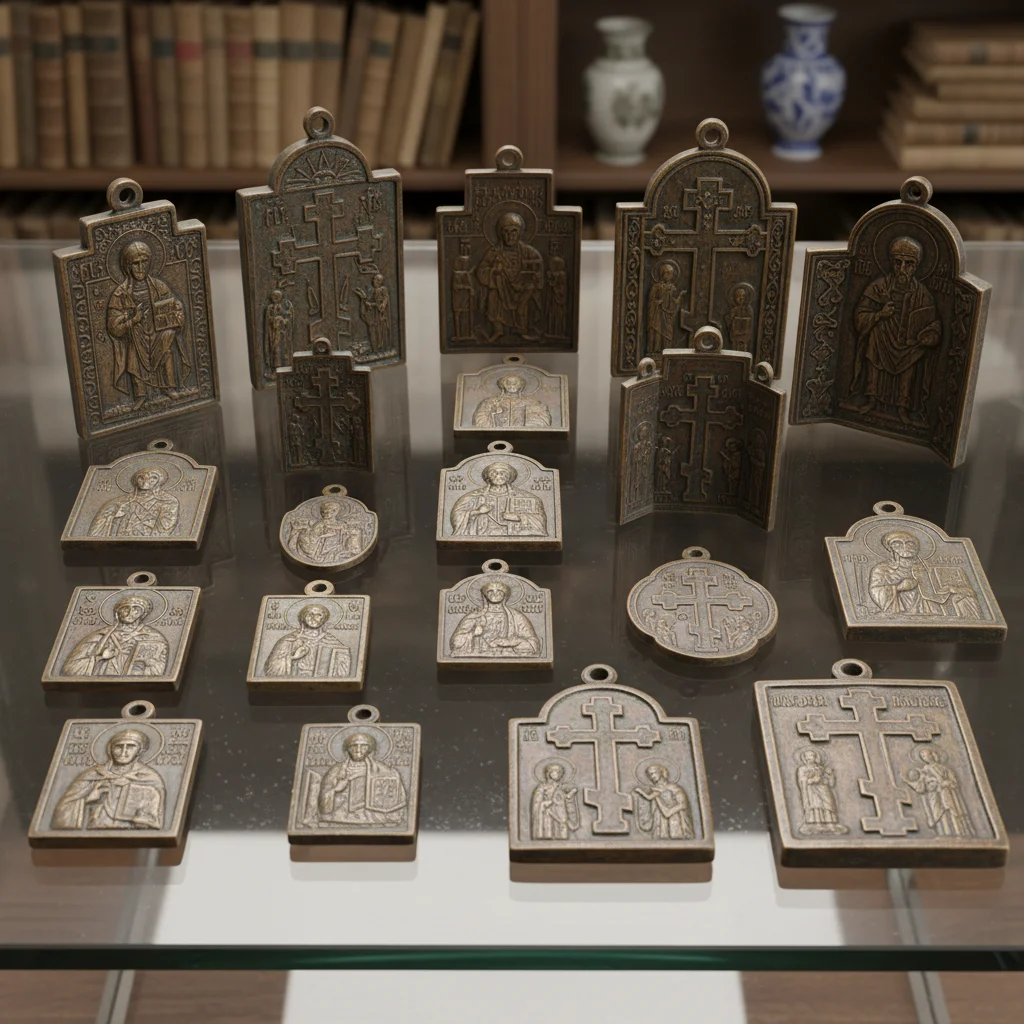
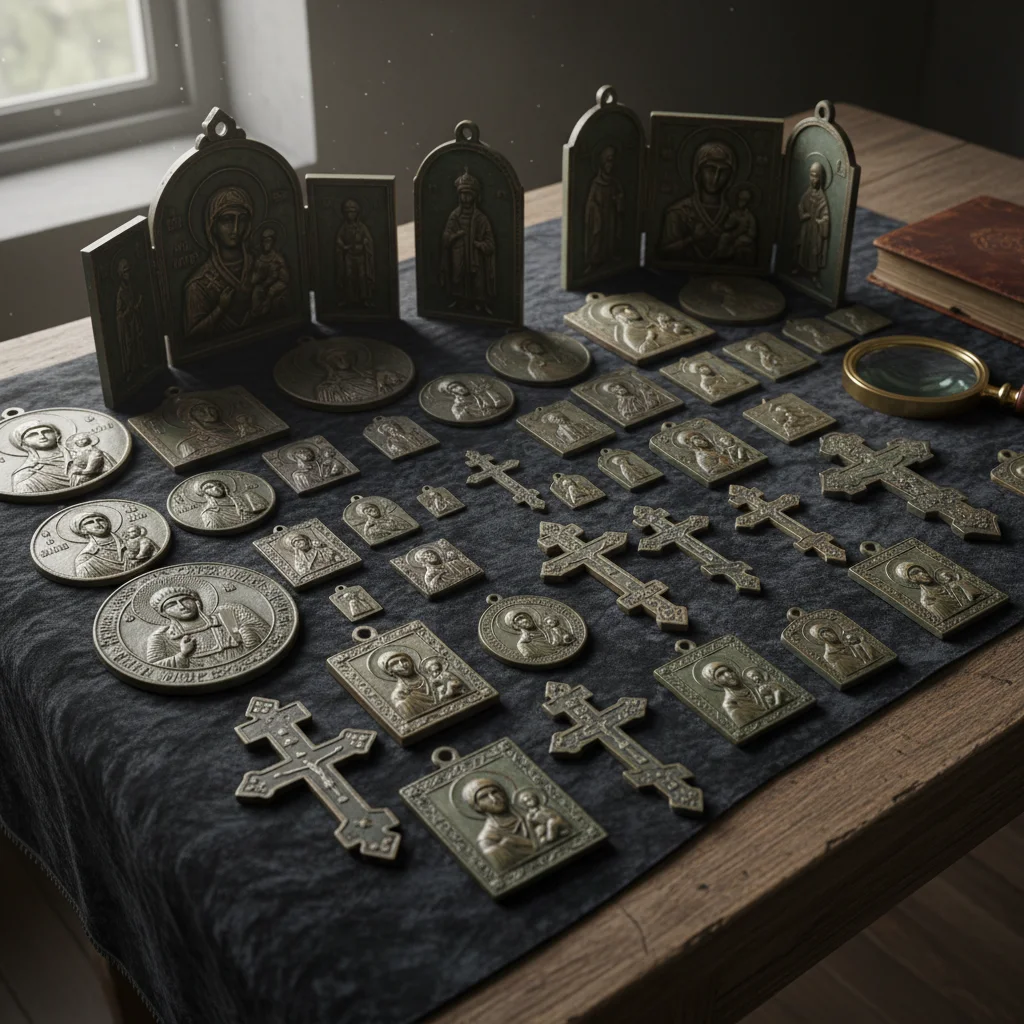
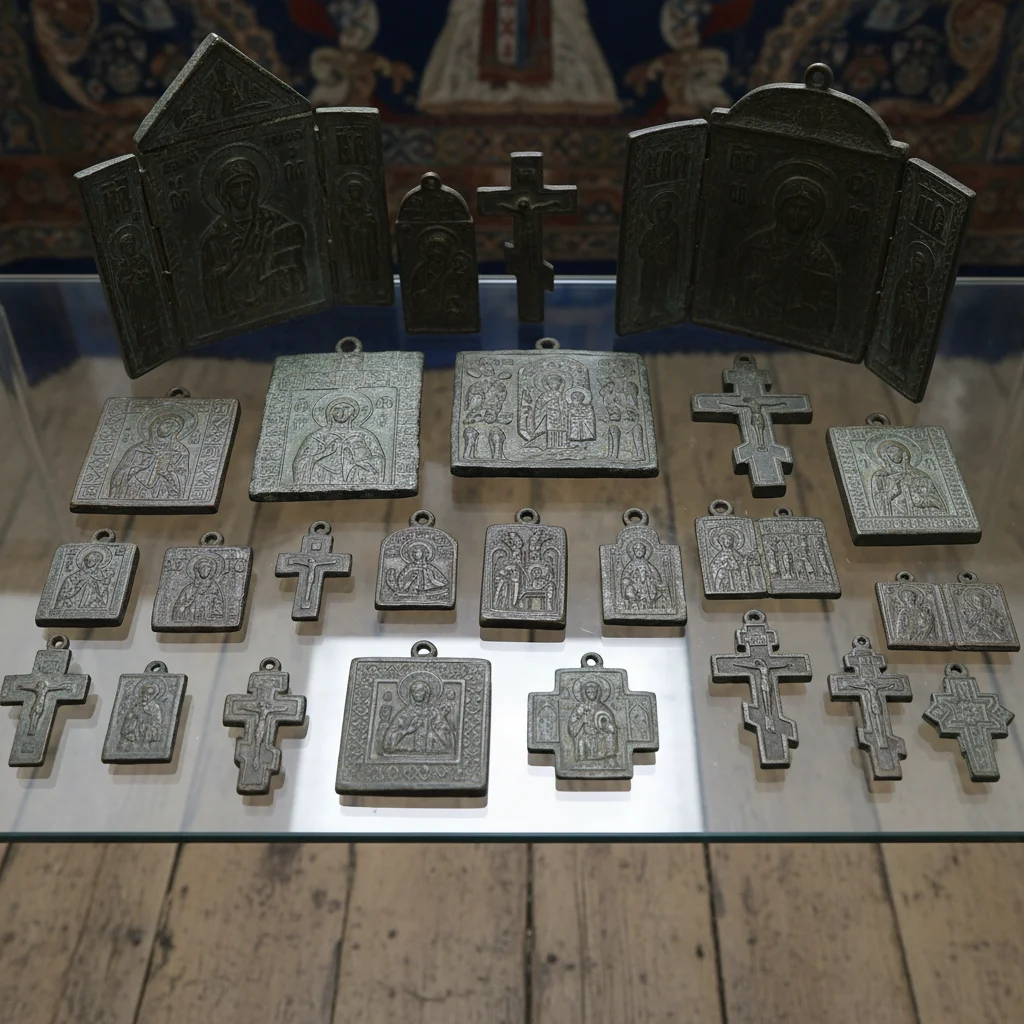
A private collection of cast copper-alloy plastic art, which belonged to a German collector, serves as evidence of the high prices of that period. After his death, his nephew began to sell off the inheritance piece by piece, and old auction price tags remained on many items.
These figures clearly demonstrate the price level for Russian icons in Germany at that time:
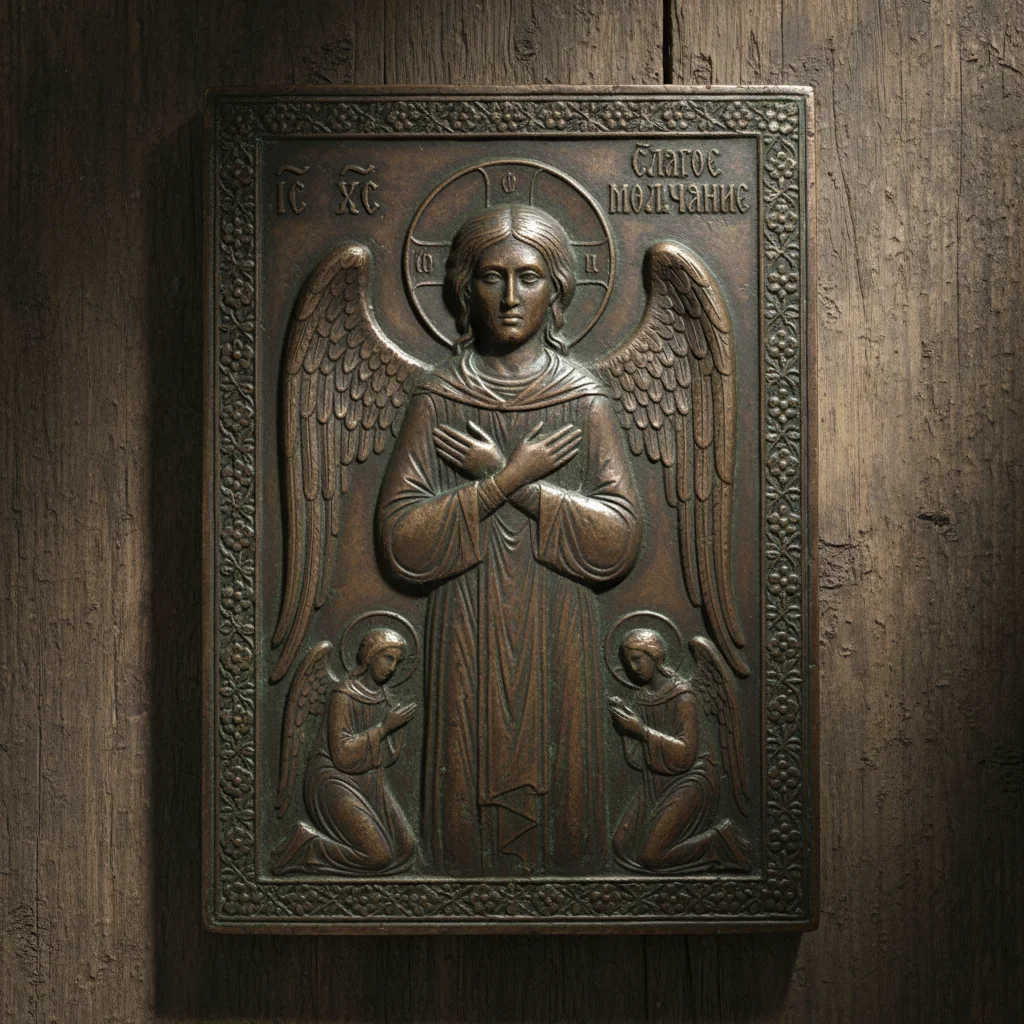
The 'Savior of the Blessed Silence' icon was valued at 1600 Deutschmarks, equivalent to 800 euros. Today, its actual value is significantly lower.
A kiot cross, not even of the largest size, had a price tag of 490 Deutschmarks.
A small fragment from a folding icon with feast scenes was sold for 350 Deutschmarks, or about 170 euros, which is also several times higher than its current market price.
This pricing was a direct consequence of the trend for Russian art and its scarcity in the Western market. Collectors were willing to pay large sums for items that were difficult to obtain.
Prices of the Past: Examples from a German Collection
Market Saturation and Price Collapse in the 90s
The situation changed dramatically in the early 1990s, after the fall of the 'Iron Curtain.' The European market, and Germany in particular, was literally flooded with Russian icons, which were exported en masse by our compatriots. Supply began to exceed demand, and prices dropped sharply.
Major trading centers for Russian icons, such as in Berlin, were overflowing. During this period, major smugglers were active, like Valery Petrovich Likhovsky, who established supply channels for icons through Belarus, Ukraine, and the Baltic states.
His activities ended tragically: in 1993, he was murdered in Berlin. According to the criminal police, this happened because he took money from creditors but failed to deliver the promised goods. This episode reflects the chaotic and criminalized nature of the market at that time.
Market Saturation and Price Collapse in the 90s
Lessons for the Investor: Fashion and Market Trends
The story of Russian icons confirms an important principle of investing in antiques: one should not buy fashionable items at the peak of their popularity. The frantic demand for icons was a temporary trend driven by their scarcity. When the market became saturated, prices collapsed.
A similar situation could be observed in the more recent past. A few years ago, a huge demand for amber arose in China, where it was called the 'stone of the sun.' This led to a manifold increase in its price worldwide. However, as with the icons, there is a risk that this trend will eventually fade, and amber prices will fall.
Therefore, it is important to distinguish between speculation and investment. Buying at the peak of a trend with the aim of a quick resale is speculation. Long-term investments, on the other hand, require analysis and the purchase of items that are currently undervalued by the market, not those at the peak of their popularity.
Lessons for the Investor: Fashion and Market Trends