Ship Modeling: From Ancient Art to an Investment Object - AUCBURG | AUCBURG
Ship Modeling: From Ancient Art to an Investment Object
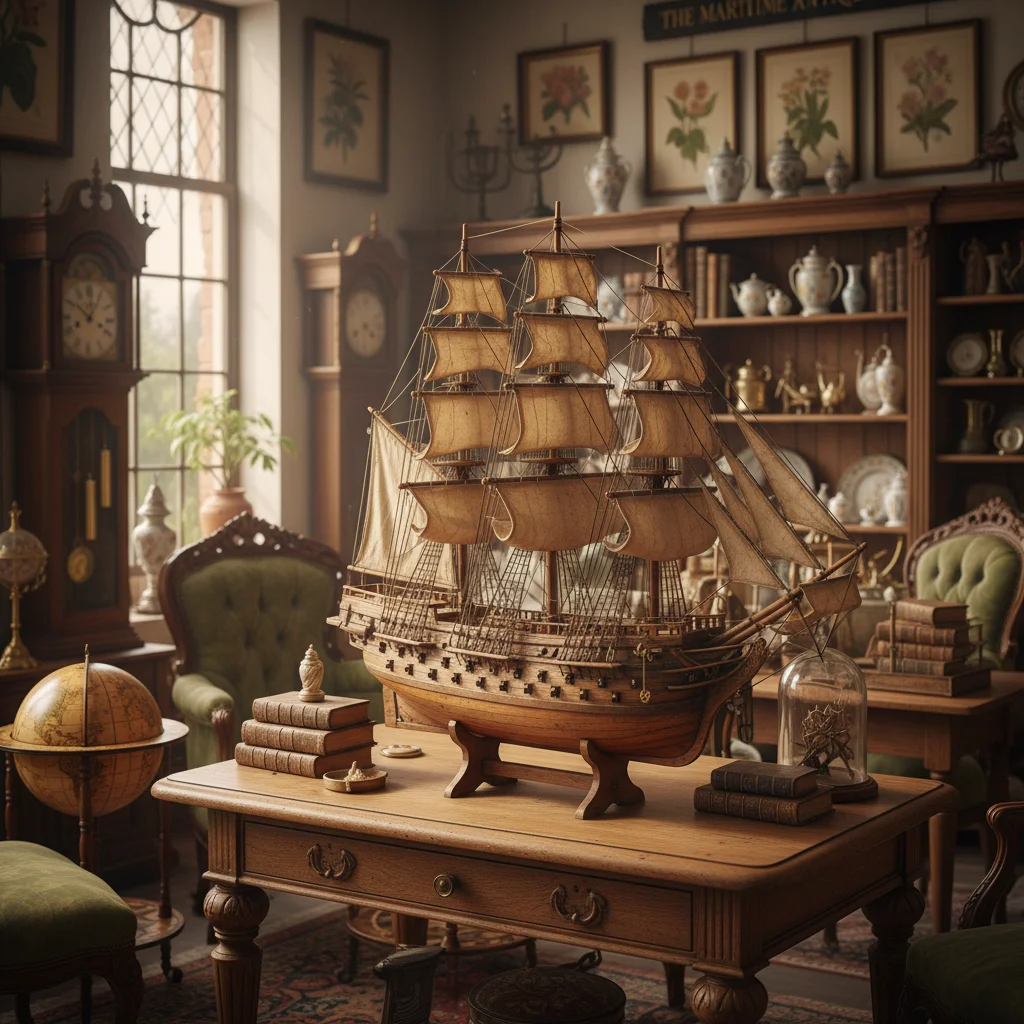
Ship modeling is a complex and multifaceted subject that many avoid due to a lack of knowledge. Nevertheless, this field deserves attention from both a collecting and potential investment standpoint. Specific examples, found in an antique warehouse with a substantial collection of ship models, can help in understanding this topic.
Ship Modeling: A Challenging but Fascinating Field
Ship modeling is a complex and multifaceted subject that many avoid due to a lack of knowledge. Nevertheless, this field deserves attention from both a collecting and potential investment standpoint. Specific examples, found in an antique warehouse with a substantial collection of ship models, can help in understanding this topic.
Creating ship models is an ancient art. In ancient times, they were offerings to the gods to ensure sailors returned home safely. The traditions of ship modeling can be traced back to Ancient Egypt and became widespread in Western Europe, especially in maritime powers like Holland and Germany, particularly in Hamburg.
Who Collects Ship Models and Why
The main collectors and investors in this field are former sailors, captains, or people whose lives were connected to the navy or merchant fleet. Of course, there are also simply enthusiasts of maritime themes among them. Geography also plays a role: maritime regions are best for successfully selling models, whereas a valuable piece can be found and bought anywhere, if you're lucky.
It's important to understand that not every old item is an antique. An artistically crafted object, like a vintage ship model, gains value from a combination of age and craftsmanship. This distinguishes them from mass-produced souvenirs, which hold no interest for collectors.
Who Collects Ship Models and Why
What Determines a Model's Value: From Museum-Quality to Admiralty Models
Of greatest interest to collectors are pieces that are close to museum quality, as well as the so-called 'Admiralty' models. These are not just mock-ups, but highly accurate replicas that were historically used in educational institutions to train maritime specialists.
Admiralty models are distinguished by their incredible detail. They match their real prototypes with 90-99% accuracy and can consist of several thousand individual parts. Such models are true works of art and objects for serious collecting.
What Determines a Model's Value: From Museum-Quality to Admiralty Models
The Creation Process and Key Characteristics of Models
Creating a high-quality ship model is a painstaking labor that can take years. It is rare for a single craftsman to do all the work, as the process requires a multitude of skills: from carpentry and tinsmithing to painting, sewing, and jewelry making. Often, one person acts as the assembler, coordinating the work of various specialists.
The model's scale is of great importance. The optimal scale for collecting is considered to be 1:50 (as well as similar scales like 1:40, 1:48), which corresponds to a model length of about one meter. Models that are too large are difficult to display and sell, while those that are too small do not allow for full detail. It is models ranging from 70 cm to 1 meter in length that are most in demand.
The Creation Process and Key Characteristics of Models
Five Rules for an Investor in Ship Models
For those who view ship models as an investment or for resale, there are several key rules to help make the right choice.
Know the subject. It is necessary to study the history of the specific ship you are buying a model of, especially if significant sums are involved.
Know the craftsman. Models created by renowned masters are valued much more highly.
Assess the quality of the work. Pay attention to the detail, craftsmanship, and materials. The use of precious woods, bone, silver, or copper significantly increases the value.
Buy in perfect condition. Even minor restoration requires the intervention of a specialist, who can be difficult to find. It is best to avoid damaged models.
Avoid souvenirs. Modern, mass-produced models have no investment value. Your buyers will be museums or serious collectors who are well-versed in the subject.
Recommended Literature for Studying Ship Modeling
Title
Author
Description
Ship Modeling Simplified
Frank Mastini
The 'ABC' for beginners from a master with 30 years of experience. Excellent for a first introduction to the subject.
The Complete Beginners Guide to Model Ship Building
Gary Renshaw
The ideal guide for novices, which covers not only the basics but also commercial aspects and investments.
The Art of Rigging
George Biddlecombe
A classic guide to rigging, published since 1848. Intended for more advanced modelers.
Historic Ship Models
N/A
A comprehensive edition with over 2500 photographs, diagrams, and historical descriptions. Considered the best choice if you need to buy only one book.
The Sailor's Word-Book
William Henry Smith
An alphabetical dictionary of nautical terms, detailing all parts of a ship.
In the West, vast experience in ship modeling has been accumulated, and numerous books, albums, and monographs with drawings and descriptions have been published. For those who want to delve deeper into the subject, there are several fundamental works.
These books will help to provide a complete understanding of ship modeling, from basic concepts to the intricacies of historical reconstruction.