The Gold Standard of the Russian Empire: From Witte's Reform to World War I - AUCBURG | AUCBURG
The Gold Standard of the Russian Empire: From Witte's Reform to World War I
From January 3, 1897, the Russian Empire, following most countries in the world except Mexico and China, introduced the gold standard, placing the ruble on a gold basis. Although gold coins had circulated in Russia before, they traditionally served more as a means of saving rather than payment.
The Transition to the Gold Standard and the History of the Imperial
Period/Ruler
Coin Weight (Imperial)
Pure Gold Content
---
---
---
Elizabeth Petrovna (from 1755)
16.53 g
15.16 g
Catherine II (from 1764)
-
about 12 g
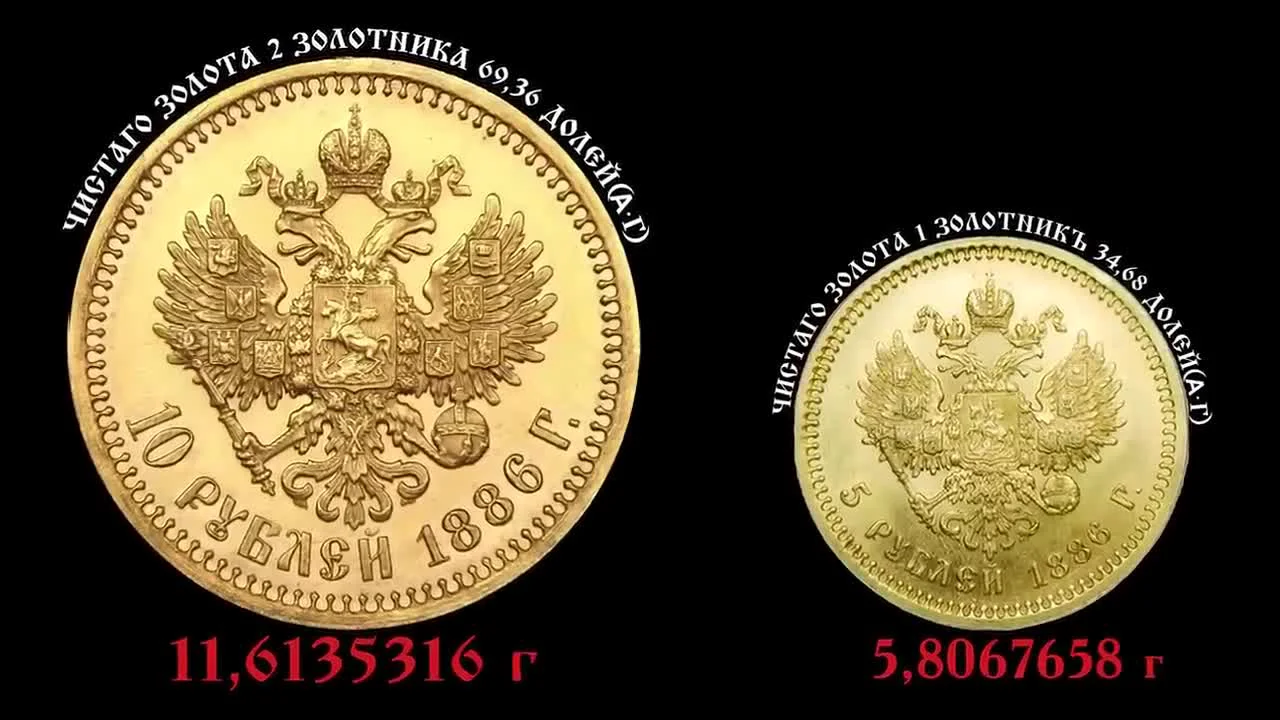
Alexander III (from 1885)
-
11.61 g
From January 3, 1897, the Russian Empire, following most countries in the world except Mexico and China, introduced the gold standard, placing the ruble on a gold basis. Although gold coins had circulated in Russia before, they traditionally served more as a means of saving rather than payment.
Since the mid-18th century, the main large gold coin was the imperial. The minting of imperials (10 rubles) and half-imperials (5 rubles) began in 1755 during the reign of Elizabeth Petrovna. Initially, the weight and gold content of these coins varied.
After 1805, the minting of imperials was temporarily suspended until the time of Alexander III, and half-imperials were issued only in symbolic series. In 1885, their issuance resumed to support Russian travelers abroad, with the gold content equated to French francs: the imperial to 40 francs, and the half-imperial to 20.
The Monetary Reform of 1897
In 1897, a key monetary reform was carried out, during which the gold content of the ruble was reduced by one and a half times. This led to a revaluation of the denominations of existing gold coins, although their actual gold content remained the same.
The changes affected the main gold coins—the imperial and the half-imperial:
The imperial, which previously had a denomination of 10 rubles, was revalued at 15 rubles.
The half-imperial, formerly a 5-ruble coin, received a new denomination of 7 rubles 50 kopecks.
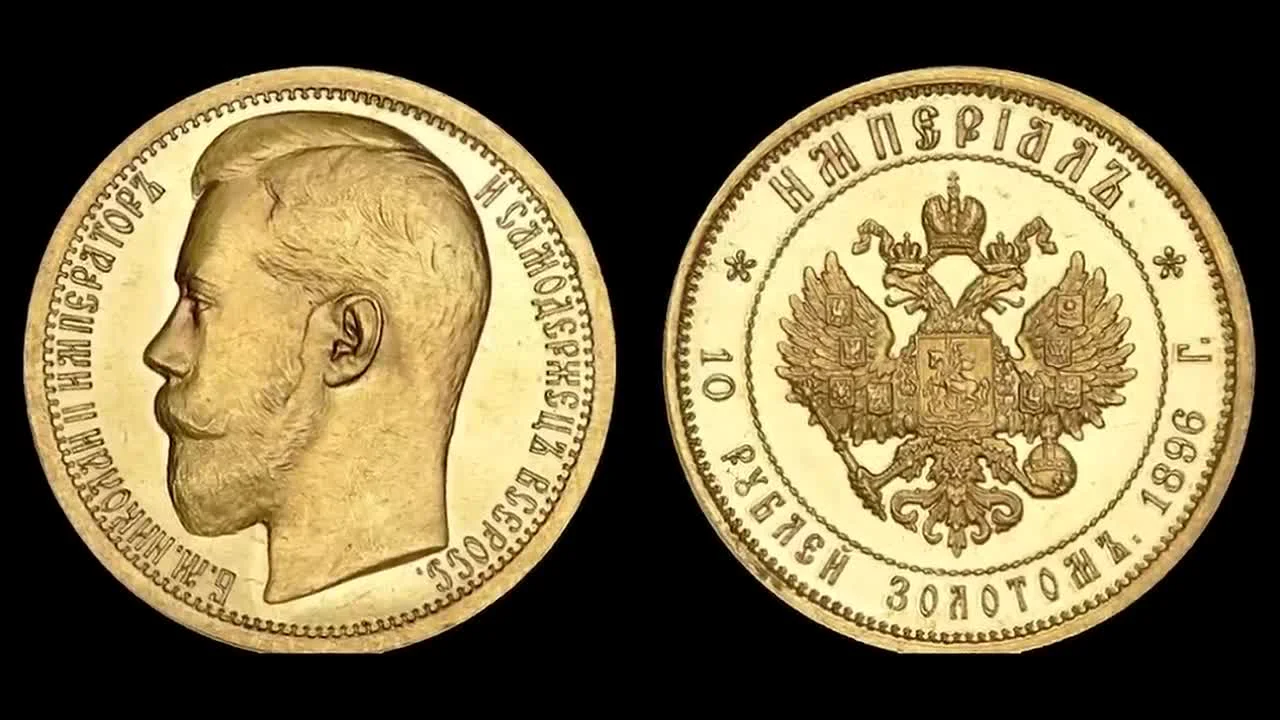
Interestingly, at the very beginning of 1897, the mint managed to strike a final batch of the old-style 10-ruble imperials. The mintage of this batch was only 125 pieces, making these coins extremely rare today. Their value at auctions reaches 8.7 million rubles.
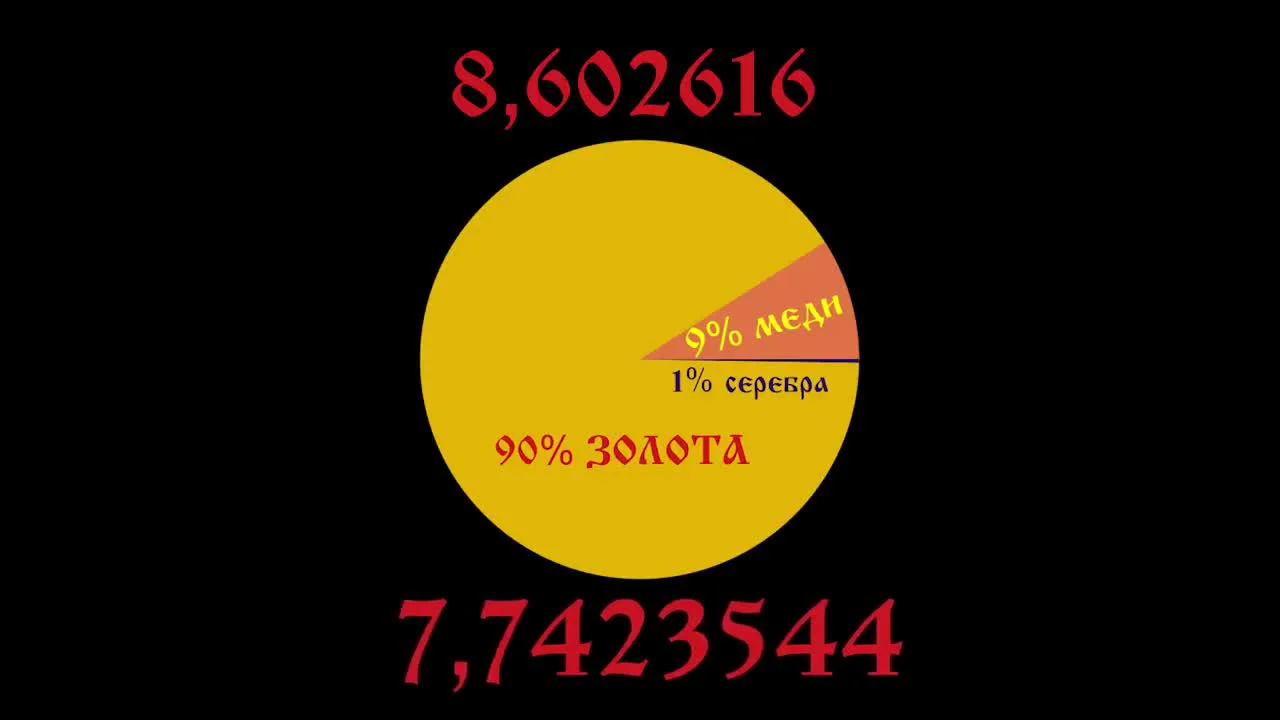
After the reform, the main gold coins in circulation were the new ten- and five-ruble coins. The ten-ruble coin weighed 8.6 grams and contained 7.742 grams of pure 900-fineness gold.
The Monetary Reform of 1897
Economic Consequences: Inflation and Social Tension
The introduction of the gold ruble led to unexpected consequences. Instead of taking money to the banks, the population began to actively hoard gold 'in their coffers.' This caused a shortage of funds in the banking system.
As a result, banks were forced to raise interest rates on deposits to attract funds, which in turn led to higher loan rates. Merchants, who used short-term loans to purchase goods, passed the increased costs on to prices, which fueled inflation.
Price growth outpaced the growth of workers' wages. This led to widespread discontent, which erupted into protest sentiments. Workers began to join Zubatov's circles, and later the organization of Father Gapon, which ultimately led to the events of January 9, 1905, and the First Russian Revolution.
1897 - 36 million rubles in gold
1898 - 147.8 million rubles in gold
1901 - 645 million rubles in gold (exceeding the volume of paper money for the first time)
Economic Consequences: Inflation and Social Tension
Depletion of the Country's Gold Reserve
By 1906, a paradoxical situation had developed: the population held more gold than the state had at its disposal. Citizens held 836 million rubles (647 tons) in gold coin, while government reserves amounted to 794.4 million rubles (614 tons).
The sources for replenishing the gold reserve were limited. Gold mining in Russia in those years amounted to 35 to 52 tons per year, which was incommensurate with the needs. For comparison, in 2022, 330 tons were mined in the Russian Federation.
The export of gold by private individuals ('travelers') going abroad averaged 75 tons per year.
Dividend payments to foreign shareholders of Russian enterprises took out about 24.5 tons per year.
The largest expense item was the repayment of foreign debts. If in 1898 this amounted to 153.32 tons of gold, by 1905 this figure had grown to 259.16 tons.
Depletion of the Country's Gold Reserve
Geopolitical Consequences: The 1906 Loan and the Choice of Allies
Country/Group
Share in the Loan
---
---
France
53.33%
Russian Banks
22.22%
Britain
14.66%
Austria-Hungary
7.33%
Netherlands
2.44%
Under critical conditions, Sergei Witte, who became the first prime minister, arranged for a large foreign loan of 653 tons of gold. This loan had not only economic but also immense geopolitical significance, determining Russia's foreign policy course for years to come.
The main creditors were the future Entente allies. The distribution of shares in the loan was as follows:
The absence of Germany is noteworthy. In 1905, Russia attempted to shift its foreign policy to a pro-German course by concluding the Treaty of Björkö. However, Germany was unable to provide the necessary loan, as its own gold reserve was small (267 tons) and was a state secret. Berlin's refusal was perceived in St. Petersburg as a sign of unreliability.
As a result, the Treaty of Björkö never came into force, and Russia, having received money from France and Britain, became financially and politically tied to the Entente. This choice largely predetermined the Russian Empire's entry into World War I on the side of this alliance.
Geopolitical Consequences: The 1906 Loan and the Choice of Allies