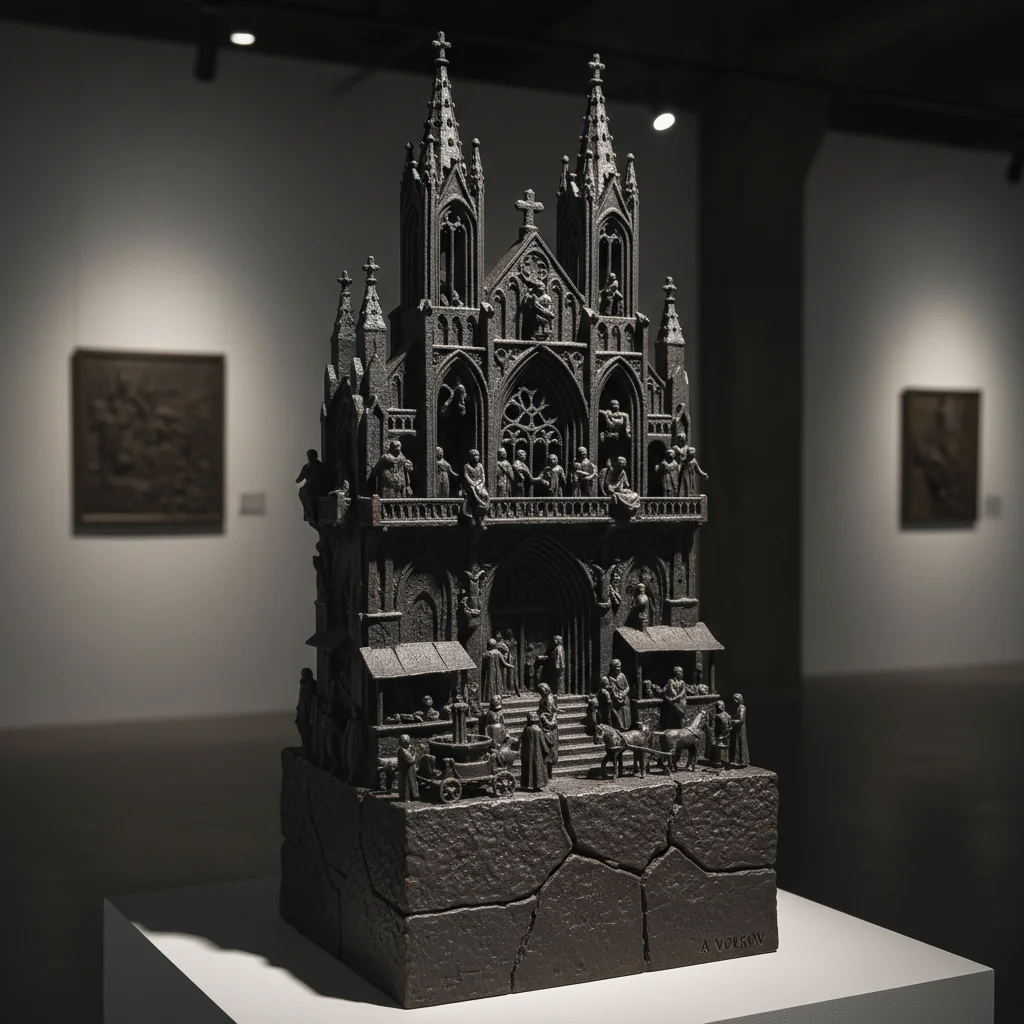
Art in Metal: A Guide to Cast Iron Art - AUCBURG | AUCBURG
Art in Metal: A Guide to Cast Iron Art
In the art of cast iron casting, German masters hold a dominant position. Initially, before the 18th century, their production was focused on utilitarian objects. These were mainly small, ornate stoves (Ofen) and fireplaces for wealthy homes, decorated with cast doors and portals.
From Stoves to Decor: The History of German Cast Iron Art
In the art of cast iron casting, German masters hold a dominant position. Initially, before the 18th century, their production was focused on utilitarian objects. These were mainly small, ornate stoves (Ofen) and fireplaces for wealthy homes, decorated with cast doors and portals.
Production was mainly concentrated in Northern Germany due to the colder climate. However, with the advent of the 19th century, craftsmen transitioned to creating more decorative, artistic, and exquisite items, transforming a utilitarian craft into a true art form.
Classification and Properties of Cast Iron
All cast iron art can be broadly divided into four main subcategories, which help to better navigate its diversity.
Mass-produced works
Author's works
Artistic pieces
Decorative items
Cast iron itself is a type of iron. It is a very hard, yet brittle material. Its key advantage is the ability to accurately reproduce even the smallest and most intricate details in a casting, making it ideal for creating complex artistic forms.
Before the 19th century, having a cast iron object on one's desk was considered prestigious. Such items were valued on par with those made of copper and bronze, and sometimes even more highly. It is believed that the expressive black color of cast iron gives the pieces a special vibrancy and depth.
Classification and Properties of Cast Iron
Criteria for Evaluating Artistic Casting
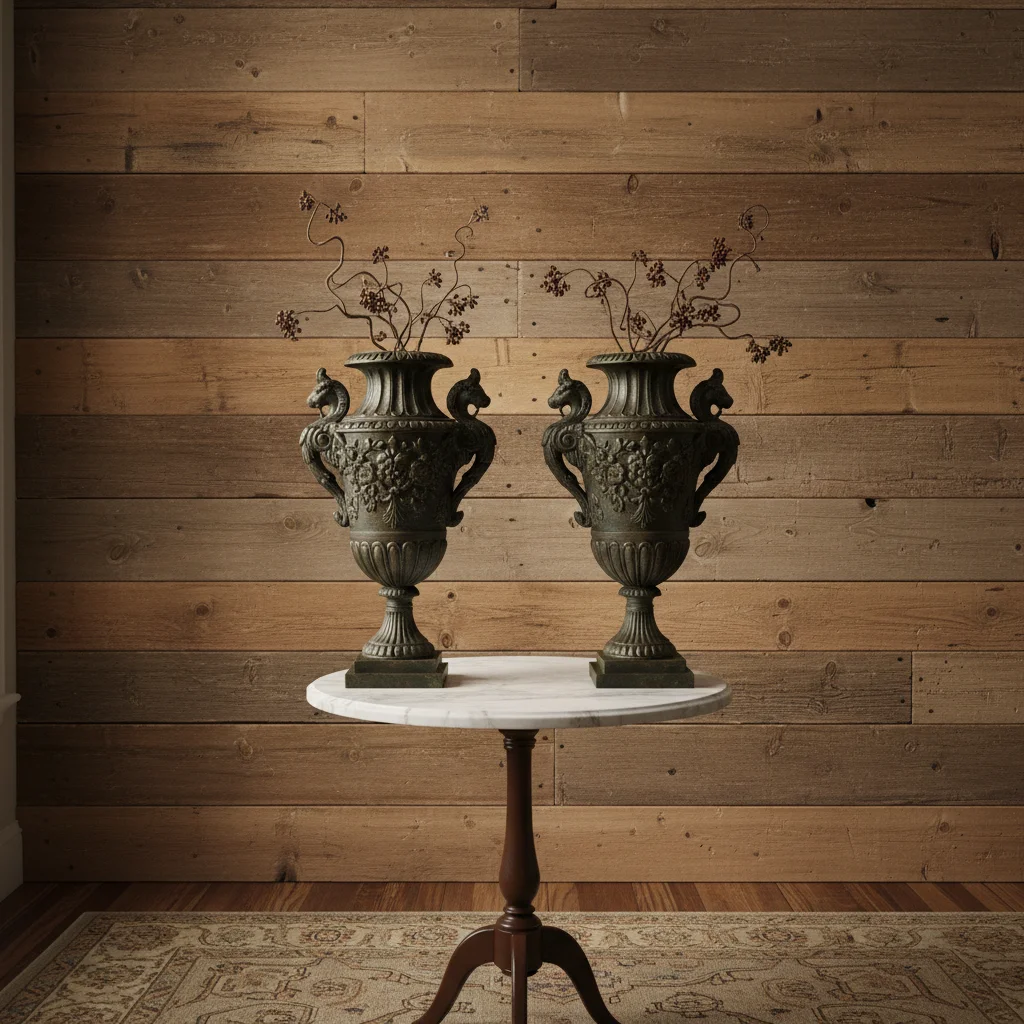
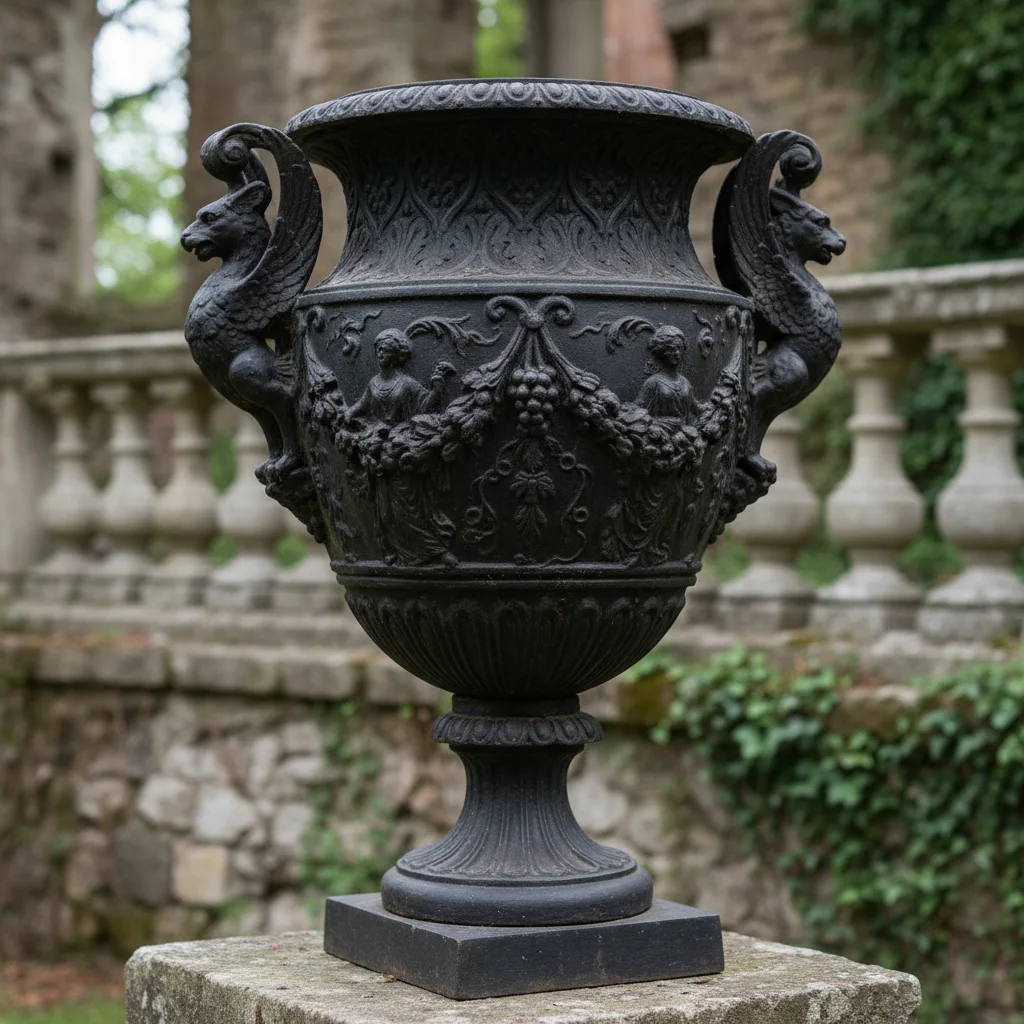
When evaluating artistic cast iron, such as vases from the 1900s, several key points should be considered. This helps to distinguish a quality work from a fake or an assembled piece.
Stability. The first thing to check is how the object stands on a surface—whether it is stable or wobbly.
Detailing. The quality of small elements, such as petals, hands, or fruits, indicates the fine work of the craftsman.
Fastenings. It is necessary to inspect the nuts and bolts. The presence of a modern nut may indicate a restoration or that the item is assembled from different parts.
Seam quality. Three-dimensional items were typically cast in two halves. It is important to carefully examine the seam where they join and assess the quality of its finish.
Reverse side. The back of the item can reveal a lot about the production technology. For example, small bumps may be a sign of modern vacuum casting, and milling marks can indicate machine processing.
Criteria for Evaluating Artistic Casting
The Quality Paradox: Why Early Castings Are More Valuable
There is an interesting paradox related to the mass production of cast iron. Often, the same model, such as a decorative plate, is produced for several decades under the same serial number.
The earlier an item was made, the higher its quality. This is because the casting mold wears out over time. The first castings are the sharpest and most detailed, as the mold is still new.
Over the years, the mold becomes 'worn smooth,' its relief fades, which inevitably affects the quality of subsequent items. Therefore, when comparing two identical objects produced at different times, the difference in quality can be colossal. Earlier examples are always valued more highly.
The Quality Paradox: Why Early Castings Are More Valuable
Hallmarks and Serial Numbers: How to Read the Signs
Signatures and hallmarks are not always found on cast iron. As a rule, they are present only on author's works, where one can find the master's signature, a series number, or the company's mark.
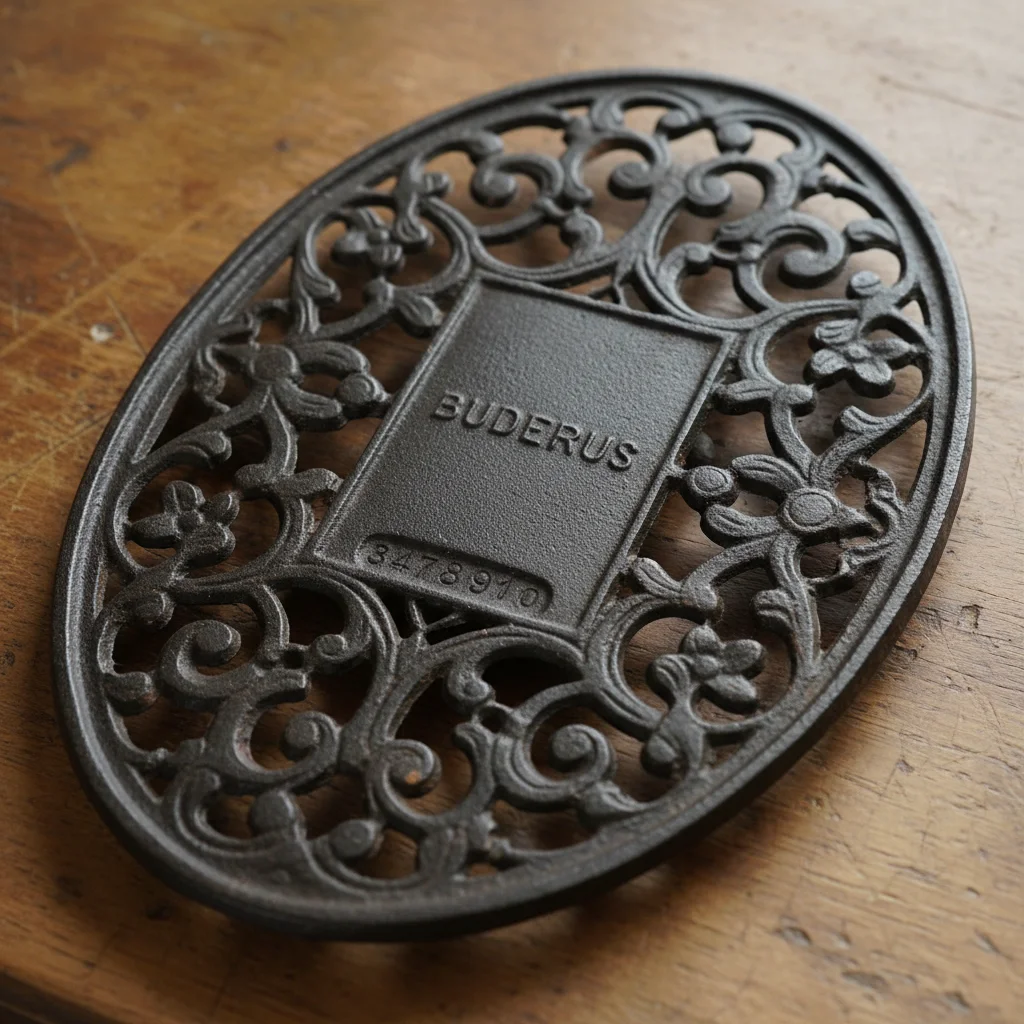
On most mass-produced items, only a serial number can be found, which can be used to identify the object in the manufacturer's catalog. For example, the famous German company Buderus, an analogue of Russia's Kasli casting, marked its products with a serial number and a company logo.
The absence of a signature does not always mean low value. The quality of workmanship, detail, and the age of the item are much more important.
Hallmarks and Serial Numbers: How to Read the Signs
Investing in Cast Iron: What's Worth Buying?
Cast iron can be a good investment. High-quality artistic and author's works are particularly valuable, especially if they are early castings. Such items are undoubtedly a profitable investment.
Mass-produced and decorative castings are also of interest. The main issue here is storage, as the items can be bulky. If you have a place to store them, such as a warehouse or a country house, then such things are worth buying—they are always in demand and can be sold.
It is important to remember that in the antiques business, profit is made at the time of purchase. Therefore, knowledge of details and the ability to distinguish quality antique works from modern mass-produced items is the key to successful investment in cast iron.