The 'Bubble' in Russian Numismatics: Myth or Reality? - AUCBURG | AUCBURG
The 'Bubble' in Russian Numismatics: Myth or Reality?
Recently, the Russian numismatics market has seen a significant price increase, raising concerns among some collectors about the formation of a 'bubble.' After observing another auction where prices reached high marks, the question arises: what will happen to collections if this supposed bubble bursts?
Recently, the Russian numismatics market has seen a significant price increase, raising concerns among some collectors about the formation of a 'bubble.' After observing another auction where prices reached high marks, the question arises: what will happen to collections if this supposed bubble bursts?
Many believe that prices are inflated and have reached an excessively high level. This makes one think about the future of collecting as a hobby. Each year, it becomes more difficult to acquire new specimens to expand a collection due to their rising cost.
From European Coins to Russian Numismatics: A Collector's Journey
A serious passion for collecting Russian coins began in 2014. Before this period, the focus was on commemorative 2-euro coins. The collection numbered around 300 specimens, including rare coins from Monaco, Vatican City, and Andorra.
Over time, it became clear that this direction was not suitable, and the entire European collection was sold. The proceeds served as the start for a new hobby—Russian numismatics. Initially, coins were purchased at flea markets, often in poor condition, which required learning cleaning and restoration techniques.
From European Coins to Russian Numismatics: A Collector's Journey
The '300th Anniversary of the Romanov Dynasty' Ruble: From 150 to 800 Euros
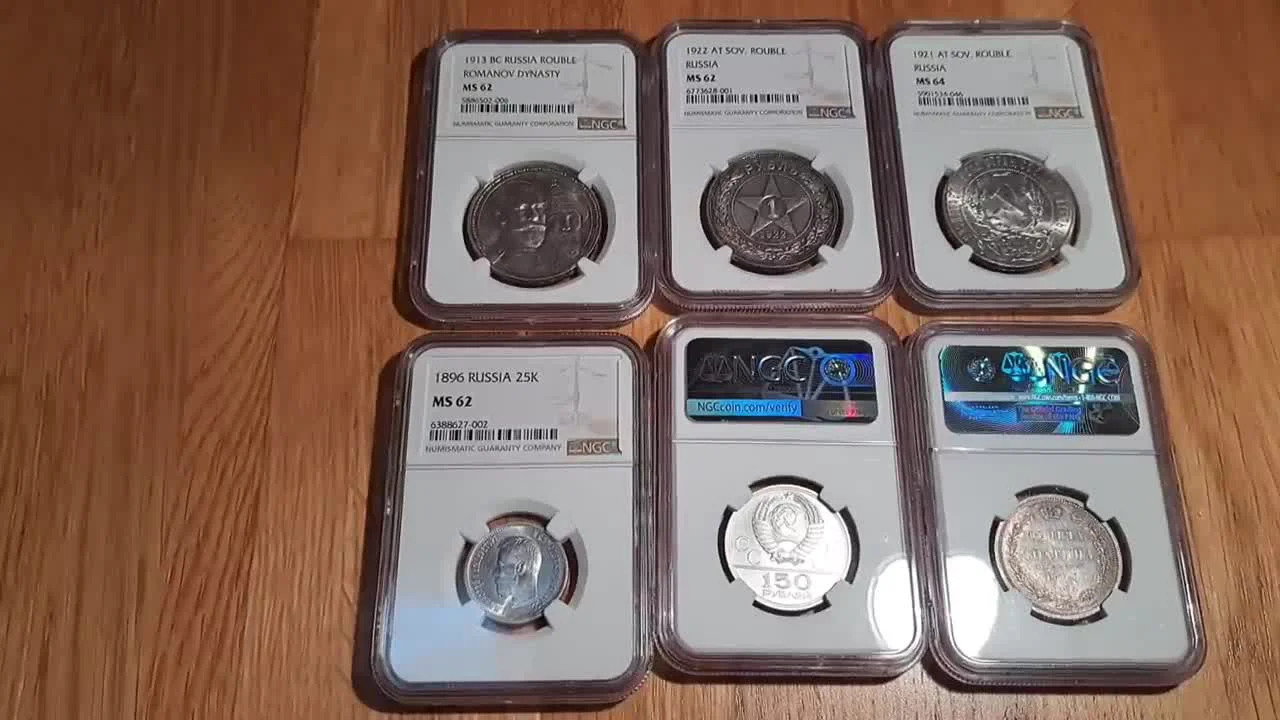
One of the first significant acquisitions was the 1913 ruble '300th Anniversary of the Romanov Dynasty.' This coin, bought at a numismatic shop in Stuttgart, became a unique entry point into the world of Russian numismatics.
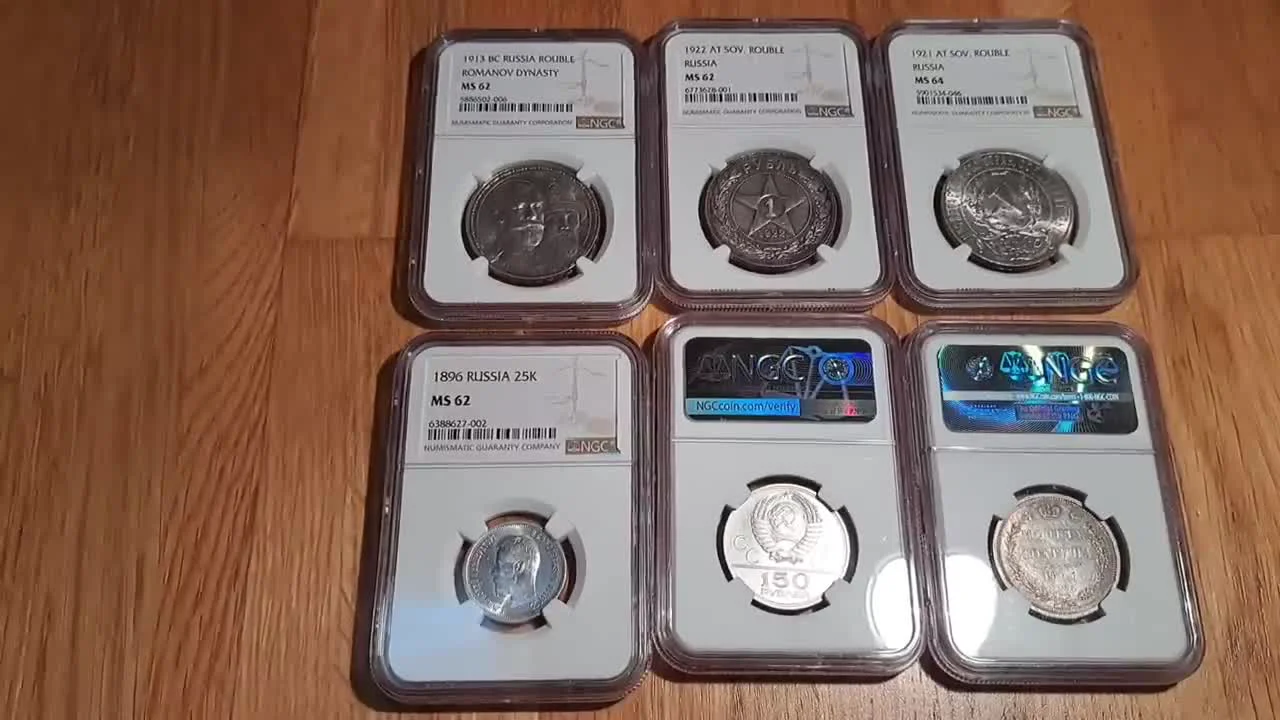
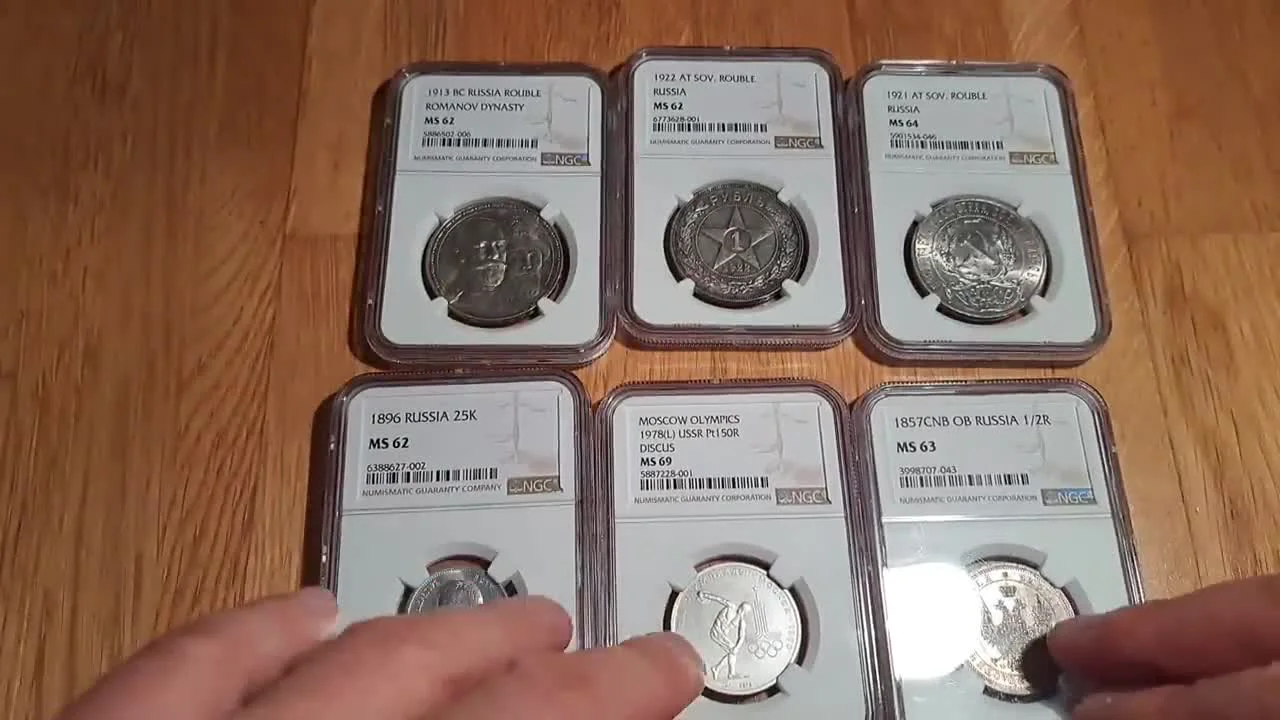
In 2014, its value was 150 euros, which was considered a high price at the time. The coin was later sent for grading and received a grade of MS 62. Today, its market value is estimated at 700-800 euros, with a forecast for further growth.
The '300th Anniversary of the Romanov Dynasty' Ruble: From 150 to 800 Euros
How the Value of Soviet Coins Has Changed
Coin
Grade
Purchase Price (approx.)
Current Price (approx.)
1921 Ruble
MS 64
~100 euros
> 1000 euros
1922 Ruble
MS 62
350 euros
2000-3000 euros
1896 25 Kopecks
MS 62
150 euros
~1000 euros
1857 Poltina
MS 63
< 300 euros
4-5 times more expensive
1978 150 Rubles (platinum)
MS 69
> 600 euros
> 2000 euros
The price growth is also clearly demonstrated by Soviet coins. At one time, a 1921 ruble in excellent condition could be bought for 100 euros or less. Today, a specimen graded MS 64 is worth over 1000 euros, and in MS 65, its price can reach 2000-3000 euros.
Even more indicative is the example of the 1922 ruble, which has transformed from a common coin into a rarity. A specimen graded MS 62, purchased a few years ago at auction for 350 euros, is now valued at 2000-3000 euros. This purchase was possible due to a poor-quality photograph in the catalog, which likely deterred other bidders.
How the Value of Soviet Coins Has Changed
Growth Factors: Why Prices for Rare Coins Will Continue to Rise
Contrary to fears, there is no 'bubble' in the numismatics market in the classic sense. A bubble forms when a producer can saturate the market with a product in response to high demand. In the case of old coins, this is impossible—their quantity is limited and they are no longer produced.
Meanwhile, the number of people wanting to acquire rare coins is constantly growing. The market is being entered not only by collectors but also by investors with significant capital who view numismatics as a way to preserve wealth. They acquire specimens in the best possible condition, after which these coins settle into private collections and safes for a long time, effectively being 'washed out' of the market.
Thus, supply is decreasing while demand is growing, which inevitably leads to further price increases. This process is irreversible, and investing in high-quality numismatic assets, whether they are Russian coins or coins from other countries in high-grade condition, remains a reliable way to preserve capital.
Growth Factors: Why Prices for Rare Coins Will Continue to Rise