Investing in Antiques: The Value of Vintage Textiles and Lace - AUCBURG | AUCBURG
Investing in Antiques: The Value of Vintage Textiles and Lace
When searching for antiques, one often comes across old lace and vintage textiles. Many people pass by such items without paying them any attention. However, it's worth exploring whether these objects are of interest from the perspective of collecting and investing.
When searching for antiques, one often comes across old lace and vintage textiles. Many people pass by such items without paying them any attention. However, it's worth exploring whether these objects are of interest from the perspective of collecting and investing.
This category of goods is found in any search for antiquities, whether at flea markets, in antique shops, or in other places. Therefore, it is important to understand what to look for so as not to miss a valuable piece.
A Brief History of Lace: From Italy to France
It is generally believed that lace first appeared in Europe, specifically in Italy. The famous Venetian lace became the starting point of its history, although some researchers claim that the origins of this craft lie in China and India.
From Italy, the art of lacemaking spread throughout Europe. Queen Catherine de' Medici played a key role in popularizing lace in France. She invited Italian craftswomen to teach French needlewomen their art.
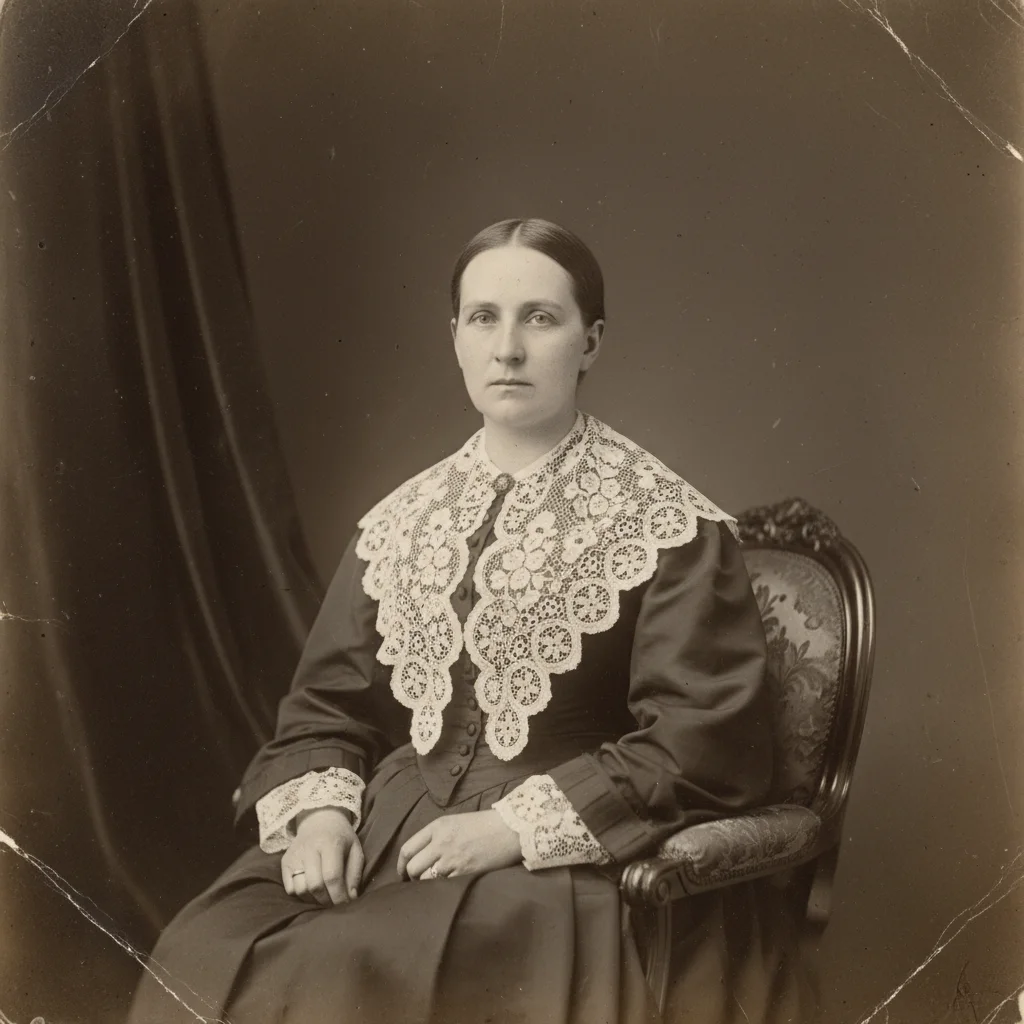
The French women proved to be talented students and by the end of the 17th century, they had surpassed their mentors. French lace products took a leading position in Europe, becoming a benchmark of sophistication. Lace was used not only for tablecloths and napkins but also for clothing and accessories, such as umbrellas and lampshades.
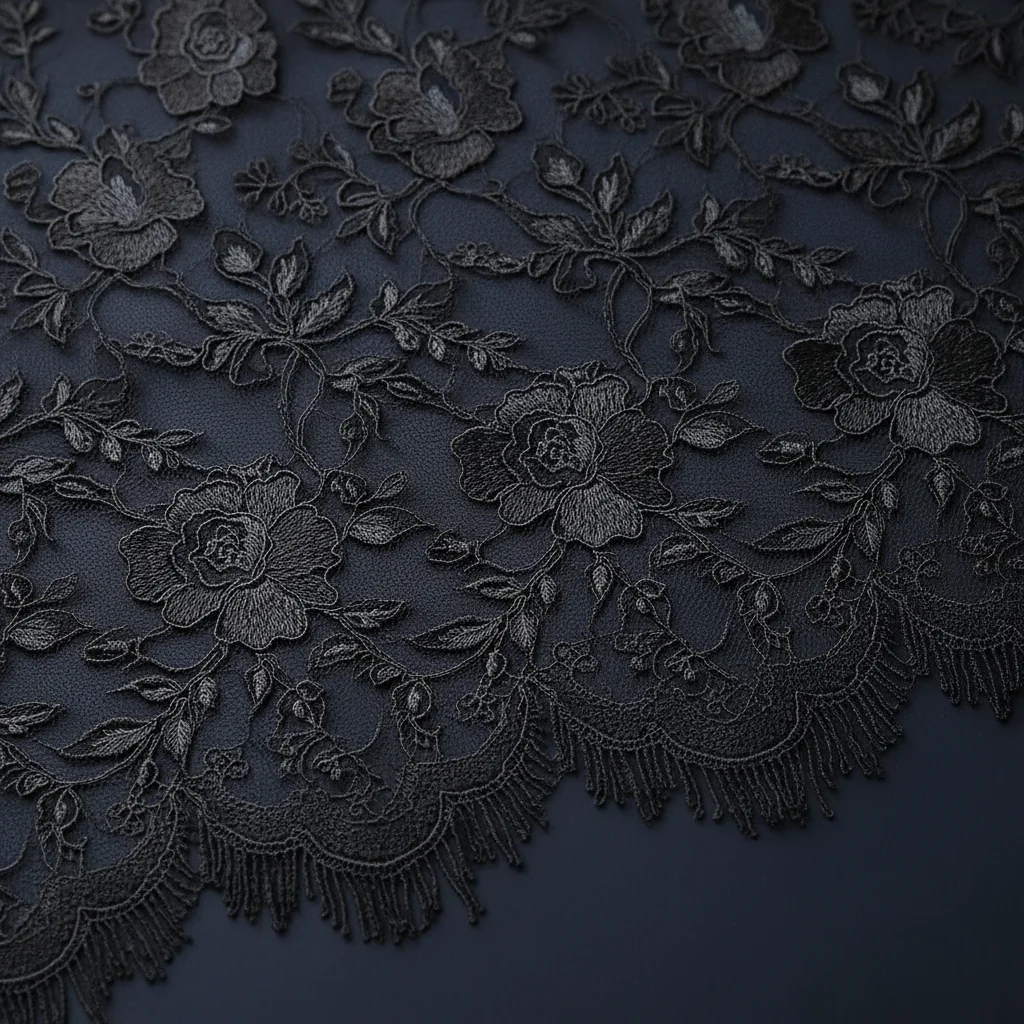
Catherine de' Medici also set the trend for black lace, having once appeared at a ball in a black 'Chantilly' style dress. This style, characterized by black knitting, became a new direction in fashion at the time.
A Brief History of Lace: From Italy to France
The Evolution of Production and the Value of Items
By the 18th century, partial machine production of lace began in France due to high demand, which negatively affected the quality. The products became less complex, and the focus shifted from quality to quantity.
Fashion magazines were used to distribute patterns, publishing samples for knitting and embroidery. For instance, in one of the French magazines from 1895, one can see diagrams for creating various lace items.
With the advent of aniline dye in 1850, textile products became brighter and more saturated. This is an important marker for dating: items with dull, unfaded colors were likely produced before the mid-19th century.
The Evolution of Production and the Value of Items
Criteria for Evaluating Vintage Textiles
When evaluating vintage textiles and lace, it is important to pay attention to several key points that determine their value.
Aesthetic appeal. First and foremost, the item should be visually pleasing.
Material. Natural heavy linen is valued much more highly than cotton or synthetic fibers.
Design. Compositions with human or animal figures are rarer and more valuable than common floral motifs.
Condition. For items from the 19th-20th centuries, perfect condition is important. For very old items (17th-18th centuries), the presence of damage is permissible.
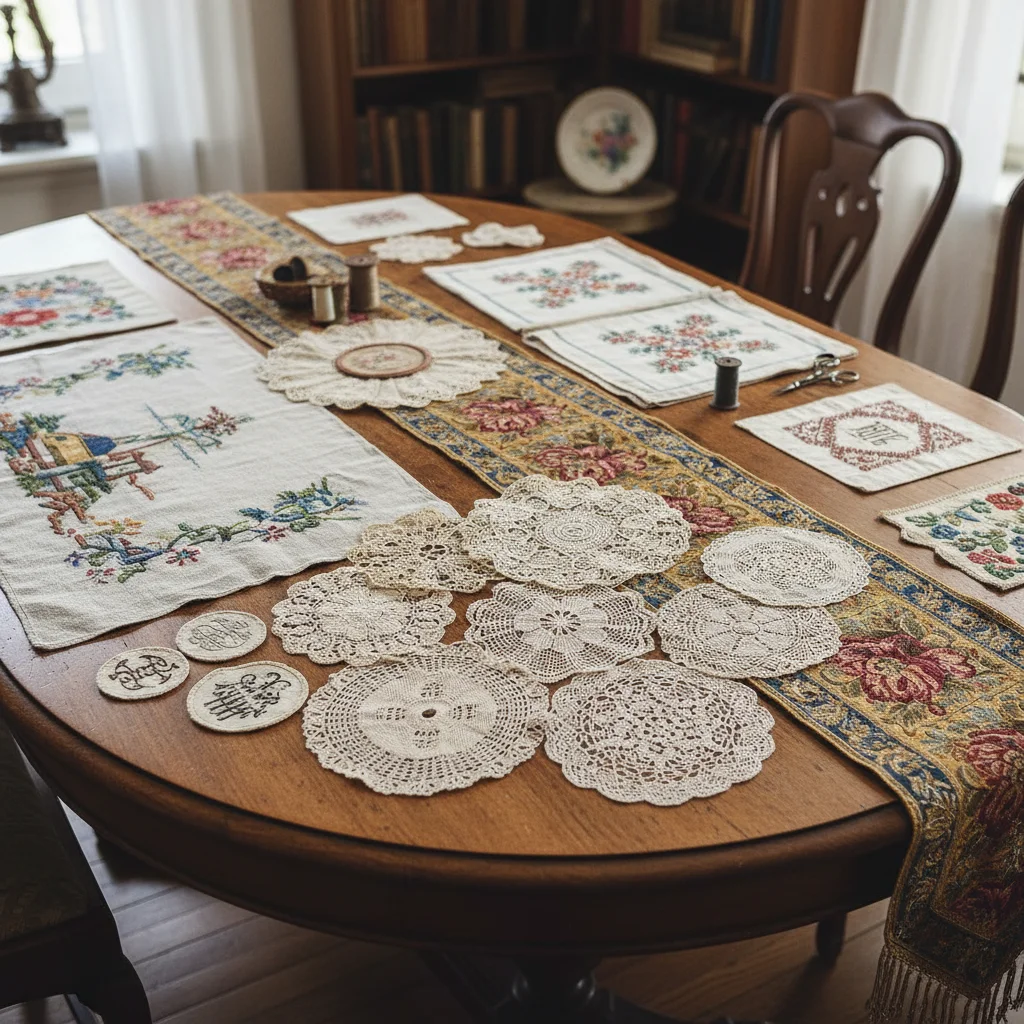
Provenance. The presence of the owner's initials, the maker's name, or marks from an educational institution (for example, on examination pieces) significantly increases the value.
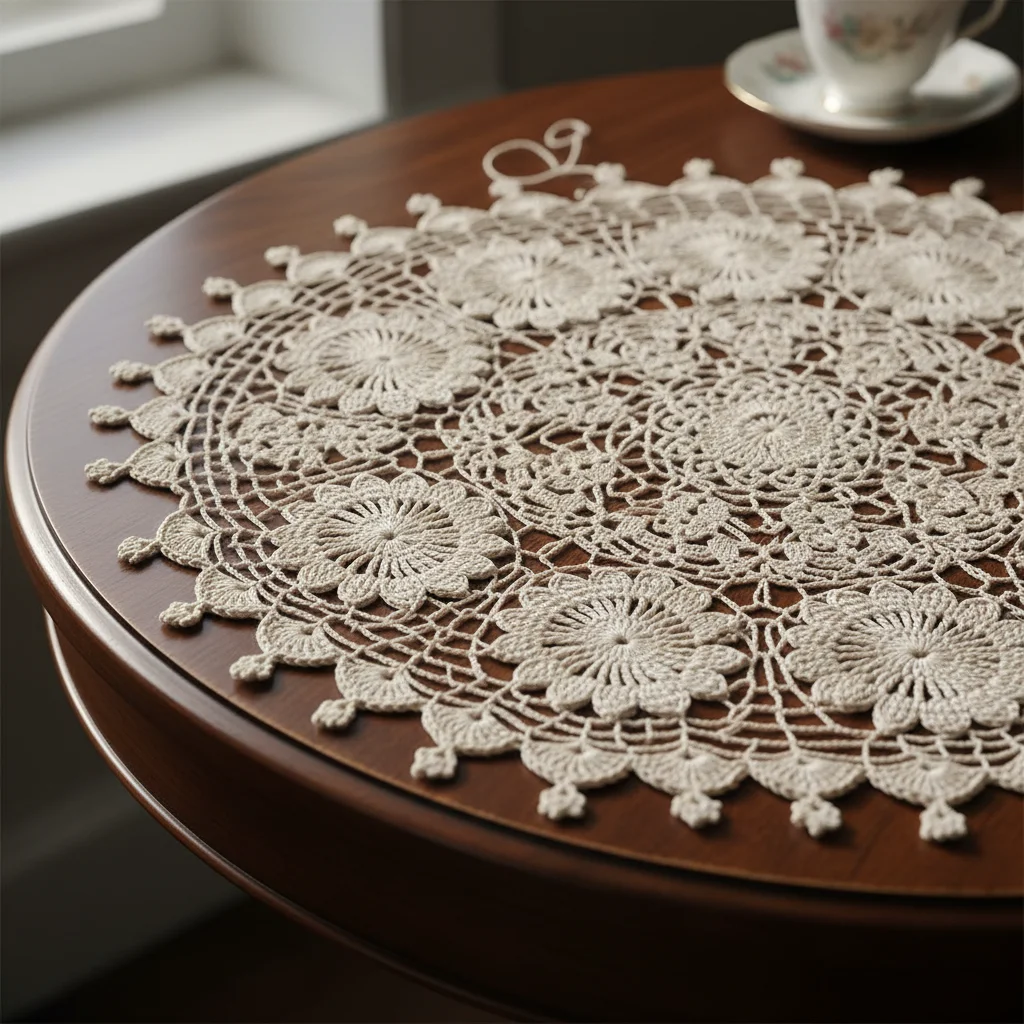
Handmade. Handmade work always differs from machine-made. In handmade items, elements will have slight variations, whereas machine knitting is absolutely identical.
Historical context. Items associated with famous personalities or events have special value.
Criteria for Evaluating Vintage Textiles
Main Techniques for Making Lace
Technique
Description
Needle Lace
A fabric is laid over a stencil base, on which the embroidery is performed. After the work is finished, the base is removed, leaving an openwork pattern.
Bobbin Lace
Creating a pattern using special wooden sticks (bobbins) on a small frame that resembles an embroidery hoop.
Crochet
The most common method, in which a pattern is created with a hook.
There are many techniques for creating lace, but we can distinguish three main types of production that are important to differentiate.
Tape lace deserves a separate mention. In this technique, pre-made lace tapes are sewn together to form a solid fabric, or they are sewn onto a fabric base.
Main Techniques for Making Lace
Investment Potential
Vintage textiles can be an interesting object for investment. For example, high-quality antique linen can cost at least 20-30 euros per square meter. Brocade items are particularly valuable, especially if they include plush elements. Originally, brocade was made on a silk base using silver and gold thread.
Chinese items made before 1900 are highly valued, especially painted silk from the 17th century. Such items can be worth thousands of euros. Also of interest are items with a history, for example, school projects by famous individuals or items that belonged to noble families, as indicated by embroidered initials or coats of arms.
To preserve the value of old fabrics, it is important to store them correctly. It is not recommended to glue them onto a cardboard or wooden base. It is best to place the item between two sheets of plexiglass or in special envelopes to avoid damage from fungus or drying out.