New 'George the Victorious' Gold Bullion Coin Series - AUCBURG | AUCBURG
New 'George the Victorious' Gold Bullion Coin Series
To properly understand the market, it is important to distinguish between bullion and collectible coins. Bullion coins have a number of characteristic features that determine their value primarily by the cost of the metal they contain.
To properly understand the market, it is important to distinguish between bullion and collectible coins. Bullion coins have a number of characteristic features that determine their value primarily by the cost of the metal they contain.
Key characteristics of bullion coins:
Made exclusively from precious metals.
Issued in large mintages, typically at least 100,000 pieces.
Have an 'uncirculated' minting quality, which implies a simpler, matte image.
Thanks to these features, the value of a bullion coin is as close as possible to the market price of the metal it is made from. This makes them an attractive instrument for investing in physical gold.
The History of Russian Gold Coins Before the 'Victorious'
Before 2006, the selection of gold bullion coins in Russia was limited. The main available options were coins from the tsarist era and Soviet restrikes.
Nicholas II rubles, which were restruck during the Soviet era, were in circulation. These were coins with a face value of 5 rubles weighing 4.3 grams and 10 rubles weighing 8.6 grams.
The Soviet 'Sower' coins, weighing 8.6 grams, were also popular. They were minted in large quantities from the mid-1970s to the early 1980s. All these coins were made of 900-fineness gold.
The History of Russian Gold Coins Before the 'Victorious'
The First 'George the Victorious' and Other Issues
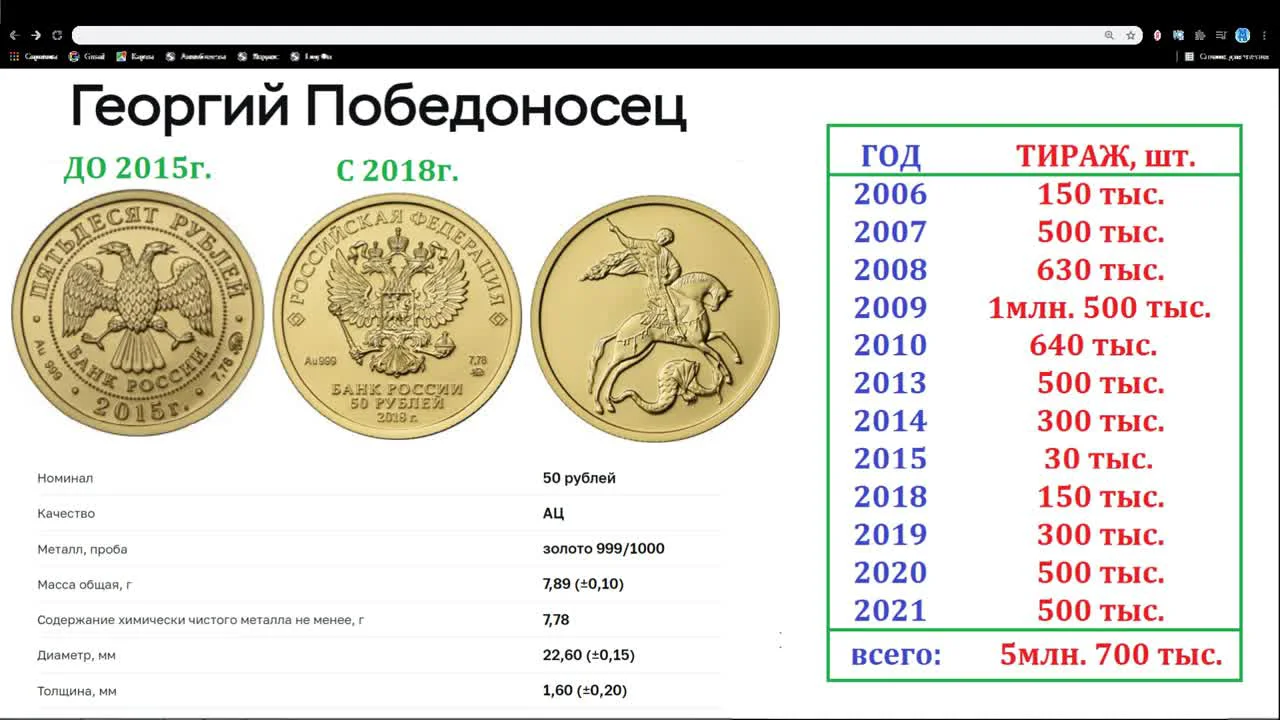
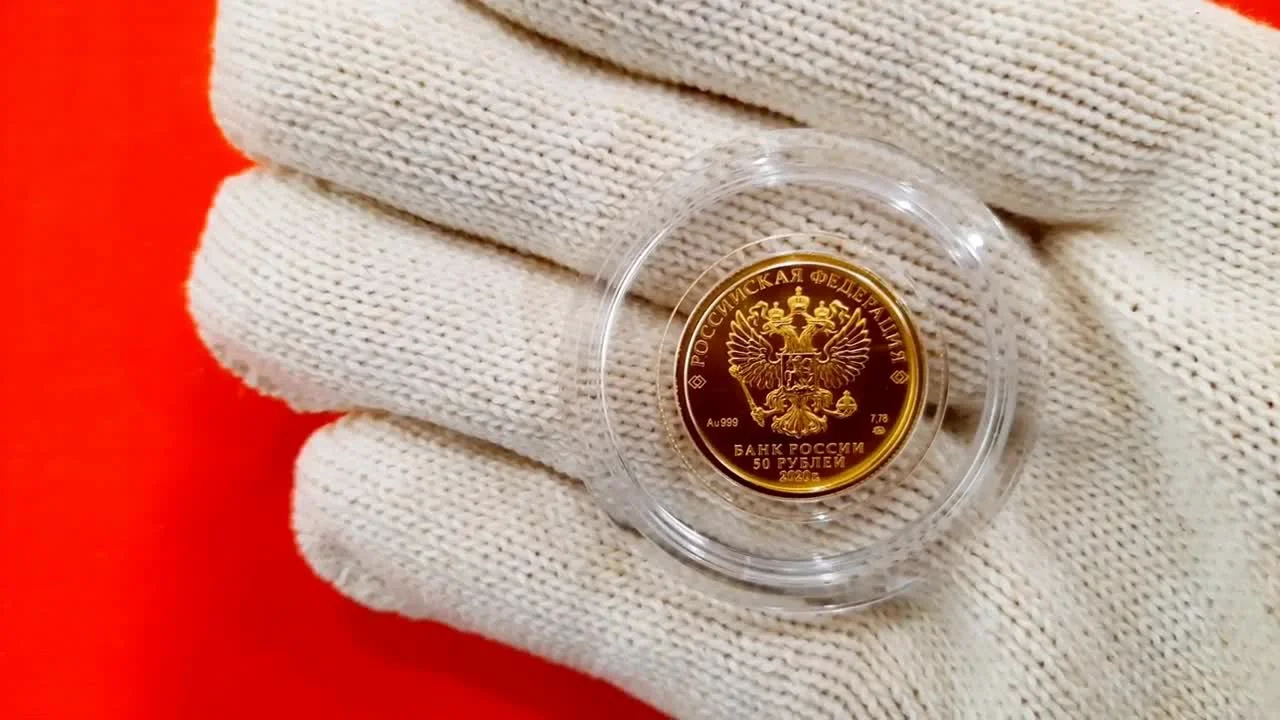
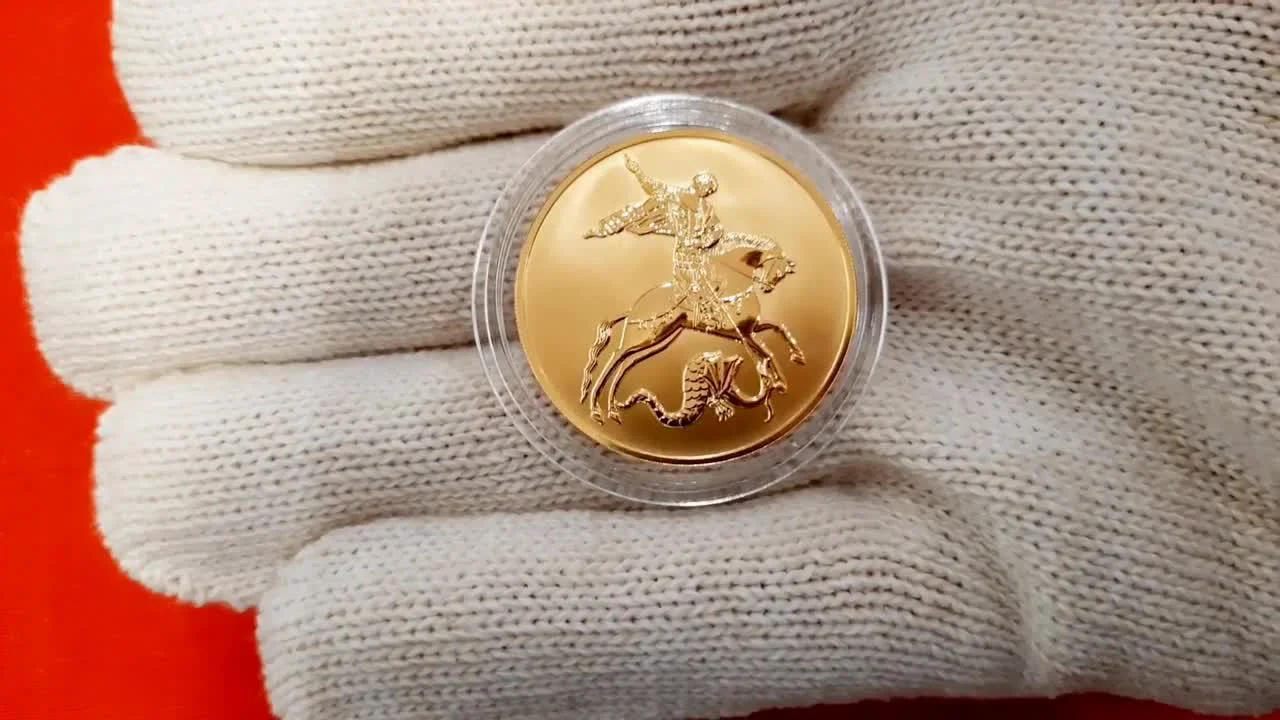
The turning point came in 2006 with the release of the first Russian bullion coin made of 999-fineness gold — the 'George the Victorious'. The coin had a face value of 50 rubles and a weight of 7.78 grams, which corresponds to a quarter of a troy ounce.
From 2006 to 2021, more than 5.7 million of these coins were issued. In 2018, the obverse design was changed. The coins were minted at the Moscow and Saint Petersburg Mints in 'uncirculated' quality.
Besides the 'Victorious', other bullion coins were also issued. For the Winter Olympics in Sochi from 2011-2013, rectangular coins were released featuring images of a leopard, a bear, and a hare. They had two denominations: 50 rubles (1/4 ounce) and 100 rubles (1/2 ounce). In 2016, a coin dedicated to the 2018 FIFA World Cup was introduced, with a face value of 50 rubles (1/4 ounce).
The First 'George the Victorious' and Other Issues
The New 2021 'George the Victorious' Series
Denomination
Weight, g
Weight, oz
Diameter, mm
Thickness, mm
Mintage, pcs.
25 rubles
3.11
1/10
16
1.3
100,000
50 rubles
7.78
1/4
22.6
1.6
500,000
100 rubles
15.55
1/2
30
1.7
100,000
200 rubles
31.1
1
33
2.8
100,000
In 2021, a whole new series of 'George the Victorious' bullion coins with different denominations appeared. This event provided investors with a wider choice for investing in physical gold.
The new series includes four coins made of 999-fineness gold in 'uncirculated' quality.
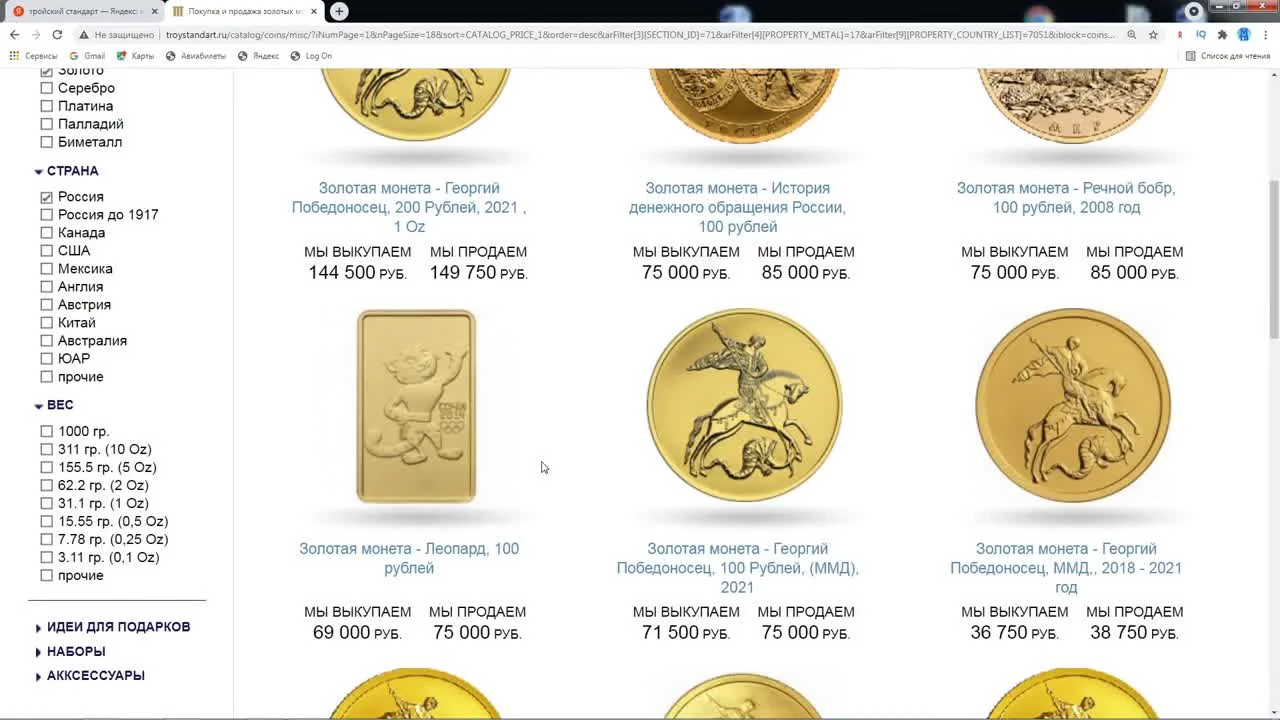
The 200-ruble coin became the first one-ounce bullion coin in the history of modern Russia. The 25 and 200-ruble coins were minted only at the Saint Petersburg Mint (SPMD), while the 50 and 100-ruble coins were minted at both the SPMD and the Moscow Mint (MMD).
The New 2021 'George the Victorious' Series
Minting Quality and the 'Rust' Problem
One of the known issues with early issues of the 'George the Victorious' gold coins is the appearance of so-called 'rust'. These are red or reddish-brown spots, which are particles of foreign metals that got onto the coin during the minting process.
The highest number of such defects was recorded on coins minted at the Saint Petersburg Mint (SPMD) from 2006 to 2010, where up to 90% of the mintage could have such spots. Since 2014, the problem has become much less common (about 1%), and since 2018, it has occurred only in exceptional cases.
It's worth noting that this defect is also found on foreign coins, such as the 'Austrian Philharmonic' or the 'American Eagle'. Many dealers do not consider this a flaw and buy back such coins without a discount. The spots can be removed, but it is not recommended to do it yourself, as gold is a soft metal and can be easily damaged. It is better to contact a jewelry workshop.
Minting Quality and the 'Rust' Problem
Spreads and Choosing the Most Profitable Denomination
Coin Denomination
Weight
Spread
200 rubles
1 ounce
3.5%
100 rubles
1/2 ounce
4.66%
50 rubles
1/4 ounce
4.5% (SPMD) - 5.1% (MMD)
25 rubles
1/10 ounce
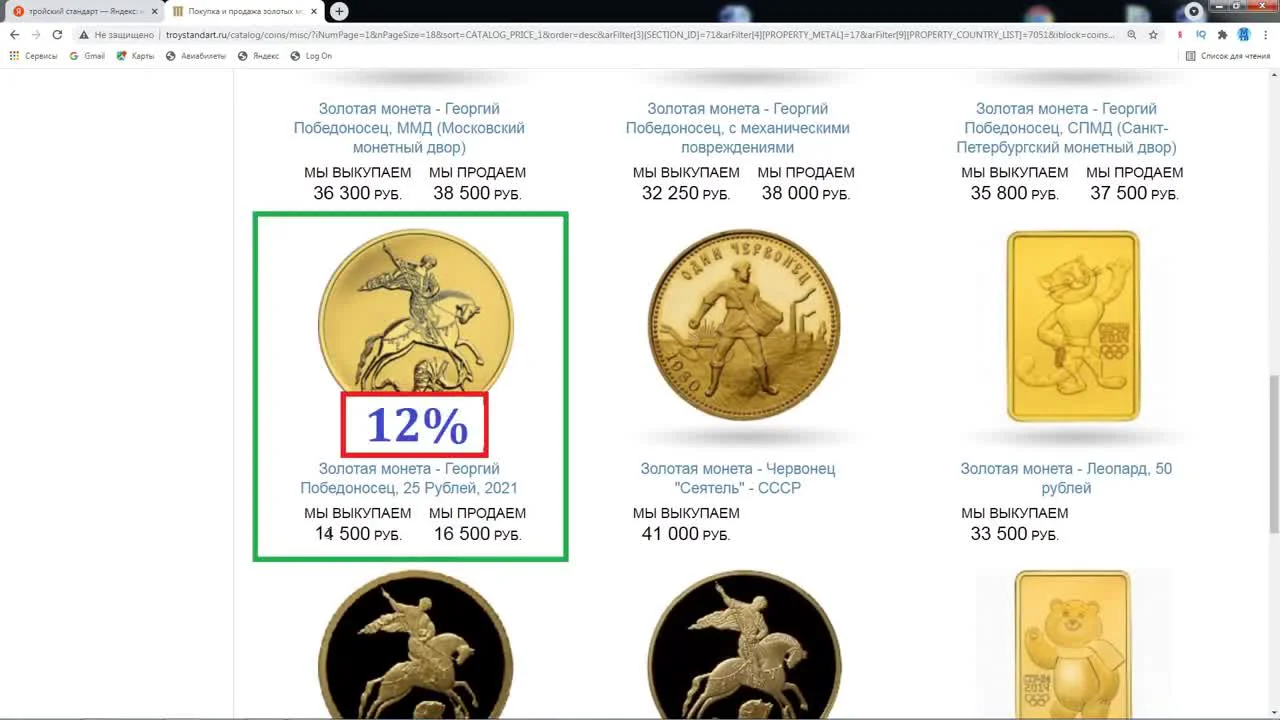
12%
When buying bullion coins, it's important to pay attention to the spread — the difference between the buying and selling price of the coin, expressed as a percentage. Buying and selling coins at banks is generally not profitable due to very large spreads. For example, at Sberbank, the spread on a quarter-ounce 'Victorious' can reach 19%.
It is much more profitable to purchase coins from official dealers. A price analysis shows that the spread is directly dependent on the coin's weight: the heavier it is, the lower the spread and the more profitable the purchase.
The table shows that the one-ounce coin is the most profitable investment. A spread below 5% is considered good, and below 4% is excellent. Coins of smaller denominations, especially the 1/10 ounce, have a spread that is too high, making them less attractive for investment.
Spreads and Choosing the Most Profitable Denomination
Pros and Cons of the New Coin Series
The new 'George the Victorious' coin series has both strengths and weaknesses. The main advantage is the introduction of a wide range of denominations, which makes investing in gold more accessible.
The one-ounce 'George the Victorious' coin is currently one of the most profitable options for private investors in the Russian market due to its low spread. It is expected to become the most popular and liquid coin in Russia.
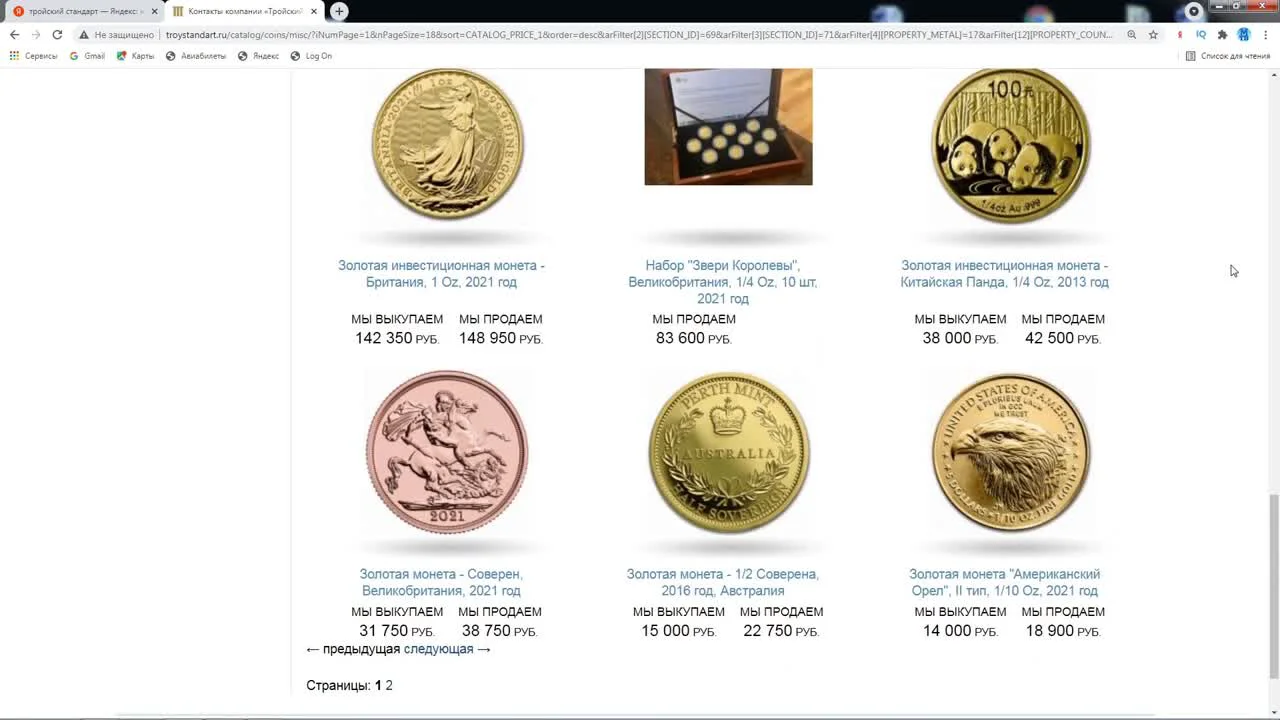
The main disadvantage is the low liquidity of Russian coins abroad. Selling a 'George the Victorious' outside of Russia can be difficult. Therefore, those planning to move should consider buying more well-known foreign coins. Some also consider the design a drawback, but for a pragmatic investor who sees the coin as a piece of precious metal, this is irrelevant.