Which Watch Crystal is Better: Acrylic, Mineral, or Sapphire? - AUCBURG | AUCBURG
Which Watch Crystal is Better: Acrylic, Mineral, or Sapphire?
Every wristwatch has a crystal that protects the dial and hands. Although we look at it constantly, we rarely think about its properties. The watch industry uses three main types of crystals, each with its own unique characteristics.
Every wristwatch has a crystal that protects the dial and hands. Although we look at it constantly, we rarely think about its properties. The watch industry uses three main types of crystals, each with its own unique characteristics.
These include acrylic, mineral, and sapphire crystals. Each of these materials has its own advantages and disadvantages, which determine its use in watches of different price categories and styles.
Acrylic Crystal: Affordability and Durability
Acrylic crystal, also known as Plexiglass or simply plastic, is most often installed in affordable watches. This is due to its low manufacturing cost. This material is also an integral part of vintage watches and modern retro-style models.
Thanks to its plasticity, acrylic crystal can easily be made convex or domed. This shape creates a pleasant vintage curve and interesting light refraction, which many enthusiasts appreciate. However, some believe it looks cheap and categorically reject such crystals.
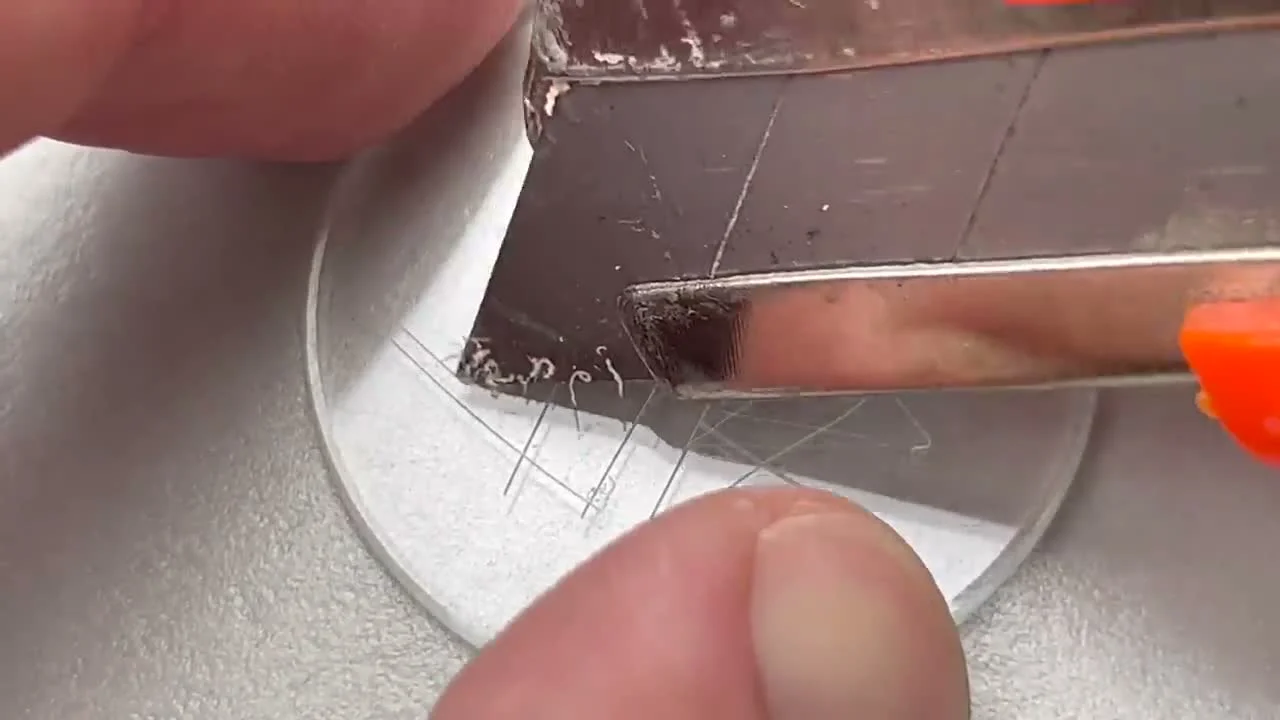
The softness of acrylic makes it very susceptible to scratches—any sharp object can leave a mark on it. However, this softness has a flip side: acrylic crystals are incredibly impact-resistant due to their flexibility. It's not easy to shatter, which is one of its main advantages.
Acrylic Crystal: Affordability and Durability
Practical Applications and Features of Acrylic
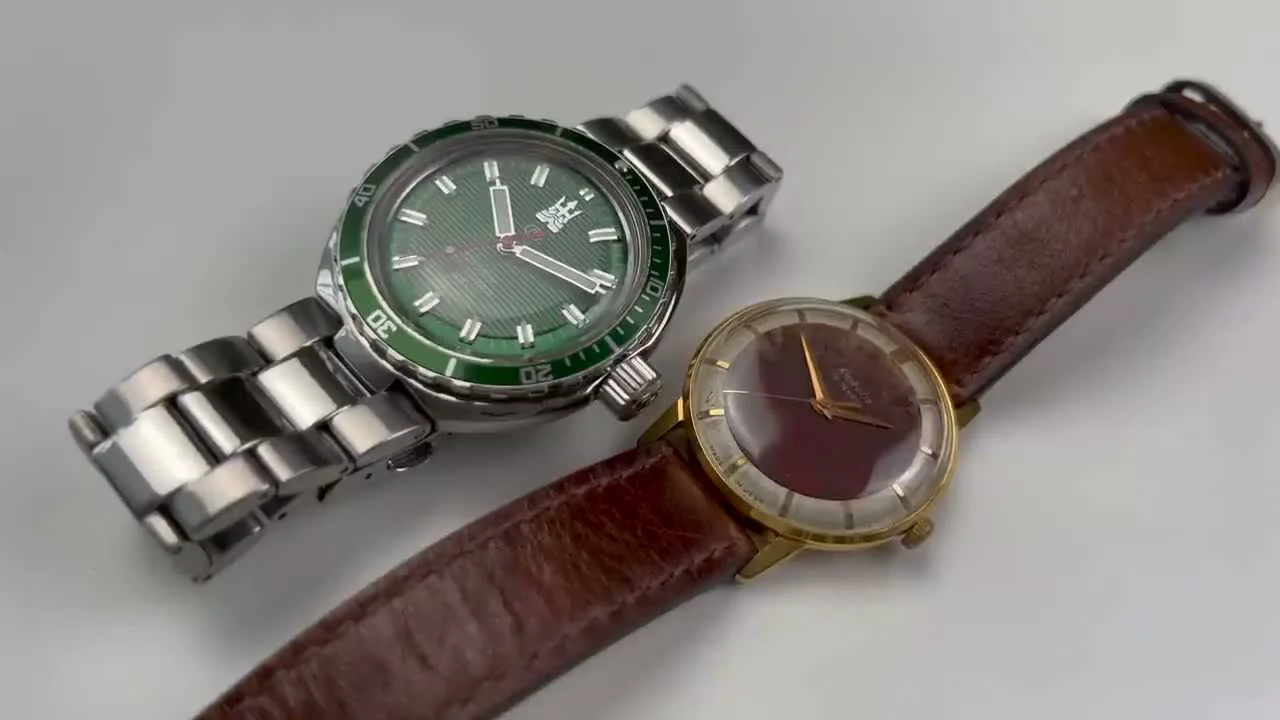
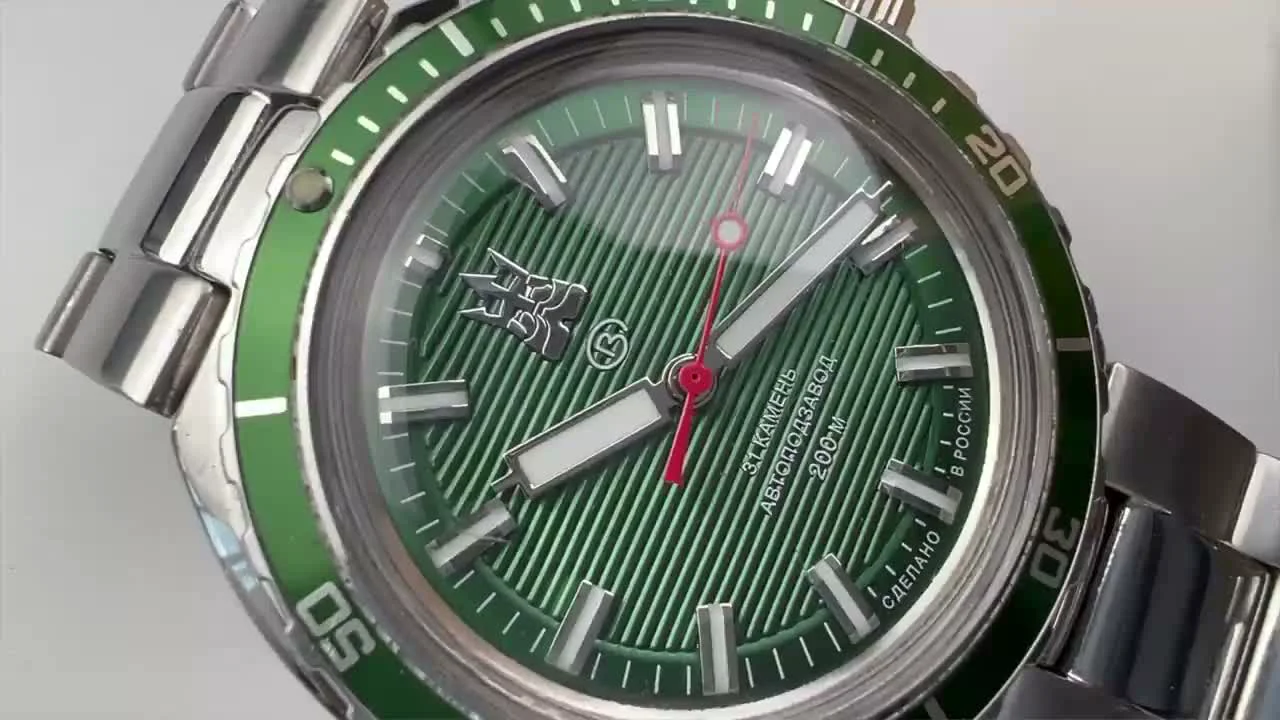
It is precisely because of its flexibility that acrylic crystal was chosen for the famous Vostok Amphibia watches. Under water pressure, it flexes slightly, pressing even more tightly against the case and ensuring a reliable seal.
The main drawback of acrylic is scratches, which appear very easily. However, there's good news: these crystals can be polished quite easily, allowing their original appearance to be restored. Thus, acrylic is well-suited for certain types of watches:
Inexpensive models where keeping the cost low is important.
Children's watches, which are often subject to drops.
Retro-style watches, where a domed crystal looks most harmonious.
Practical Applications and Features of Acrylic
Mineral Crystal: The Golden Mean
Mineral crystal has become widespread in the inexpensive watch segment, as it represents a compromise between acrylic and sapphire. It is much more scratch-resistant than acrylic, but still not perfect in this regard. Essentially, it is the same material used in regular windows.
This type of crystal is often found in fashion-brand watches and models with complex case shapes, as manufacturing a shaped crystal from sapphire would be significantly more expensive. Some manufacturers, like Seiko, use harder, tempered versions of mineral crystal (Hardlex), which are more durable than standard ones.
Despite better scratch resistance, mineral crystal is more brittle than acrylic and can shatter from an impact. Its main disadvantage is that it cannot be polished. If scratches appear on the crystal, the simplest solution is to replace it completely.
Mineral Crystal: The Golden Mean
Sapphire Crystal: Premium Scratch Protection
Sapphire crystal is the choice of most premium brands. It is considered the hardest of the materials used. It's important to understand that watches use not natural, but artificial, synthetic sapphire, which has the same properties.
The main and most significant advantage of sapphire is its almost complete invulnerability to scratches. It can only be scratched by a diamond. Thanks to this, watches maintain an excellent appearance even after several years of active use. Additionally, sapphire is perfectly transparent, and with a good anti-reflective coating, it can create the illusion that there is no crystal at all.
However, such hardness also has a drawback. Sapphire crystal, unlike acrylic, lacks flexibility, making it more brittle. Under a strong impact, it won't scratch but may shatter into small pieces.
Sapphire Crystal: Premium Scratch Protection
Other Types of Crystals and the Final Choice
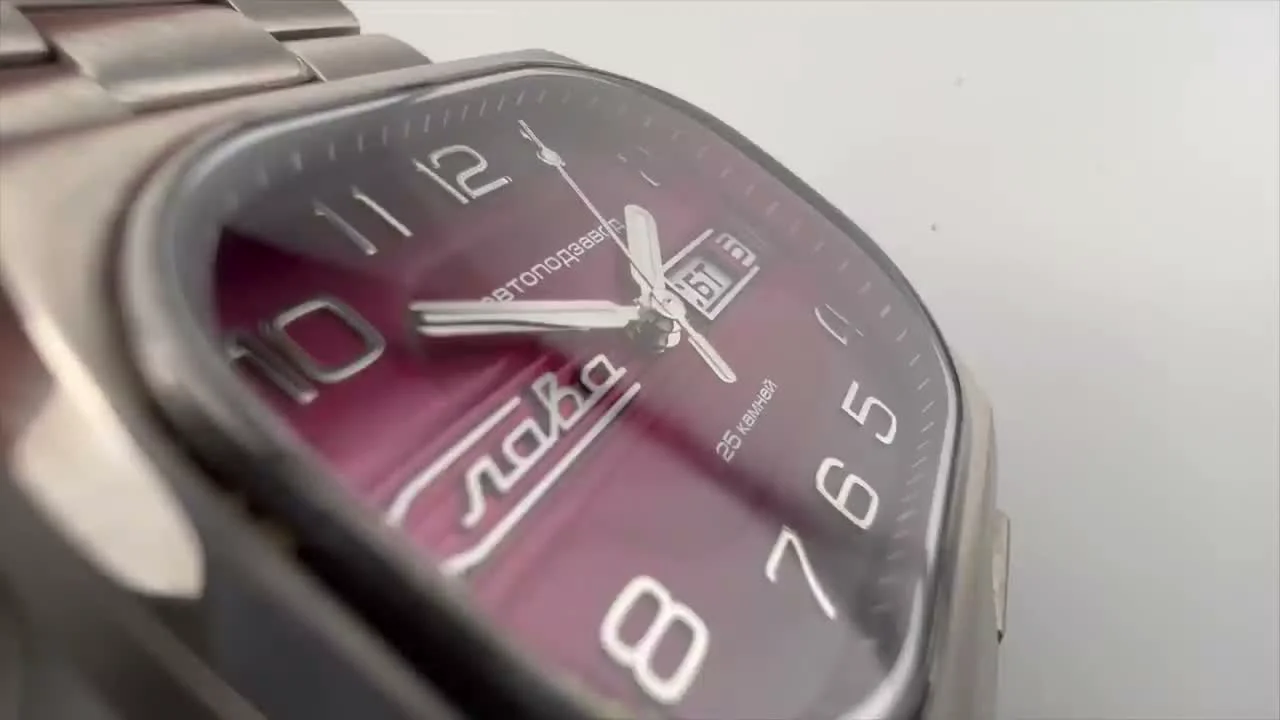
Besides the three main types, hybrid options also exist. For example, you can find mineral crystal with a sapphire coating, as seen in some Slava watch models. In this 'sandwich,' a thin top layer of sapphire provides scratch protection, while the thicker mineral base ensures impact resistance.
So, which option is better? The choice depends on the intended conditions of use. For daily office wear, sapphire crystal is the best choice due to its scratch resistance. If the watch is likely to be exposed to frequent impacts, acrylic, which is harder to shatter, will be more practical.
It is also important to consider the purpose and style of the watch. In some models, such as the Vostok Amphibia diver or the Omega Speedmaster chronograph, acrylic crystal is a historically accurate and integral design element that manufacturers intentionally preserve.