Why Heating is the Worst Way to Clean Coins: A Visual Experiment - AUCBURG | AUCBURG
Why Heating is the Worst Way to Clean Coins: A Visual Experiment
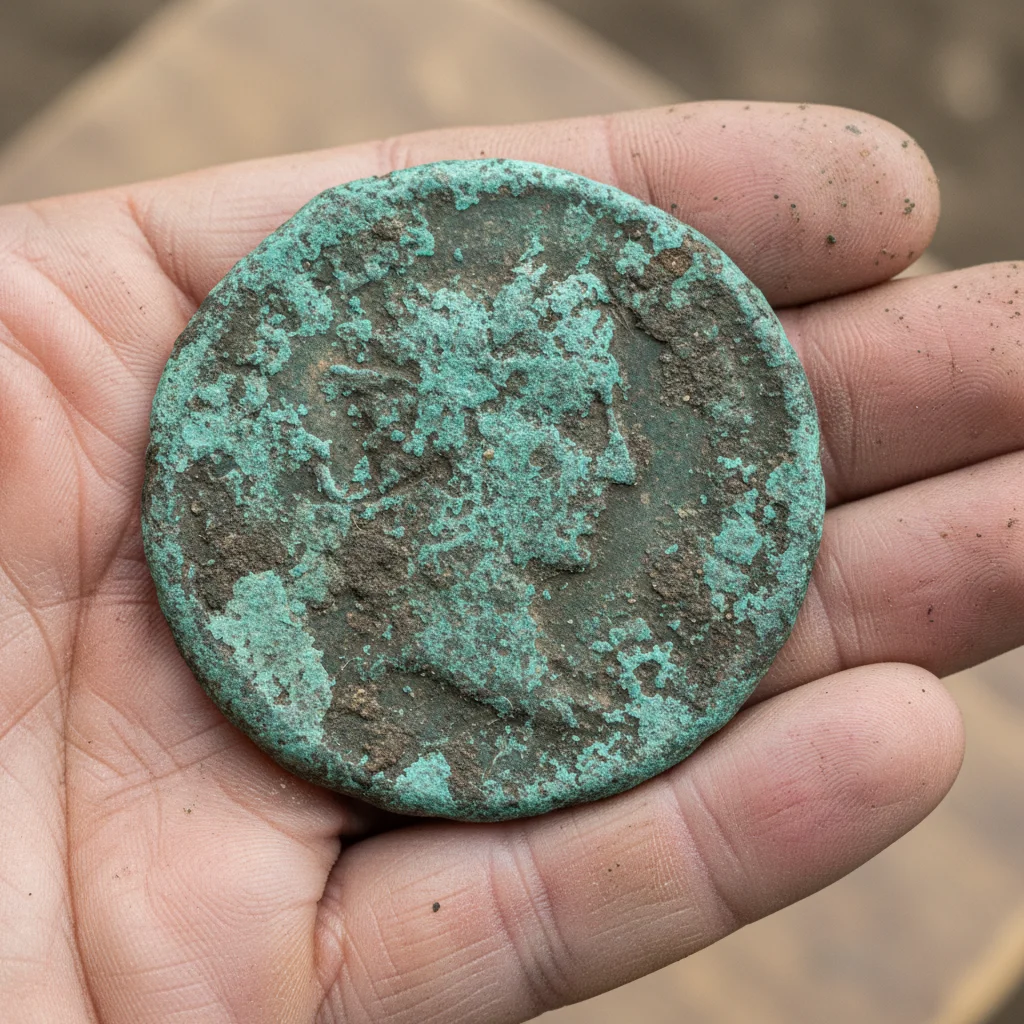
Many beginner collectors face the problem of dirty coins covered in green oxides. In search of a solution, they often turn to online resources, where one can find numerous cleaning tips: from washing and rinsing to soaking in various solutions and even heating.
Many beginner collectors face the problem of dirty coins covered in green oxides. In search of a solution, they often turn to online resources, where one can find numerous cleaning tips: from washing and rinsing to soaking in various solutions and even heating.
However, not all of these methods are safe for collectible specimens. Some of them, especially heat treatment, can cause irreparable damage to a coin. To visually demonstrate the consequences, an experiment was conducted by heating coins found in the ground.
The Copper Coin Experiment: Invisible Damage
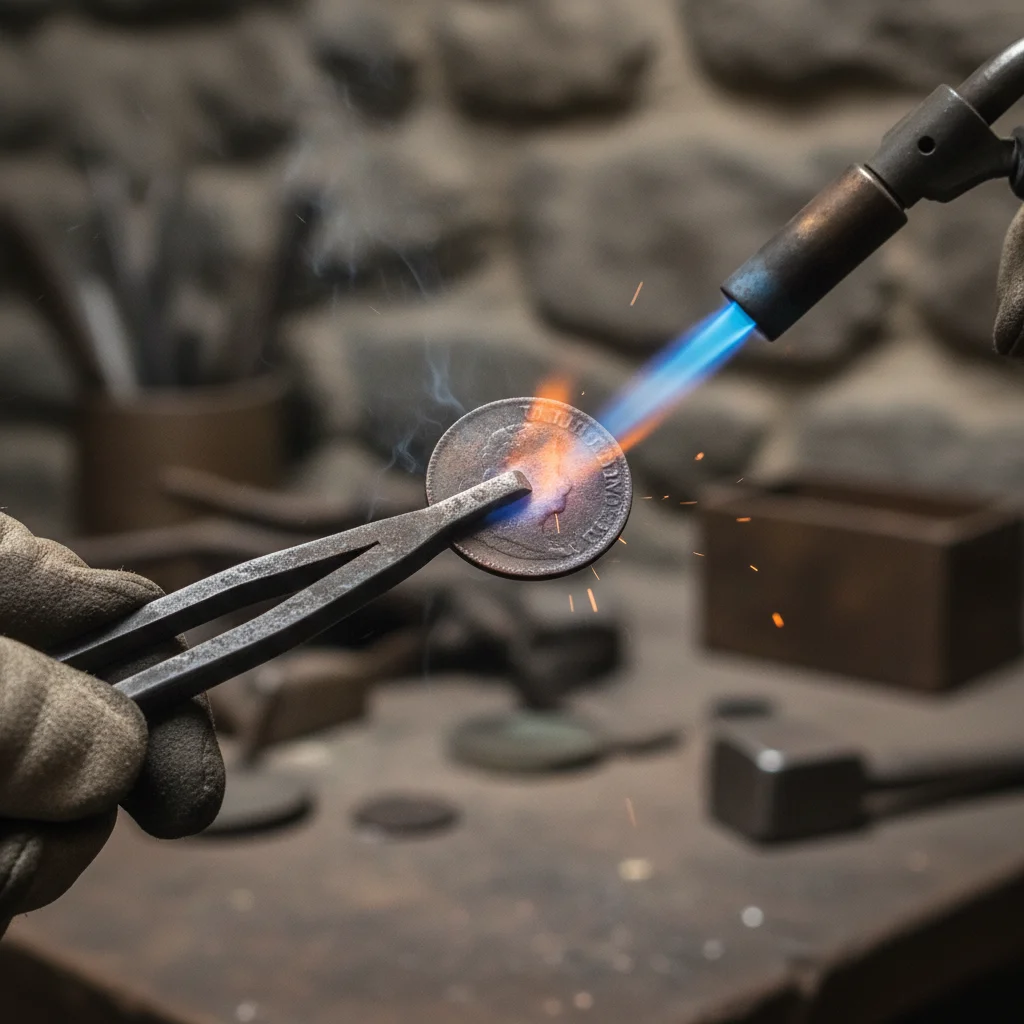
For the first test, a copper coin was used. Using a gas torch fueled by lighter gas, it was heated to a temperature of about 800 degrees Celsius. After heating and cooling, the coin's surface was cleaned with a brush.
At first glance, there were no obvious improvements; the coin did not look cleaner or more attractive. However, it had actually sustained serious damage. The heating process, known as annealing, leads to irreversible changes in the metal's structure.
The protective layer is destroyed.
The hardened surface layer formed during minting is ruined.
The mint luster and the original field of the coin are permanently lost.
As a result, the coin is ruined. This damage is noticeable to any trained eye, and its collectible value decreases significantly, as any deterioration in quality directly affects the price.
The Copper Coin Experiment: Invisible Damage
The Silver Coin Experiment: Complete Destruction
Metal
Property When Heated
Copper
Higher melting point
Silver
Melts very quickly and easily
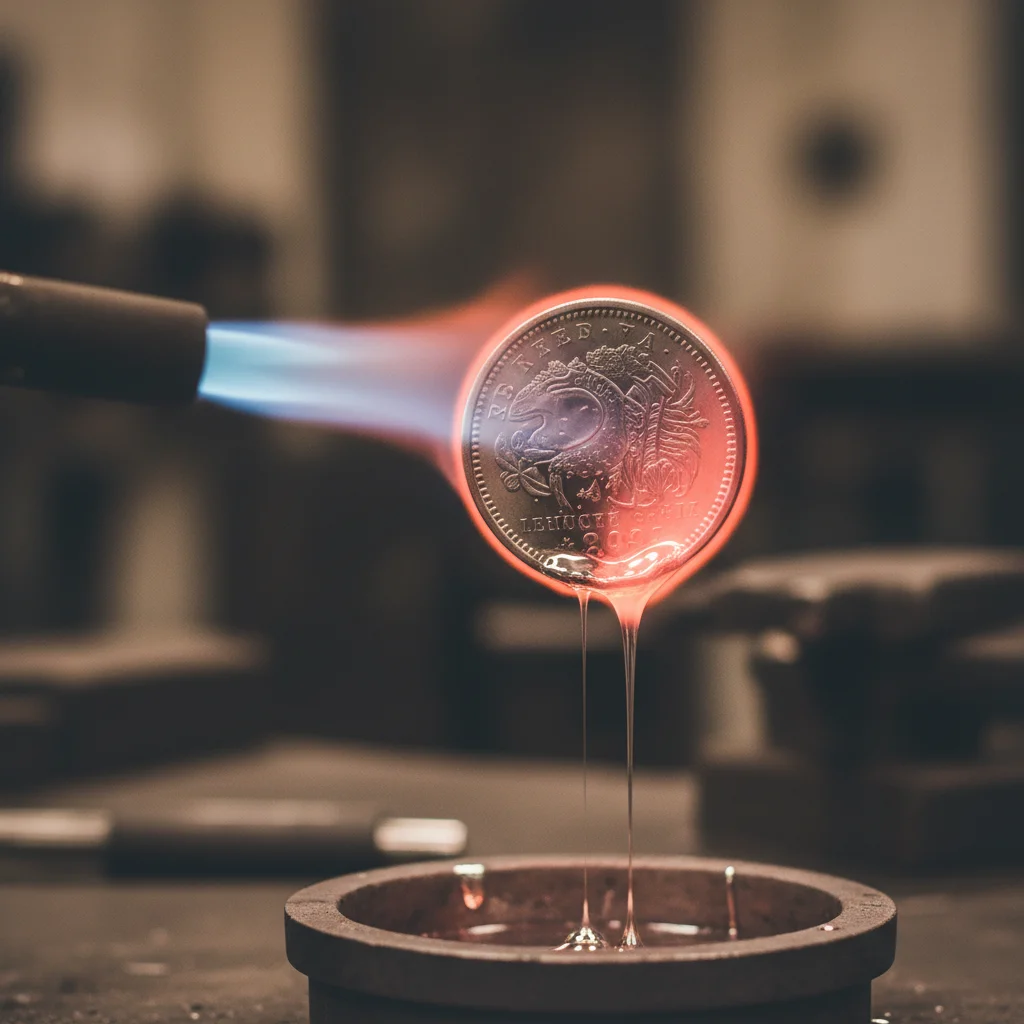
The second experiment was conducted with a silver coin to see how a different metal would react to heat. The result was even more disastrous and illustrative. When heated with a gas torch, the silver coin first turned red, then began to melt and flow, completely losing its shape.
This happens due to differences in the physical properties of the metals. Silver melts much more easily and quickly than copper, making it particularly vulnerable to heat treatment at home.
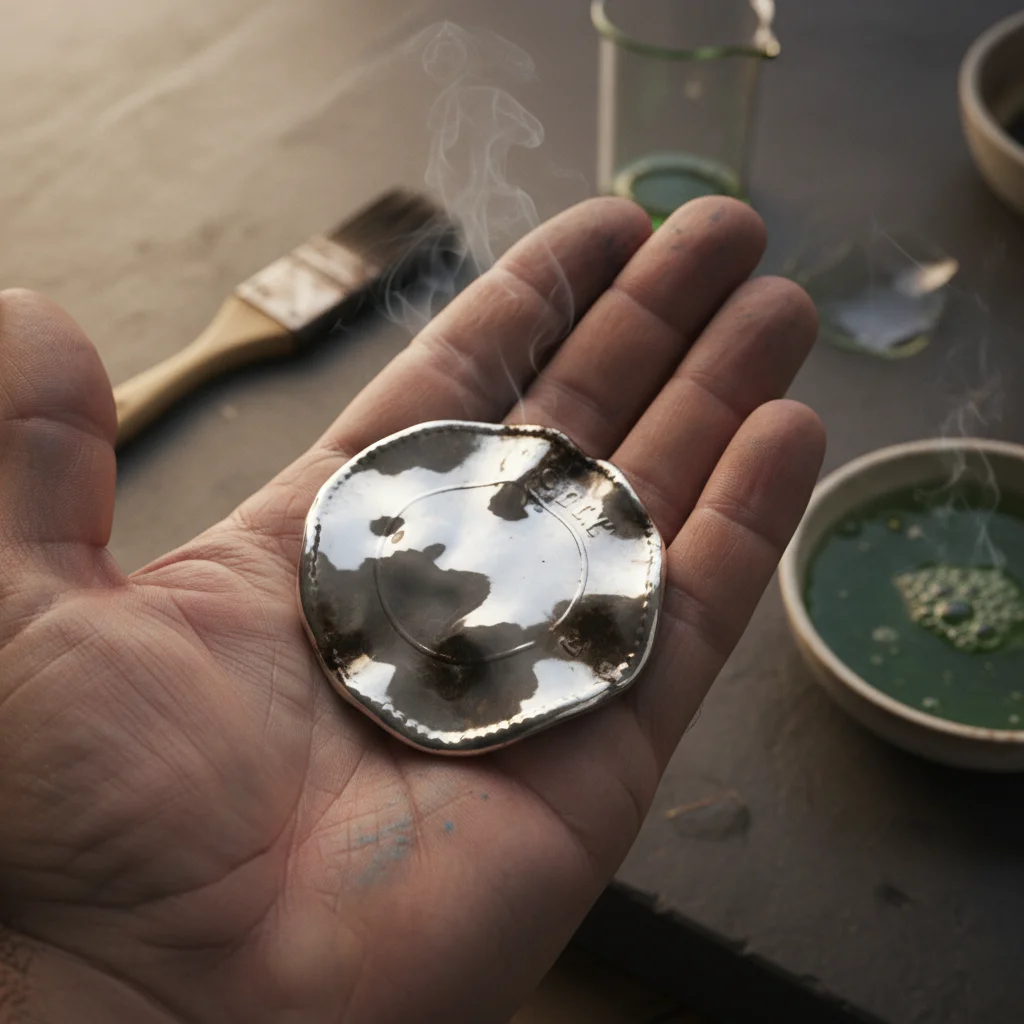
The experiment showed that heating silver coins is strictly unacceptable. This type of 'cleaning' instantly and irreversibly destroys the item, turning it into a formless piece of metal.
The Silver Coin Experiment: Complete Destruction
Experiment Results: From Coin to Scrap Metal
The results of both experiments are unequivocal: heating is not a suitable method for cleaning coins. The copper coin was ruined due to changes in its metal structure and loss of mint luster. The silver coin was completely destroyed, melting into a formless ingot.
After such 'treatment,' the items lose their numismatic value. What was once a collectible coin becomes ordinary scrap metal, worth only the value of its metal by weight.
Thus, the heating method, despite its apparent simplicity, causes irreparable harm to coins. Collectors should avoid such aggressive cleaning methods to preserve their specimens in their original condition and not strip them of their historical and material value.