A Guide to Buying and Storing Gold and Silver Bars - AUCBURG | AUCBURG
A Guide to Buying and Storing Gold and Silver Bars
Investors in physical precious metals are often concerned about the proper packaging of bars when buying them from banks. This aspect became especially relevant after March 2022, when the abolition of VAT made bars at least 20% more profitable to acquire, which stimulated demand.
Investors in physical precious metals are often concerned about the proper packaging of bars when buying them from banks. This aspect became especially relevant after March 2022, when the abolition of VAT made bars at least 20% more profitable to acquire, which stimulated demand.
In practice, banks often sell gold bars in already cut factory bags, and large silver bars, such as one-kilogram bars, may be issued in regular zip-lock bags. This raises legitimate concerns for buyers: will banks accept such bars back during a buyback, since the packaging integrity is compromised or entirely absent?
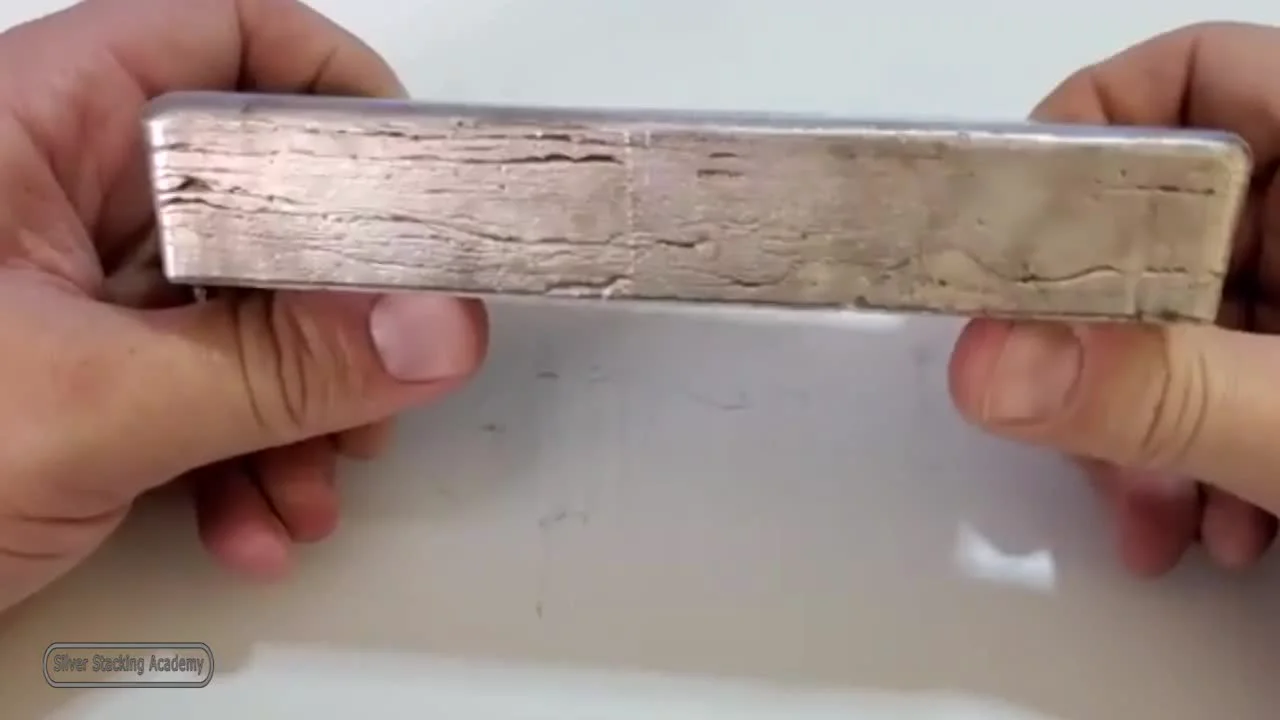
Patina is an additional concern for silver owners. Even when stored in a zip-lock bag, silver bars can develop dark spots, which also calls their subsequent liquidity into question.
Packaging of Gold Bars from Different Manufacturers
Manufacturer
Packaging Type
Krastsvetmet
Usually sealed bags containing both the bar itself and its certificate.
Prioksky Non-Ferrous Metals Plant
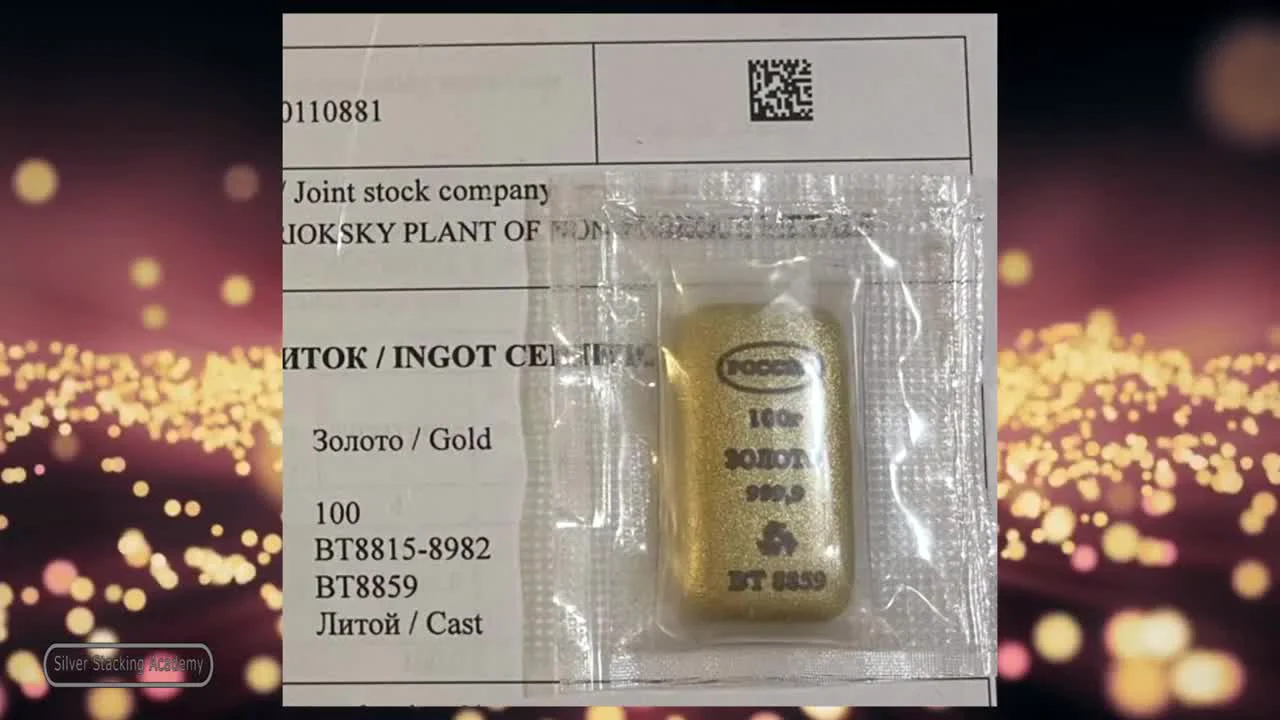
Often sold in unsealed or cut bags.
Gold bars from different refineries can come in different packaging. It is important to understand these differences to avoid unnecessary anxiety.
Although Krastsvetmet bars are most often sold in sealed packaging, there are exceptions. For example, a 50-gram bar may be sold without a bag, which, however, does not prevent the bank from buying it back later. It is not recommended to open the sealed packaging yourself: 999.9 fine gold is a soft metal, and it can be easily damaged if dropped. The presence of dents can complicate the sale.
Even if a bank employee opens the packaging to check the weight, this is not critical. The main thing is to preserve the integrity of the bar itself. For additional protection during storage, the bar can be wrapped in a soft material, for example, toilet paper.
Packaging of gold bars from different manufacturers
The Importance of Accompanying Documents
Regardless of the packaging's condition, the key factor when selling bars back to the bank is the presence of the complete set of documents issued at the time of purchase. They must be stored carefully.
Certificate for the bar.
Passport of the batch from which the bar originates.
These documents are what confirm the authenticity and characteristics of the metal. Without them, the bank will most likely refuse to buy back the bar. In such a situation, the only option is to sell to a pawn shop or a private buyer, where the price may be less favorable than at the bank.
When selling bars back to the same bank where they were purchased, and with all the documents present, problems usually do not arise, even if the packaging was initially opened. The bank will in any case remove the bar for measurement and weighing.
The importance of accompanying documents
The Problem of Patina on Silver Bars
Silver, unlike gold, is subject to patination—an oxidation process that occurs upon contact with air, resulting in dark or brownish spots on the surface. This process can begin within the first few days after purchase, even if the bar is stored in a zip-lock bag.
The appearance of patina is a natural property of silver and does not indicate low quality. The spots can be easily removed at home using special liquid silver cleaners. However, it is worth noting that Russian banks prefer to buy back bars in perfect, 'excellent' condition.
Therefore, for investors planning to sell silver bars back to the bank in the future, the issue of preserving their pristine appearance becomes particularly important. The presence of patina, although removable, can be a reason for a lower buyback price or a refusal to complete the transaction.
The problem of patina on silver bars
Vacuum Sealing as a Method for Storing Silver
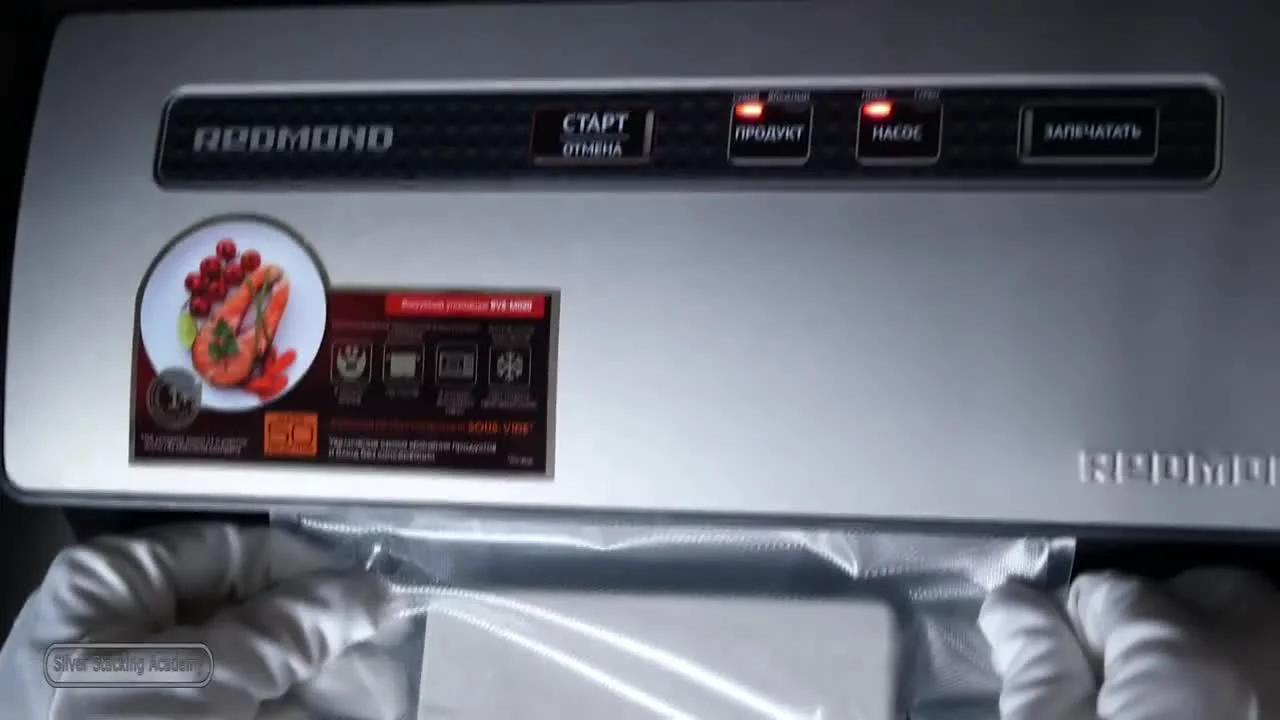
An effective solution for preventing patina on silver bars is to vacuum seal them. This method allows the metal to be isolated from contact with air, which is the main cause of oxidation.
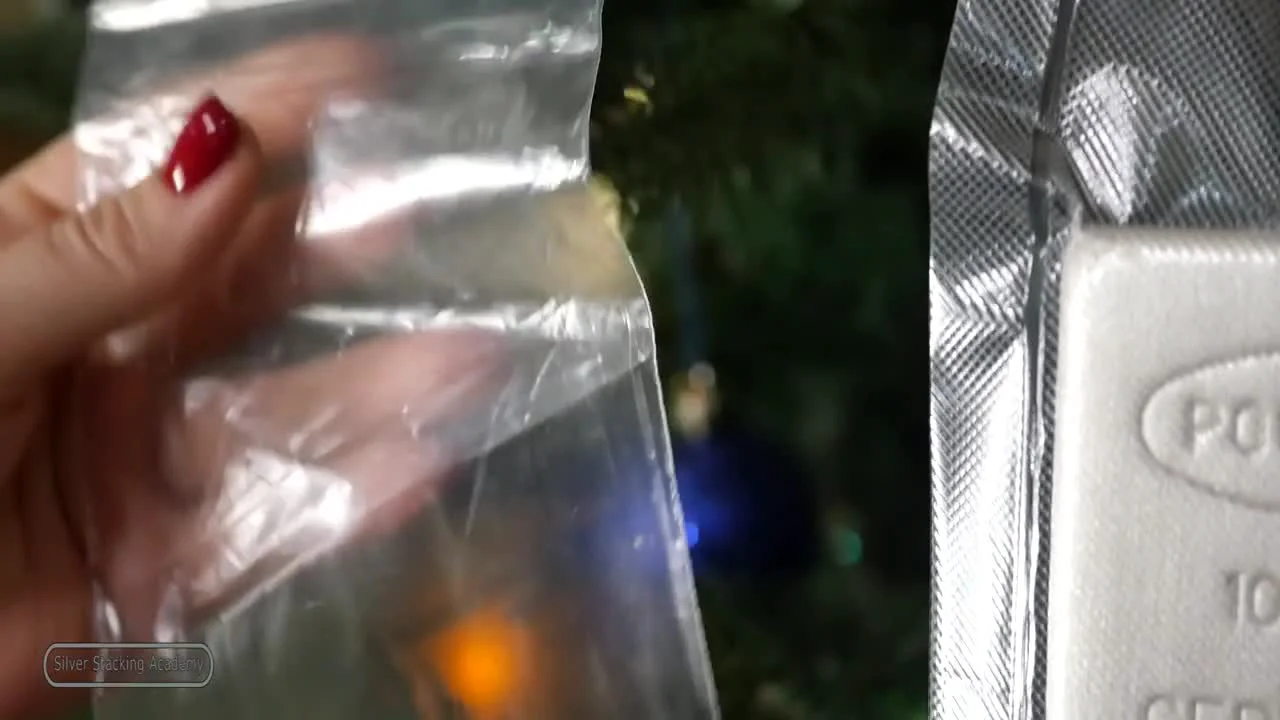
A household vacuum sealer, for example, from the brand Redmond, is used for this. The process is quite simple: the silver bar is placed in a special durable bag, after which the device pumps out all the air and hermetically seals the edge.
This storage method provides long-term protection for the bars against tarnishing. Experience shows that even after six months of storage in vacuum-sealed packaging, silver bars remain in perfect condition, with no signs of patina.
Furthermore, a vacuum sealer is a multifunctional device. It can also be used in the household to extend the shelf life of food or for marinating meat and fish.