All About Bullion Bars: From Purity to Purchase
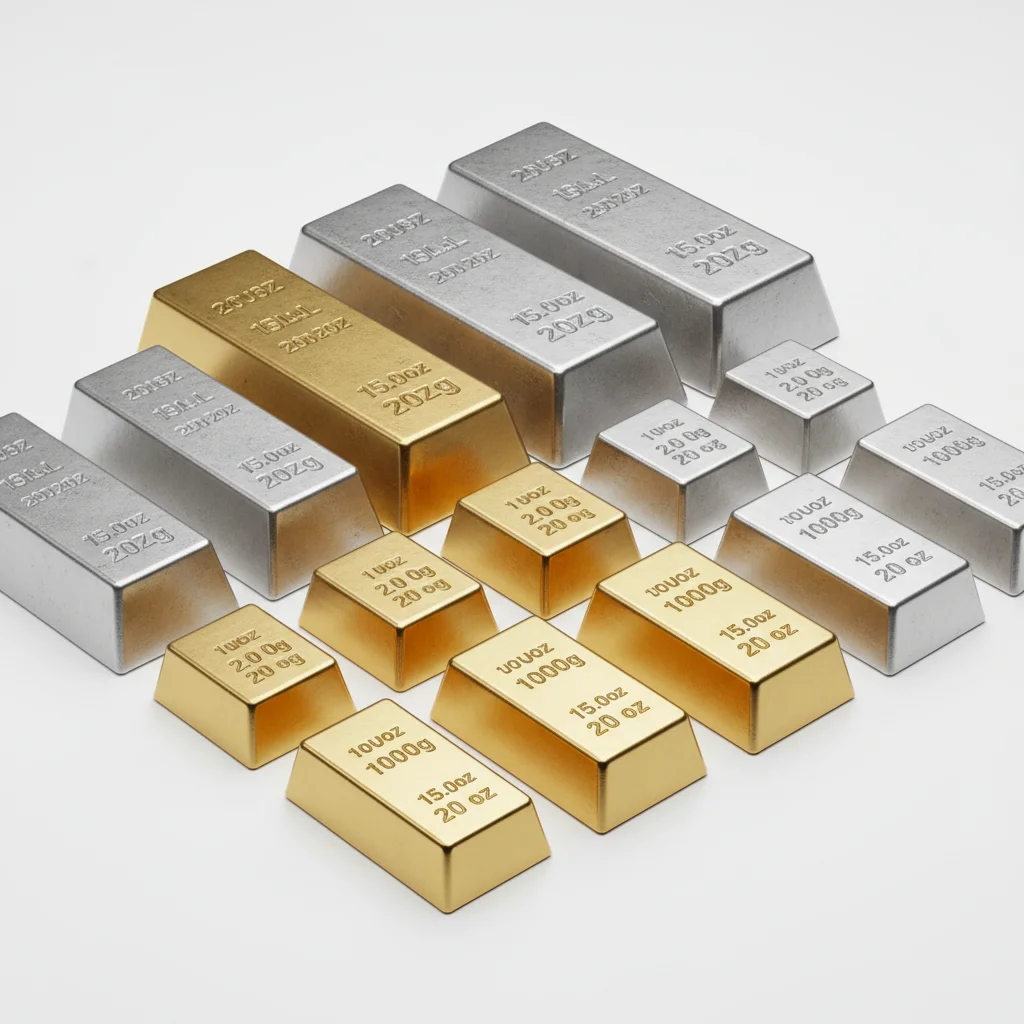
A bar is a block of metal, in this case, a precious one. Bars can have different shapes and masses, and specialized refineries handle their production.
•5 min read
22views
Loading...

A bar is a block of metal, in this case, a precious one. Bars can have different shapes and masses, and specialized refineries handle their production.
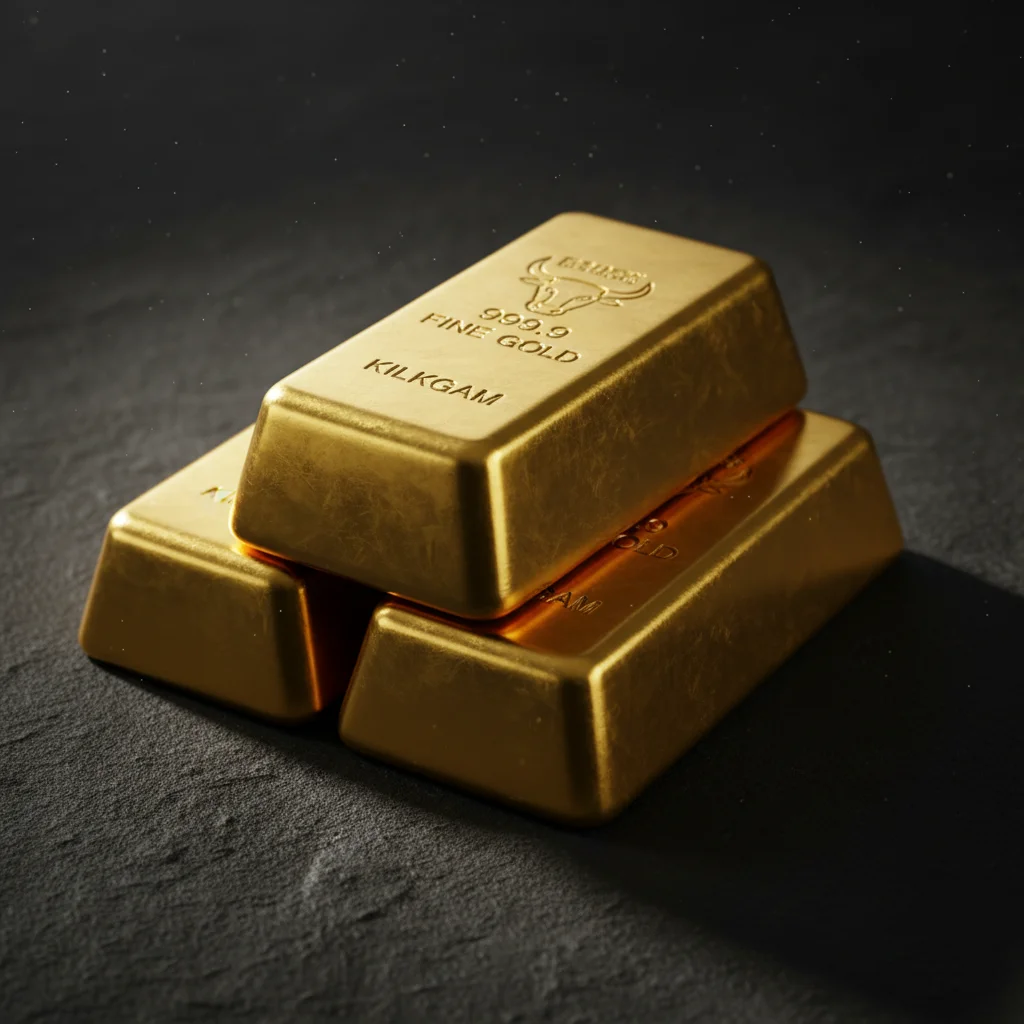
A bar is a block of metal, in this case, a precious one. Bars can have different shapes and masses, and specialized refineries handle their production.
In Russia, several enterprises are the key producers of precious metal bars. Each has its own hallmark, which it applies to its products.
| Term | Description |
| 999.9 Fineness | The purity standard for investment bars, also known as "four nines." It means the precious metal content is 99.99%. |
| Impurities | The remaining 0.01% of the bar's mass, consisting of traces of other metals that entered the alloy during the refining (purification) process. |
| 1000 Fineness | Absolutely pure metal with no impurities. It is not found on an industrial scale and is only achievable in laboratory conditions. |
All investment bars share one key characteristic: the purity of the metal. A single fineness standard is established for them.
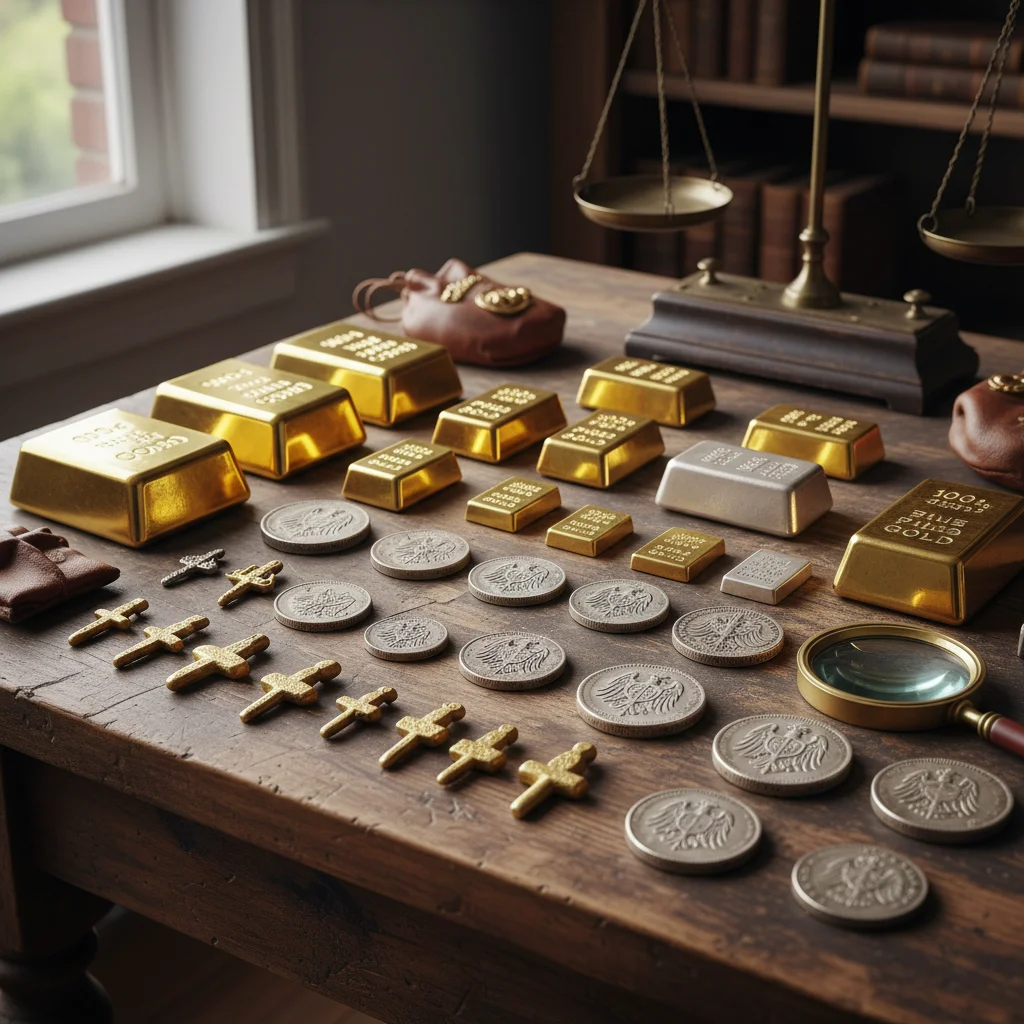
Bars are divided into two main types: standard and bullion. Standard bars are large, weighing from 11 to 13.3 kg, like those seen in bank heist movies. They are stored in state reserves and major banks. Bullion bars are intended for public sale and have a fixed weight.
There are also platinum and palladium bars, but they are much less common.
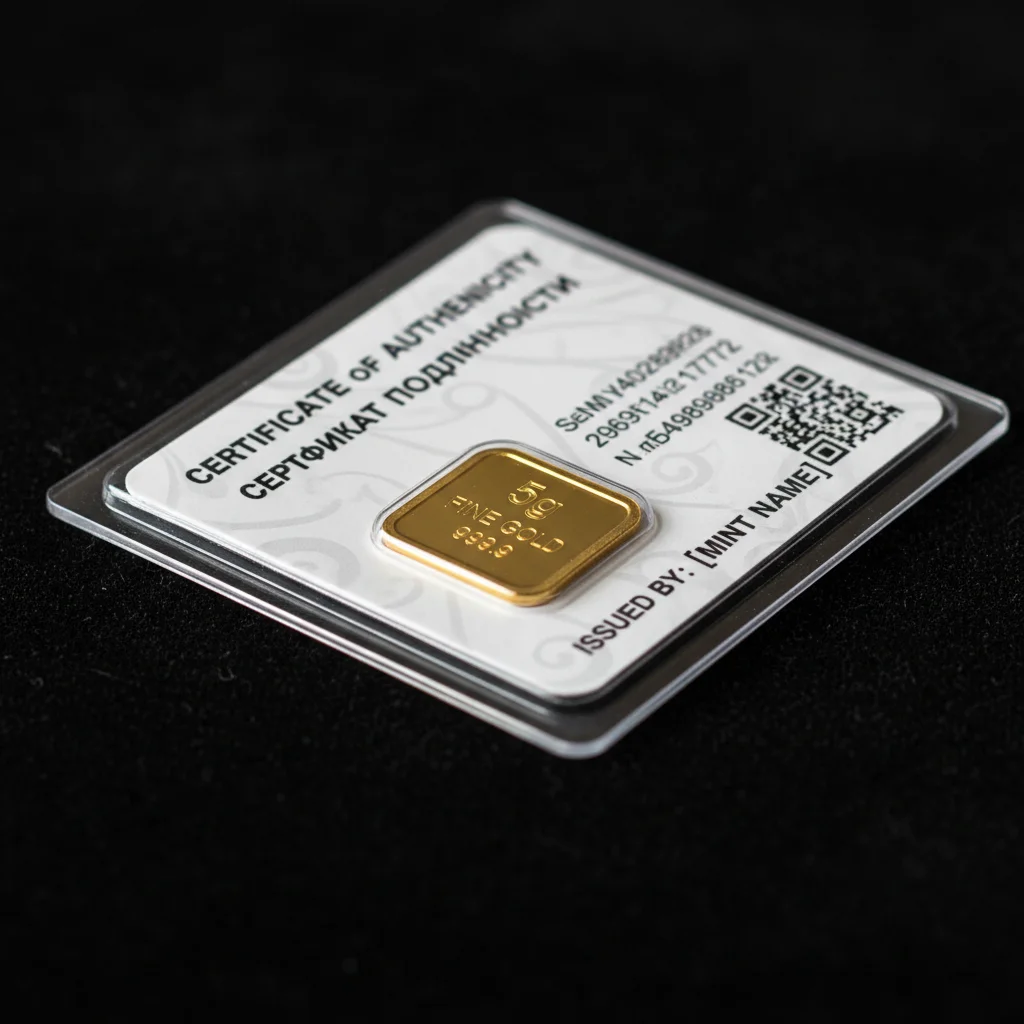
A 5-gram bullion bar is a small rectangular plate just a few millimeters thick. Its obverse side (front) contains all the key information: the inscription 'РОССИЯ' (RUSSIA) in an oval, the weight '5г' (5g), the metal name 'ЗОЛОТО' (GOLD), the fineness '999,9', the manufacturer's hallmark (in this case, Krastsvetmet), and the unique bar number.
A ten-gram bar from 2023, produced by the Prioksky Non-Ferrous Metals Plant (PZCM), comes in a simple small plastic bag. It is noticeably thicker than the five-gram bar. On some bars that have been in circulation, small scratches can be seen on the reverse side—these are marks from testing on a touchstone (rubbing method), which was likely conducted at a bank.
A 20-gram bar, produced by the Moscow Special Alloys Plant (MZSS), has similar markings but is distinguished by the manufacturer's hallmark. It is also thicker and more massive than bars of a smaller weight.
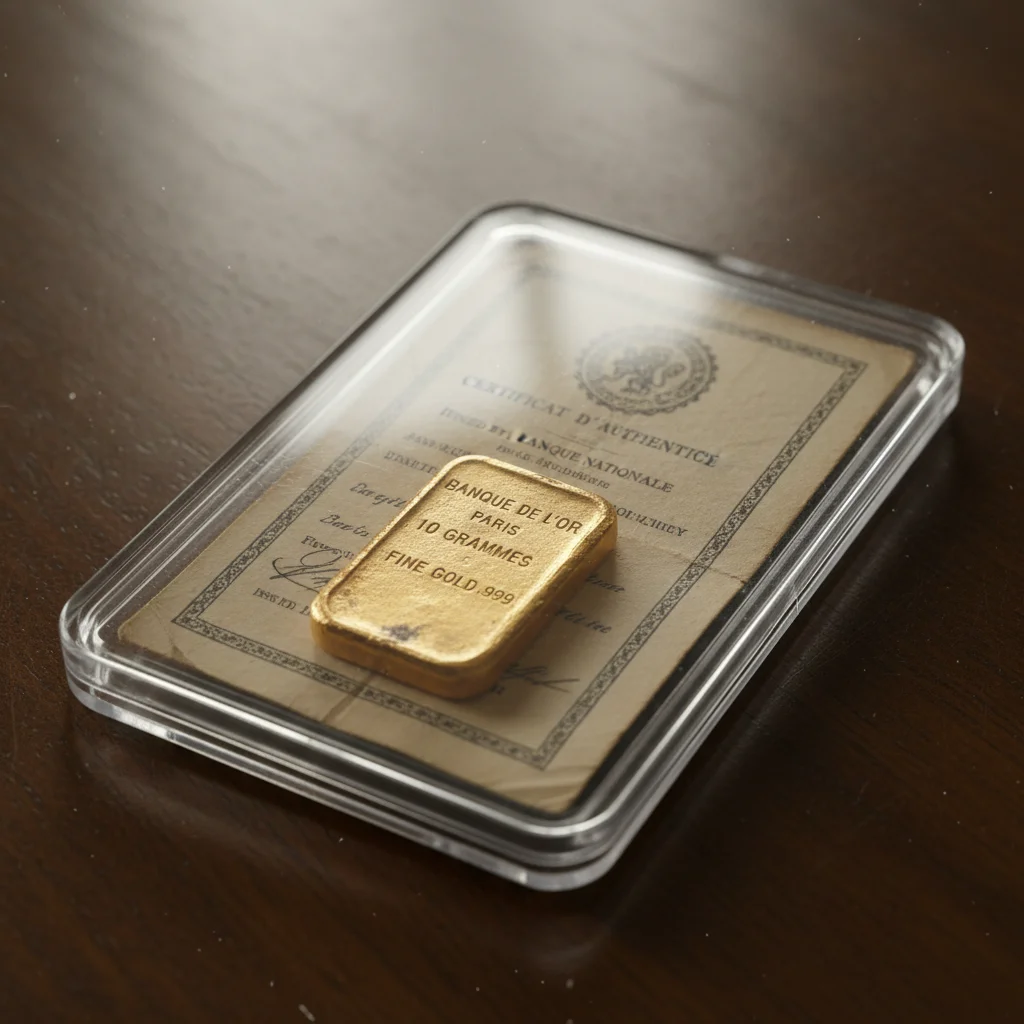
The appearance and packaging of bars have changed over time. For example, a 10-gram bar from 1999 was sold in a special plastic case with a certificate from 'Lanta-Bank'.
When comparing this bar with a modern 2023 equivalent, the differences are visible. The old bar is thinner and more elongated, and its reverse side is smooth and polished, unlike the matte and rough surface of the new one.
These changes in design and production technology do not affect the metal's value but may be of interest to collectors.
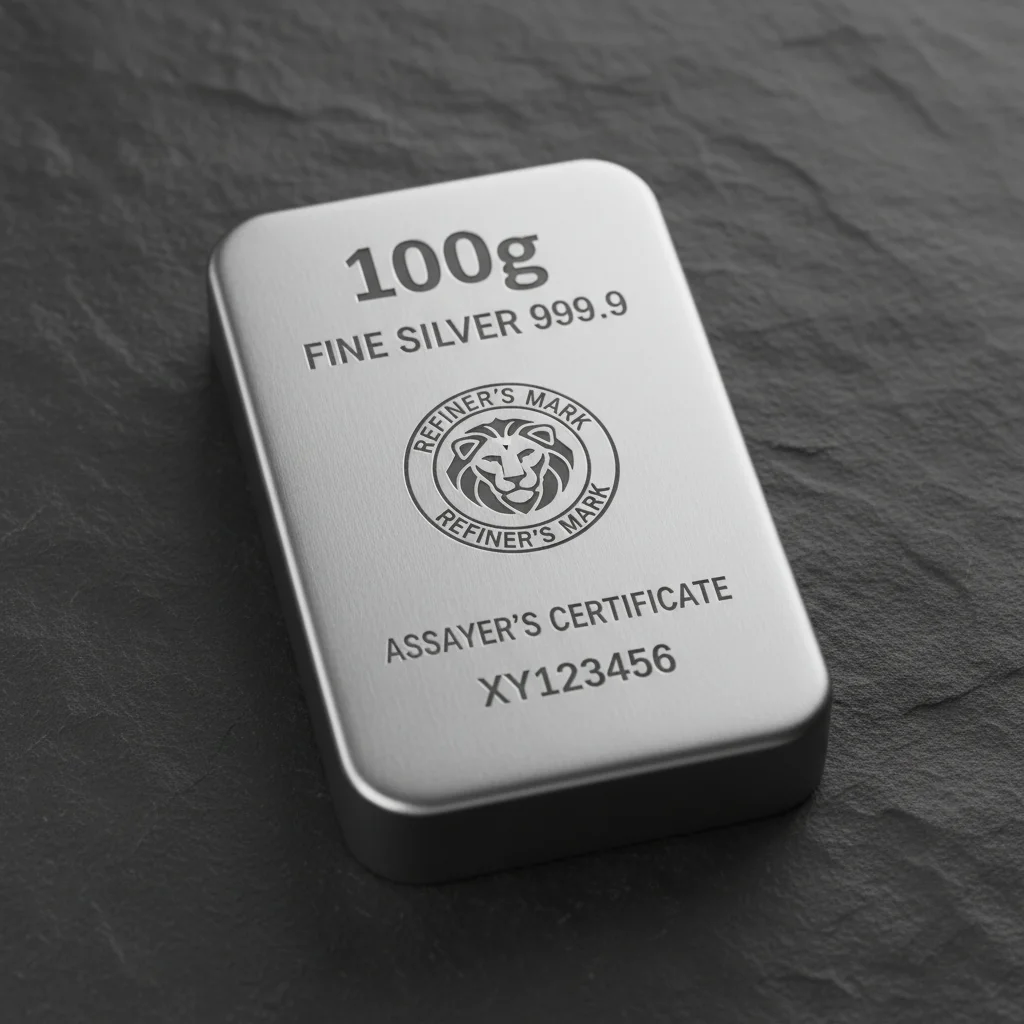
Silver bullion bars are also available for purchase. A 100-gram bar has a characteristic matte, rough surface. Its shape is more rounded compared to stamped gold bars.
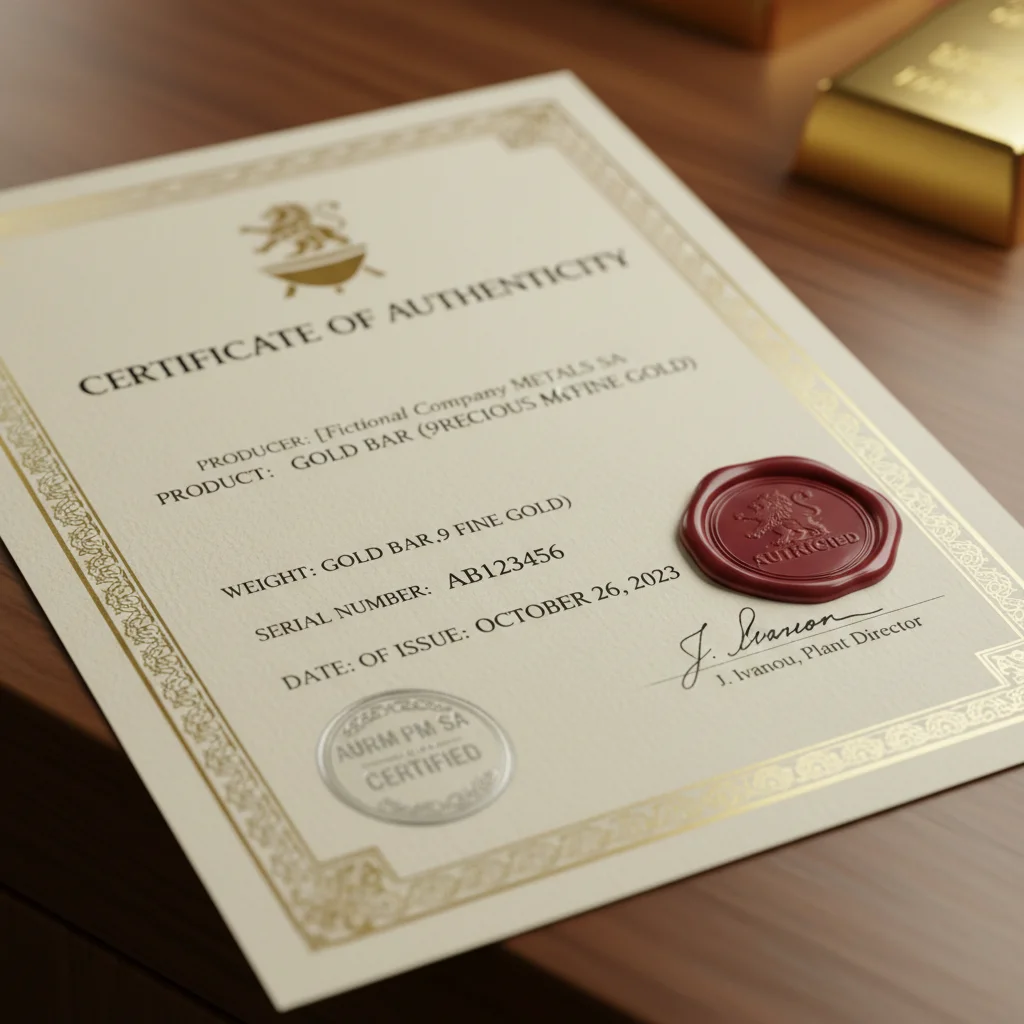
When purchasing bars, accompanying documents are always provided. This can be an individual certificate for each bar or a general passport for an entire batch. The certificate specifies all necessary information.
For example, the certificate for a 10-gram bar dated 31.10.2023 specifies: the manufacturer (Prioksky Non-Ferrous Metals Plant), the type of metal, nominal mass, batch number, bar code, manufacturing method (stamped), and compliance with GOST R 51572-2020.
The document also states the mass fraction of gold (not less than 99.99%) and the total fraction of impurities (not more than 0.01%). Sometimes, instead of individual certificates, a single general passport may be issued for a batch of bars, listing the numbers of all bars in the batch.
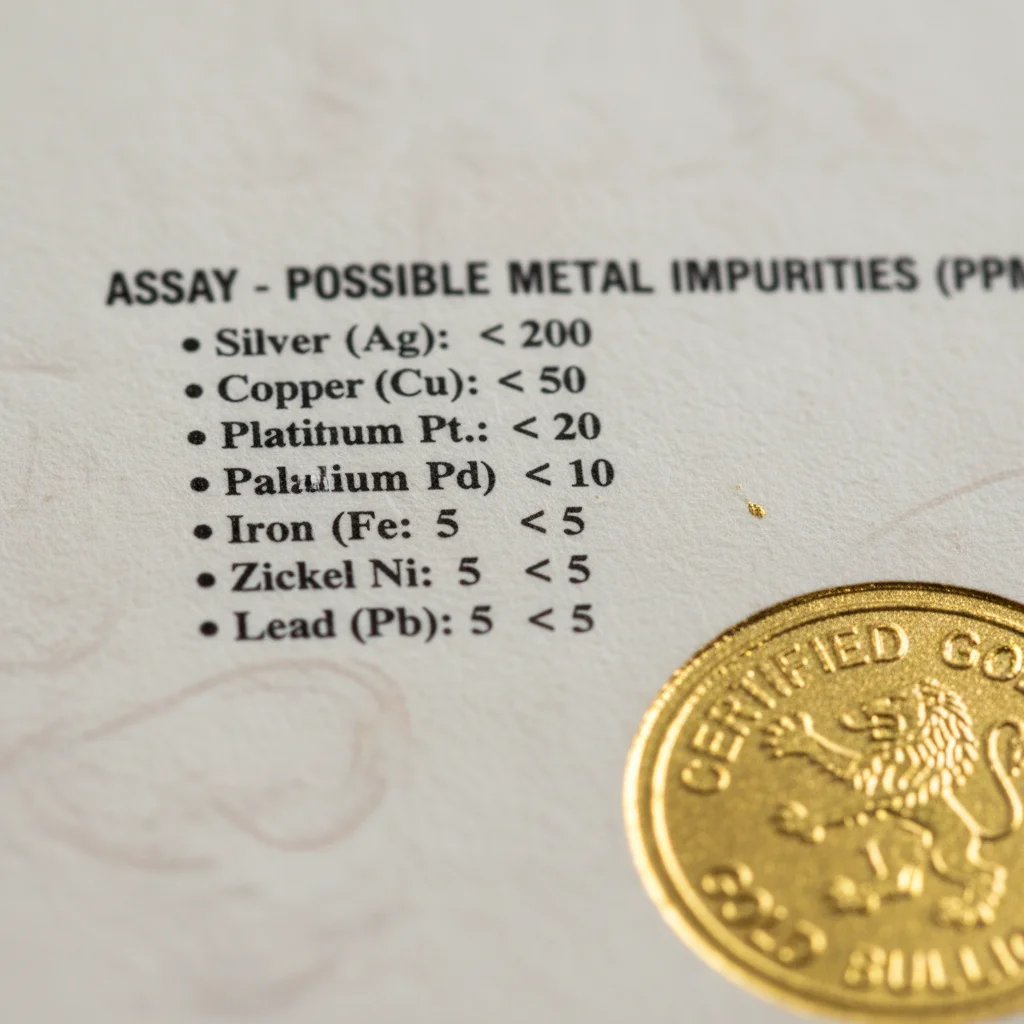
Unlike jewelry, where other metals (alloys) are intentionally added to gold to give it color and strength, in 999.9 fineness bars, impurities are merely residual traces from the purification process.
The total amount of these impurities does not exceed 0.01%. The manufacturer's certificate usually lists the metals that may be present as impurities. Among them may be:
The primary places to buy bullion bars are banks. Sberbank is traditionally the largest seller, but many other commercial banks also offer this service. Bars can also be purchased directly from some manufacturing plants, such as the Prioksky Non-Ferrous Metals Plant.
There is also the option of buying bars 'hand-to-hand' from private individuals. This method can be more cost-effective but carries higher risks. If you decide on such a transaction, a professional verification is strongly recommended.
To verify a bar's authenticity, you should consult a jeweler or a pawn shop. It is necessary to check the exact weight, dimensions, and most importantly, perform a spectrometer analysis, which will show the precise chemical composition of the metal. This approach will help you avoid buying a counterfeit.