Banknotes of Belarus of the 2009 Series: A Collector's Album Review - AUCBURG | AUCBURG
Banknotes of Belarus of the 2009 Series: A Collector's Album Review
The modern stage of currency circulation in Belarus is associated with the 2009 series banknotes, which were introduced into circulation in 2016. This period is of interest to collectors due to the existence of special issues and related materials.
Modern Banknotes of Belarus: Collector's Sets and Materials
The modern stage of currency circulation in Belarus is associated with the 2009 series banknotes, which were introduced into circulation in 2016. This period is of interest to collectors due to the existence of special issues and related materials.
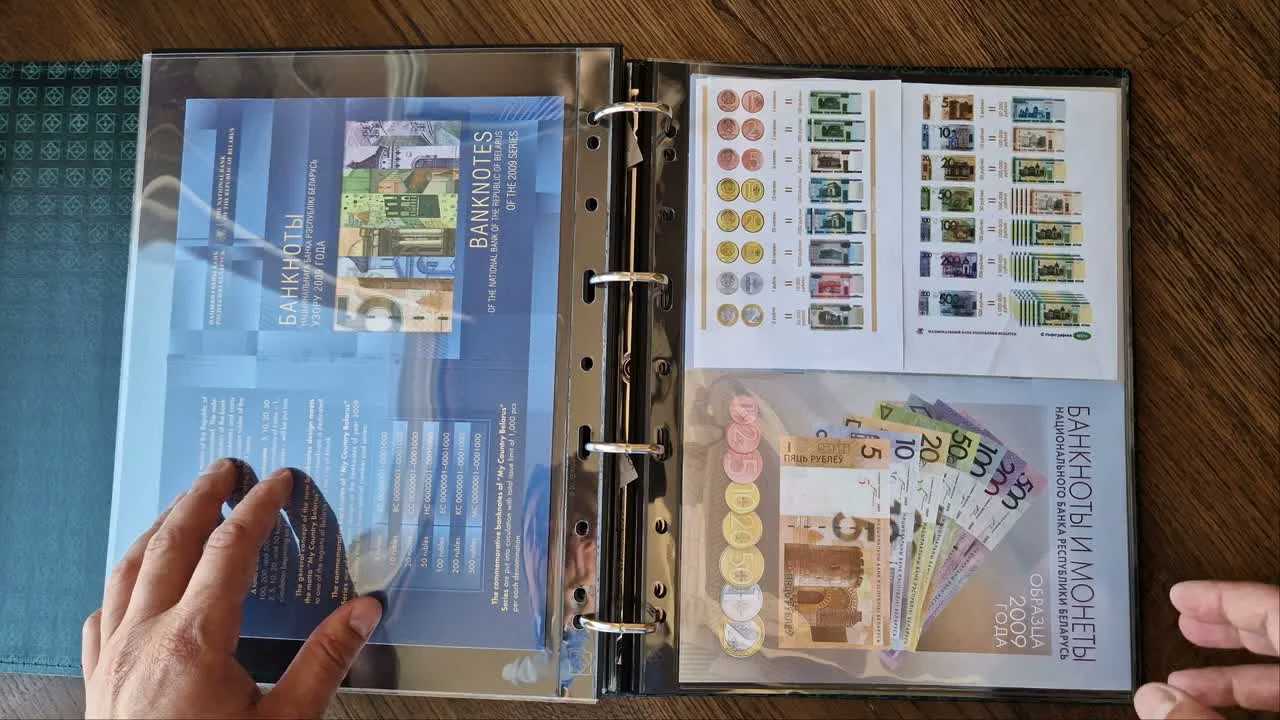
Simultaneously with the introduction of the new banknote series, a special collector's set 'Maya Kraina — Belarus' was released. Its distinctive feature is that all seven denominations in the set share the same serial number. A total of 1,000 such sets were issued.
In addition to the banknotes themselves, the collector's album also contains various informational materials. For example, booklets and infographics that visually illustrate the 2016 denomination process and the transition from old currency to new rubles and kopecks.
The 2016 Denomination and Information Brochure
New Currency (2009)
Equivalent in Old Currency (2000)
1 kopeck
100 rubles
5 kopecks
500 rubles
10 kopecks
1,000 rubles
50 kopecks
5,000 rubles
1 ruble
10,000 rubles
2 rubles
20,000 rubles
5 rubles
50,000 rubles
10 rubles
100,000 rubles
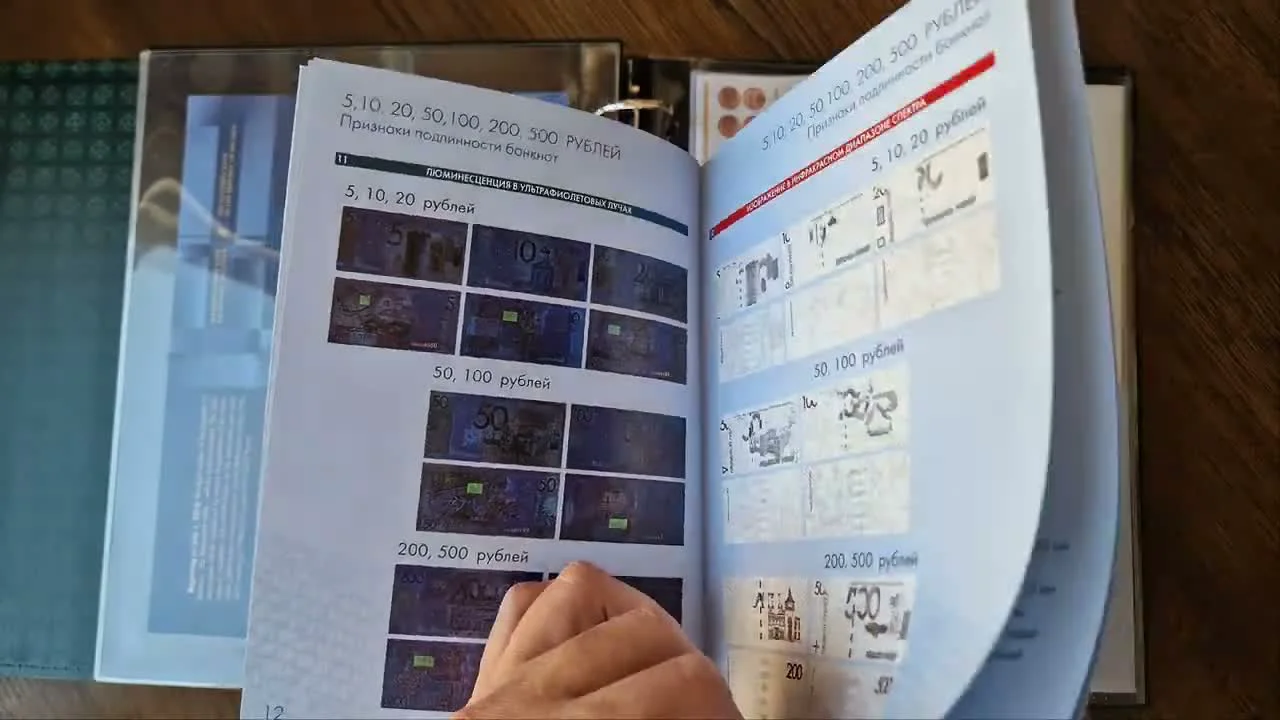
To inform the public about the transition to the new currency, a detailed brochure titled 'Banknotes and Coins of the 2009 Series' was issued. This booklet contains comprehensive information about all denominations of banknotes and coins.
The brochure details each banknote: what is depicted on it, its size, predominant colors, and main security features. It includes images of the banknotes under ultraviolet and infrared light, which helps in verifying their authenticity. The conversion table for old and new currency is of particular value.
This brochure is not only a historical document but also a useful reference for notaphilists, as it contains all the key information about the monetary reform.
The 2016 Denomination and Information Brochure
Banknote Varieties: From 5 to 20 Rubles
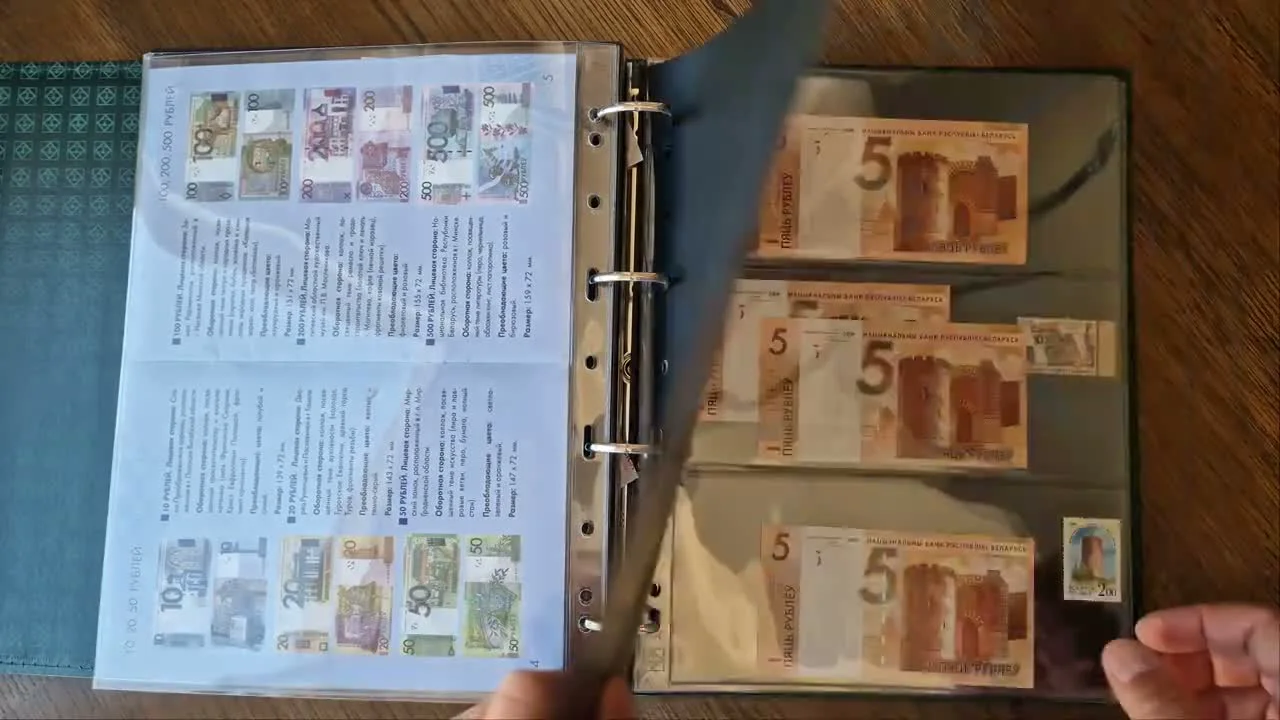
The concept of the collector's album involves placing several versions of each banknote. This allows for a clear visual comparison of the differences between issues. This primarily concerns lower denomination banknotes, which are more common in circulation and have more varieties.
From the commemorative set 'Maya Kraina — Belarus' (1,000 copies issued).
The first issue of the 2009 series, printed by the British company De La Rue. They have their own varieties, for example, the so-called 'narrow' and 'wide' waves on the security thread of the 20-ruble banknote.
Later issues (e.g., 2019), which were printed at the Russian 'Goznak'.
An interesting addition to the collection are banknotes with consecutive serial numbers, which can sometimes be obtained directly from an ATM, a great stroke of luck for a collector.
Banknote Varieties: From 5 to 20 Rubles
Higher Denominations: 50, 100, 200, and 500 Rubles
The higher denomination banknotes also have their place in the collection and are organized according to the same principle. The 50 and 100 ruble notes are presented in three main versions: from the commemorative set, the first issue (De La Rue), and a later, modified 'Goznak' issue.
The 100-ruble banknote of the 2022 series is of particular interest. It features an updated design and enhanced security features, making it visually more appealing compared to the first issue.
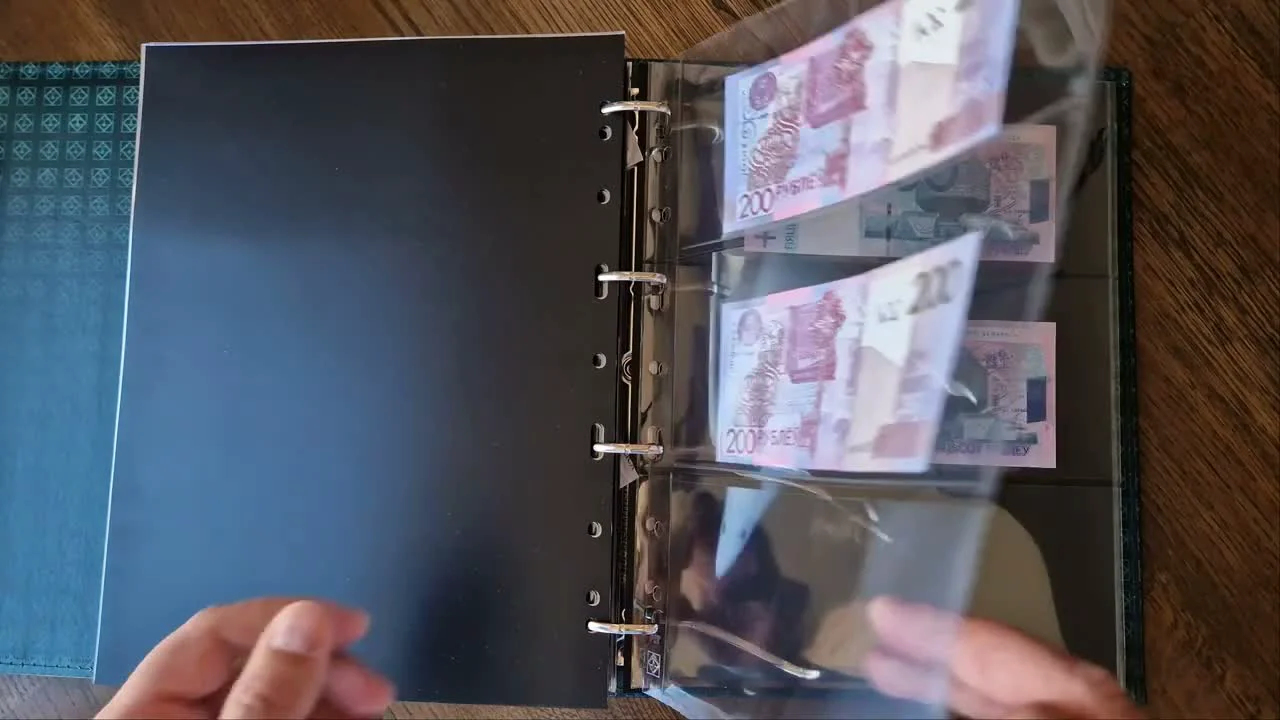
As for the highest denominations — 200 and 500 rubles — at the time of compiling the collection, they exist in only two versions: from the commemorative set and the regular circulation first issue. Modified versions of these banknotes from 'Goznak' have not yet been released.
Higher Denominations: 50, 100, 200, and 500 Rubles