What is a Numismatic Collection: Principles and Differences from a Simple Accumulation of Coins - AUCBURG | AUCBURG
What is a Numismatic Collection: Principles and Differences from a Simple Accumulation of Coins
Many beginner numismatists ask themselves: what really constitutes a collection? One often sees large, impressive albums filled with coins, but such an assembly cannot always be called a collection in the full sense of the word.
What distinguishes a collection from a set of coins?
Many beginner numismatists ask themselves: what really constitutes a collection? One often sees large, impressive albums filled with coins, but such an assembly cannot always be called a collection in the full sense of the word.
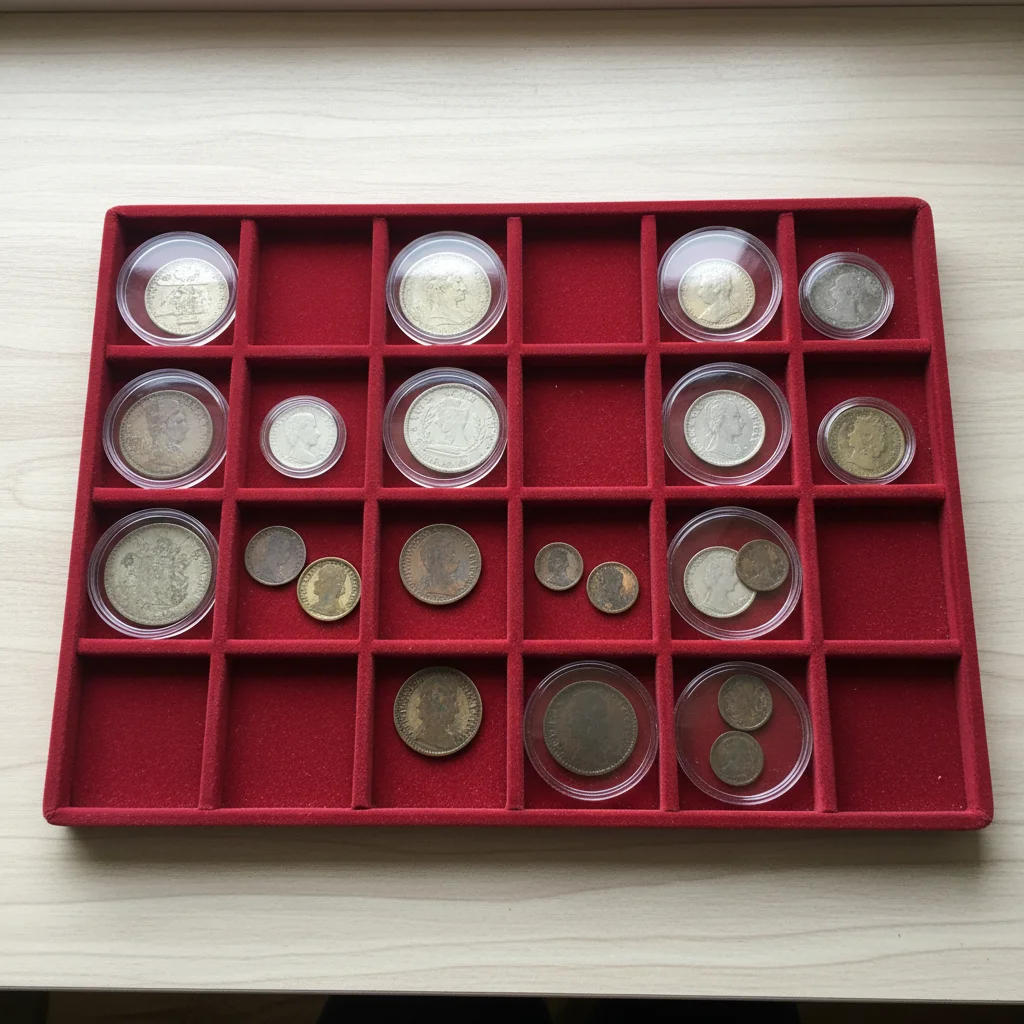
The main task is to understand how a collection differs from a simple handful of coins arranged in a holder. It's important to grasp how to turn an unsystematic accumulation into something that can be proudly called a collection. Often, what people consider a collection turns out to be a chaotic assortment of various coins.
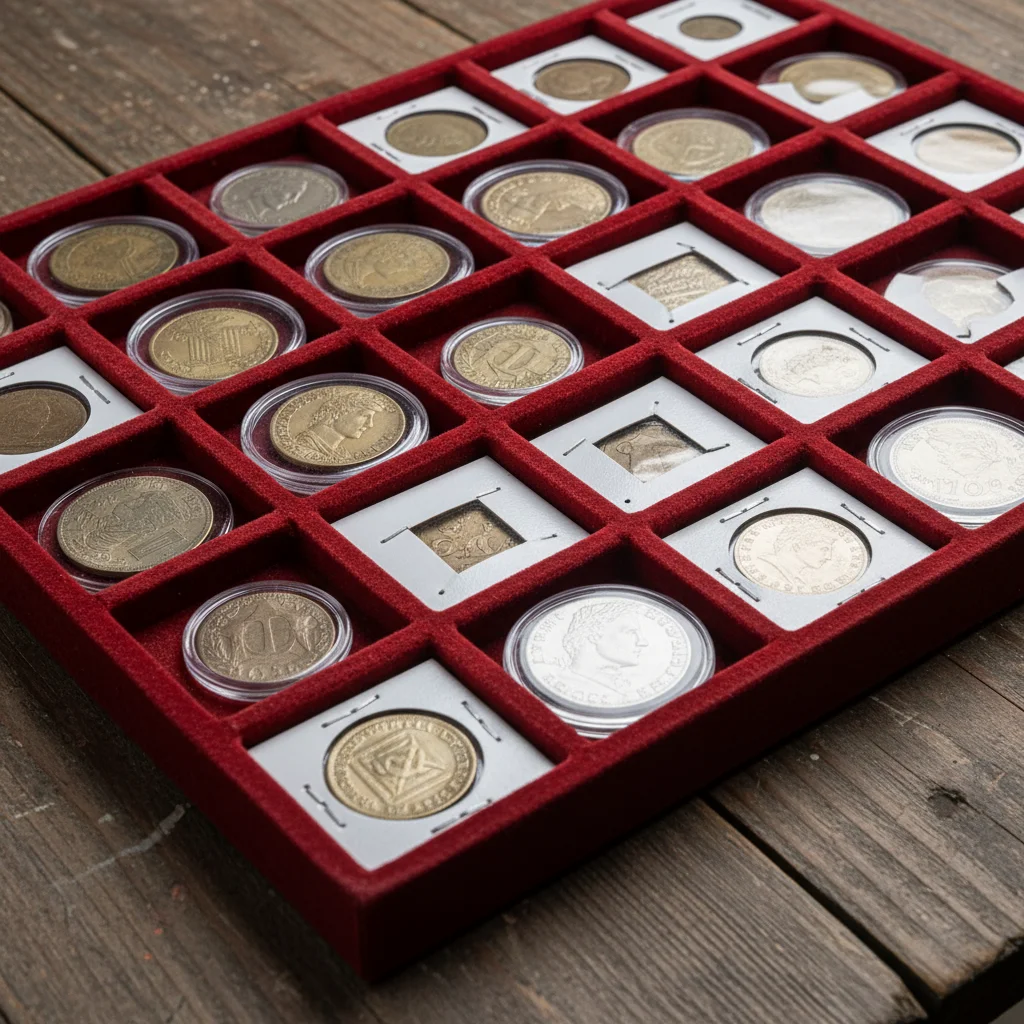
For example, a single album might contain silver rubles of the Russian Empire, aluminum coins from various countries from the second half of the 20th century, commemorative coins of the USSR, and a worn copper five-kopek piece from Catherine the Great's era. Such an assortment, despite having interesting specimens, is not yet a collection.
Systematization — The Main Principle of Collecting
The key concept that transforms a simple accumulation into a collection is systematization. A collection is, first and foremost, a systematized assembly united by a single chosen theme. It doesn't matter how expensive or numerous the coins are; what's important is their unifying idea and logic.
The theme can be absolutely anything, depending on the collector's interests. It gives the assembly a meaningful appearance, direction, and coherence.
Coins of a single denomination.
Coins of one specific country.
Coins with a specific subject, for example, featuring images of butterflies.
Systematization is the main principle of collecting
Example of a True Collection: Portrait Rubles of Catherine the Great
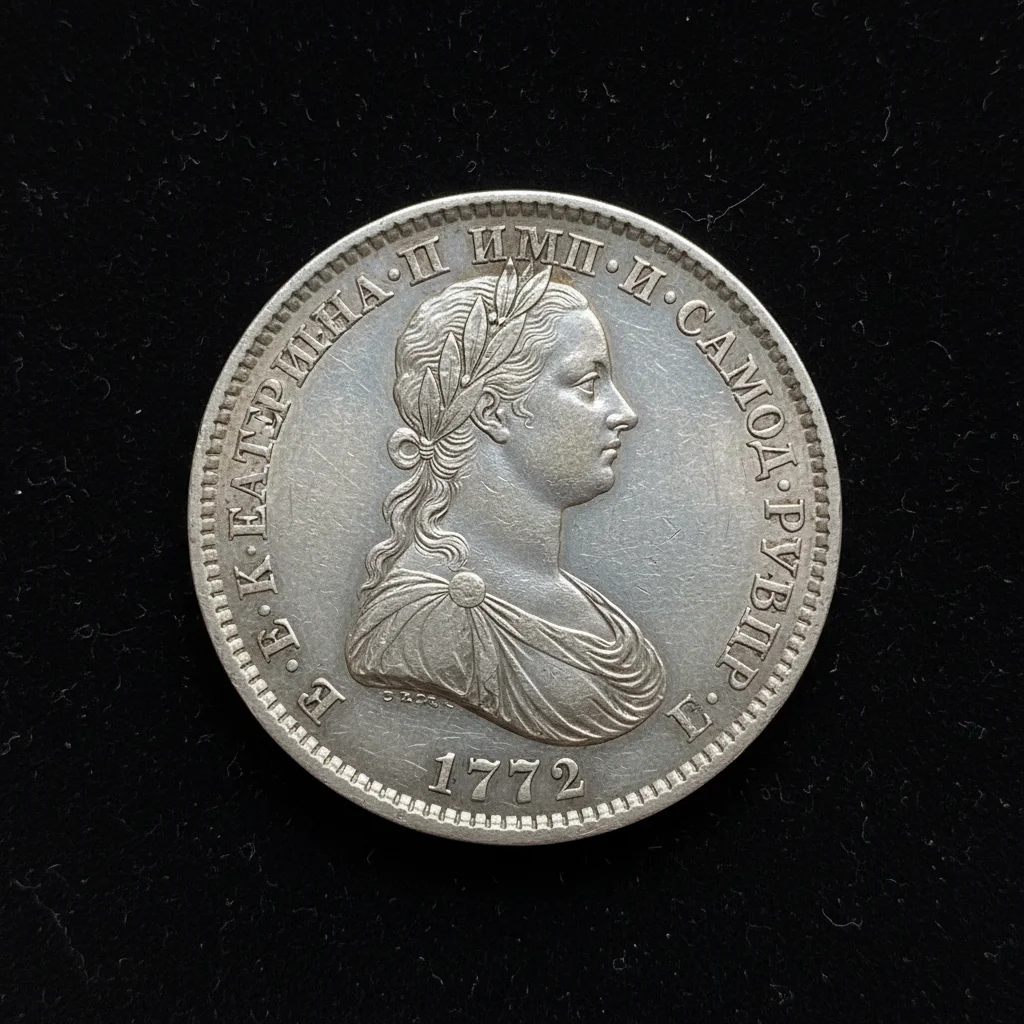
A prime example of a true collection can be a small assembly of fewer than a dozen coins. These are the portrait rubles of Catherine the Great, collected by type. Every coin in this collection is in exceptional condition, with a bright mint luster.
The owner collected these coins meticulously and selectively over several decades. The result is a small wooden tray that holds true masterpieces of 18th-century medallic art.
Such an assembly, despite its compactness, is a complete collection. It has a clear theme, is logically structured, and consists of specimens of the highest quality. This is an example of how a thoughtful approach turns coins into a source of collector's pride.
Example of a true collection: Portrait rubles of Catherine the Great
When a Large Accumulation is Not a Collection
As a counterexample, consider a large and expensive accumulation housed in three albums. It is significantly more valuable than the previous example, but does it have the right to be called a collection?
In these albums, one can find completely different coins with no common theme. Such an accumulation is more of a quality investment portfolio or simply a selection of interesting specimens, but not a collection.
Rubles from the era of Peter the Great.
Modern commemorative coins.
Soviet and Russian gold coins.
Rare varieties of pre-war Soviet circulation coins.
Silver coins of old Europe.
At this stage, it is just a set of expensive metal discs. However, this material can be used to create a true collection if one defines a specific theme and uses the surplus and unnecessary coins to acquire missing pieces.