Silver Coins: Pros, Cons, and Pitfalls for the Investor - AUCBURG | AUCBURG
Silver Coins: Pros, Cons, and Pitfalls for the Investor
The question of buying silver coins requires consideration of several key aspects. One of the main advantages of such assets is their liquidity. Silver coins can be quite easily sold to various organizations.
The question of buying silver coins requires consideration of several key aspects. One of the main advantages of such assets is their liquidity. Silver coins can be quite easily sold to various organizations.
The main places to sell them are pawn shops and banks. Some pawn shops, when appraising, may consider not only the weight of the precious metal but also the coin's additional value, such as:
Historical
Collectible
Numismatic
However, it is important to understand that not all pawn shops approach valuation this way. Most of them view coins exclusively as scrap precious metal, which significantly reduces their appraised value.
Difficulties in Selling: Banks and Pawn Shops
Selling silver coins through banks also has its unpleasant nuances. Banks typically buy back coins at a reduced price. They sell coins at one price and buy them back at another, lower price, as their main goal is to make a profit.
As for pawn shops, there is an important legal aspect. Despite popular belief, pawn shops are legally not allowed to purchase coins outright. Their activities are limited to issuing loans against property collateral.
You can also try to sell coins on online platforms like 'Avito'. However, this also has its specifics: the highest demand is not for all coins, but mainly for investment ones.
Difficulties in Selling: Banks and Pawn Shops
Coin Classification: What's the Difference?
Coin Category
Description and Valuation Principles
Numismatic
Valued for their rarity and artistic merit, not just for their metal weight. A gram of metal in such coins is worth significantly more.
Investment (Bullion)
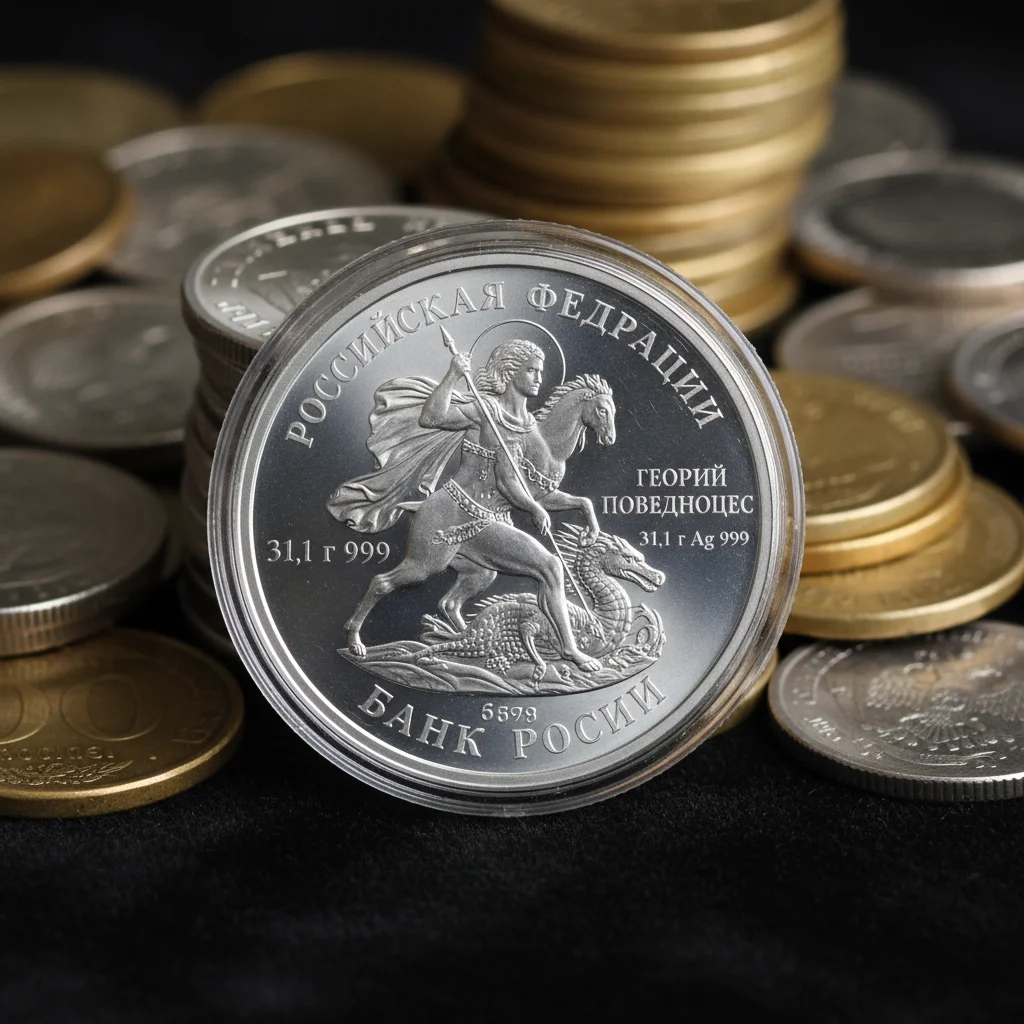
Essentially, this is 'stamped scrap.' Their value is almost entirely determined by the weight and current price of the precious metal. An example is the 'George the Victorious'.
Commemorative (Collectible)
An intermediate category between numismatic and investment coins. They often have a vibrant design and are sold in banks.
To properly understand the market, it is important to distinguish between several main types of precious metal coins. There is some ambiguity in their classification, but three main categories can be identified.
Each category has its own unique characteristics and valuation principles, which directly affects their investment appeal.
Investment coins are in demand on the secondary market, while the prices for jubilee and commemorative coins in banks are usually fixed, making it difficult to resell them for a profit.
Coin Classification: What's the Difference?
Commemorative Coins: A Pretty Wrapper with Zero Value
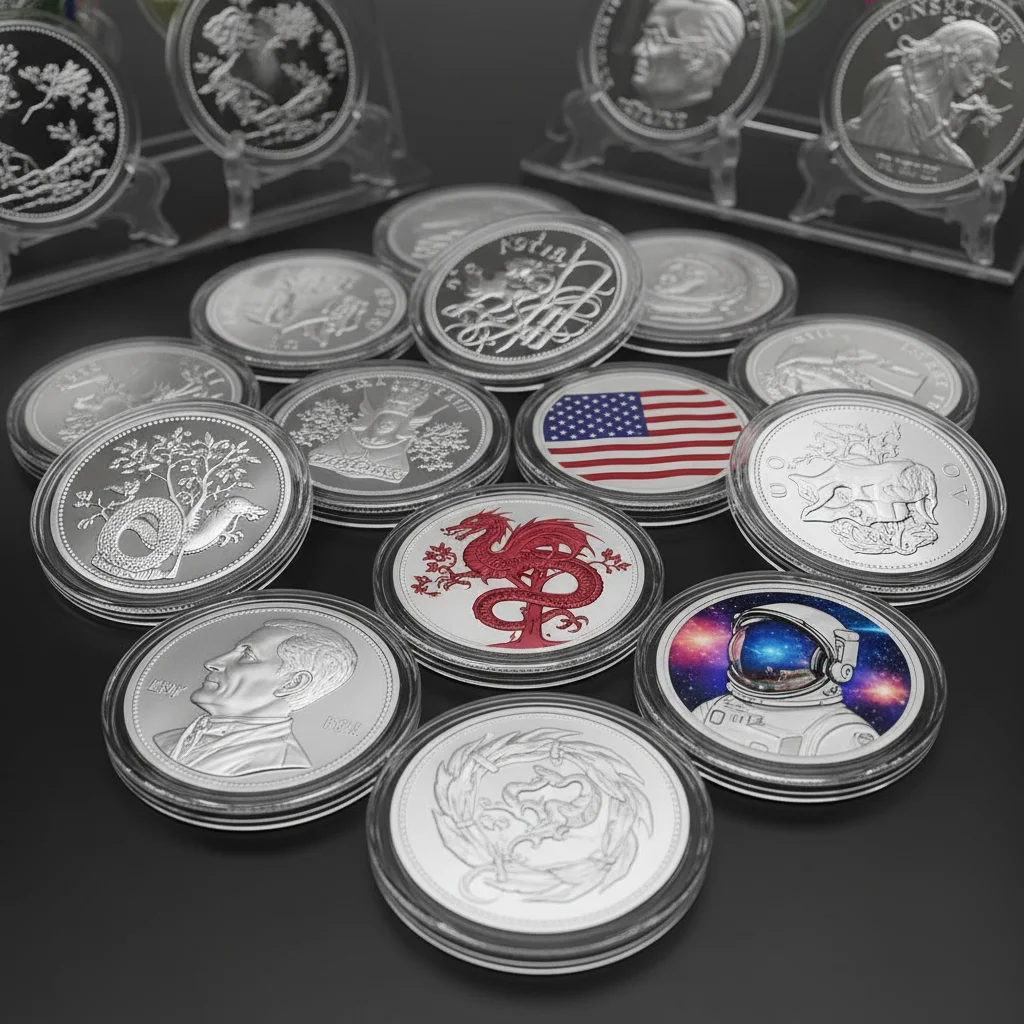
A special category consists of commemorative or collectible coins, which can often be found, for example, at Sberbank. These can be series dedicated to Russian tsars or admirals.
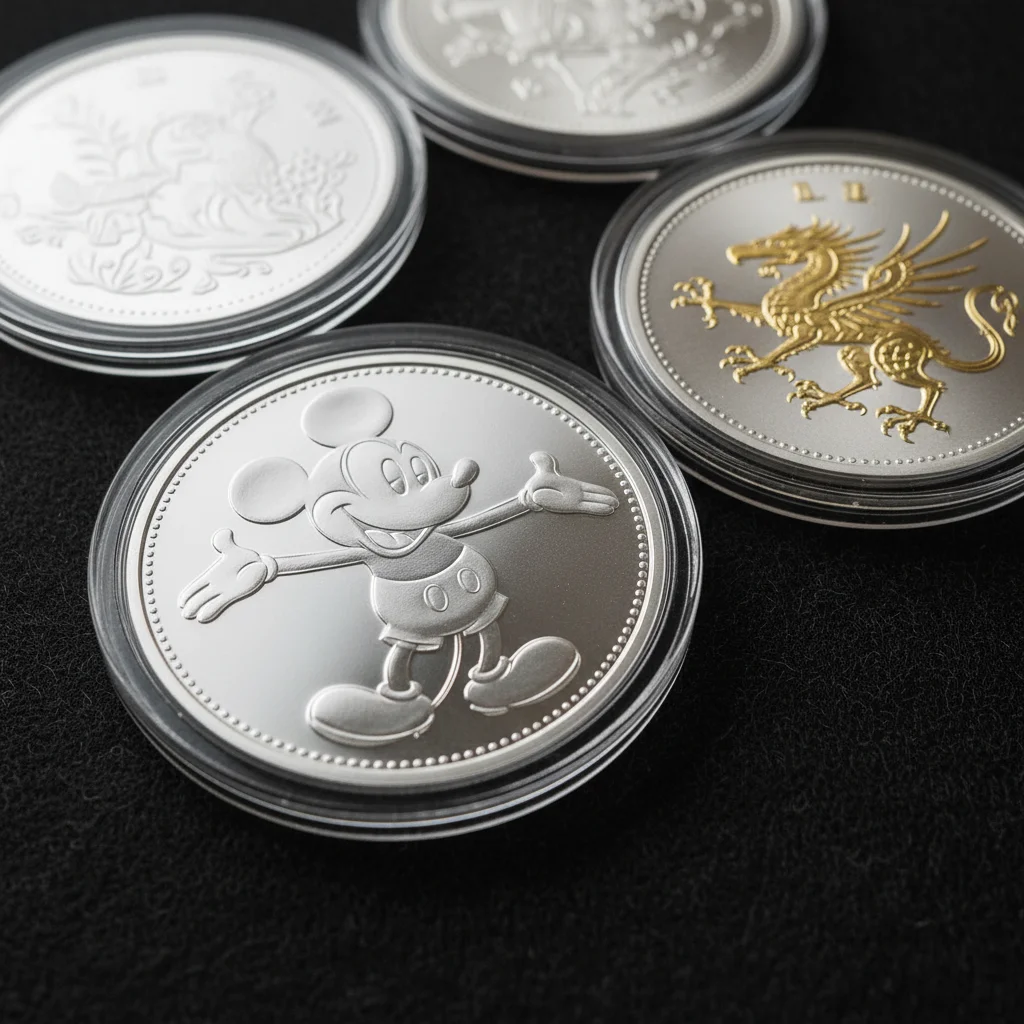
Such coins are created as a marketing gimmick. Their numismatic value is zero. The attractive appearance is achieved through various tricks:
Selling in beautiful packaging
Applying colored enamel
Manufacturing in unusual shapes (hearts, rectangles)
Inserting crystals or creating holes
When choosing between a standard investment coin ('George the Victorious', 'American Eagle') and a beautiful commemorative coin of the same weight, you should always buy the one with the lower price per gram. During periods of low demand for precious metals, it is virtually impossible to sell such 'decorated' coins for more than their metal value.
Commemorative Coins: A Pretty Wrapper with Zero Value
Volatility and Current State of the Silver Market
The silver market in Russia is small, which leads to high markups and a large difference between buying and selling prices (the spread). Interest in this metal is not as high as, for example, in cash dollars or euros.
Silver is a very volatile asset. It is called 'gold's nervous little sister' because when the price of gold changes by 1%, the price of silver can fluctuate by 2-3%. Investing in silver requires 'nerves of steel'.
Nevertheless, silver is of some interest. It is practically the only commodity that costs less today than it did at its peak in 1980, when its price reached almost $50 per ounce. It is currently trading significantly lower, which creates potential for growth.