Sovereigns: The History and Investment Value of the Most Recognizable Gold Coins - AUCBURG | AUCBURG
Sovereigns: The History and Investment Value of the Most Recognizable Gold Coins
Gold British Sovereigns are among the most famous coins in the world. They have a long and rich history, having once had a significant impact on global monetary circulation. Thanks to their recognizability, these coins are found in the collections of both novice and experienced numismatists.
Gold British Sovereigns are among the most famous coins in the world. They have a long and rich history, having once had a significant impact on global monetary circulation. Thanks to their recognizability, these coins are found in the collections of both novice and experienced numismatists.
Originally, it was a one-pound gold coin for circulation in Britain. Until the First World War, all issued sovereigns entered circulation, which is why coins from this period are difficult to find in good condition. Today, the sovereign continues to be issued, but now as a bullion and investment coin.
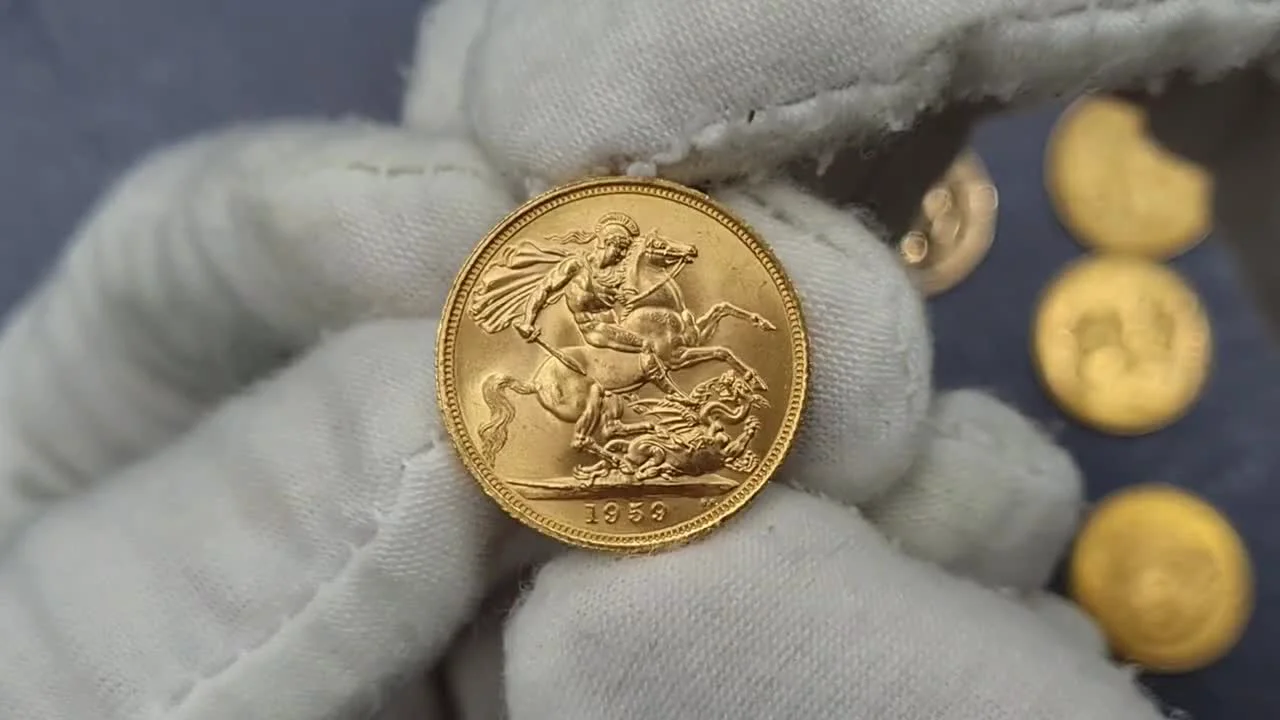
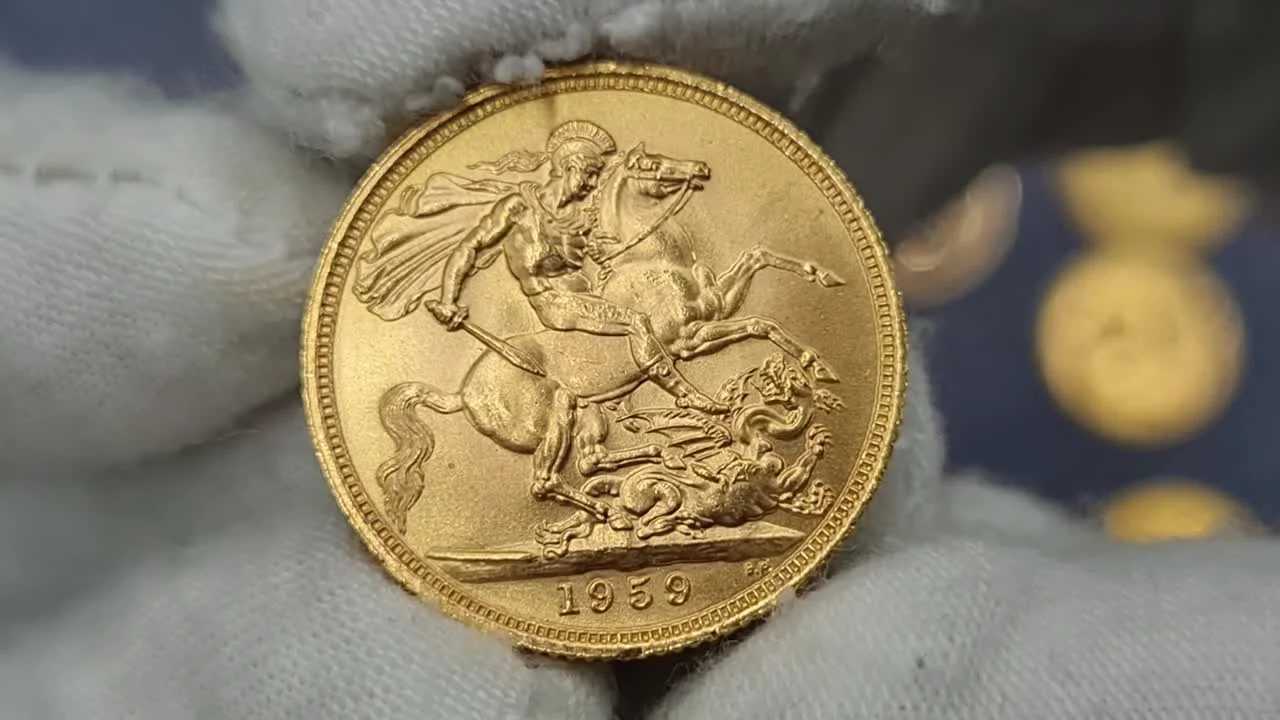
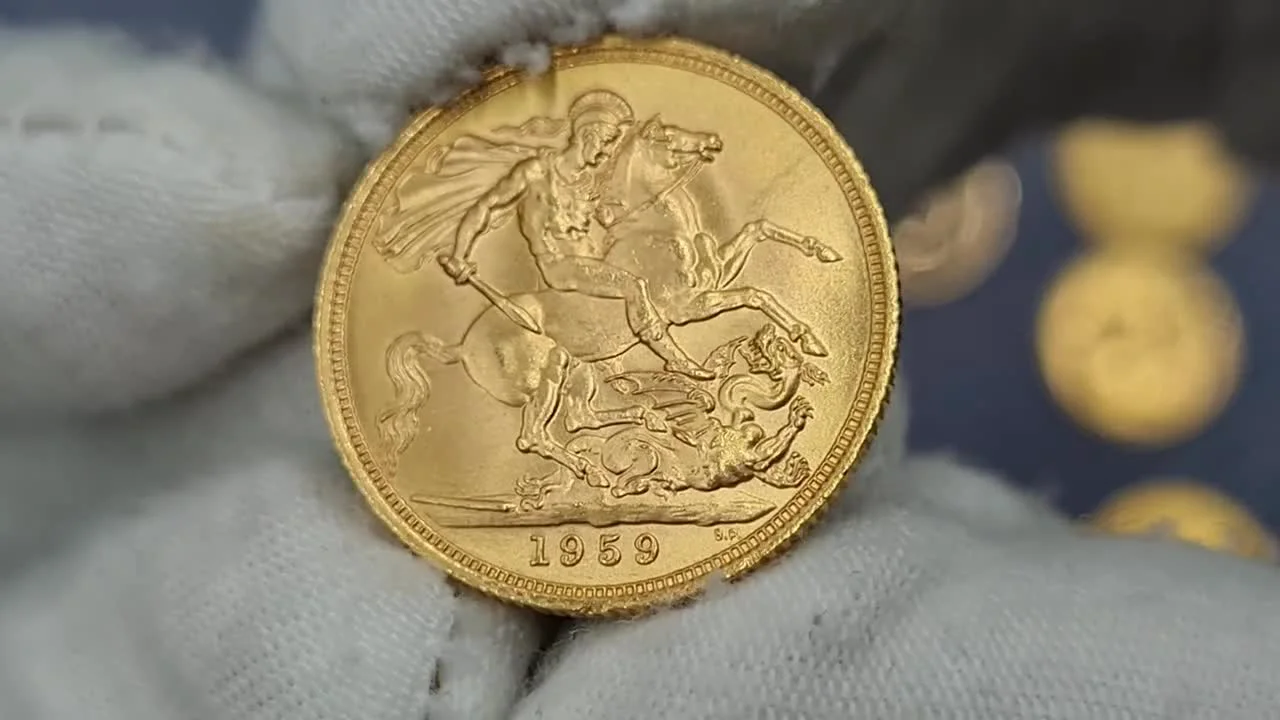
The main distinguishing feature of the sovereign, which makes it recognizable worldwide, is the reverse depicting Saint George slaying the dragon.
The Birth of the New Sovereign: The Great Recoinage of 1816
The history of the sovereign dates back to the Middle Ages, but the coin acquired its modern form in the early 19th century. The new sovereign began to be minted in 1817 during the reign of King George III.
The appearance of this coin was the result of the British government's new monetary policy. In 1816, a program called the "Great Recoinage" was launched. At that time, Britain was facing economic difficulties and needed to rethink its currency.
As a result, the British gold guinea, which weighed about 8.5 grams, was replaced by the sovereign, weighing almost 8 grams. The new monetary unit was divided into 20 shillings.
The Birth of the New Sovereign: The Great Recoinage of 1816
Early and Rare Sovereigns: From George III to William IV
The very first sovereigns, issued under George III, are a great rarity today. Due to a rather unflattering portrait of the monarch, popularly nicknamed the "bull head," the coins were not popular. It is estimated that about three-quarters of the nearly 5-million mintage were melted down, which explains their high value today—from $5,000 to $10,000.
Subsequent issues are also of great interest to collectors:
Sovereign of George IV. It was issued in two versions: with the classic image of Saint George and with the British coat of arms on the reverse. The first type is more valuable.
Sovereign of William IV. These coins did not feature Saint George; instead, the coat of arms was placed on the reverse. These coins are also rare and expensive.
Early and Rare Sovereigns: From George III to William IV
The Victorian Era: The Heyday of Minting
During the reign of Queen Victoria, the minting of sovereigns reached colossal scales. In just 25 years, coins worth 150 million pounds were issued, and the total mintage during her entire reign was 300 million. It is from this period that the history of mass-produced and more affordable sovereigns begins.
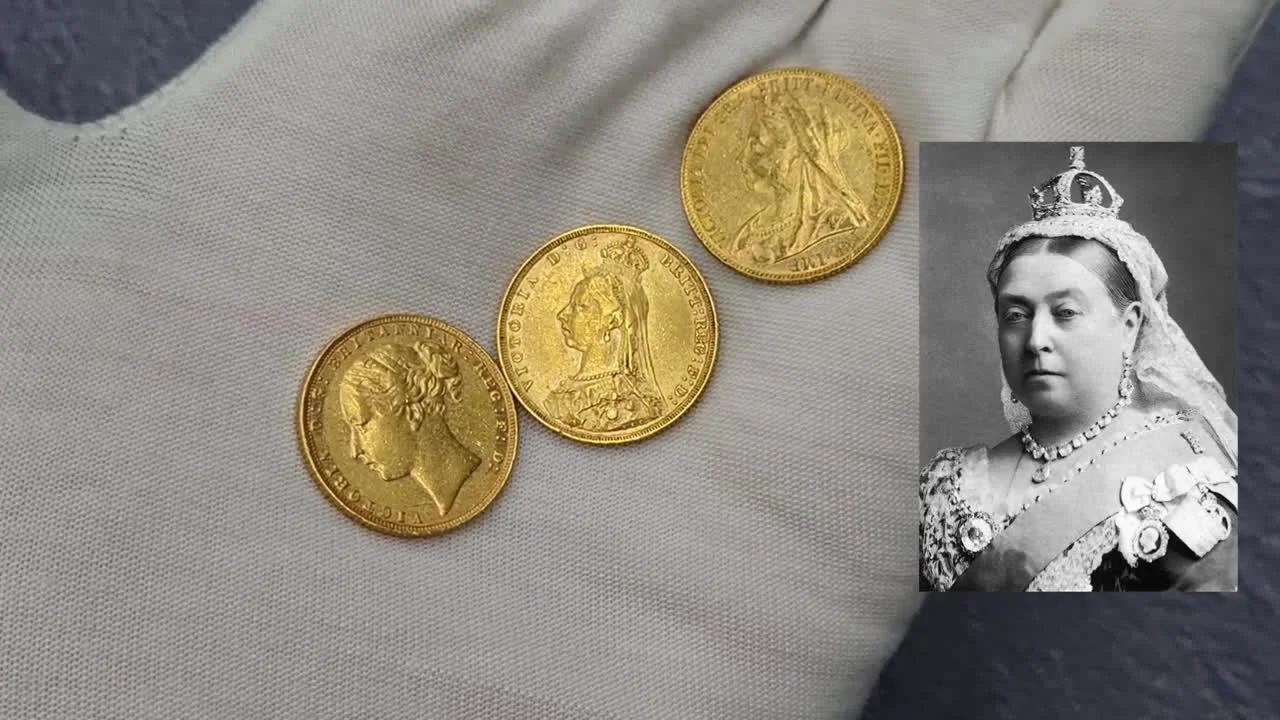
During her reign, four main types of sovereigns appeared, distinguished by the Queen's portrait and the reverse design:
Shield type
"Young Head"
Jubilee Sovereign
"Old Head"
The most expensive of these is the shield type, while the "Young Head" portrait coins are considered the most common and affordable. This period also includes the legendary "Una and the Lion" coin with a denomination of 5 pounds (or 5 sovereigns). Its mintage was only 400 pieces, making it one of the most expensive British coins with an auction price starting from $400,000.
The Victorian Era: The Heyday of Minting
Saint George: The Iconic Design by Benedetto Pistrucci
The famous reverse design with Saint George was created in 1816 by the Italian engraver Benedetto Pistrucci, commissioned by the British Royal Mint. The artist depicted the saint in a neoclassical style, which was quite unusual.
Instead of a traditional knight in armor, the coin depicts a semi-nude warrior in a classical helmet and cloak. This scene is very epic and captured in motion: the horse attacks the dragon, which George has already pierced with a spear (a fragment of the spear is visible near the dragon), and he is now raising his sword.
This interpretation of the image alludes to classical Greek motifs and is reminiscent of depictions of Hercules. The same design can be found not only on gold sovereigns but also on silver British crowns.
Saint George: The Iconic Design by Benedetto Pistrucci
Sovereigns of the 20th and 21st Centuries
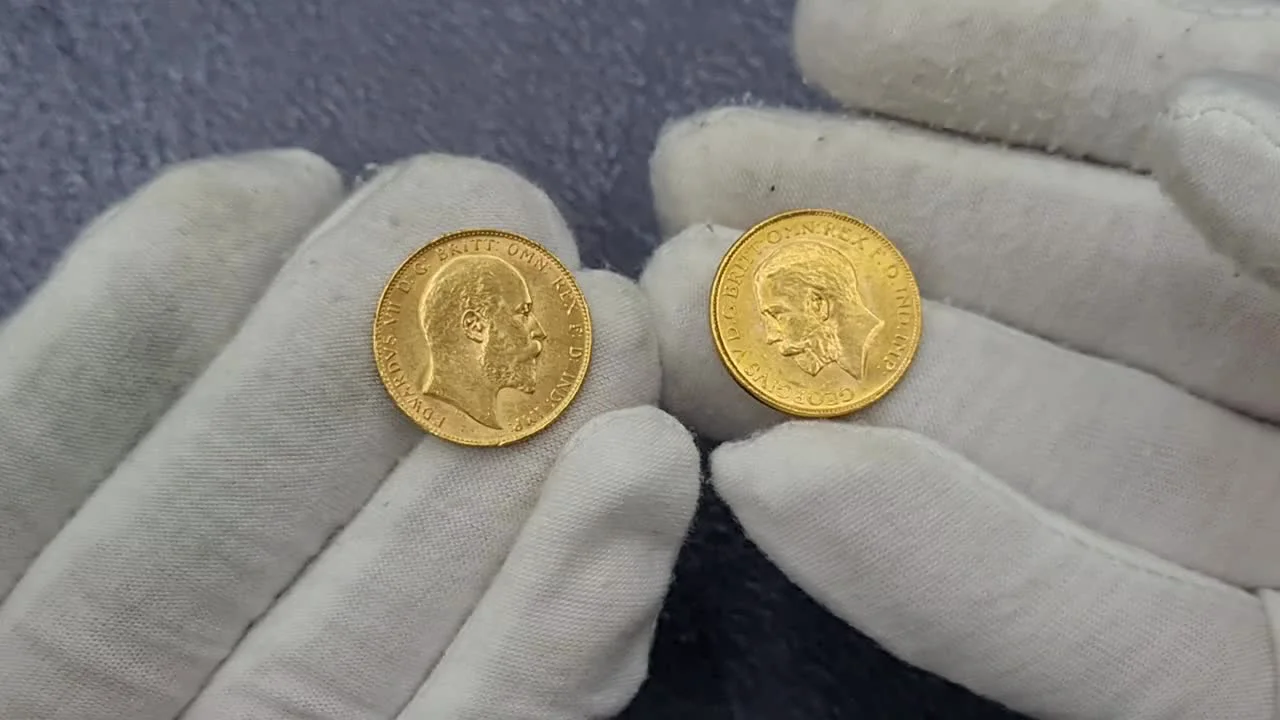
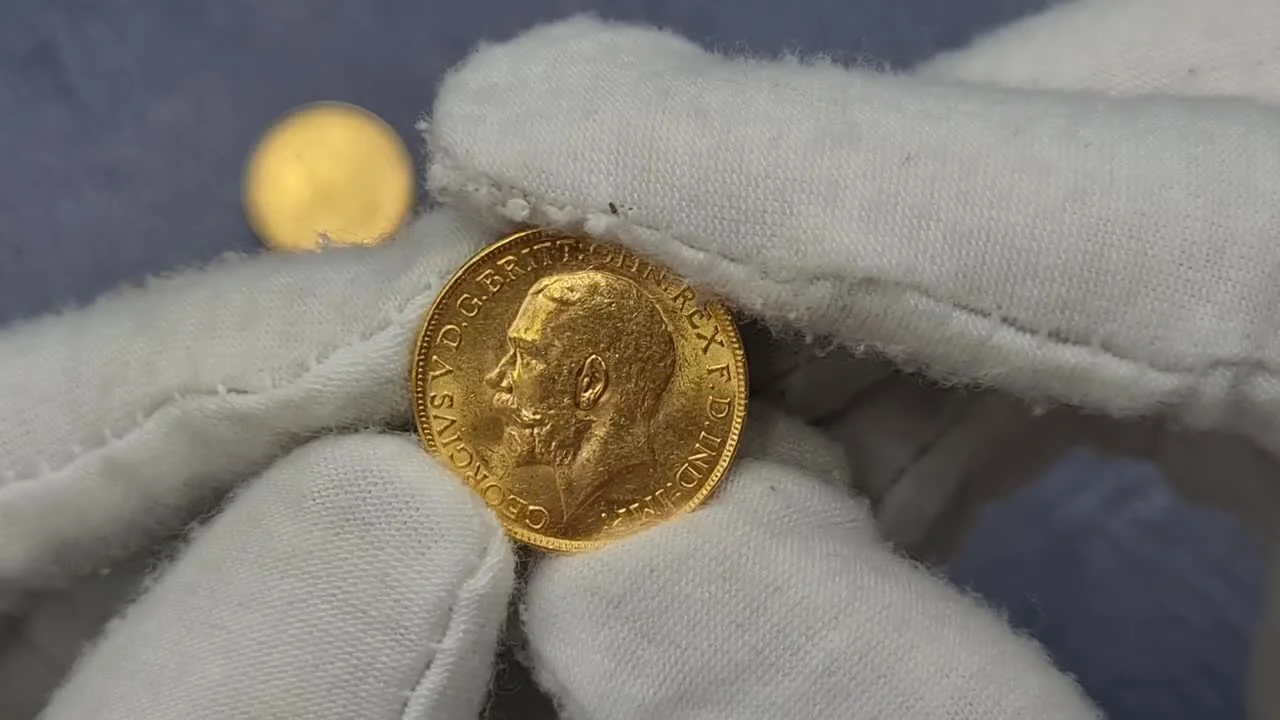
The history of sovereigns continued in the 20th century. During the reign of Edward VII, an era of prosperity, their mintages were very high. Under his son, George V, sovereigns were actively minted throughout the British Empire. There were six colonial types, distinguishable by a special letter on the reverse indicating the mint (e.g., M for Melbourne, I for Mumbai, SA for South Africa).
After the start of World War I, sovereigns ceased to circulate in Britain itself; they were minted until 1917 mainly to replenish gold reserves and pay war debts to the USA. In 1925, Winston Churchill returned to the gold standard, and minting resumed for the same purposes.
Under Elizabeth II, the sovereign survived Britain's 1966 ban on gold ownership. The ban drove trade underground and was repealed in 1970. During her reign, several types of portraits were used. From 1985 to 1997, sovereigns were only issued in proof quality for collectors. Today, Britain issues at least one type of sovereign annually, often dedicated to special events.
Sovereigns of the 20th and 21st Centuries
Investment Appeal of Sovereigns
Thanks to their variety and history, sovereigns offer several investment strategies. The vast number of these coins allows one to choose a suitable option for any budget and goal.
Basic investment in gold. Mass-produced issues, such as Elizabeth II sovereigns with the "Young Head" portrait, are almost always available in excellent condition and trade close to the price of their metal content.
Investing in collectible value. Buying iconic, limited-mintage sovereigns (for example, the coronation sovereign of Charles III) at their initial release can be profitable if the coin acquires collectible value over time.
Investing in numismatic history. Purchasing rare and expensive sovereigns, such as the issues of George III or 5-pound coins, is a long-term investment. Such coins, especially in high grade, can significantly increase in price.
Thanks to its reputation and worldwide fame, the sovereign is one of the most liquid gold coins. In India, for example, they are traditionally given as gifts for weddings and other important events.