Soviet Christmas Ornaments: Nostalgia Embodied in Glass
For many who grew up in the USSR, an old box of Christmas ornaments is a true portal to childhood. Fragile glass baubles, clip-on figurines, and cotton-wool animals evoke a warm feeling of nostalgia. However, these decorations are more than just family heirlooms. They are silent witnesses to history, reflecting in their design all the key events, ideological attitudes, and cultural trends of a vast country. From the first cardboard figures symbolizing the new Soviet era to cosmonauts celebrating scientific breakthroughs, each ornament told its own small story against the backdrop of a larger one.

More Than Just an Ornament
For many who grew up in the USSR, an old box of Christmas ornaments is a true portal to childhood. Fragile glass baubles, clip-on figurines, and cotton-wool animals evoke a warm feeling of nostalgia. However, these decorations are more than just family heirlooms. They are silent witnesses to history, reflecting in their design all the key events, ideological attitudes, and cultural trends of a vast country. From the first cardboard figures symbolizing the new Soviet era to cosmonauts celebrating scientific breakthroughs, each ornament told its own small story against the backdrop of a larger one.
It is this connection to the past that has turned ordinary Christmas decorations into an object of close attention for collectors. Today, they not only decorate the Christmas tree on New Year's Eve but also hold places of honor in private collections and museum exhibitions. By studying them, one can trace how production technologies, artistic styles, and even the daily life of a Soviet person changed. These small glass and cotton treasures are a kind of historical chronicle, understandable without words and accessible to anyone willing to look beyond the glitter of tinsel.
From Ban to Rehabilitation: The Birth of the Soviet Christmas Tree
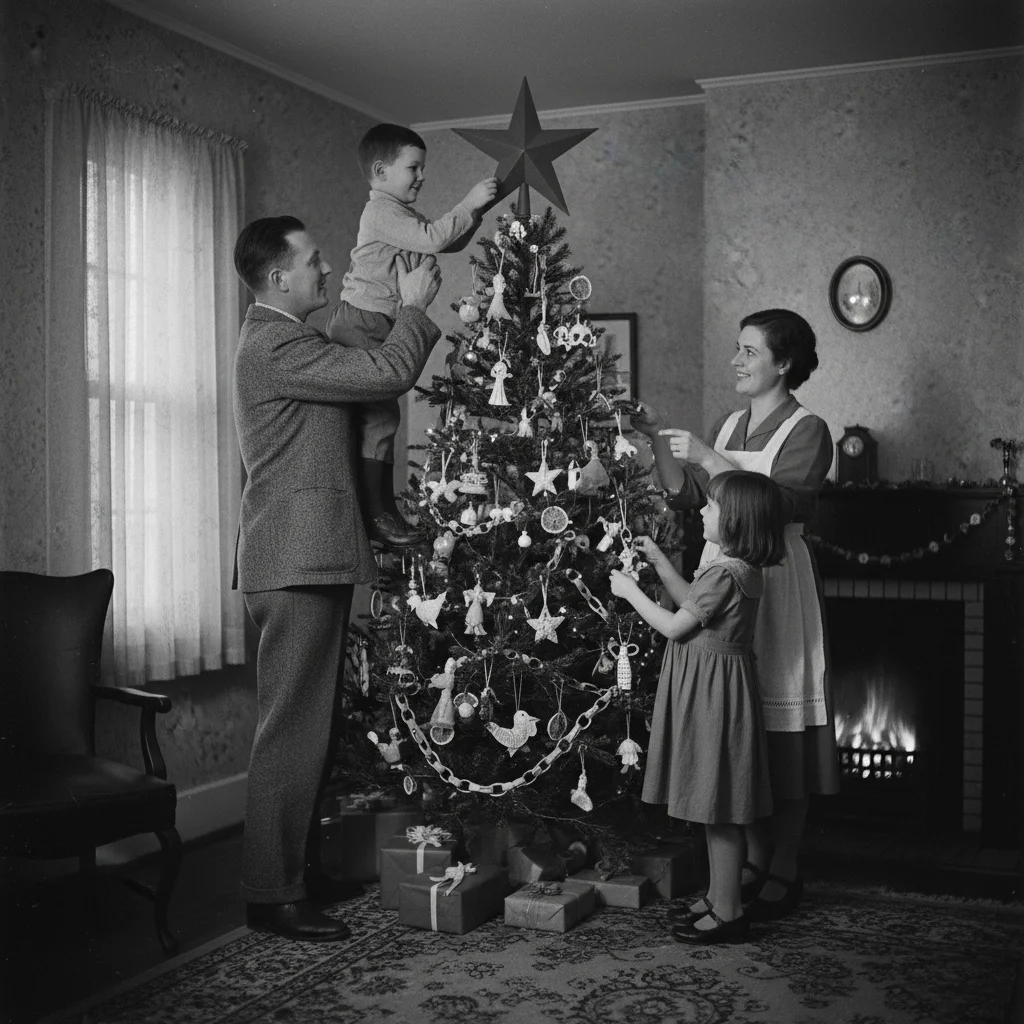
The tradition of decorating a Christmas tree came to Russia from Germany in the 19th century and became firmly established among the nobility and later in urban society. After the 1917 revolution, the Christmas tree was declared a 'bourgeois' and 'religious' relic, and for many years the holiday went underground. The situation changed only in 1935 when an article was published in the newspaper 'Pravda' calling for a good New Year's tree to be organized for children. The holiday was 'rehabilitated' but given a new, ideologically correct meaning: Christmas was replaced by New Year's, and the Star of Bethlehem at the top of the tree was replaced by a five-pointed red star.
The first Soviet Christmas ornaments, which appeared in the late 1930s, bore the imprint of the new era. Instead of angels and biblical scenes, figurines of pioneers, Red Army soldiers, and airships with the inscription 'USSR' appeared on the branches. Production was not yet mass-scale, so many ornaments were made from available materials: cotton wool, papier-mâché, and pressed cardboard. These toys were hand-painted and are of particular value to collectors today due to their rarity and unique historical context. They were the first step in forming a distinctive culture of Soviet New Year's decorations.
Wartime Ornaments: A Reflection of Harsh Reality
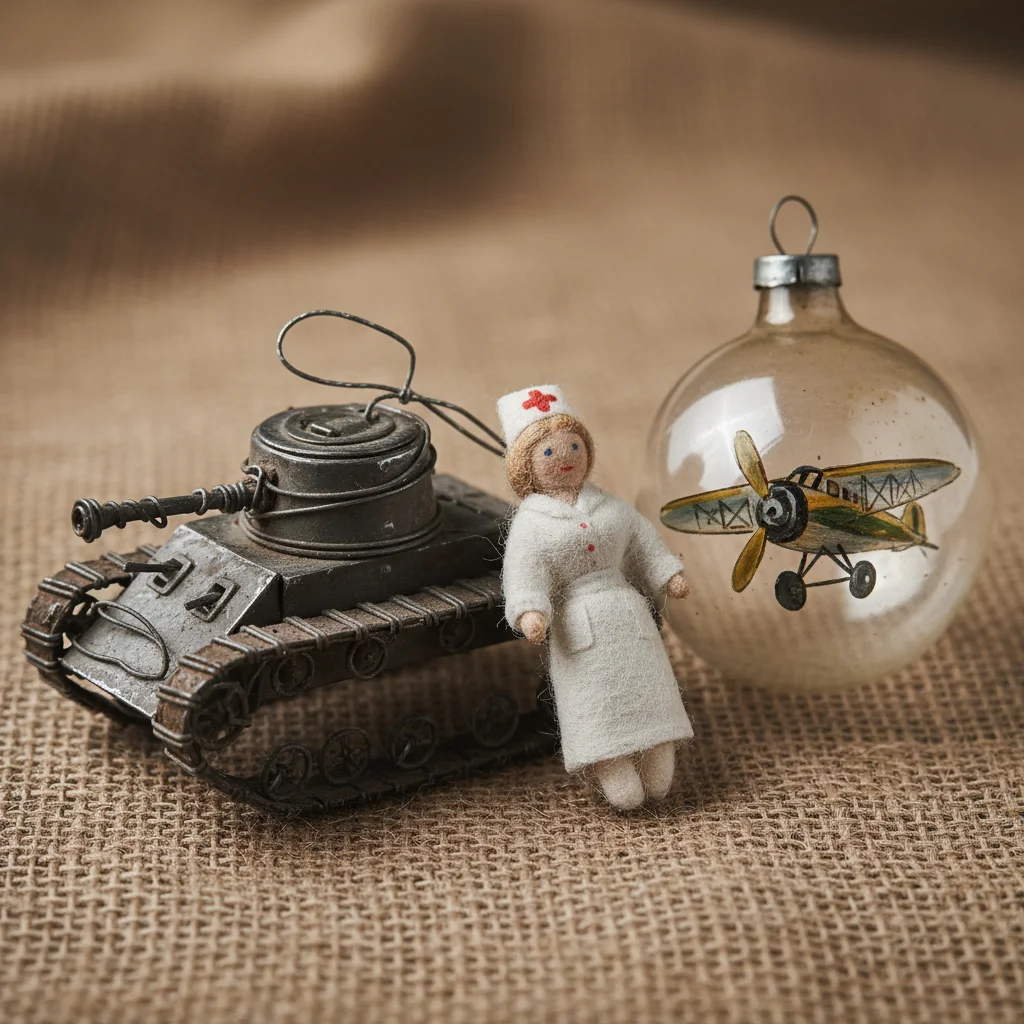
With the beginning of the Great Patriotic War, the production of Christmas ornaments was, of course, not a priority. Many factories were repurposed to produce goods for the front. However, the tradition of celebrating the New Year was not interrupted—it became a source of hope for people and a symbol of the peaceful life everyone believed in. Christmas ornaments continued to be made, but from whatever was at hand: production waste, wire, bandages, and metal shavings.
The themes of the ornaments changed dramatically during this period. Figurines of medic dogs, nurses, partisans, airplanes, and tanks appeared on the trees. A popular toy was the parachutist, made from pieces of fabric and cotton wool. Even ordinary baubles were painted with military themes. For example, one factory made baubles from burnt-out light bulbs, which were then painted. These decorations were simple, often plain, but they carried an immense emotional charge. Today, wartime ornaments are a great rarity and a valuable exhibit for any collector, as they are direct evidence of the people's indomitable spirit during the most difficult years of history.
The Thaw Era: Corn, Vegetables, and Fairy Tale Heroes
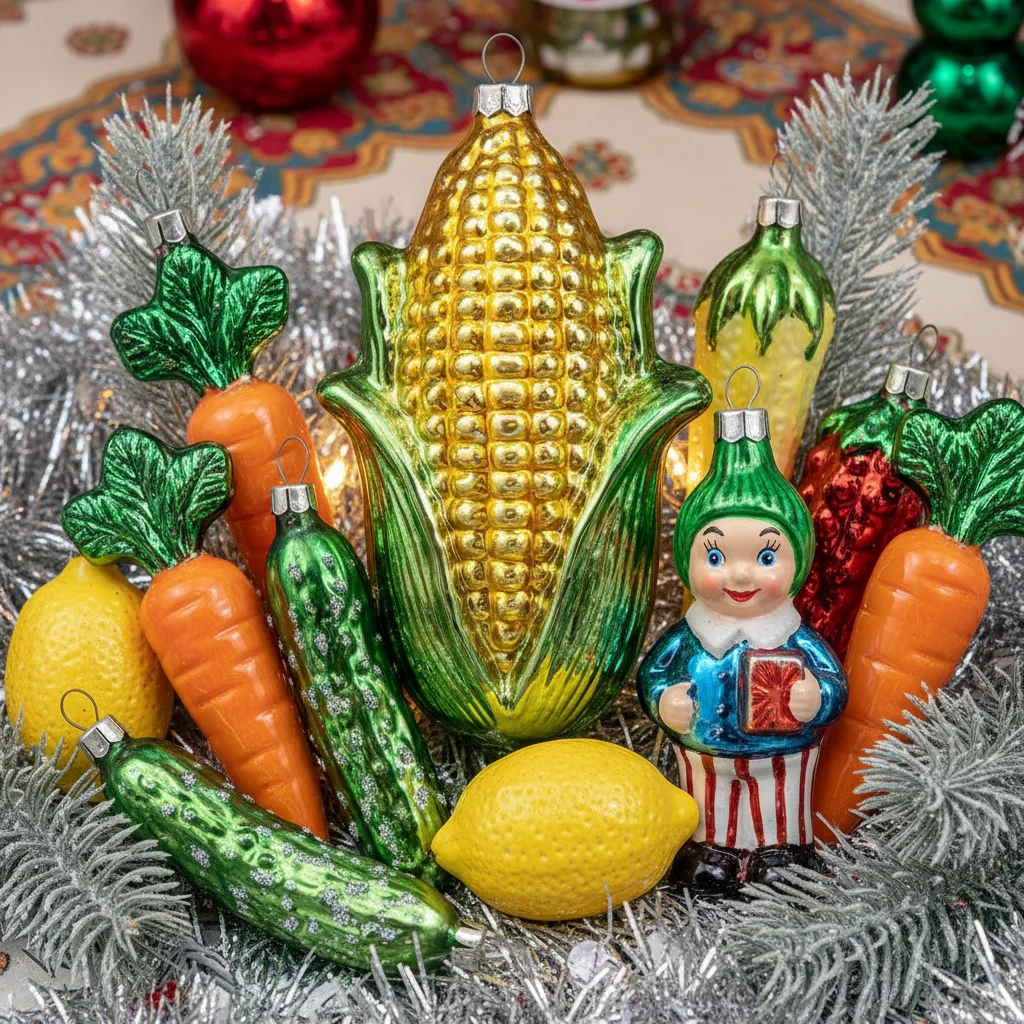
The post-war years and the ensuing 'Thaw' brought with them hopes for a better, more prosperous, and peaceful life. This was immediately reflected in the themes of Christmas ornaments. In the 1950s and 60s, abundance reigned on Christmas trees across the country: glass vegetables, fruits, and berries symbolized agricultural successes and food prosperity. The undisputed hit was the 'queen of the fields'—corn, which appeared on trees during the rule of N.S. Khrushchev. Glass ears of corn of all sizes and colors became as much a symbol of the era as cosmonauts.
Another important trend was the turn to the world of childhood and fairy tales. The release of popular cartoons and fairy-tale films gave rise to entire series of Christmas ornaments. Doctor Aibolit, Cipollino and his friends, heroes from Pushkin's fairy tales, and characters from 'Little Red Riding Hood' and 'Morozko' took up residence on the branches. Sets of ornaments that allowed one to collect all the characters from a single fairy tale on the tree were particularly prized. These figurines were distinguished by fine workmanship and detailed painting of faces and costumes. Ornaments depicting household items were also popular: teapots, samovars, clocks, and lamps. They created an atmosphere of comfort and domestic warmth, which people longed for after the difficult years.
The Conquest of Space: From Sputnik to Cosmonaut
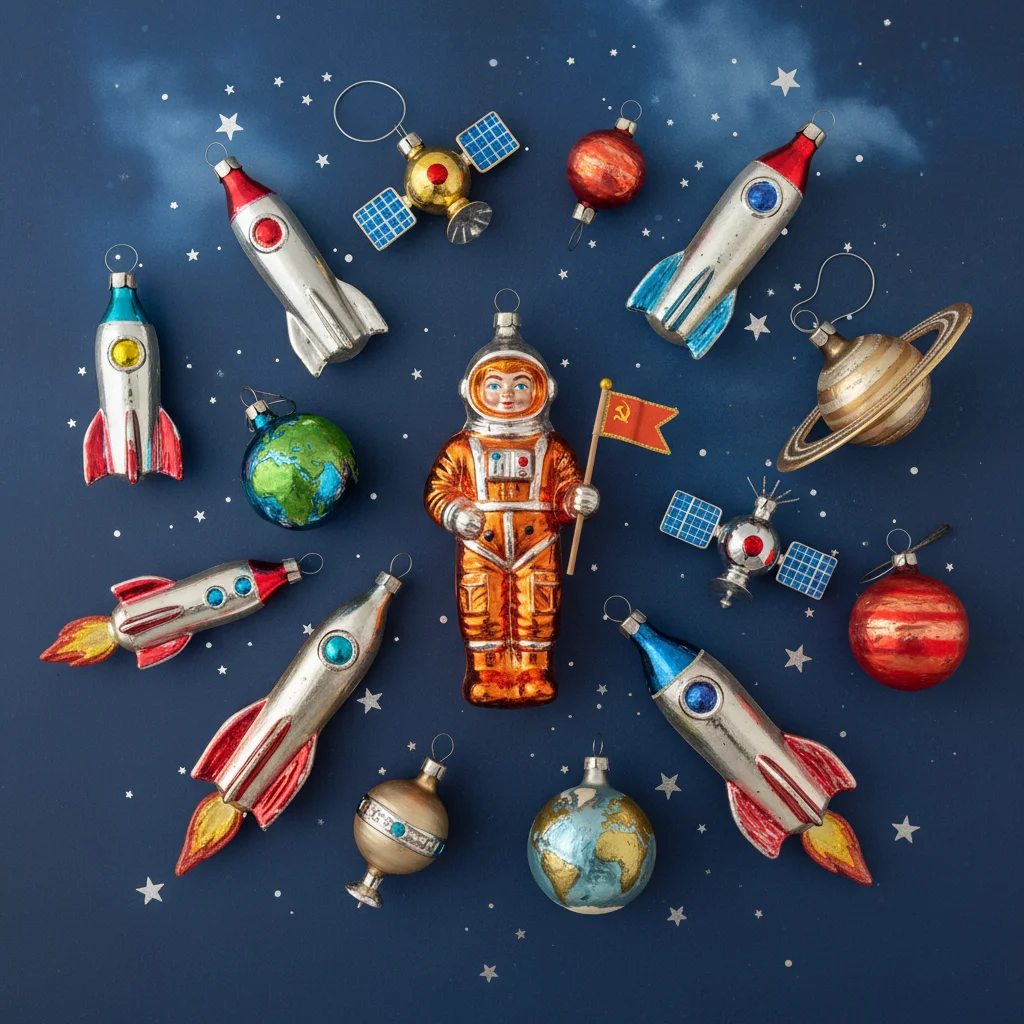
The launch of the first artificial Earth satellite in 1957 and Yuri Gagarin's flight in 1961 were events of planetary scale and caused an unprecedented surge of pride and enthusiasm in Soviet society. The space theme instantly became dominant in all spheres of life, and the production of Christmas ornaments was no exception. Space burst onto New Year's trees, becoming one of the most vibrant and recognizable symbols of the 1960s.
Factories across the country began mass-producing glass rockets, satellites, lunar rovers, planets, and, of course, figurines of cosmonauts in spacesuits. Cosmonauts were especially popular: they were depicted standing, flying, with 'USSR' inscribed on their helmets. These ornaments were a symbol of the triumph of Soviet science, the personification of the dream of the future and the conquest of new worlds. They were made with great attention to detail, coated with silvery paint to imitate the metal of a spacecraft. Today, these ornaments are among the most sought-after by collectors. They are not only beautiful but also carry the spirit of great discoveries and a universal belief in the boundless possibilities of man.
Production Technologies: Glass Beads, Clip-ons, and Phosphorus
Behind the variety of shapes and subjects of Soviet ornaments were different production technologies. The most common were blown glass ornaments. A glassblower would heat a glass tube and blow a ball or a simple figure from it, which was then passed to the painting workshop. There, the ornaments were coated with amalgam for shine, and then artists would hand-paint them, giving each one a unique look.
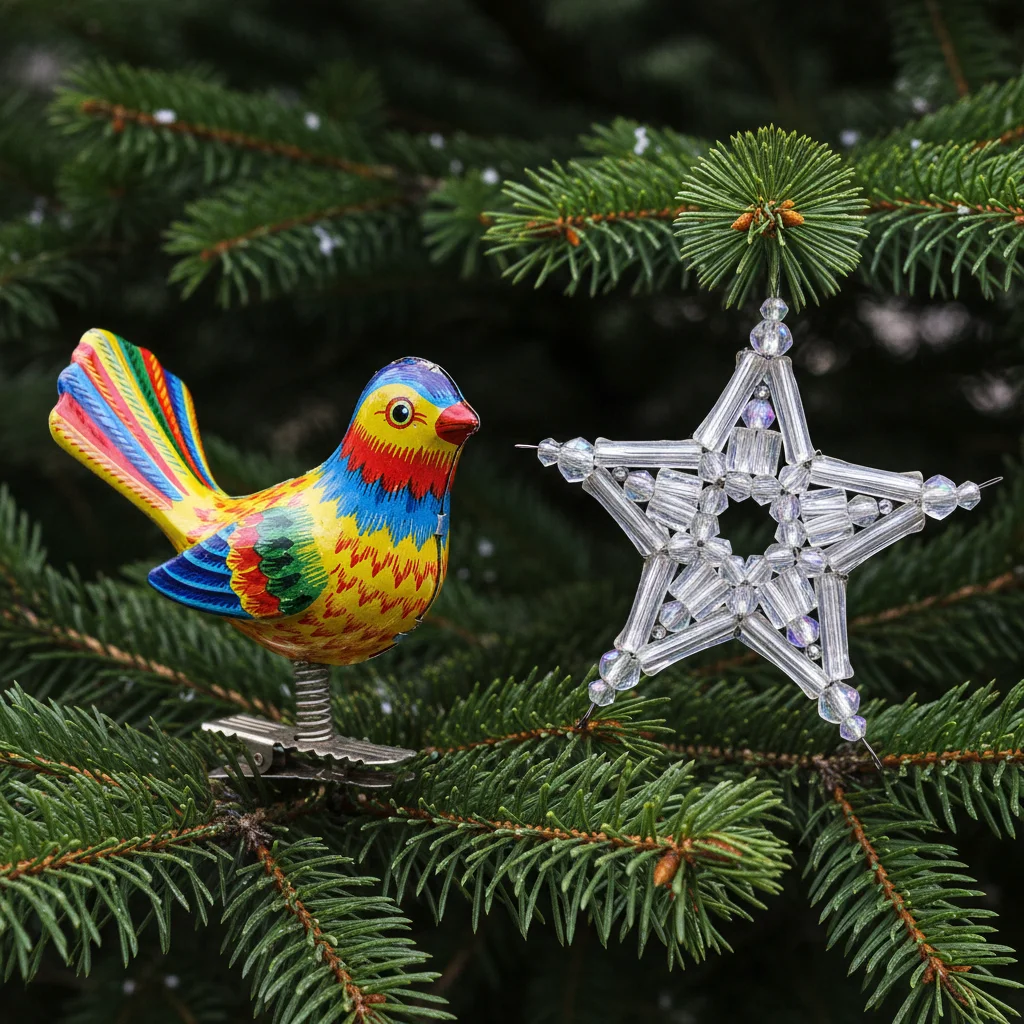
Clip-on ornaments were very popular. A metal clip allowed for convenient and secure attachment of the figurine to a branch. This format was most often used for fairy-tale characters, birds, animals, and children. It created the effect that the character was sitting right on a fir branch. Another interesting technology was the creation of ornaments from 'steklyarus'—glass tubes and beads strung on a wire frame. These were assembled into complex and delicate structures: stars, snowflakes, airships, airplanes, and even Kremlin towers. These decorations looked very elegant and light. In the 1950s and 60s, some ornaments, especially those with a space theme, were coated with phosphorescent paint. After the lights were turned off, they continued to glow mysteriously in the dark, creating a magical atmosphere.
The Late USSR: Standardization and Mass Production
In the 1970s and 80s, the production of Christmas decorations in the USSR reached its peak in volume, but this affected their diversity and artistic value. Unique, hand-painted figurines were replaced by simpler, more standardized designs intended for the mass consumer. Hand-painting was increasingly replaced by screen printing or simplified patterns. The main assortment consisted of baubles of different sizes and colors, icicles, cones, lanterns, and spire-like tree toppers.
Themed ornaments were still produced, but their design became more concise. For example, baubles depicting the Olympic Misha, the mascot of the 1980 Moscow Olympics, were popular. Gradually, glass began to be replaced by new, cheaper, and safer materials—plastic and foam. Plastic ornaments were unbreakable, which pleased parents of young children, but they lost the magical shine and delicacy inherent in glass. Despite the simplification, many ornaments from this period still evoke warm memories for those whose childhood fell in these years. Simple baubles with a white 'frost' coating or unpretentious plastic huts are also an integral part of the history of the Soviet Christmas tree.

A Valuable Collector's Item: What Affects the Cost
Today, Soviet Christmas ornaments are not just decorations, but a full-fledged collector's item with its own market and evaluation criteria. The cost of a single piece can range from a few dozen rubles to tens of thousands. Several key factors influence the price. The first and foremost is rarity. Pre-war ornaments, especially those made of cardboard and cotton wool, have survived in small numbers and are highly valued. Ornaments from limited themed series, such as a complete 'Cipollino' or 'Doctor Aibolit' set, are also considered rare.
The second factor is condition. An ideal specimen is considered one without chips, cracks, with well-preserved paint and the original fastening (hanger or clip). Any damage or restoration significantly reduces the cost. The third factor is the subject and manufacturer. Ornaments on popular themes such as space, fairy tales, or the circus are usually more expensive than simple baubles and icicles. Products from certain factories are valued higher due to the quality of their execution. Finally, the presence of the original packaging or box can multiply the price, especially for a complete set. Knowledge of these nuances helps collectors navigate the market and find real treasures.
Treasure Hunting: Where to Look and How to Avoid Mistakes
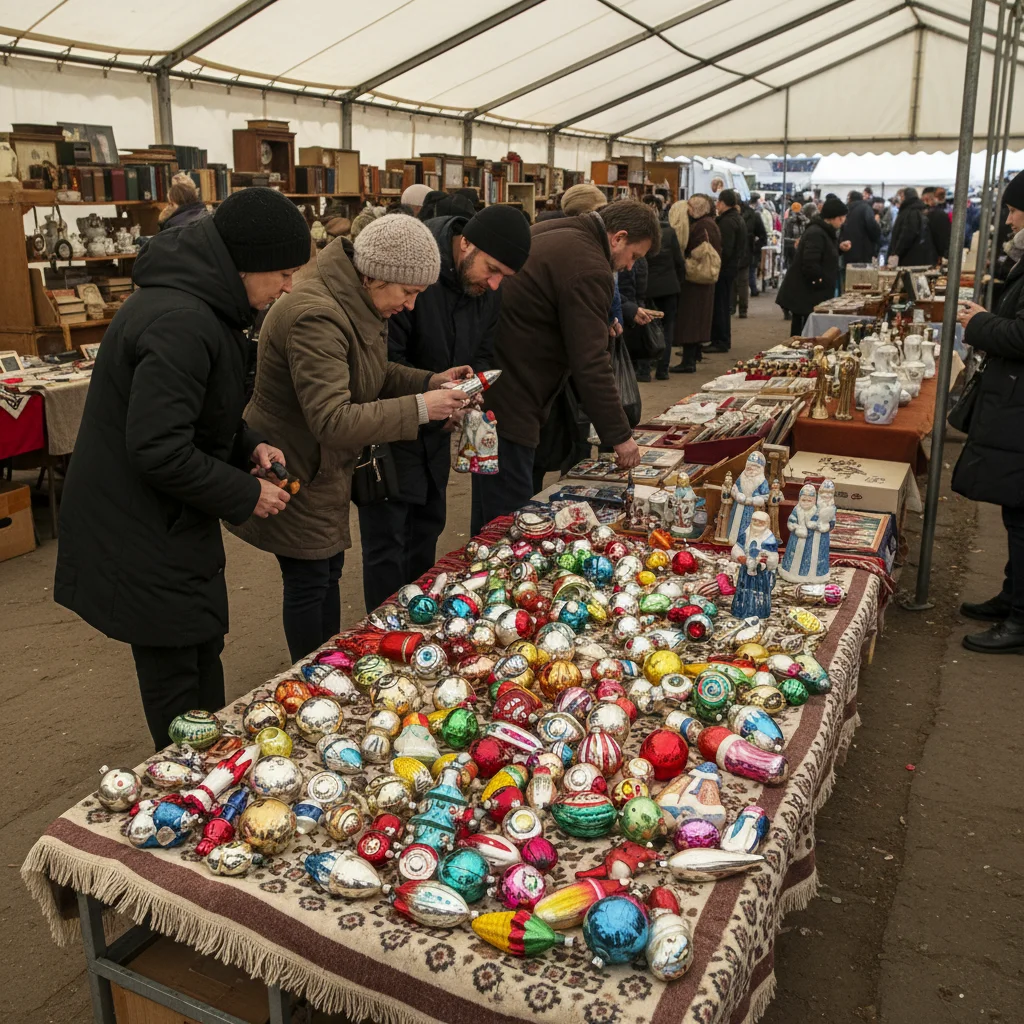
The search for Soviet Christmas ornaments is a fascinating activity, akin to treasure hunting. The most obvious and pleasant source is the mezzanines and attics in grandparents' homes. It is there, in old boxes, that the most valuable family heirlooms are often stored. If family stocks are exhausted, the search can continue at flea markets and antique fairs. Here, you can not only find interesting specimens but also chat with other collectors, learn a lot of new things, and even bargain.
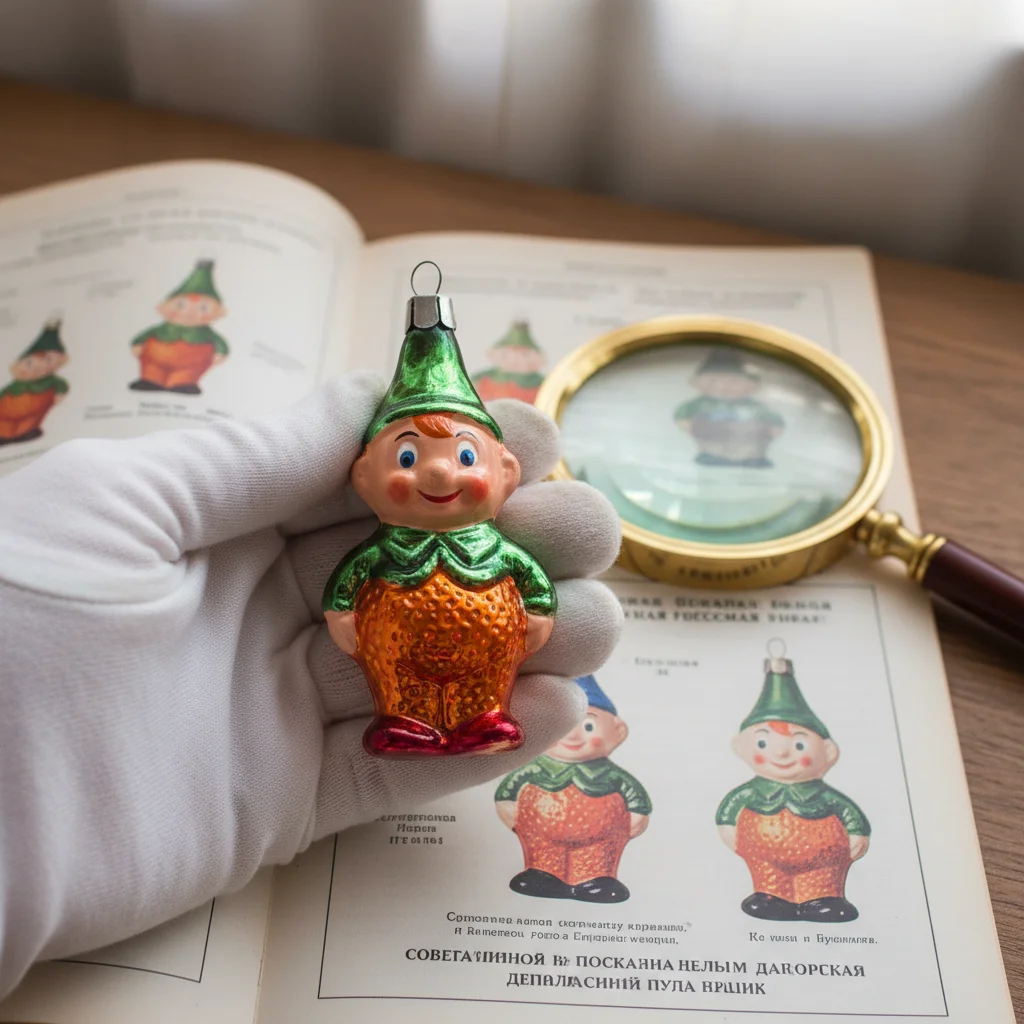
With the development of the internet, online platforms such as Avito, Meshok, and specialized forums for collectors have become the main places for buying and selling. The selection here is huge, but the risks are also greater. It is important to carefully examine photos, request additional pictures, and pay attention to the condition of the paint and fastenings. Unfortunately, modern reproductions and fakes have begun to appear on the market, which an inexperienced collector might mistake for an original. Therefore, before making a major purchase, it is worth studying catalogs and consulting with more experienced fellow enthusiasts. The main thing in this endeavor is not only knowledge but also intuition, as well as a love for these small witnesses of a great history.