How to Determine the Value of Antique Silver: From Scrap to Treasure - AUCBURG | AUCBURG
How to Determine the Value of Antique Silver: From Scrap to Treasure
The value of some silver items is determined solely by their weight and the current price of the metal. Today, the price of scrap silver fluctuates, but on average, it is about 50 rubles per gram. This category usually includes items of common fineness marks, such as 875, 900, and the tsarist 84 zolotnik.
The value of some silver items is determined solely by their weight and the current price of the metal. Today, the price of scrap silver fluctuates, but on average, it is about 50 rubles per gram. This category usually includes items of common fineness marks, such as 875, 900, and the tsarist 84 zolotnik.
Item fragments: broken pieces of spoons, forks, and other objects.
Heavily damaged or incomplete items: for example, old watch cases.
Items in poor condition with an unattractive appearance, even if they are whole. An example would be a Soviet 875 fineness cigarette case with numerous dents and cracks.
Even items with a history can be valued as scrap. Single tsarist 84 zolotnik spoons, which are over 100 years old, are often sold by weight if they do not have interesting hallmarks and were mass-produced for their time. The market is oversaturated with such items, which determines their low value.
Category 2: Slightly More Expensive Than Metal Price
There is a category of silver items whose value only slightly exceeds the scrap price, usually by 5-10%. These are typically mass-produced items that have been preserved in good condition or are part of a set.
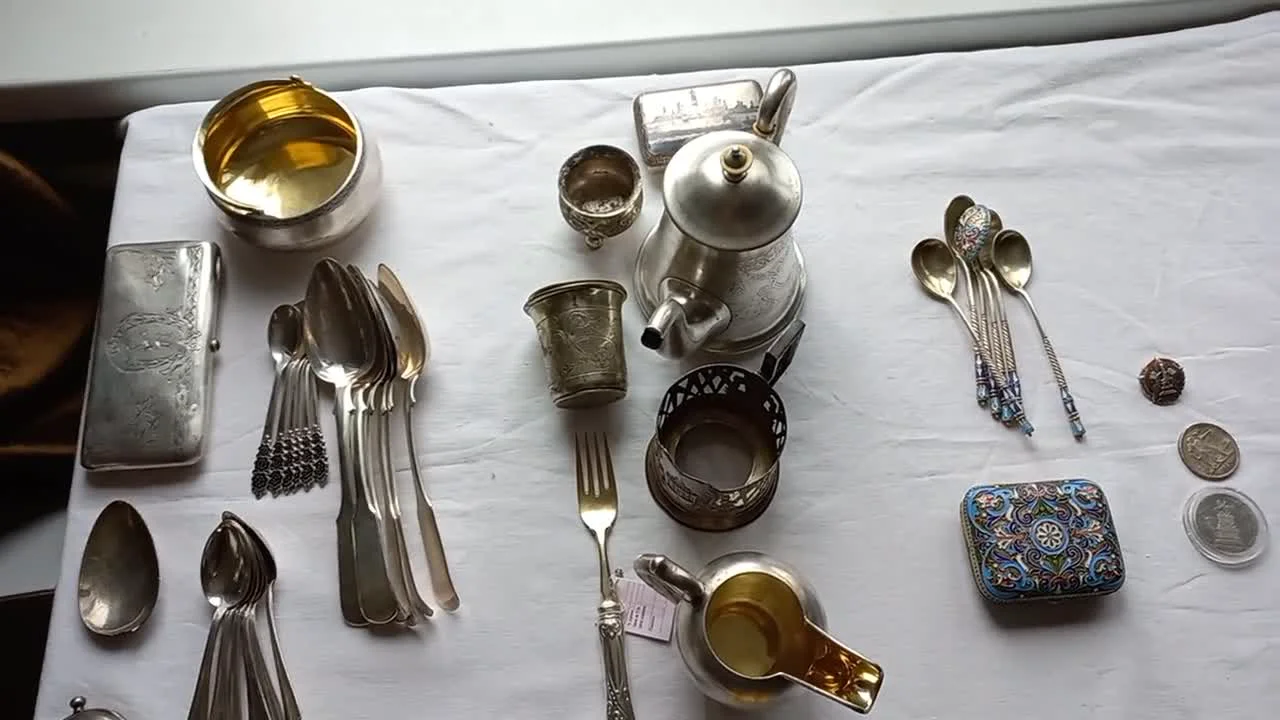
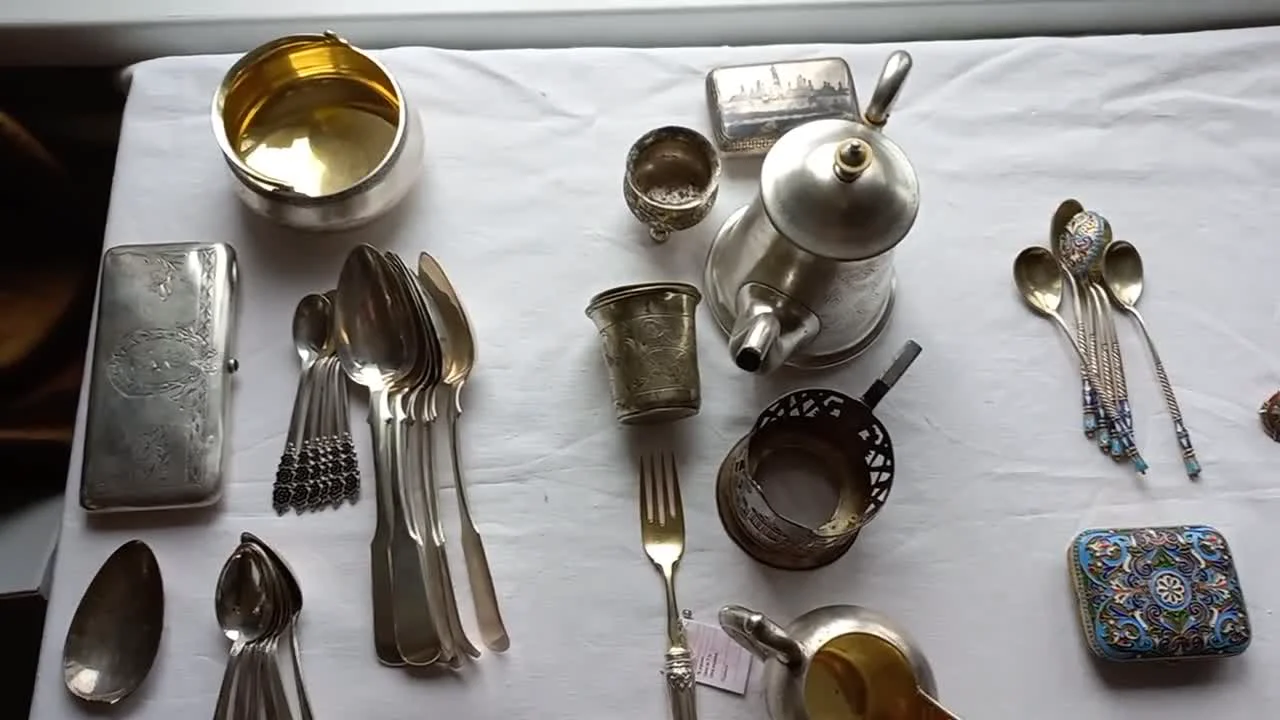
Soviet tableware from the 1950s-60s, for example, an 875 fineness gilded sugar bowl.
Sets of Soviet spoons with simple, single-color enamel.
Sets of tsarist spoons from the 1830s. The presence of a set increases their value compared to single items.
Soviet jewelry from Baltic factories with gilding.
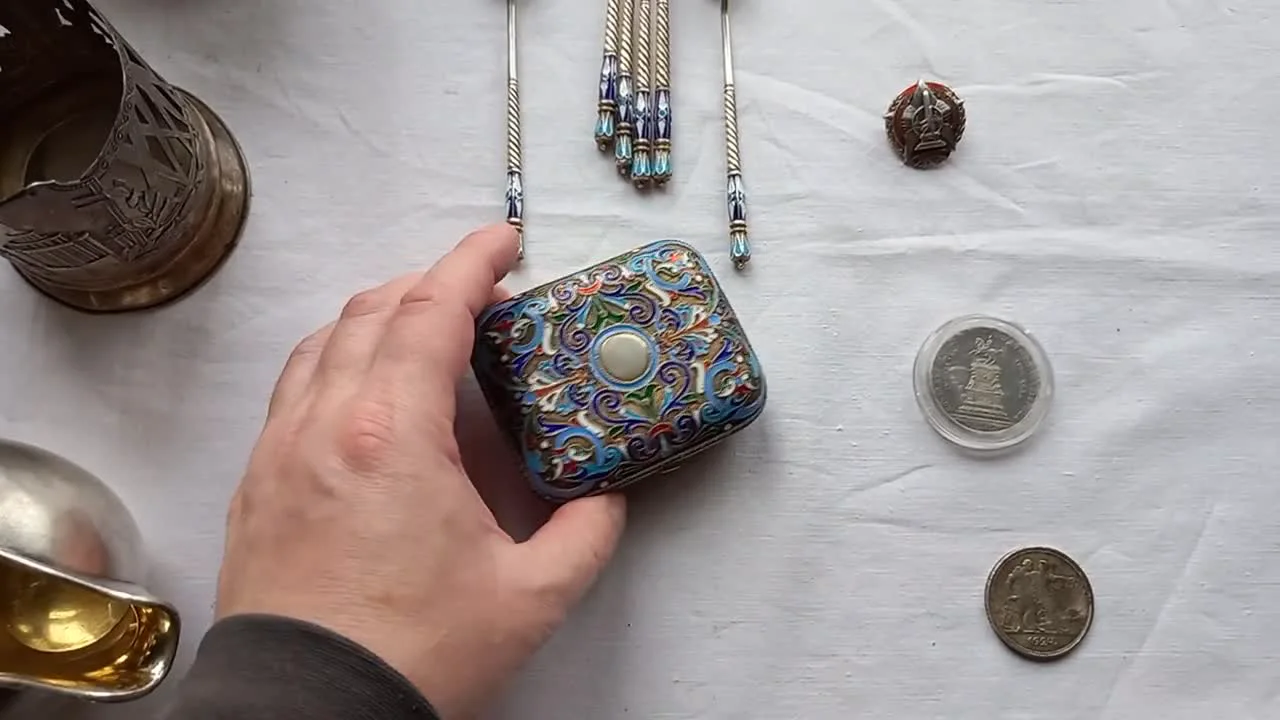
Mass-produced silver coins in poor condition also fall into this category. For example, a 1924 ruble with a large mintage and signs of wear will be worth little more than the metal. However, the same coin in excellent condition or a rare variety can be valued much higher. It is important to remember that the antiques market is flooded with such items, which keeps their prices from rising.
Category 2: Slightly More Expensive Than Metal Price
Category 3: Several Times More Expensive Than Metal
The value of silver items can increase by two, three, or more times compared to the price of the metal if they have collectible value. The key factors here are the manufacturer, artistic execution, and era.
Items made by famous masters and firms, especially suppliers to the Imperial Court, are particularly valued. These include works by the Grachev brothers, Fabergé, and Khlebnikov. For example, a milk jug made by the Grachev brothers will be significantly more expensive than an ordinary one.
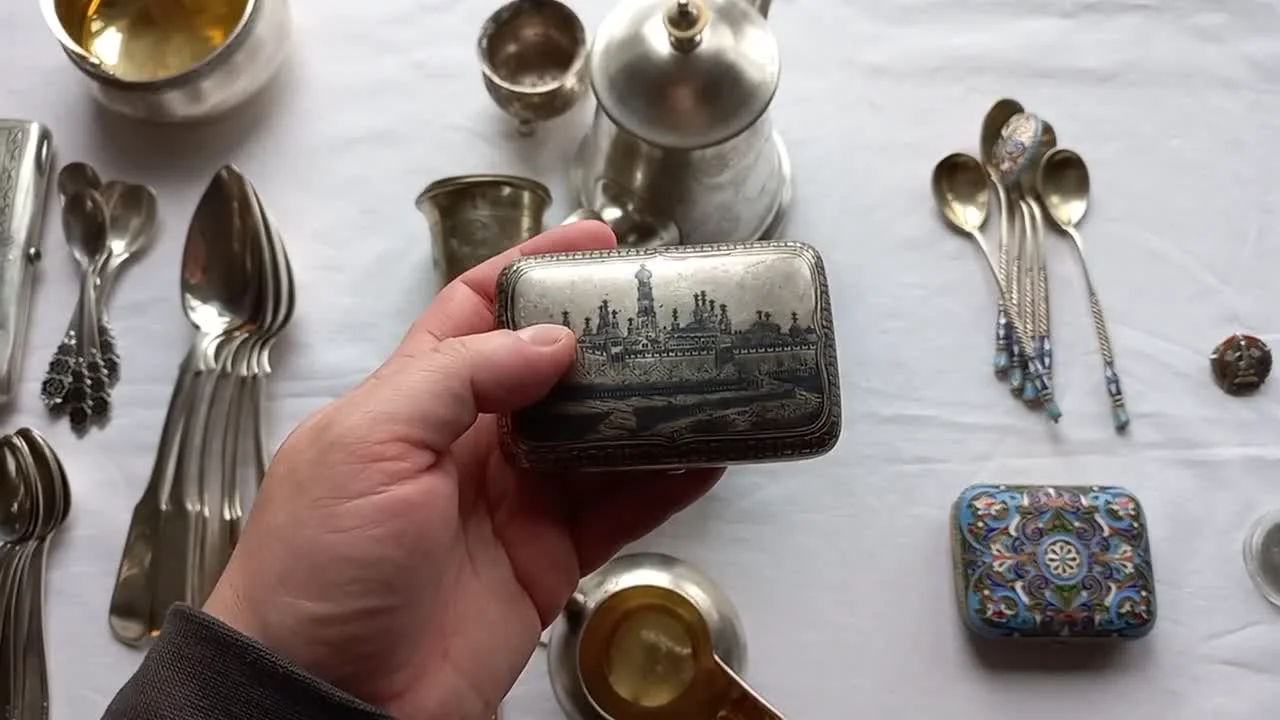
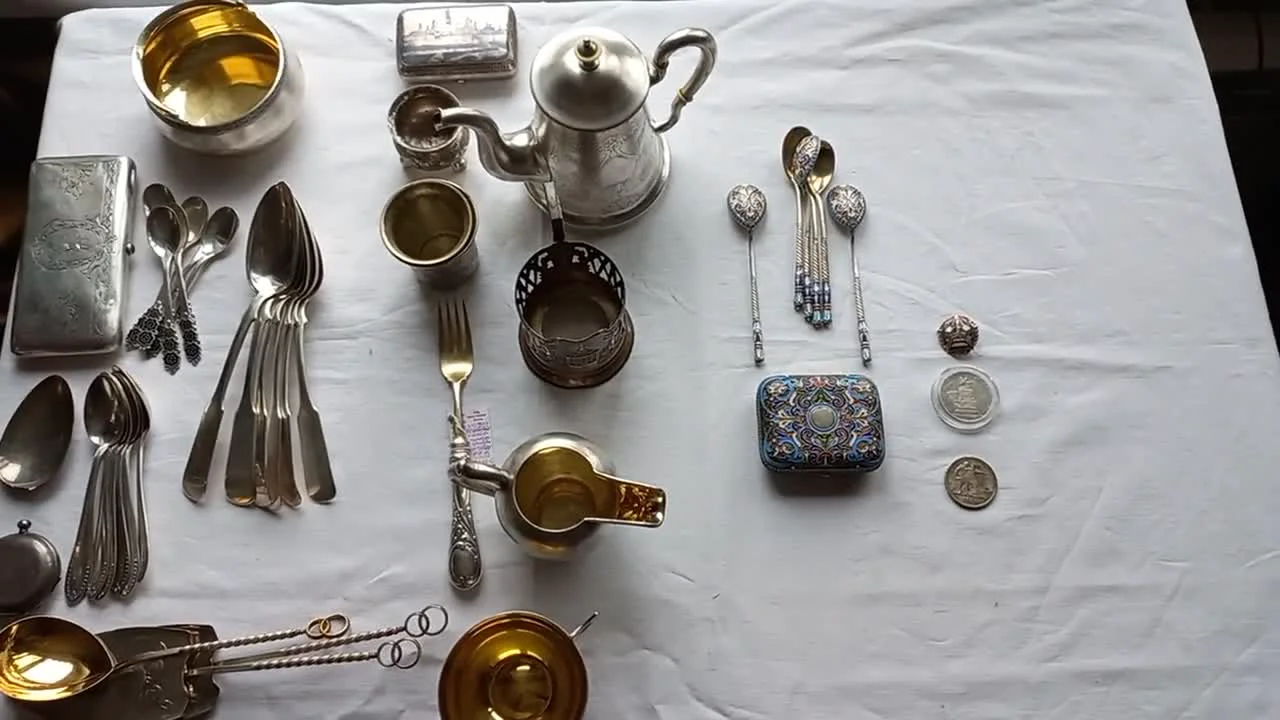
Even Soviet items can have high value. Silver podstakanniks (tea glass holders) with rare motifs or a Soviet cup with an engraving of the Kremlin can be valued at twice the weight of the metal. This category also includes tsarist items with niello (for example, cigarette cases), salt cellars in excellent condition, and items with high-quality artistic workmanship, such as a tsarist gilded fork with a complex pattern.
Category 3: Several Times More Expensive Than Metal
Category 4: Value in Enamel
The use of enamel is one of the main factors that multiplies the value of a silver item. Items with multicolored (polychrome) cloisonné enamel are especially highly valued, and can be worth 10 or more times the price of the metal.
Tsarist items with such enamel are true works of art. A spoon or cigarette case with magnificent, complex work and in perfect condition is a serious collector's item. It is important to pay attention to its preservation: any defects, especially chips in the enamel, can cut the value in half.
Even Soviet items with polychrome enamel are valued higher, although they are inferior to tsarist ones. Their value can exceed the price of the metal by about 5 times. At the same time, items with simple, single-color enamel typically cost only slightly more than scrap.
Category 4: Value in Enamel
Category 5: Exceptional Rarity
The most expensive silver items are those whose value can exceed the price of the metal by hundreds or even thousands of times. The value of such artifacts is determined by their exceptional rarity and collector demand.
Rare coins. An example is the 'Horse' coin-medal, whose price can reach 100,000 rubles in good condition. Even mass-produced coins, like the 1924 ruble, can have rare varieties that only specialists know about.
Rare badges. Some tsarist or early Soviet badges made of silver can be worth tens of thousands, hundreds of thousands, or even millions of rubles. Often, their owners are unaware of their real value and risk selling them for the price of scrap.
The value of such items is determined not so much by the weight of the silver as by their uniqueness, historical context, and demand in the numismatic or phaleristics market. Therefore, when such items are found, a consultation with a specialist is crucial for a proper appraisal.