Restorers' Secrets: When Intervention Increases and When It Decreases an Item's Value - AUCBURG | AUCBURG
Restorers' Secrets: When Intervention Increases and When It Decreases an Item's Value
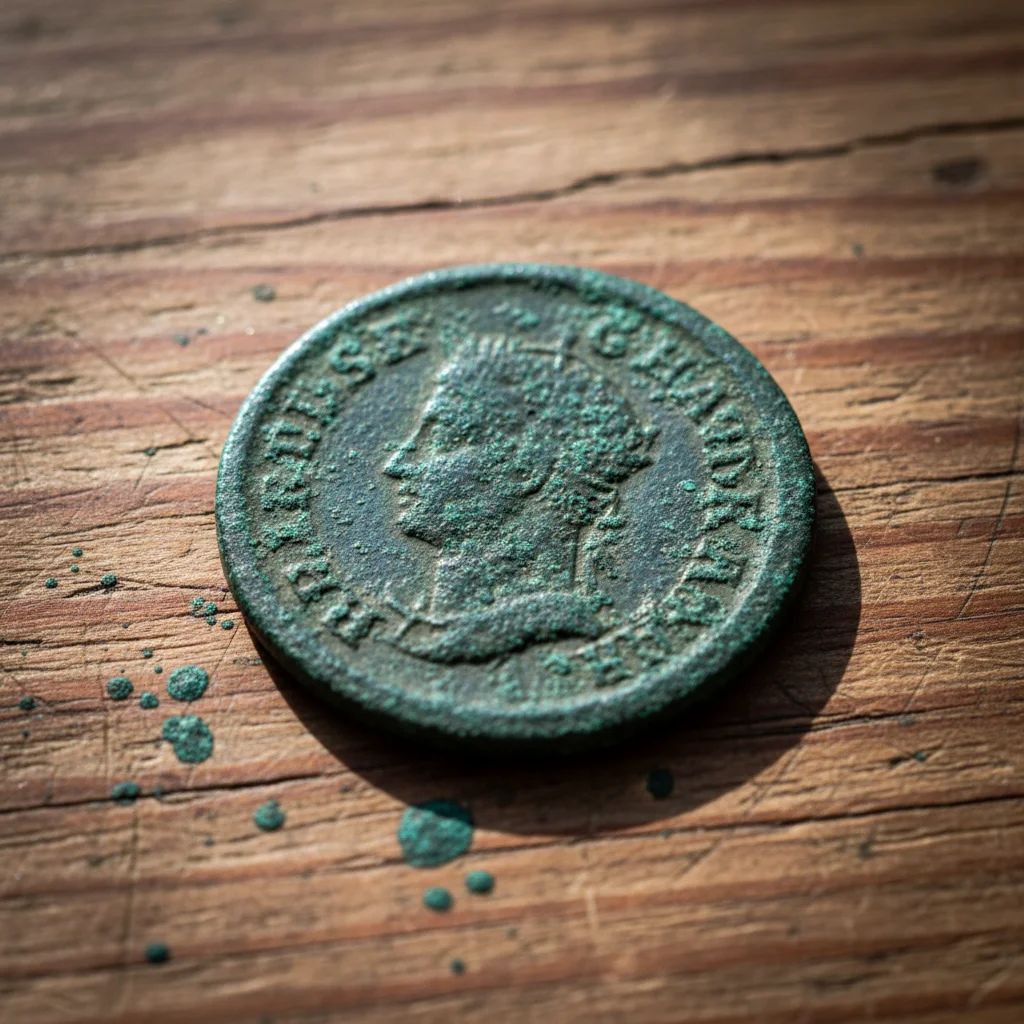
In the world of antiques, not every aesthetic improvement is beneficial. A prime example is numismatics. Attempting to make an old coin shiny with cleaning agents can reduce its value tenfold or more, or even bring it down to the price of the metal. The reason lies in the patina—a noble layer that forms on the metal's surface over decades and centuries.
The Intervention Paradox: Why Does a Cleaned Coin Lose Value?
In the world of antiques, not every aesthetic improvement is beneficial. A prime example is numismatics. Attempting to make an old coin shiny with cleaning agents can reduce its value tenfold or more, or even bring it down to the price of the metal. The reason lies in the patina—a noble layer that forms on the metal's surface over decades and centuries.
Patina is not just dirt, but evidence of the item's authenticity and age. It protects the metal from further corrosion and is valued by collectors as an integral part of the coin's history. By removing it, the owner erases a temporal imprint that cannot be restored. Therefore, in numismatics and some other collecting fields, pristine preservation is prized above all else.
Saving a Masterpiece: When Restoration Increases Value
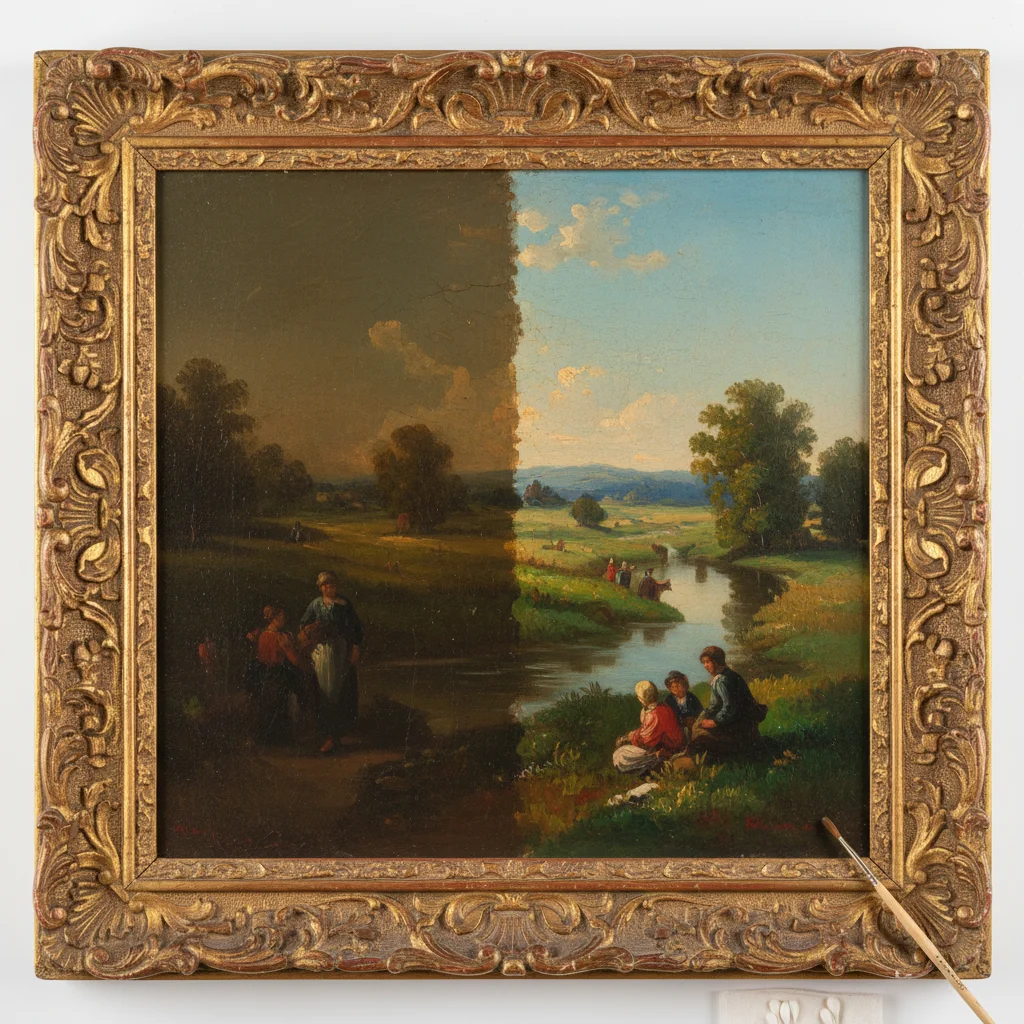
The situation is completely different with works of art, such as paintings. A painting that has suffered from time, humidity, or mechanical damage needs professional intervention. Darkened varnish, cracks (craquelure), tears in the canvas, or flaking paint all distort the artist's original intent and threaten the complete destruction of the work.
Competent restoration of a painting can return it to an exhibition-worthy state and significantly increase its market value. A specialist carefully removes old, yellowed varnish, strengthens the paint layer and canvas, and meticulously fills in losses. As a result, the work returns to its original color palette, and the viewer can once again see it as the artist intended. In this case, the impact of restoration on the antique's price is exclusively positive.
Saving a Masterpiece: When Restoration Increases Value
Two Golden Rules of Professional Restoration
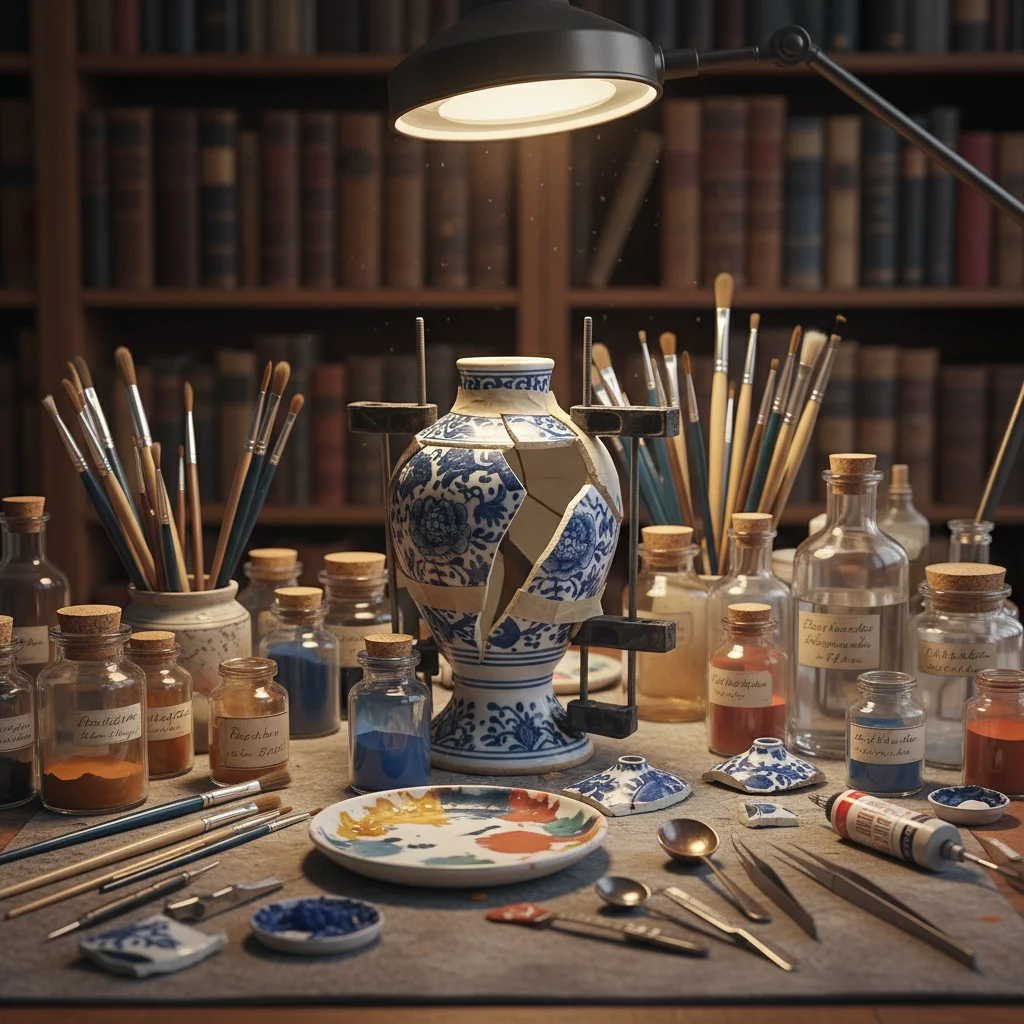
To ensure that intervention does not turn into vandalism, professional restorers worldwide adhere to strict principles. Among them, two fundamental rules can be highlighted that define the quality and acceptability of any restoration work.
These rules help preserve the historical and artistic integrity of the object, without replacing the original with a modern imitation. Adherence to them is the main criterion that distinguishes scientific restoration from amateur repair.
Reversibility of intervention. All materials that a restorer applies to an object (glues, varnishes, paints) must be such that they can be removed in the future, if necessary, without harming the original. This allows future generations of restorers to use new, more advanced technologies.
Preservation of the artist's intent. The restorer's task is not to improve upon the artist, but to preserve and reveal their original idea as accurately as possible. Any infilling of losses (retouching) must be done within the boundaries of the loss and be stylistically distinguishable from the original upon close inspection, so as not to mislead the viewer.
Two Golden Rules of Professional Restoration
Restoration vs. Alteration: Where Is the Line Drawn?
Criterion
Scientific Restoration
Alteration (Refurbishment)
Goal
Conservation, preservation, repair of critical damage
'Improving' the appearance, adding shine, changing the design
Methods
Minimal reversible intervention, use of archival data
Aggressive cleaning, complete repainting, replacement of parts with modern ones
Result
Preservation of historical value, increase in price
Loss of authenticity, transformation into a decorative object, sharp decrease in value
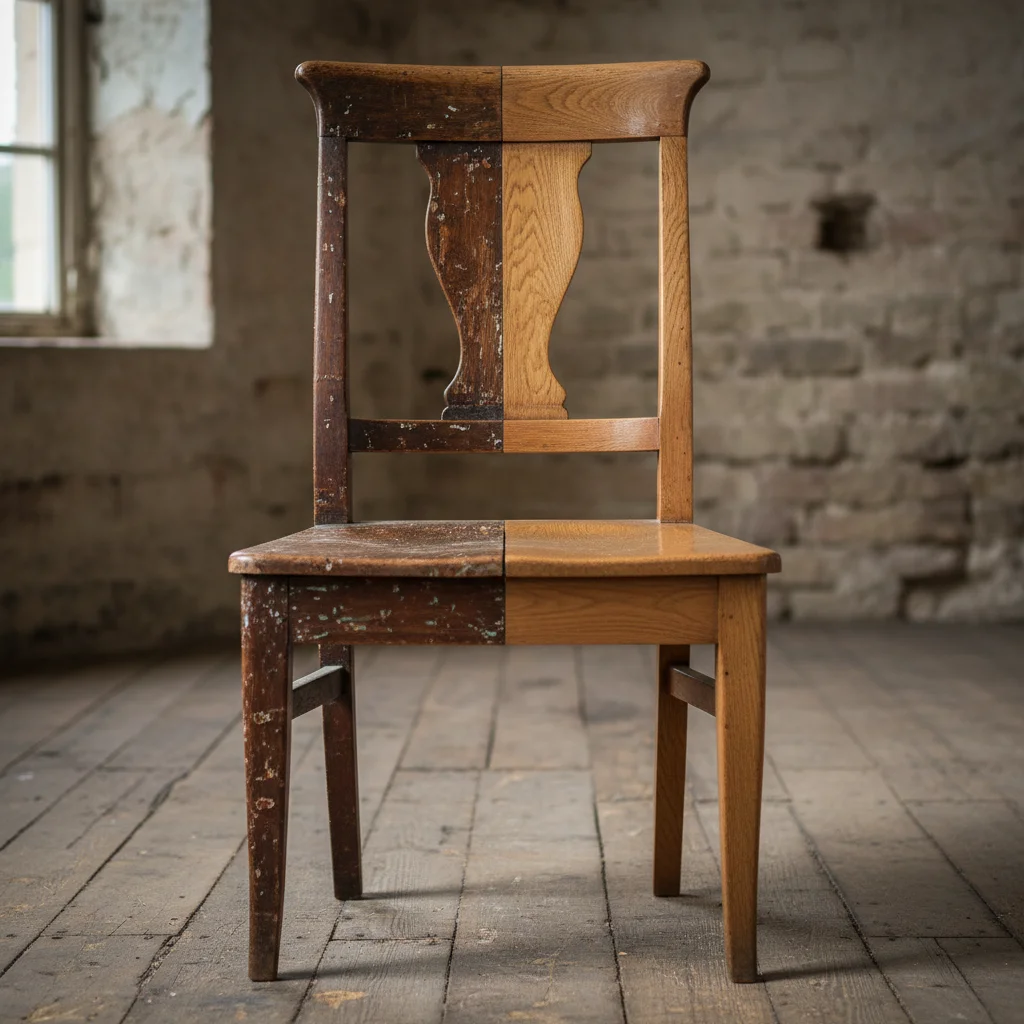
The key question for any antique owner is: where does life-saving restoration end and destructive alteration begin? The fine line between these concepts determines whether the item's value will increase or decrease after intervention. Understanding this difference helps to correctly assess the condition of an antique and make the right decisions.
Restoration is aimed at conservation and repairing damage with minimal intervention, while alteration is, in essence, the creation of a new object based on an old one, often with a complete loss of its authenticity.
Therefore, before taking any action, it is worth consulting with a professional restorer. Sometimes the best thing you can do to preserve an item's value is to do nothing at all.
Restoration vs. Alteration: Where Is the Line Drawn?