Review of Lots from the German Auction House Carsten Zeige - AUCBURG
Review of Lots from the German Auction House Carsten Zeige
The Carsten Zeige auction house, known far beyond Germany, including in Russia, was previously located in Hamburg and has now moved to Berlin. Its distinctive feature is a wide range of offered items, capable of satisfying the interests of both collectors and enthusiasts of classic antiques and militaria.
The Carsten Zeige auction house, known far beyond Germany, including in Russia, was previously located in Hamburg and has now moved to Berlin. Its distinctive feature is a wide range of offered items, capable of satisfying the interests of both collectors and enthusiasts of classic antiques and militaria.
The auction's pricing policy is designed for buyers with different budgets. The house has established itself as a reliable partner, ruling out the presence of forgeries. The staff is known for its conscientiousness, and orders are processed promptly, making participation in the bidding convenient and safe.
An important rule for all participants is that a 25% auction house fee must be added to the final hammer price. This percentage is added to the final bid, forming the final purchase price for the winning bidder.
Awards of Imperial and Nazi Germany
Among the lots representing Germany's military history, several interesting items stand out. One of them is a World War I breast badge for armored car crews. This hollow silver badge was typically purchased privately by recipients after the ceremony. With a starting price of €1,000, it was sold for €1,600.
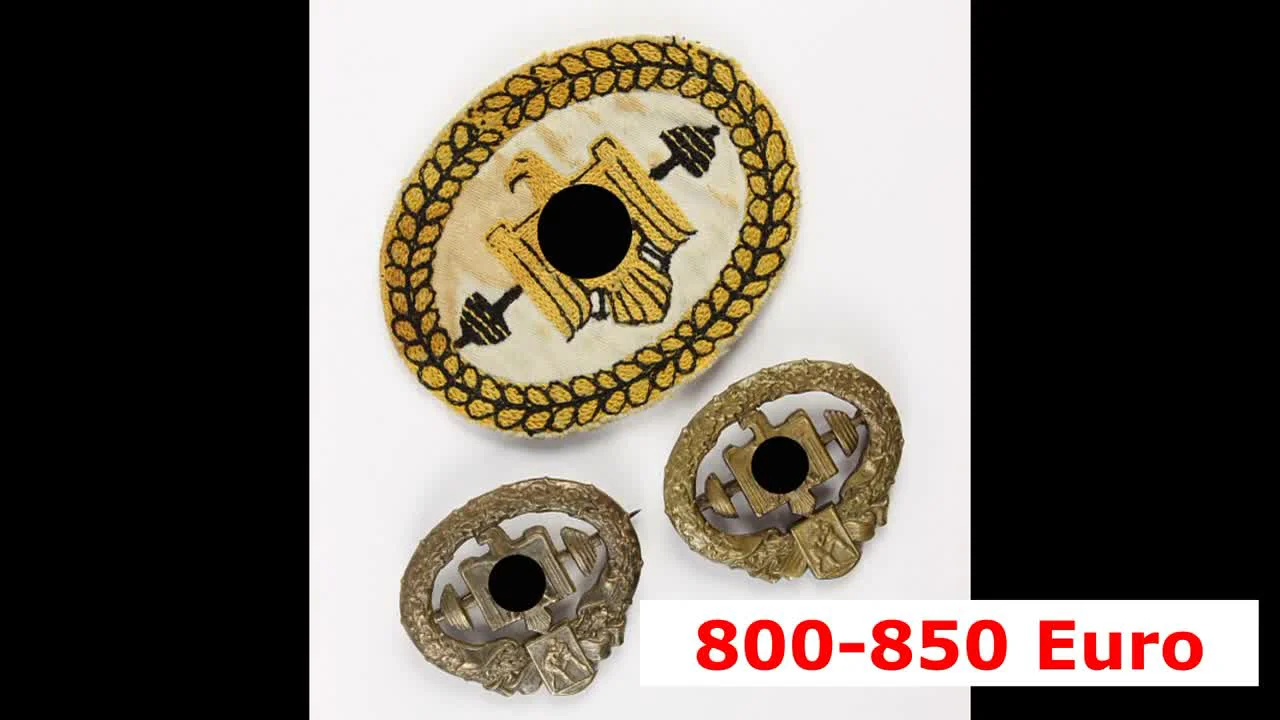
The Nazi Germany period is represented by a distinctive badge for weightlifting competitions. This badge was issued in bronze and silver-plated bronze. A set including two badges (in bronze and 'silver') and a cloth patch was sold for €850, with a starting price of €800. The manufacturer is the Schmidhäussler company from Pforzheim.
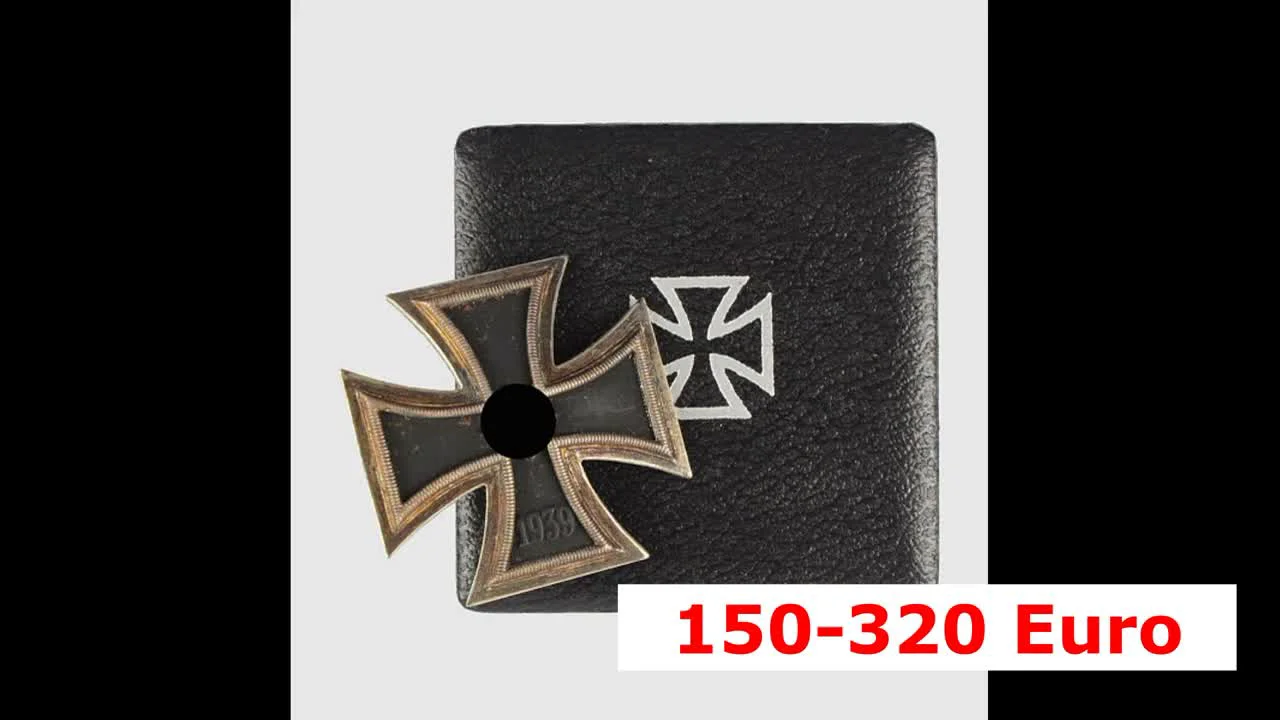
Also presented was a set of five Hitler Youth organization badges. It included two membership badges and three marksmanship awards, including one for snipers. This set sold for €300, starting from a bid of €200. An Iron Cross of 1939 from the manufacturer L/13, in its award case, was sold for €320.
Awards of Imperial and Nazi Germany
Highest Awards and Decorations of the Third Reich
The highest awards of the Third Reich garnered special interest at the auction. Among them was the Knight's Cross of the War Merit Cross of 1939. This silver-plated cross with polished edges is made of 900 silver and is marked '1', indicating the manufacturer Deschler & Sohn of Munich. The lot was sold for €4,600.
High Seas Fleet Badge
Minesweeper War Badge
Blockade Runner Badge with miniature
Auxiliary Cruiser War Badge
Destroyer War Badge (including an embroidered version)
U-boat War Badge
E-Boat Badge (1st model and a copy of the 2nd model)
This entire set was sold for €1,700. Additionally, a set of 13 awards was presented at the auction, including the Eastern Front Medal, the Iron Cross 2nd Class, the Infantry Assault Badge, and the award for Eastern peoples. This lot sold for €650.
Highest Awards and Decorations of the Third Reich
Rare International Orders: Egypt and China
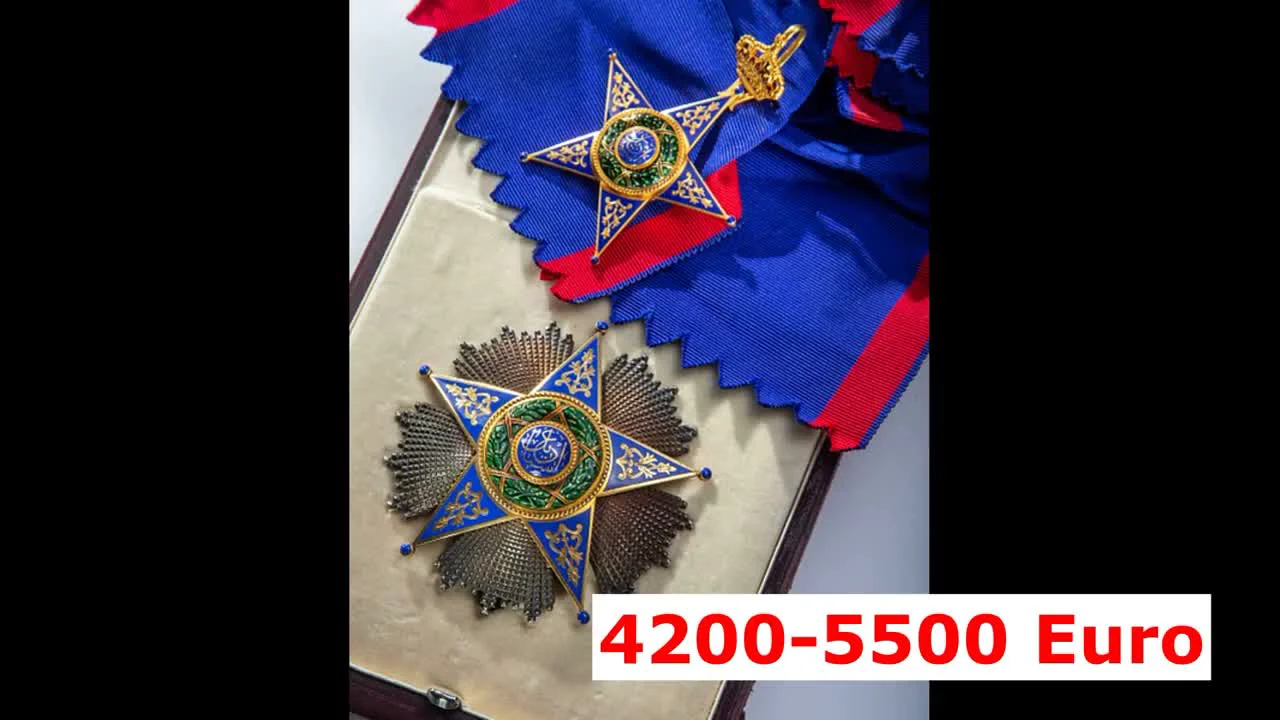
Rare international awards were also featured at the auction. Notably, a set of the Order of Ismail, belonging to the Kingdom of Egypt. The set, awarded in 1915, consists of a Grand Cross and a breast star. The order is made of gold with enamel, and the star is made of silver with a gold appliqué. Both items bear the mark of the Cairo-based manufacturer Lattes and were sold in their original case for €5,500.
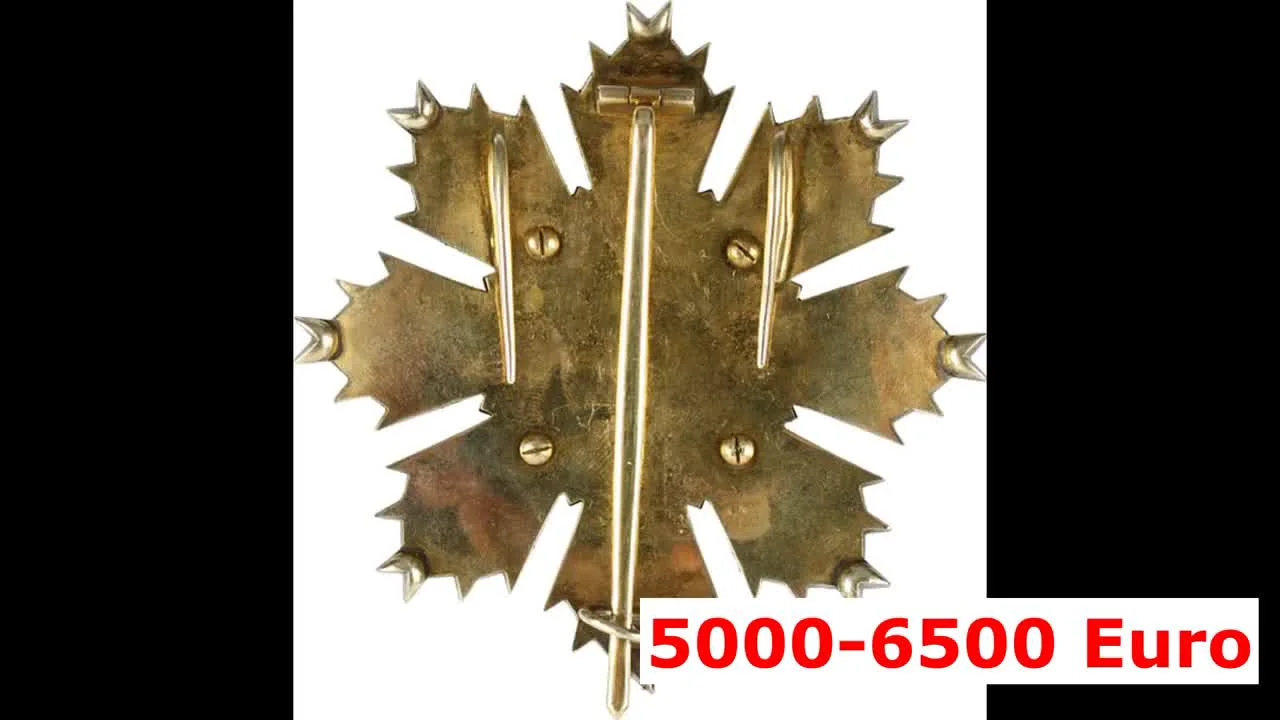
Another notable lot was a set of the Order of the Striped Tiger, 2nd Class, of the Republic of China. It includes the award itself and a breast star. The order was established in 1912 by President Yuan Shikai as an award for military merit and was abolished in 1928. The pieces are made of gilded silver, decorated with a gemstone, enamel, and hand-painting. This set, in its original box, was sold for €6,500.
Rare International Orders: Egypt and China
Masterpieces of Phaleristics: From the Order of the Garter to Awards of the Russian Empire
One of the most expensive and interesting lots was the Most Noble Order of the Garter. This early 18th-century example is one of the gems of phaleristics. The figure of Saint George slaying the dragon is made of high-quality gold, covered with hot enamel, and encrusted with diamonds. The rarity of the item is confirmed by the fact that it was sold for £140,000 in 2014. At the current auction, its final price was €105,000.
Russian phaleristics were represented by two significant orders. The breast star for the Order of St. Anna, 1st Class, made of silver with enamel and gilding, bears the '84' hallmark and the stamp of master Dmitry Osipov. It was sold for €3,800.
Another lot was a set of the Order of St. Stanislaus, 1st Class, consisting of a gold enameled cross and a breast star. The cross has the '56' hallmark and the mark of the court jeweler Albert Keibel (1882-1905). The set, in its original case with a ribbon, was sold for €5,000.
Masterpieces of Phaleristics: From the Order of the Garter to Awards of the Russian Empire
Military Uniforms and Headgear
The militaria section included several sets of uniforms and headgear. A Third Reich police senior lieutenant's uniform, consisting of a tunic and trousers made of field-gray fabric with brown cuffs, was sold for €850. A separately presented gendarmerie officer's tunic with distinctive orange piping was sold for €750.
A kepi for a member of the Reich Labour Service (RAD).
A black Hitler Youth kepi.
A green field cap for a Wehrmacht infantry officer.
Another lot consisted of five side caps for enlisted and officer personnel of the Wehrmacht's Cossack units. Various versions of these side caps were sold for €1,200.
Military Uniforms and Headgear
Edged Weapons of the Third Reich and the East
The collection of edged weapons at the auction included several notable examples. A Luftwaffe officer's sword in an aluminum version with gilded swastikas and a hilt wrapped in blue leather was sold for €1,200. It came with a hanger for an officer's dagger. A Third Reich officer's saber with a lion's head pommel and the manufacturer's mark 'WMW Waffen' was sold for €420.
A cavalry saber from around 1900 with a brass hilt and a 106 cm curved blade was sold for €260. The collection also included a historical weapon from Persia — an axe from around 1850. This 76 cm long item is decorated with finely engraved Arabic symbols and remnants of gilding. It was sold for €550.
Edged Weapons of the Third Reich and the East
Uniforms and Equipment of the GDR
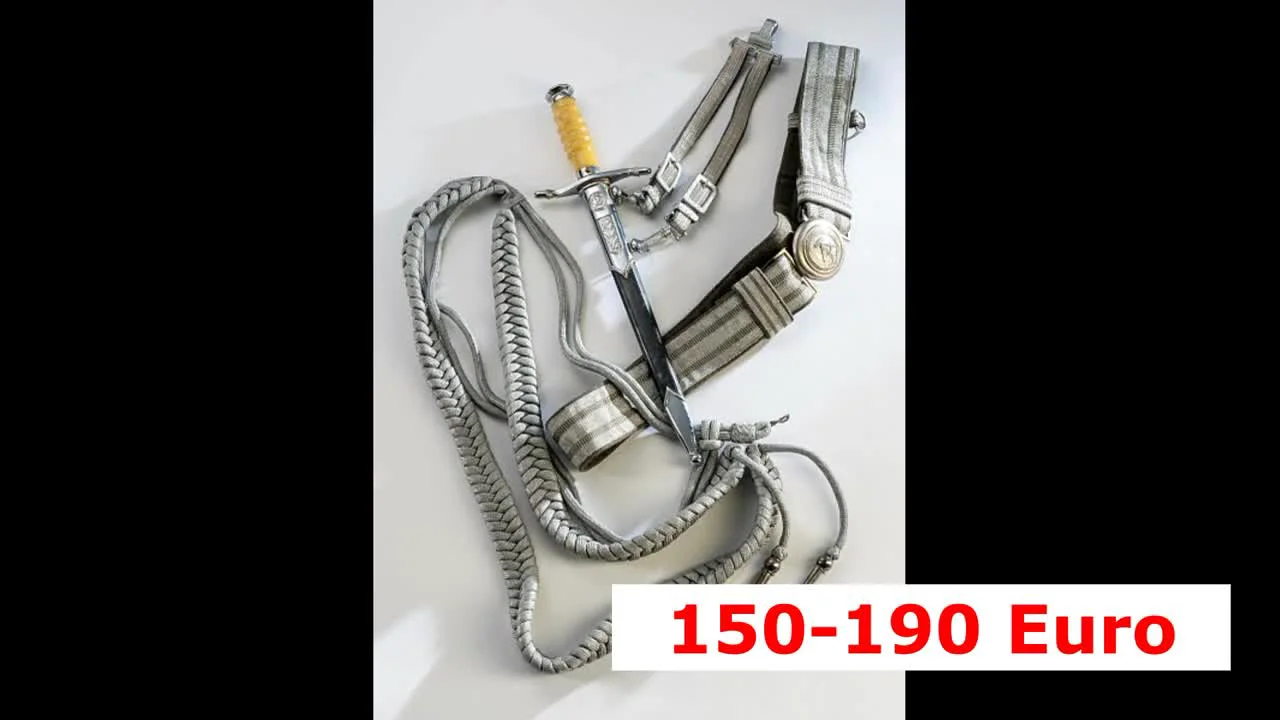
Concluding the review were lots from the period of the German Democratic Republic (GDR) and its National People's Army (NVA). A dagger for army officers, produced around 1990, was presented as a complete set, including a portepee, belt, and underarm cord. Although such daggers are not expensive, the complete set was sold for €190, which is considered a good price.
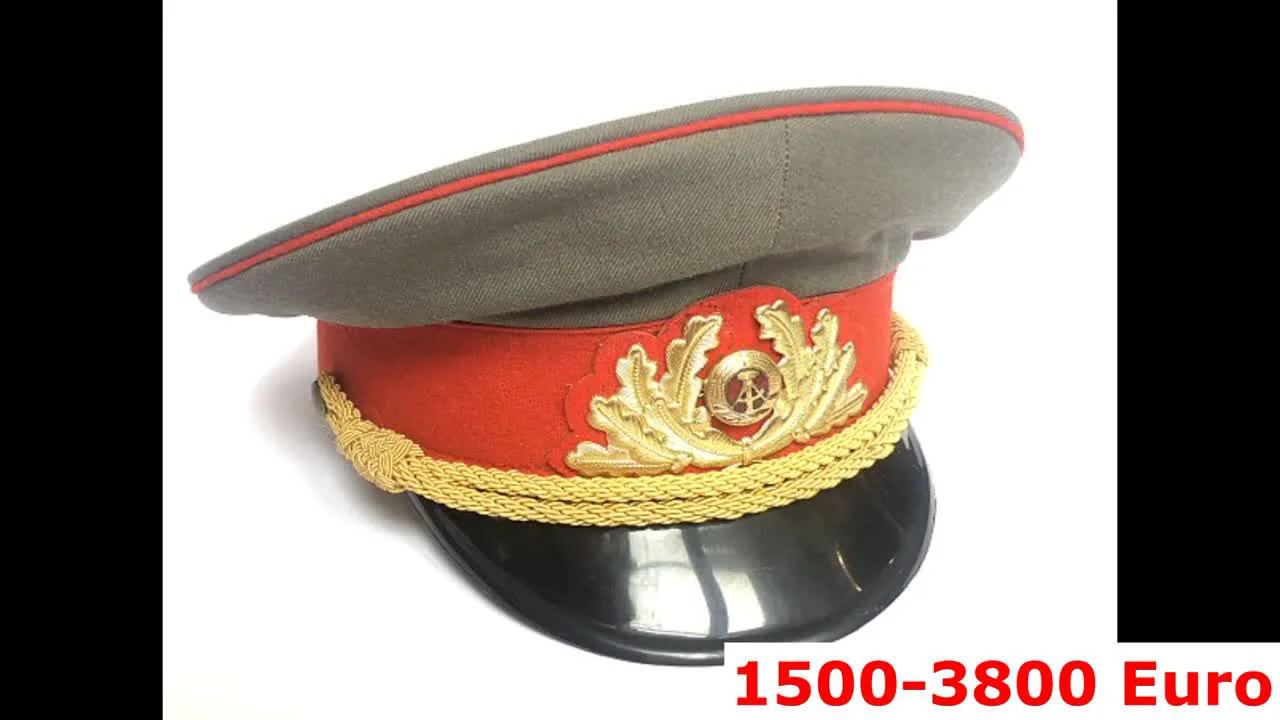
The most impressive lot from this period was a complete uniform set for a Major General of the NVA land forces. It included a dress tunic with a shirt, summer and winter coats, and various headgear. The uniform was adorned with numerous ribbon bars and a graduate badge from the Friedrich Engels Military Academy. This beautifully preserved set from 1972 was sold for €3,800.