
Gold Panda: A Legendary Coin, Shrouded in History and Investment Mysteries
From its inaugural release in 1982 to its current standing as one of the most coveted investment coins, the Chinese Panda consistently captivates collectors and investors alike with its distinctive design and intriguing history.
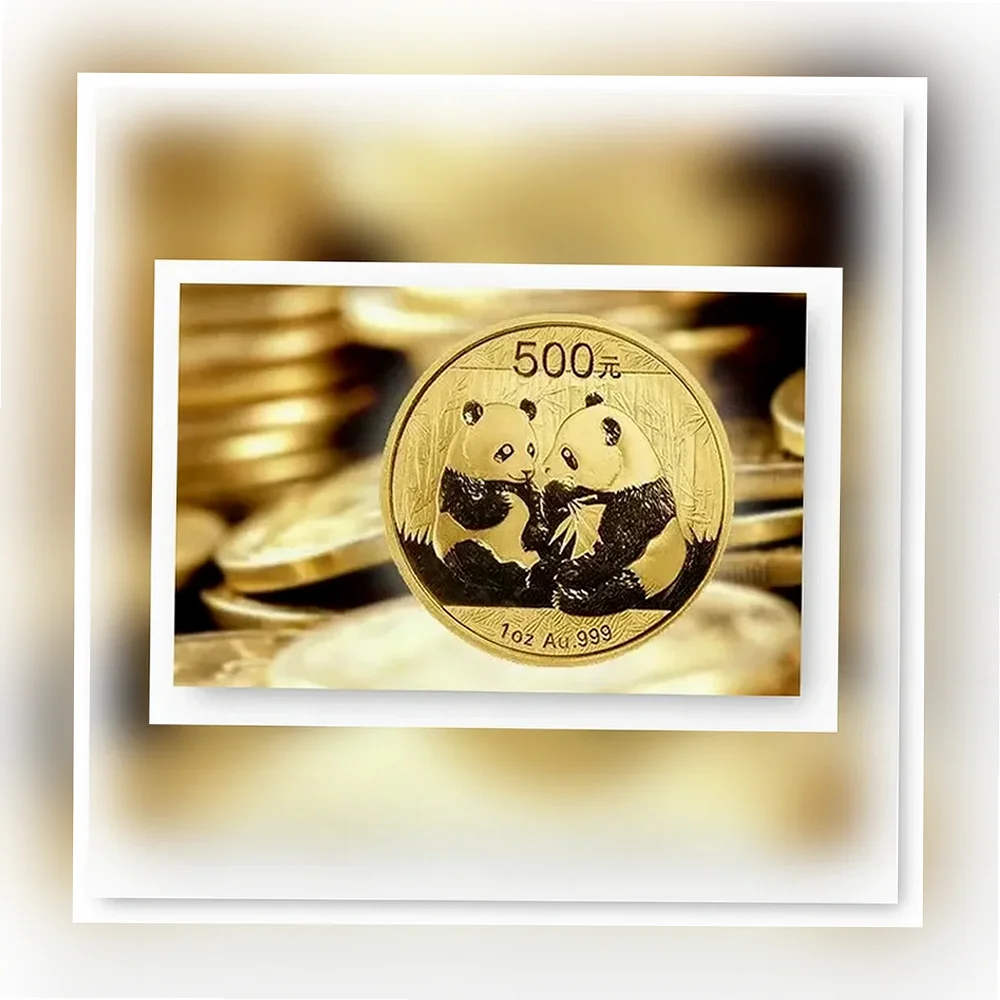
Birth of a Legend: The First Steps of the Chinese Panda
The history of the 'Chinese Panda' gold coins began in 1982 when the first specimens with a high gold purity of .999 were minted. From its very inception, this series immediately gained immense popularity among precious metal connoisseurs and investors worldwide.
That year, the People's Republic of China commissioned the release of 16,000 one-ounce 'Panda' coins, which sold out in a matter of months. Such overwhelming success led to a rapid increase in the value of these gold coins on the secondary market, exceeding their initial price by four times.
Recognition was not long in coming: as early as 1985, the American Numismatic Association honored the 1983 one-ounce 'Panda' with the prestigious title of 'Coin of the Year.' This served as a powerful confirmation of the unique value and appeal of this investment coin.
Art in Metal: The Evolution of Design
The 'Chinese Panda' became the world's first investment coin whose reverse design changes annually. This tradition highlights the artistic value of each coin and maintains high interest among collectors.
In 2001, the Chinese government attempted to keep the design unchanged, which caused widespread indignation in the numismatic community. In response, after a two-year hiatus, it was decided to resume the annual design change, starting with the 2003 issue. This allowed China to create sustained demand, which remains stable despite fluctuations in the gold market.
The reverse side of these gold coins, first created by Shanghai artist Chen Jian, always features an image of a panda. Sometimes the design includes a mother bear and cub, as was the case for some years, and the 2013 issue, for example, was dedicated to three adult pandas.
While the reverse is updated annually, the obverse always depicts the majestic Temple of Heaven in Beijing. This temple complex was built in the 15th century by Emperor Yongle and served as a venue for annual harvest ceremonies, becoming an enduring symbol of the series.
Weight and Value: Transformation of Denominations and Metrics
Initially, gold coins only indicated the weight and purity of the metal in Chinese and English, without specifying a denomination. This was added the year after the first issue.
Ten years after the series first appeared, the weight and purity were exclusively indicated in English. Another notable design change occurred in 1992: since then, the Temple of Heaven has been surrounded by a large ring.
Initially, the Shanghai Mint struck coins in one, half, quarter, and one-tenth ounce denominations. For almost 20 years, these weights were denominated as one hundred, fifty, twenty-five, and ten yuan respectively. A year after the first issue, a one-twentieth ounce 'Panda' was introduced with a nominal value of five yuan.
In 2001, all denominations were revised, and for example, the denomination of one-ounce gold coins increased from 100 to 500 yuan. Seven years ago, another key change occurred when traditional ounces were replaced with metric grams.
| Characteristic | Period | Details |
| Initial Denominations | 1982-2001 | 1, 1/2, 1/4, 1/10 ounce (100, 50, 25, 10 yuan); 1/20 ounce (5 yuan) |
| Denomination Revision | 2001 | One-ounce coin increased to 500 yuan |
| Transition to Metric Grams | 7 years ago | 500 yuan = 30 grams (0.9645 ounce); 200 yuan = 15 grams (0.4823 ounce) |
Collection Giants: Extra-Large Specimens
In addition to standard investment coins, China also issued a number of extra-large 'Chinese Panda' specimens, which are of significant interest to collectors and investors.
- In 1984, a 12-ounce coin was struck.
- In 1987, a 5-ounce coin appeared.
- In 1991, an impressive 5-kilogram coin was released.
- In 1997, a 1-kilogram coin was issued.
All these extra-large coins were available exclusively in Proof finish, which underscores their premium status and collectible value.
Circulation Mysteries: Secrets of the Chinese Mint
For 18 years, starting in 1982, Chinese Gold Panda coins were produced according to demand. This meant that the mintage was unlimited, and production continued as long as the People's Bank of China received orders.
However, all subsequent issues were limited to a maximum mintage, making them rarer and more valuable for collectors. The Chinese Mint, meanwhile, approaches the disclosure of its plans with great caution, and sometimes the true mintage volume remains uncertain.
The government regularly reports only on the total number of ounces minted per year. For example, in the period starting from 19XX, the Mint struck a total of 2,174,174 ounces of gold, and from 19YY, 4,926,360 ounces. In total, approximately 24 million coins of all denominations have been minted, which testifies to the scale of the series.
Mint Identifiers and Mysteries
Despite their widespread popularity, many aspects of the Chinese Gold Panda coin series are shrouded in mystery. For example, most 'Panda' coins do not have a mint mark, which makes their identification difficult.
Only in 1987 were coins struck with the letter S, denoting the Shanghai Mint, and the letter Y, indicating provenance from the Shenyang Mint. Nevertheless, it is known for certain that the coins were issued by three different mints: Shanghai, Shenyang, and Shenzhen.
The Shanghai Mint struck Gold Pandas from 19XX; the Shenyang Mint from 19YY and from 20ZZ; and the Shenzhen Mint from 19AA and from 2005 to the present.
Despite the absence of official mint marks on most specimens, subtle differences in design can help determine the minting location of specific coins. Collectors have identified the following characteristics:
- **Date Size:** Chinese Panda coins with a large date were usually minted in Shanghai.
- **Date Size:** Coins with a small date were generally produced at the Shenyang Mint.
- **Proof Mark:** On many Proof coins, a small letter P can be found, which distinguishes them from bullion coins (BU). This letter is most often located near the panda's right paw on the reverse.
Financial Revolution: VAT and the Buyback Program
Ten years ago, in December 2012, China's Ministry of Finance, in conjunction with the State Taxation Administration, made a significant decision. They exempted buyers of 'Chinese Panda' gold coins from paying a 17% value-added tax (VAT).
This measure opened up new opportunities for the national association, China Gold Coin Incorporation. In September 2013, a program was launched to buy back gold 'Panda' coins from the public through retail outlets in Beijing, Shanghai, and Shenzhen, which also allowed the association to resell the coins for profit.
Expanding Horizons: Pandas in Other Metals
The success of the 'Chinese Panda' gold series inspired the Chinese government to expand the lineup to include coins made from other precious metals.
- **Silver Pandas:** Silver versions were introduced in 1983. Like the gold coins, they feature an annually changing reverse design, making them attractive to collectors.
- **Platinum Pandas:** A series of platinum 'Pandas' appeared in 1987. However, due to a significant increase in platinum prices, their production ceased after 18 years.
- **Bimetallic Pandas:** The 'Chinese Panda' lineup also included a series of bimetallic coins, which were minted in the period from year 19 to year 20. These unique specimens consisted of a silver outer part and a gold center.