Restoration of the 1853 'Russian Alphabet': From Ruins to a Readable State - AUCBURG | AUCBURG
Restoration of the 1853 'Russian Alphabet': From Ruins to a Readable State
Alphabet books are valuable and rare publications that occupy a special niche in the world of antiquarian books. Their rarity is due to the fact that they were intended for children and were actively used, which is why most copies survive to this day in very poor condition.
Alphabet books are valuable and rare publications that occupy a special niche in the world of antiquarian books. Their rarity is due to the fact that they were intended for children and were actively used, which is why most copies survive to this day in very poor condition.
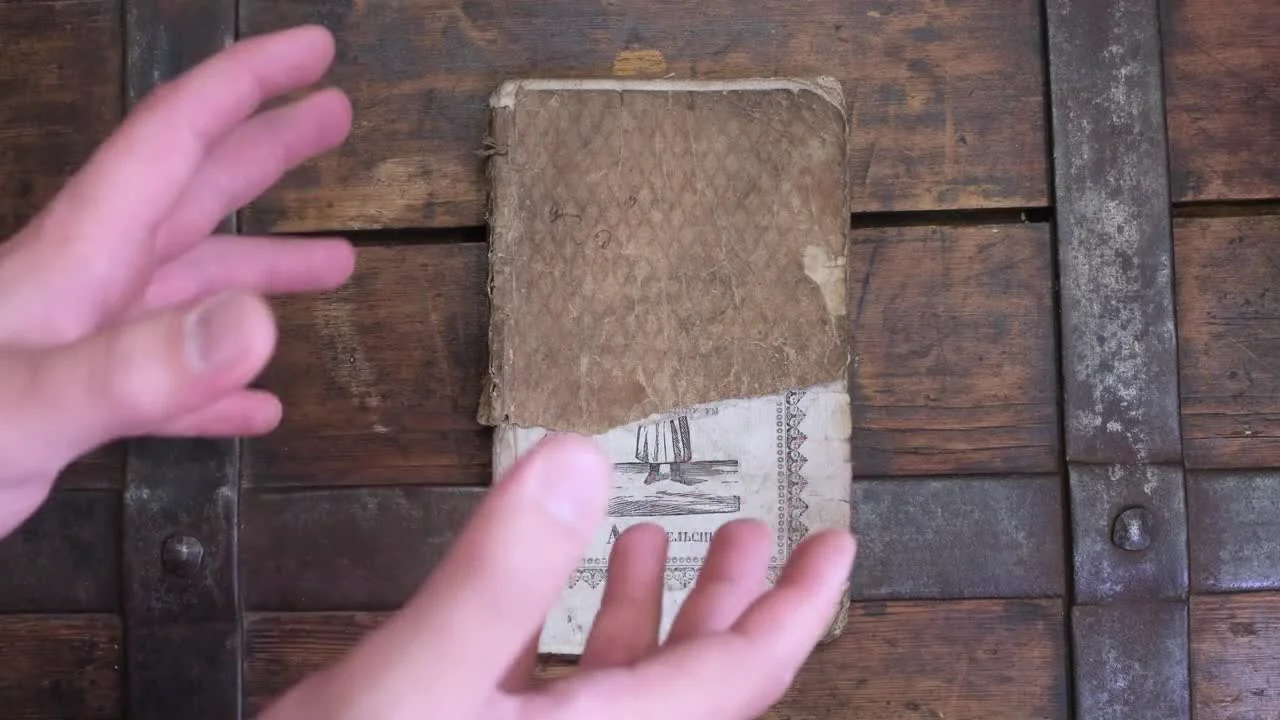
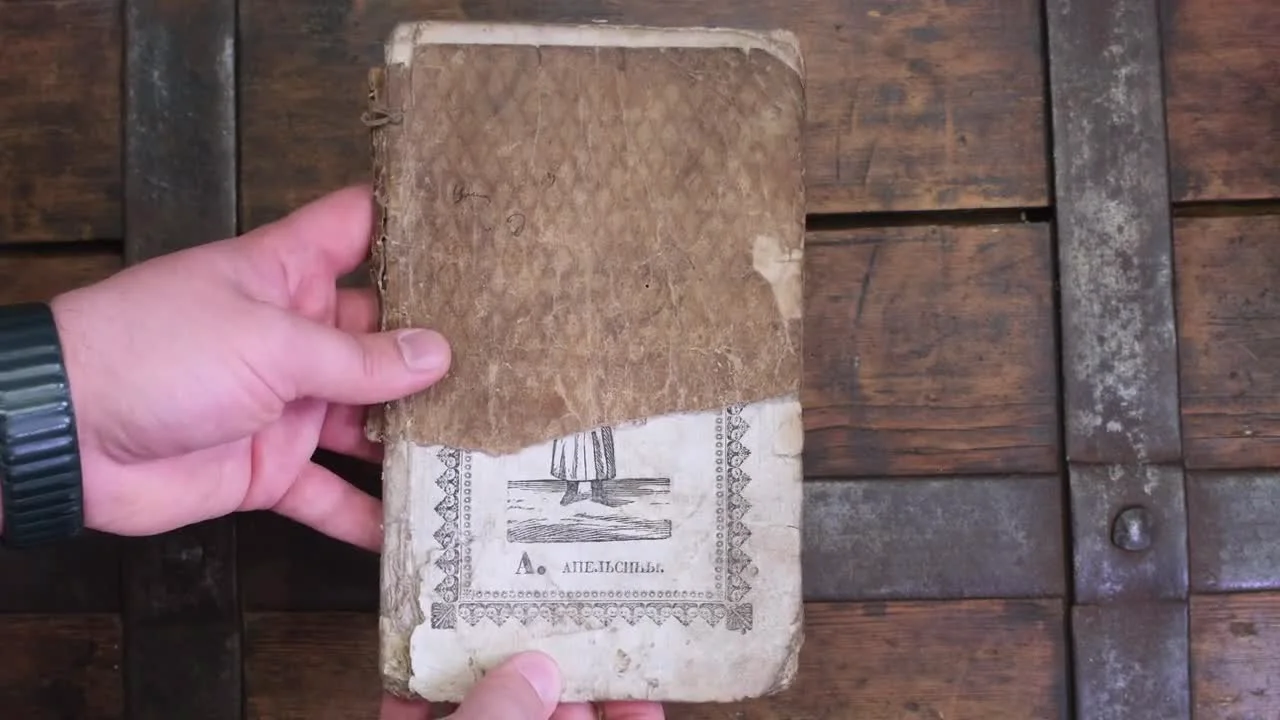
The copy presented — 'The New and Complete Russian Alphabet' — was no exception. The book did not have a binding but retained its original publisher's paper wrapper. The title page preserved information about the censorship approval, dated October 2, 1852, suggesting a publication date of late 1852 or early 1853.
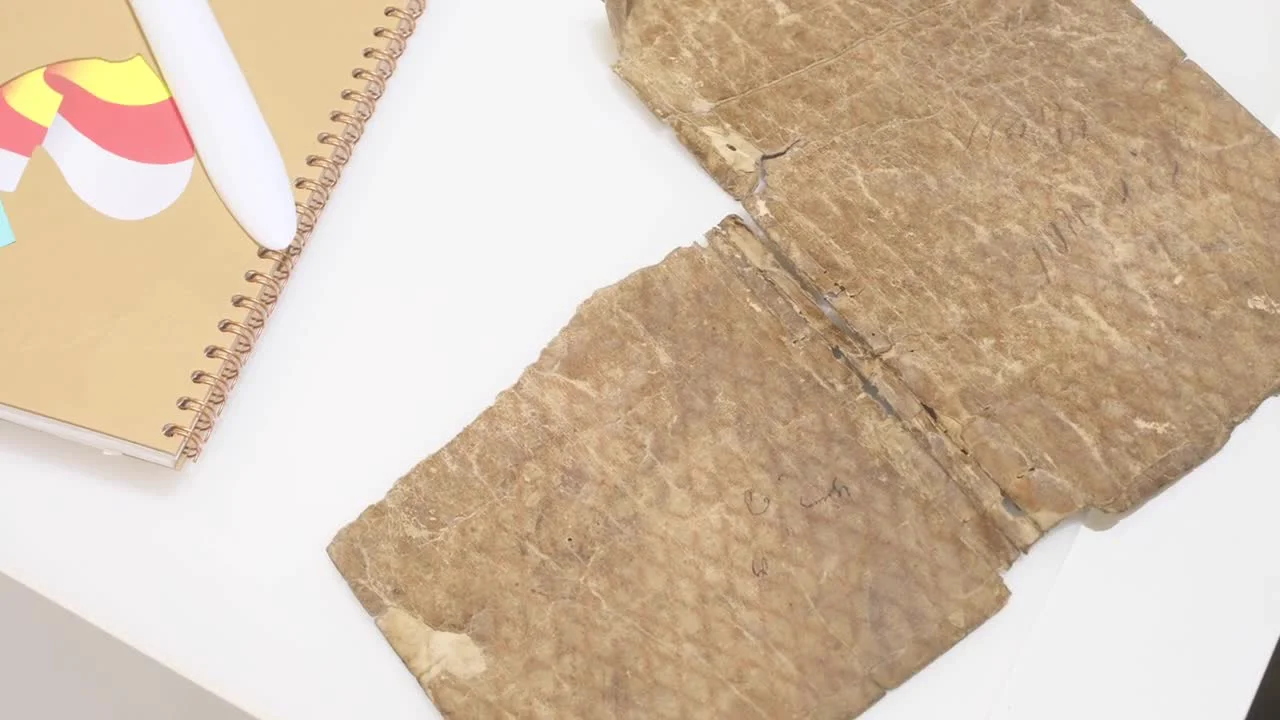
The book's condition was critical: half of the title page was missing, and the pages were extremely brittle, literally falling apart in hand. This made it impossible to safely study the contents without prior restoration.
Contents of the Mid-19th Century Alphabet Book
Despite its dilapidated state, it was possible to examine the book's internal structure. In addition to the alphabet itself with illustrations, the edition contained numerous supplementary materials for learning to read and write.
Two-syllable and three-syllable words.
Exercises for reading by syllables.
Prayers and commandments, brief excerpts from Christian teachings.
Rules of propriety and politeness.
A brief sacred history of the Old Testament.
A table showing Arabic and Roman numerals.
An interesting feature is the presence of letters in the alphabet that are now obsolete. The book includes letters such as 'yat,' 'izhitsa,' and 'fita.'
Contents of the mid-19th century alphabet book
The Process of Cleaning and Washing the Pages
The first stage of restoration was the complete disassembly of the book and the cleaning of each page. Due to heavy soiling and the porous structure of the paper, the process was carried out in several steps to avoid damaging the fragile material.
Dry cleaning. First, all surface dust and dirt were carefully removed with a soft brush.
Vacuuming. Next, a special low-power conservation vacuum cleaner was used. This allowed for the removal of fine dirt particles without damaging the paper.
Washing. The pages were placed in a special cleaning solution. For safety, each page was moved on a screen to prevent it from disintegrating in the water.
Additional mechanical cleaning. After soaking, some stains were manually removed with a brush directly in the water. This was followed by a rinse in distilled water.
The process of cleaning and washing the pages
Filling Losses with Paper Pulp
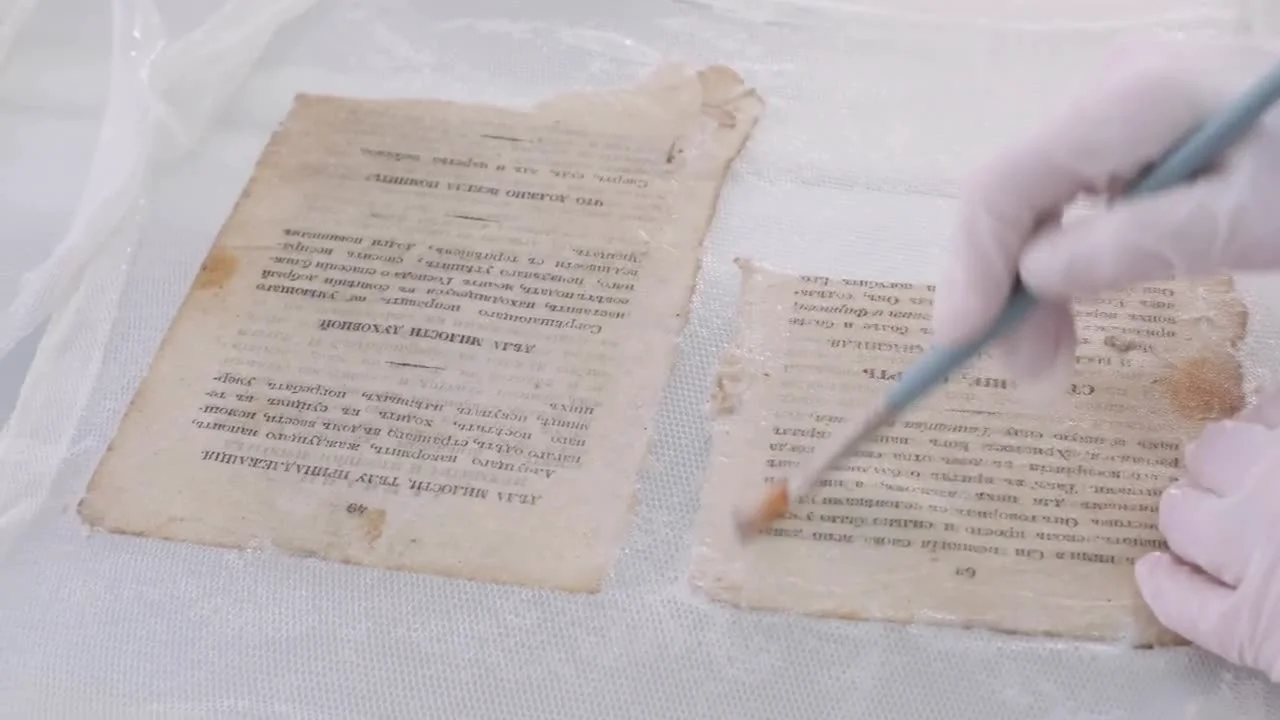
After cleaning and washing, the stage of filling in the lost fragments of the pages began. Due to large and numerous losses, it was decided not to use restoration paper but to use the paper pulp infilling method. This approach creates softer and more natural transitions between the old and new paper.
For this, a special paper pulp was prepared, made from ground paper from the same era as the book itself. The pulp was carefully applied to the lost areas using a special tool. The work was done on a light table to precisely control the thickness and boundaries of the applied layer.
After infilling, all pages were carefully restored and reinforced around the perimeter. Then came the toning process — matching the color of the restored areas to harmonize with the original paper tone. For this, pastels and watercolor pencils were used, which were blended with a cotton swab.
Filling losses with paper pulp
Reconstruction of the Publisher's Wrapper
Special attention was paid to restoring the original publisher's wrapper. It consisted of two layers of paper and was severely damaged. It was decided not to preserve the inner layer, replacing it with old paper from the same era.
The outer layer with the design was carefully scanned in high resolution. Using a graphic editor, a designer restored the lost fragments of the pattern, guided by the preserved parts. This process required meticulous work in matching colors, textures, and aligning the design.
After the digital reconstruction, the missing parts were printed. Then, the original fragments of the cover were cleaned, washed, and flattened. Next, all the pieces — original and printed — were assembled like a puzzle and glued onto a new backing of old paper (lined) to give the cover strength.
Reconstruction of the publisher's wrapper
Final Assembly of the Book
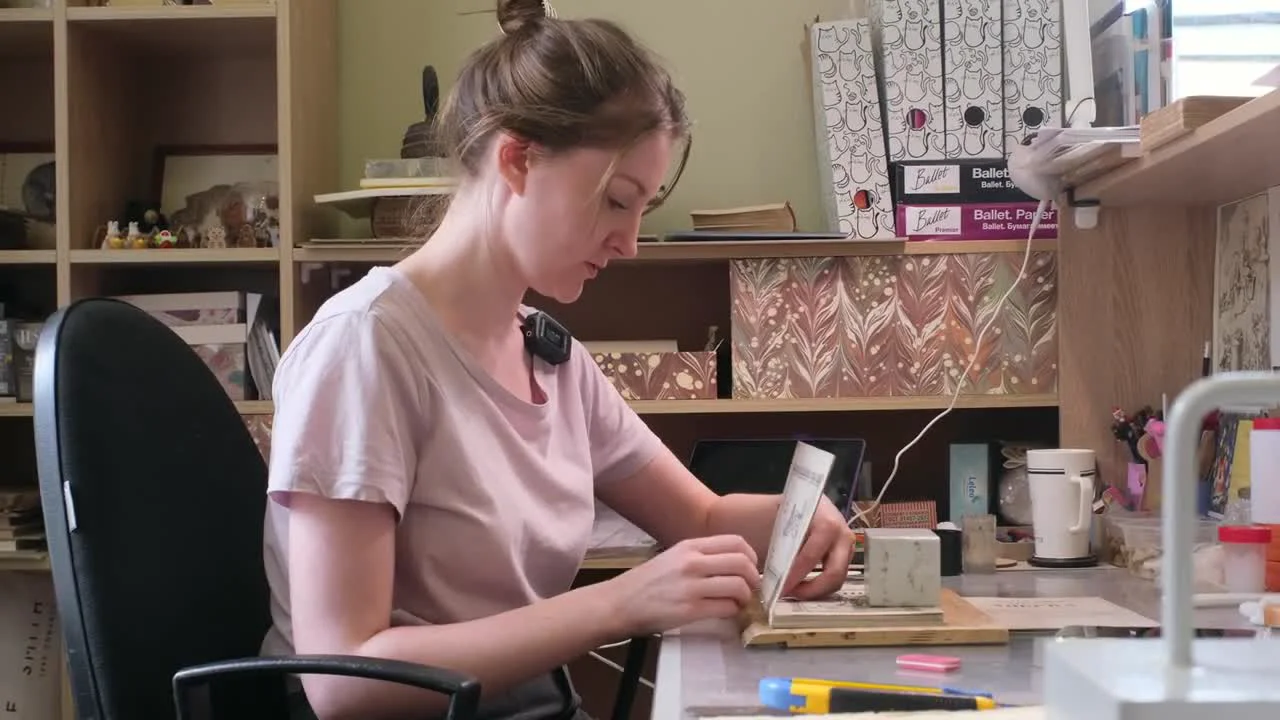
The final stage was the assembly of the book. The restored pages were sewn into a single block. A pamphlet 'chain' stitch method was used, which was traditionally employed for softcover editions. This method does not require cords or a sewing frame and helps preserve the authentic appearance of the publication.
After sewing the block, the restored cover was glued to it. It was attached only at the spine, as it was originally done. The book was then placed under a press to dry.
As a result of all the work, the 'Alphabet' was given a second life. It can now be safely handled and studied without fear for the preservation of its fragile pages. Not only the text and illustrations were saved, but also the unique appearance of the book in its original publisher's wrapper.