Restoration of Rare Documents: From Cleaning to Recovery - AUCBURG | AUCBURG
Restoration of Rare Documents: From Cleaning to Recovery
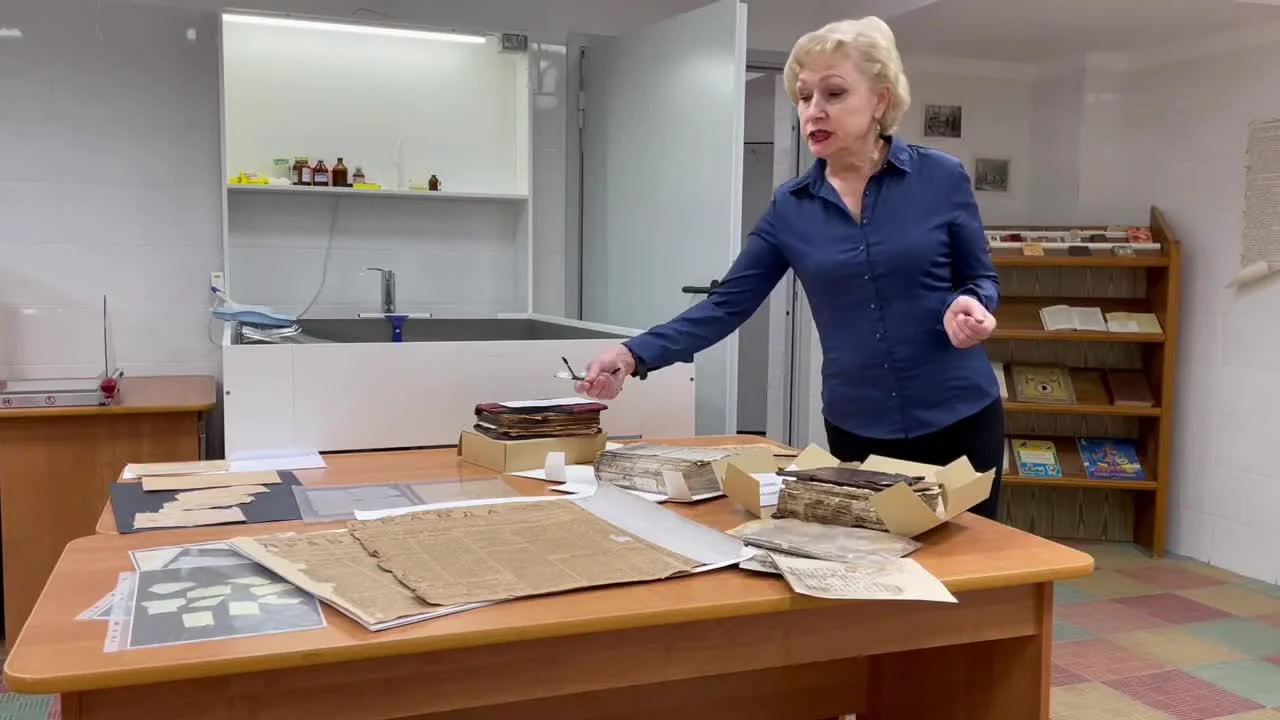
For 11 years, the Regional Center for Conservation and Preservation of Documents has been preserving library collections. The main focus is on documents of special value. In addition, the center actively consults with the republic's collection custodians and participates in various projects, such as the regional 'Digital Culture' project.
For 11 years, the Regional Center for Conservation and Preservation of Documents has been preserving library collections. The main focus is on documents of special value. In addition, the center actively consults with the republic's collection custodians and participates in various projects, such as the regional 'Digital Culture' project.
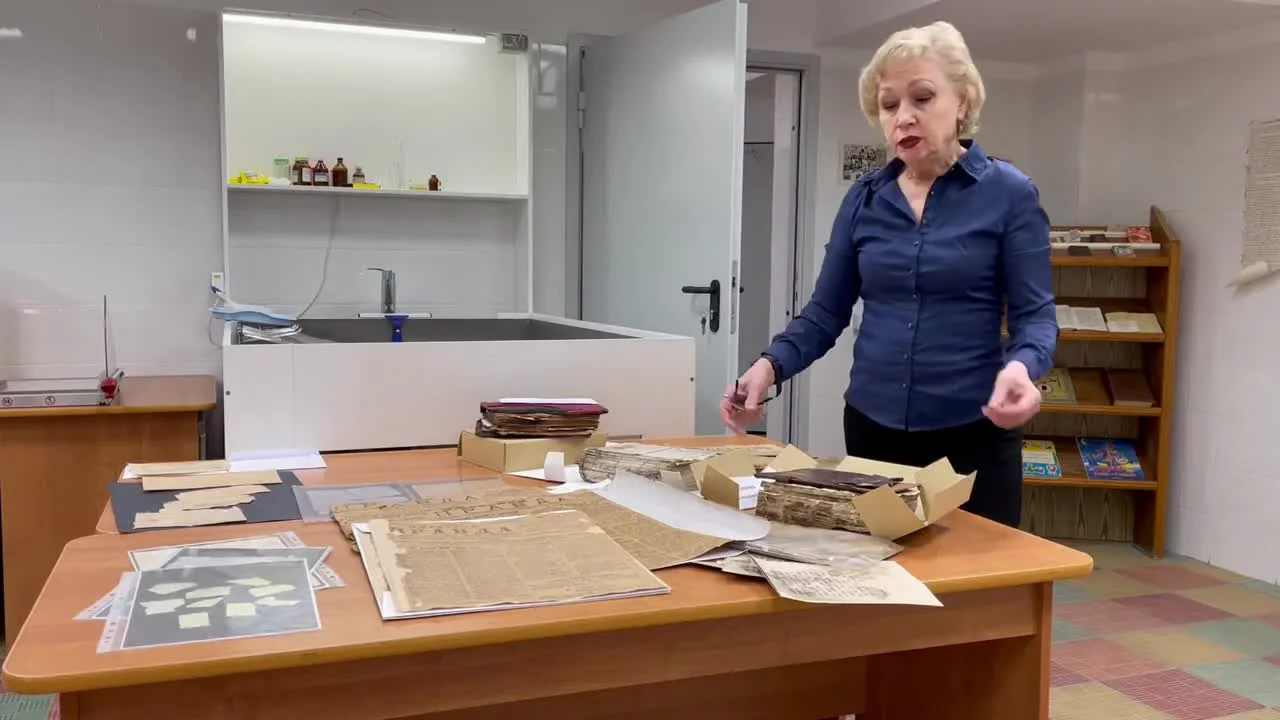
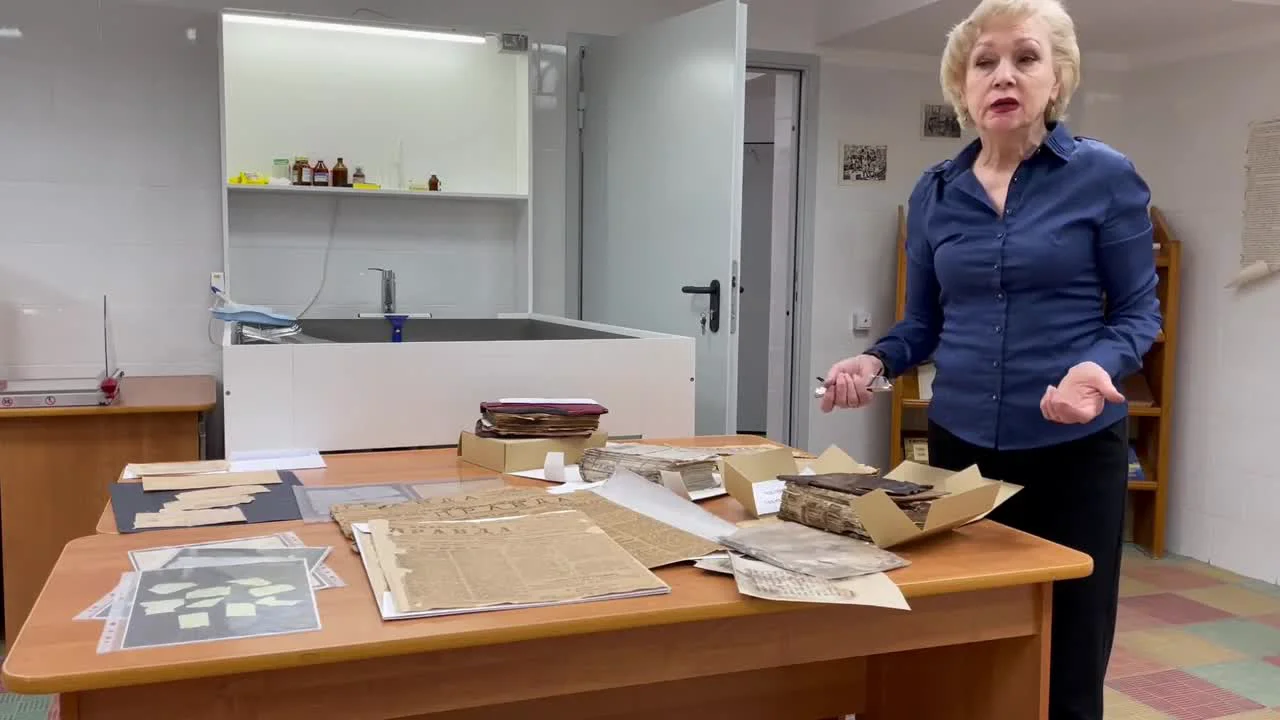
As part of this project, work is being done on the pre-digital preparation of publications. One example is the 'Pravda' newspaper, which is in a semi-destroyed state. After restoration, the recovered newspaper sheets will be digitized, ensuring their preservation and accessibility for researchers.
National
Regional
Local History
Rare Editions Being Restored
Publication
Year
Features
Gospel
1845
The document was severely damaged in a fire but was saved thanks to the wooden covers of the binding.
'Vremya' (Time) Journal
19th century
F. M. Dostoevsky took part in editing it; 'Notes from the House of the Dead' was first published here. The preservation state is very poor.
Book of Hours (Chasovnik)
1822
It was kept in poor storage conditions, which led to massive destruction. Some sheets were conserved for preservation.
Many unique and valuable documents are undergoing restoration, each with its own history of damage. Some have suffered from time and improper storage, others from more serious incidents like fires.
Work is being carried out on publications of great cultural and historical significance. For example, a journal edited by Fyodor Dostoevsky himself, or an ancient Gospel saved from complete destruction thanks to its wooden binding.
Rare editions being restored
Step 1: Dry Cleaning of the Document
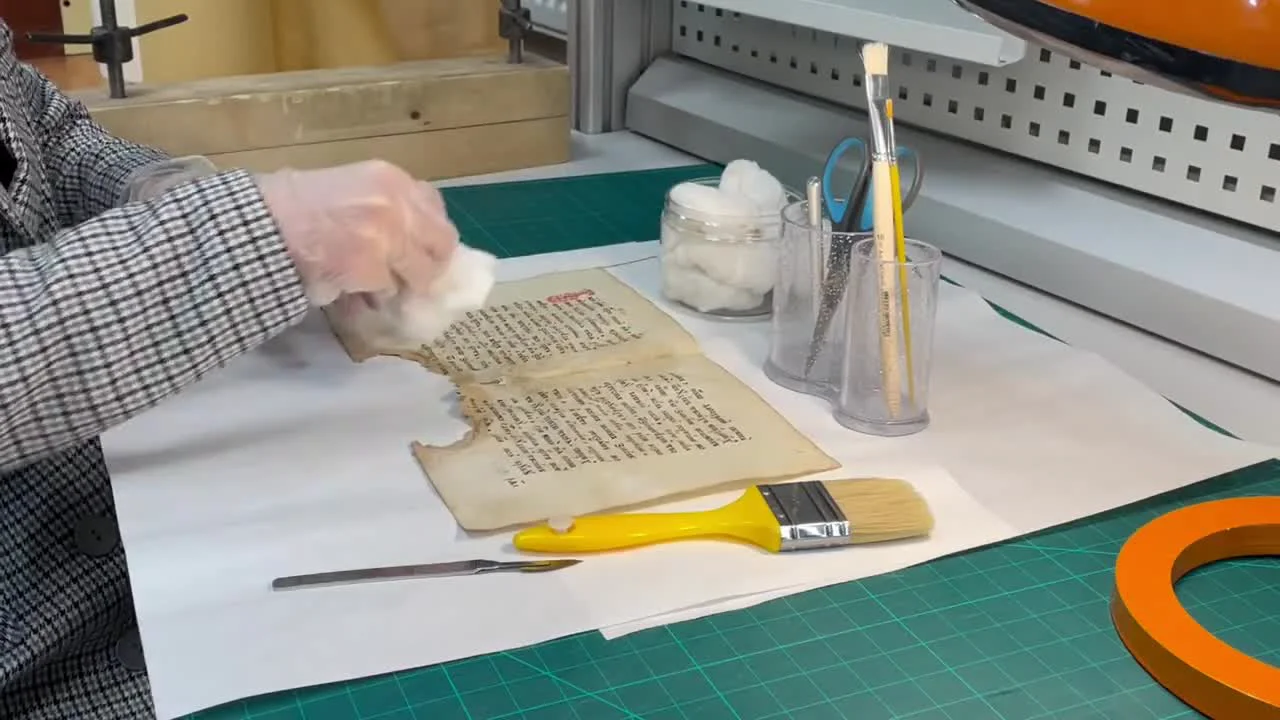
The restoration process begins with preparing the document. The first step is dry mechanical cleaning, which removes surface contaminants and prepares the sheet for further procedures.
The work is done on a special restorer's table. First, all foreign elements left after the book was unbound, such as old threads, are carefully removed. Then, the surface of the sheet is cleaned of dust and minor debris.
A scalpel is used to remove thread remnants and other elements left from unbinding.
A wide brush is used to sweep dust and surface contaminants from the sheet's surface.
A cotton swab is used for the final, more thorough cleaning of the sheet.
Step 1: Dry Cleaning of the Document
Step 2: Washing the Paper Base
After dry cleaning, the document sheet is sent for washing. This procedure helps remove ingrained dirt and prepares the paper for filling in losses. The process requires special care, as wet paper becomes very fragile.
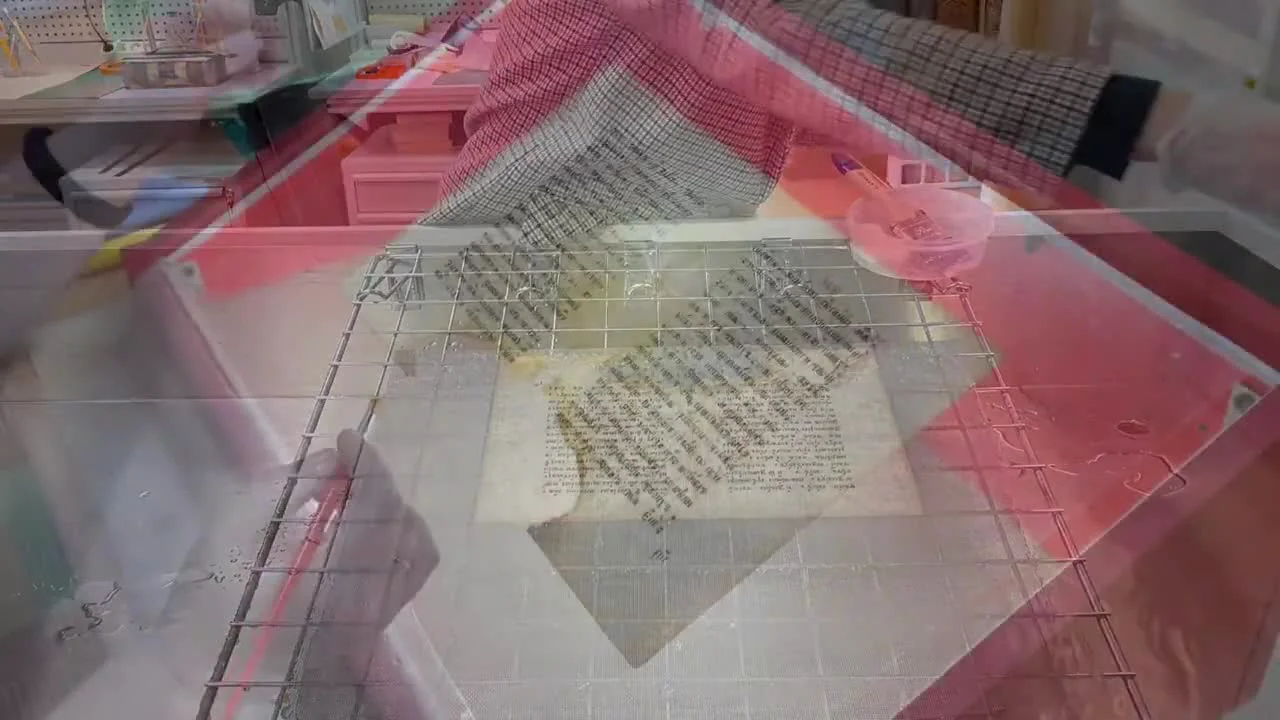
The document is placed in a special bath on a metal mesh, which serves as support. The sheet is also covered with a mesh from above to prevent it from being destroyed by the water stream. After it is completely wet, a special cleaning agent is applied.
The cleaned sheet is placed on a mesh in the restoration bath and covered with a second mesh.
The sheet is fully moistened with water from a shower head.
A brush is used to apply 'Antipyatin' soap to remove remaining dirt.
The sheet is turned over along with the meshes, and the procedure is repeated on the reverse side.
The document is thoroughly rinsed with clean water.
Step 2: Washing the Paper Base
Step 3: Filling in Lost Fragments
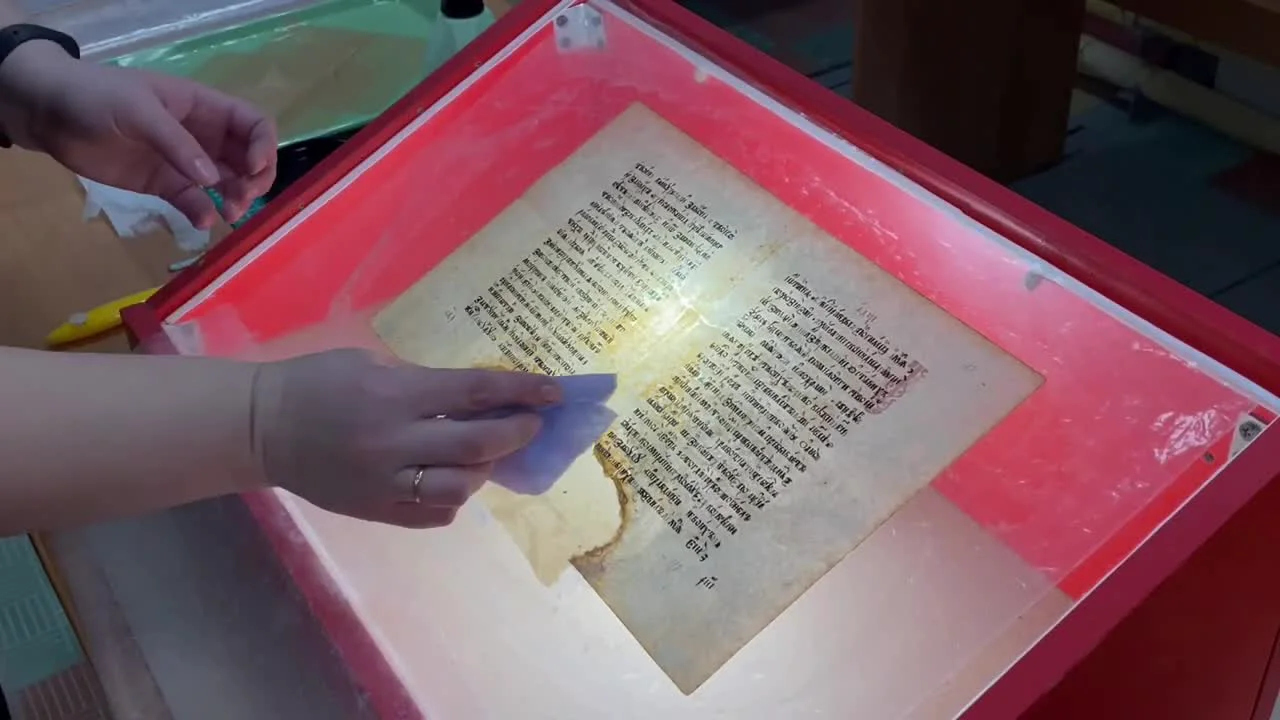
A key stage of restoration is infilling, which is the process of filling in the lost parts of a sheet. This work is done on a light table, which allows the restorer to see the borders of the damage clearly. The restorer uses special paper matched in color and density to the original.
First, glue is applied to the edges of the losses with a thin brush. Then, a pre-prepared fragment of restoration paper is applied. After that, the sheet is turned over, and for additional reinforcement, a thin long-fiber tissue paper is applied to the reverse side.
The washed sheet is placed on a light table.
Glue is applied along the edge of the lost element.
A fragment of restoration paper is applied and smoothed with a napkin.
A scalpel is used to carefully remove excess paper along the contour of the loss.
The reverse side of the sheet is reinforced with 6-gram long-fiber tissue paper.
Step 3: Filling in Lost Fragments
Step 4: Pressing and the Final Result
The final process in restoring the paper base is pressing. It is necessary to flatten the sheet and remove excess moisture. For this, the restored document is placed in a special 'sandwich' made of several layers of different materials.
The damp sheet is placed on waxed paper, which prevents sticking. It is covered with another layer of the same paper, and then with blotting paper to absorb moisture. The entire structure is clamped between cardboard boards and sent to a press.
The document remains under the press for about a day, sometimes longer, depending on the degree of moisture. The result is a flat, restored sheet where the lost fragments are filled in, and the document itself is strengthened. After all the sheets are restored, the bookbinding work to restore the cover begins.