
Top Sales of the Month
The most expensive and significant sales of the month. Infographics, photo galleries and analysis of record results.
Articles (35)
Page 1 of 2
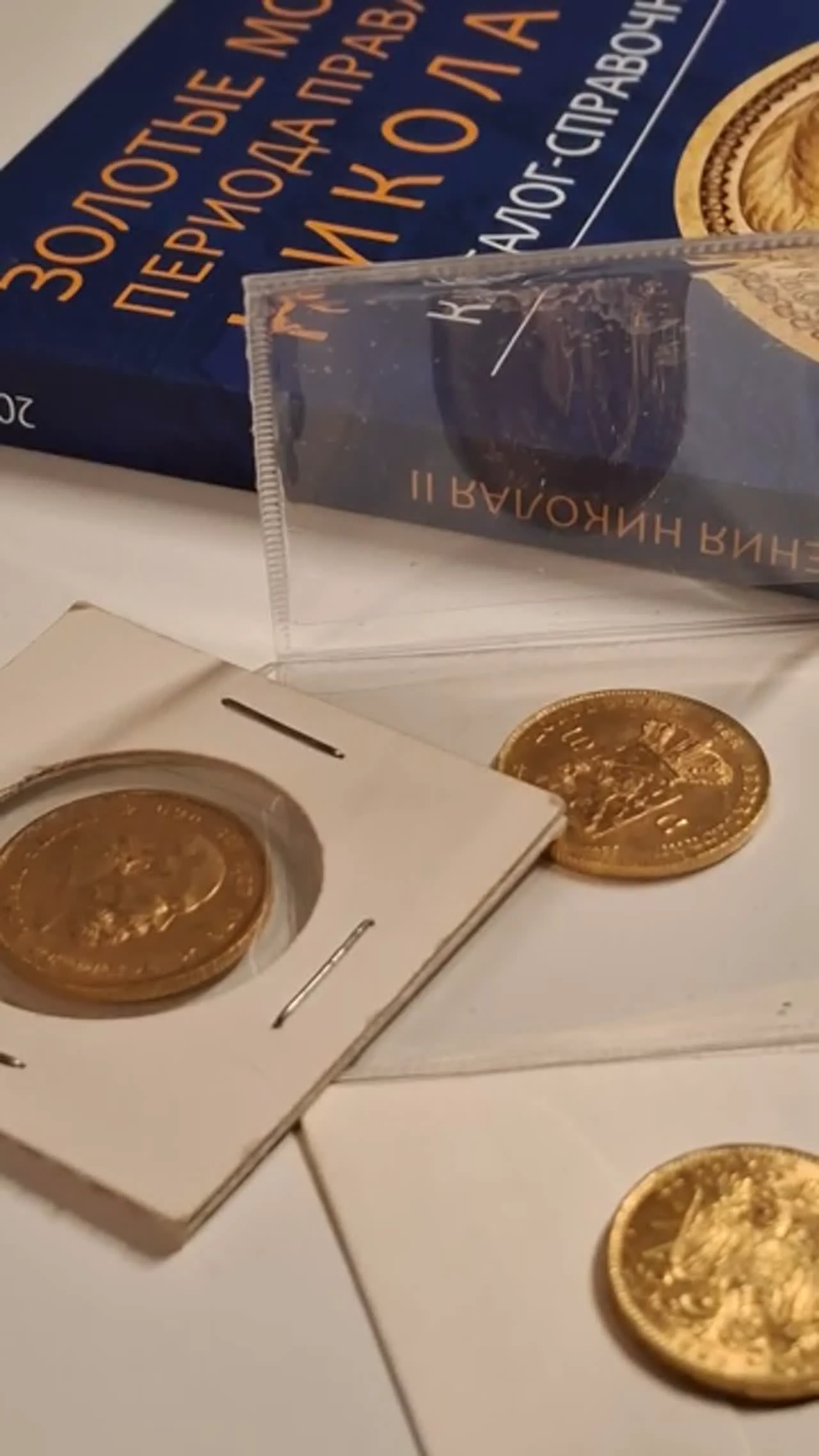
Austro-Hungarian Gold Coin: 20 Kronen 1896 of Franz Joseph I
The arrival of the long-awaited collectible coin was accompanied by excitement. The packaging turned out to be very poor, which raised concerns about possible damage to the valuable specimen. In this regard, the unboxing was video-recorded to provide to the seller in case a return was necessary.
Top Sales of the Month
Read More →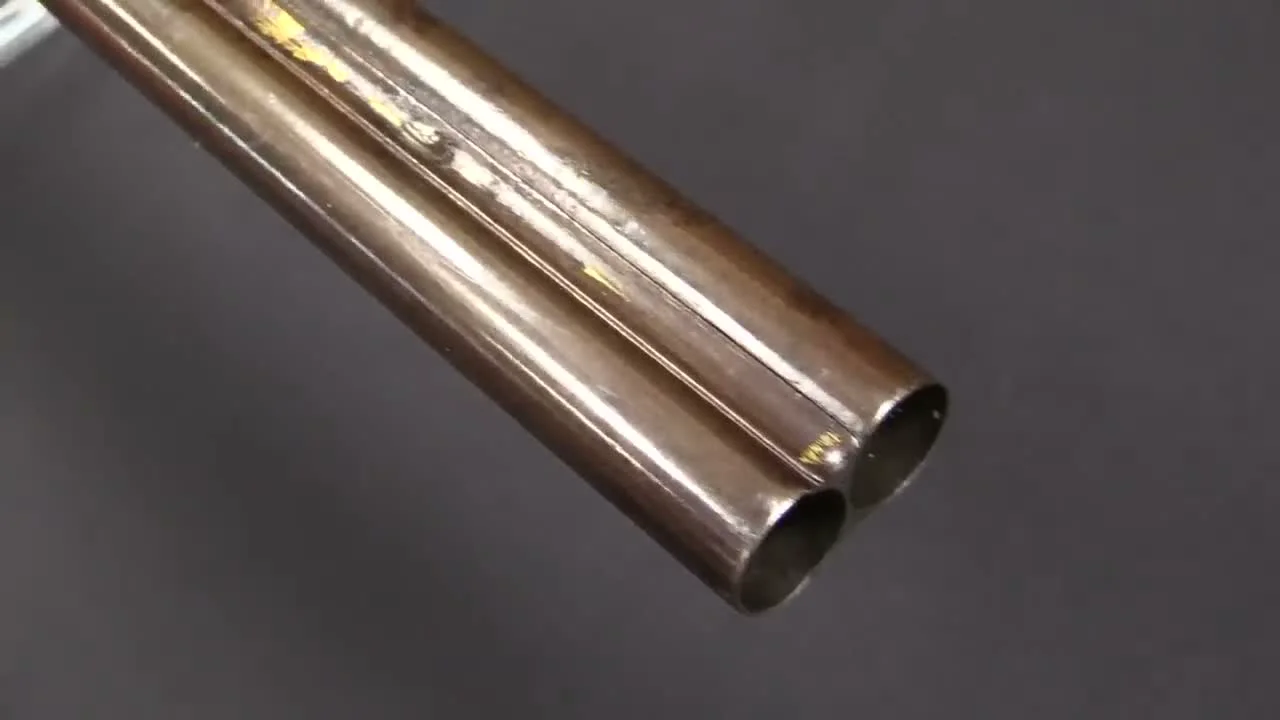
The Pauly Rifle of 1812: The Revolutionary Invention of the Unitary Cartridge
In an era when Napoleon led his armies across Europe armed with flintlock muskets, a Swiss engineer offered him a revolutionary technology—a breech-loading firearm that used unitary cartridges. However, the emperor rejected this opportunity, and the invention, half a century ahead of its time, remained in obscurity.
Top Sales of the Month
Read More →
Hidden Costs: What You Need to Know About Selling Antiques at Auction
Many people, both buyers and sellers, are often surprised when they see the final price of a lot at auction. The price they expected can differ significantly from the final amount due to various auction fees and commissions that not everyone knows about in advance.
Top Sales of the Month
Read More →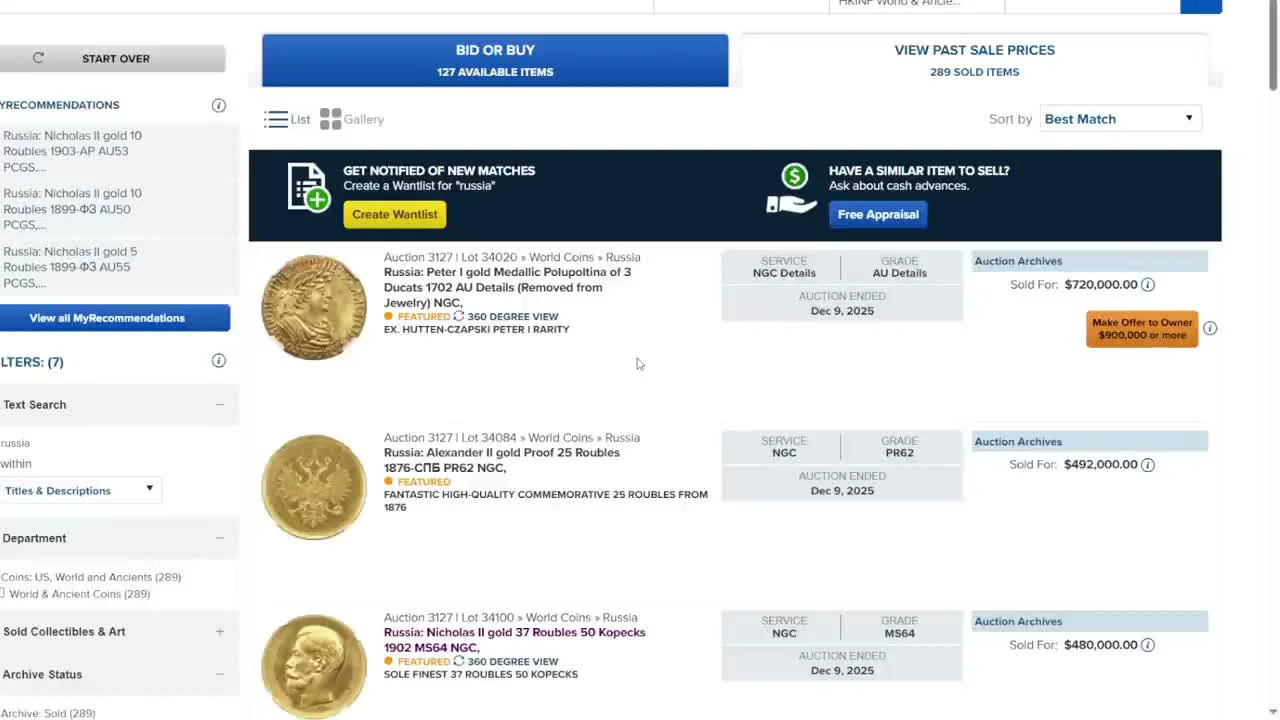
Heritage Auction Results: Rare Russian Empire Coins Sold for Hundreds of Thousands of Dollars
A major American numismatic auction by Heritage took place from December 6 to 9, 2025. This event can be considered a premium-segment auction, as it featured lots valued from several hundred to hundreds of thousands of dollars.
Top Sales of the Month
Read More →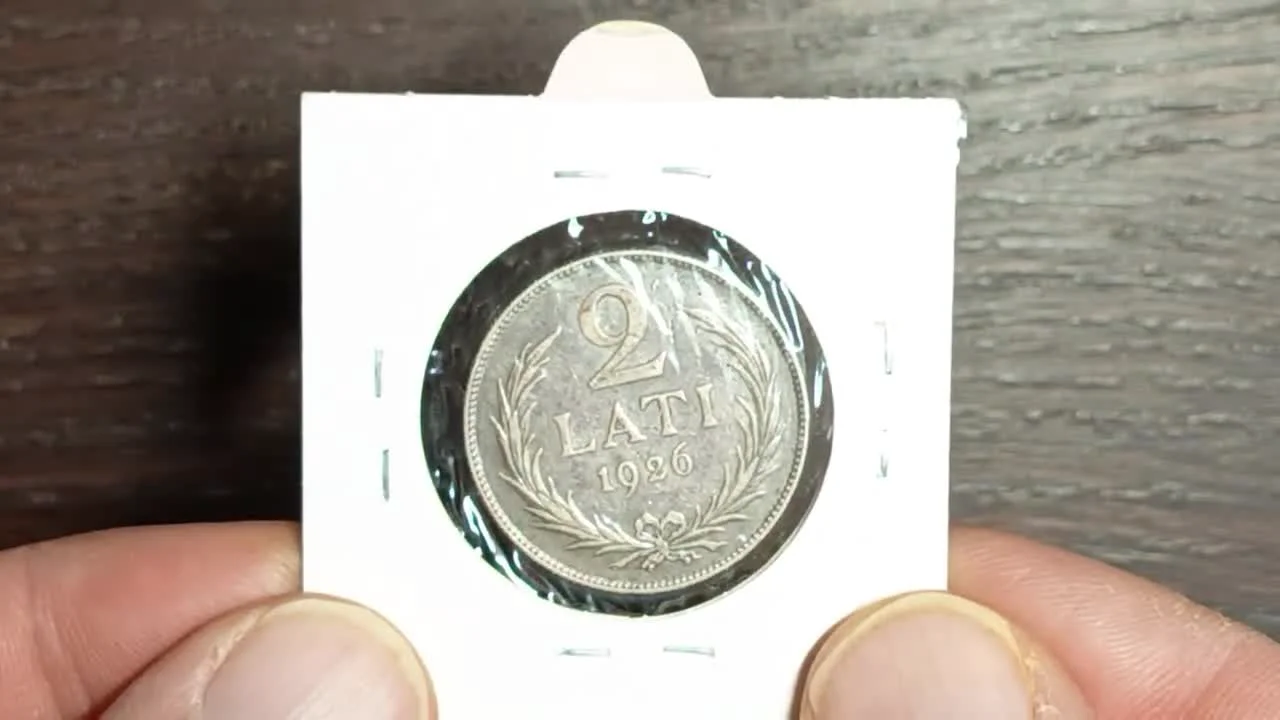
Latvia's 'Baltic Franc': A Review of the 1926 2 Lati Silver Coin
Among the numismatic finds acquired at a fair in Valencia, a 2 lati coin from Latvia, dated 1926, stands out. This currency appeared just eight years after the country declared its independence and became an important affirmation of the new statehood.
Top Sales of the Month
Read More →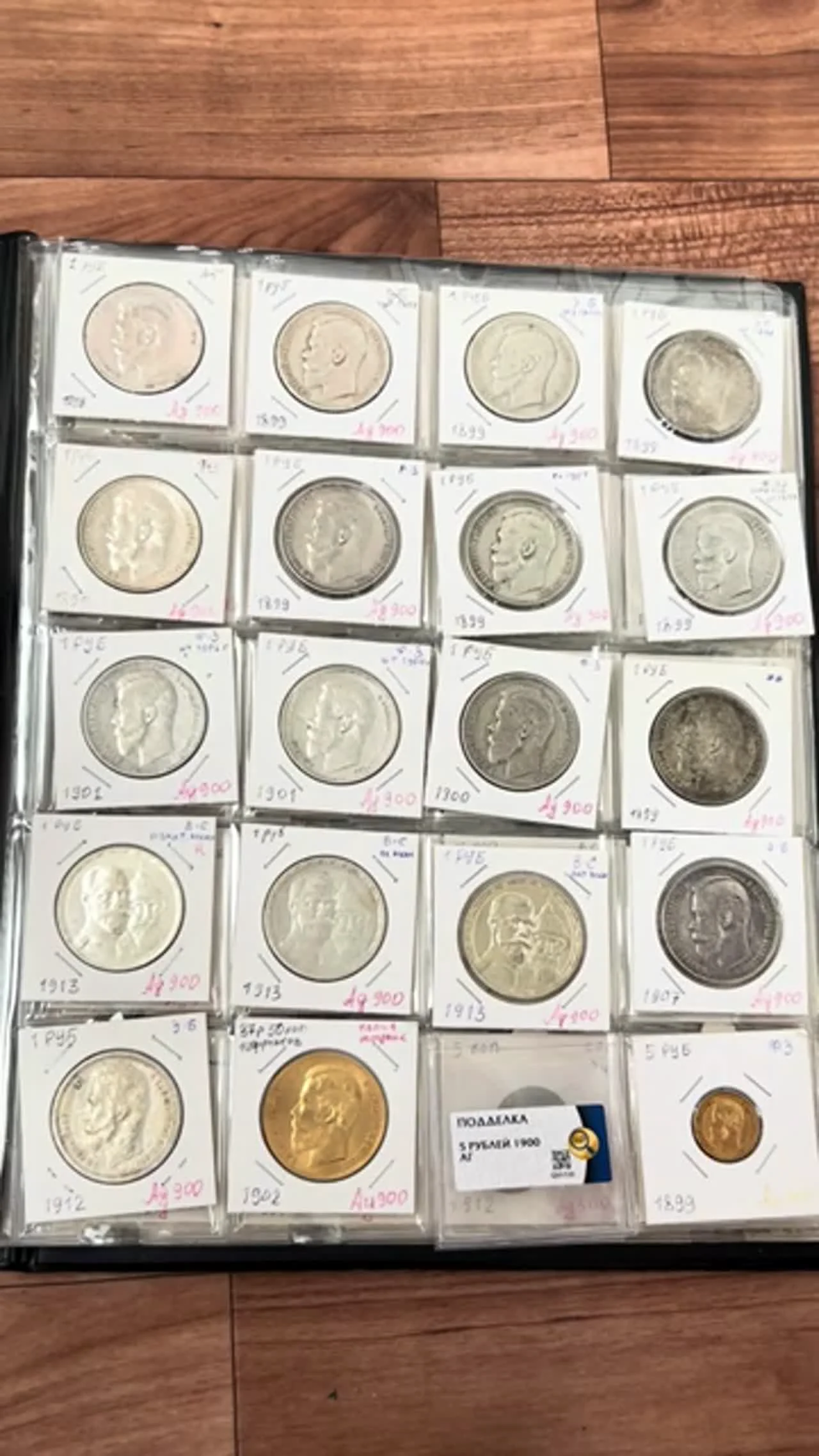
A Review of a Collection of Nicholas II Silver Rubles: From a Year Set to Rare Varieties
The core of the collection consists of coins from the reign of Nicholas II, forming what is known as a 'year set'. The condition of the specimens is not always of collector's quality, but they serve as a worthy starting point for a novice numismatist, allowing for the study of various mint years and coin types.
Top Sales of the Month
Read More →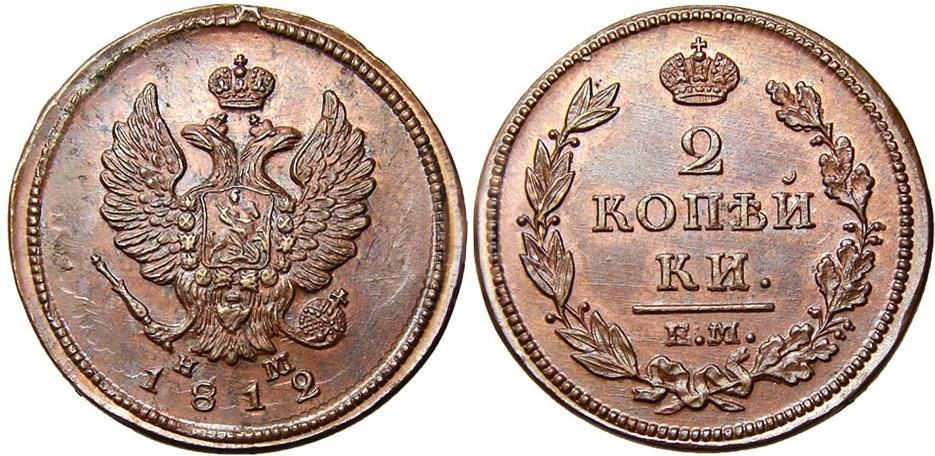
2 Kopeks 1812: Features and Value of the 'Queen of the Fields'
The subject of this review is a 2 kopek copper coin from 1812, issued during the reign of Alexander I. This particular specimen is distinguished by its excellent, so-called 'cabinet' preservation. The coin's surface, or field, is completely glossy, with no signs of mechanical cleaning or harsh interference.
Top Sales of the Month
Read More →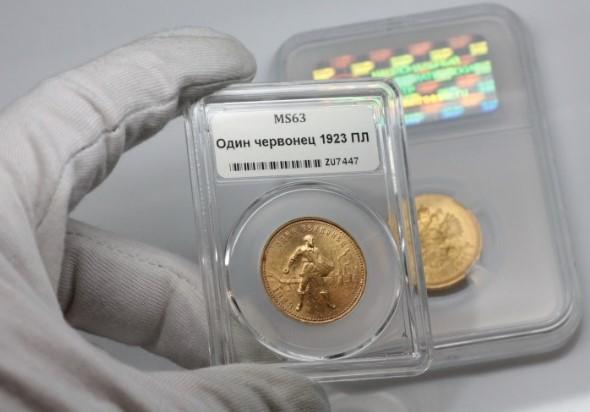
The Only Correct Way to Store Collectible Coins
There is a coin storage method that ensures their maximum preservation for many years. It involves placing a coin not just in a plastic capsule, but in a special silicone insert with prongs. These grips clasp the edge and rim of the coin on three or four sides, holding it securely.
Top Sales of the Month
Read More →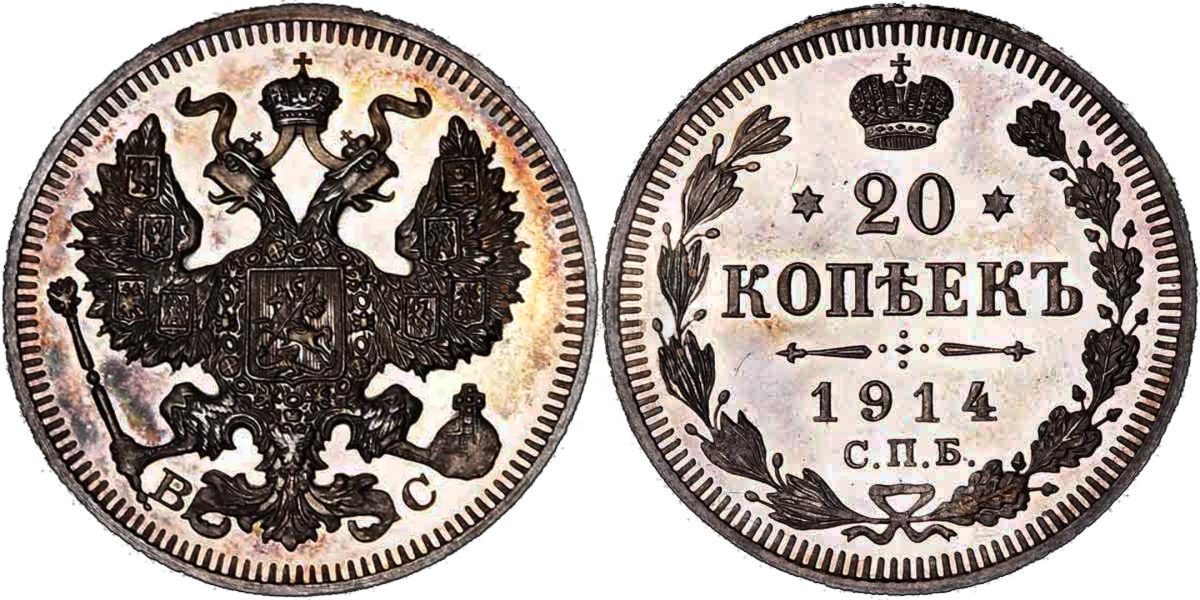
20 Kopeks 1914: How the Mintmaster's Initials Determine the Coin's Value
The 20 kopek silver coin of 1914 was issued during the reign of Emperor Nicholas II. This numismatic artifact has precise specifications, which are important for its identification and valuation.
Top Sales of the Month
Read More →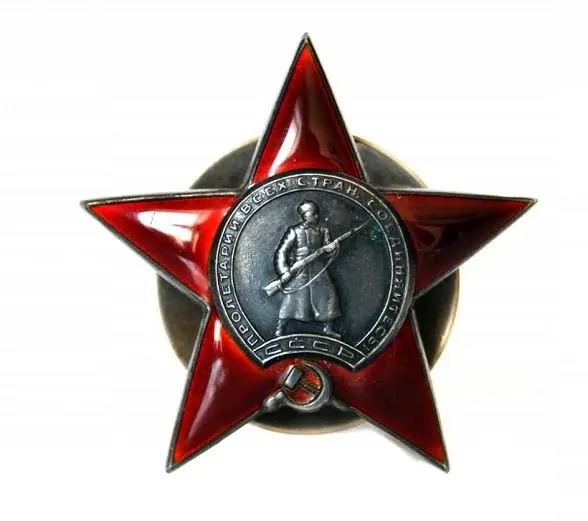
Combat Awards of Submariners and Divers: Stories of Heroism for Sevastopol
Among the awards related to naval themes, sets belonging to divers are of particular interest. Such awards are found much less frequently than those of other military branches, making them highly valued in collector circles.
Top Sales of the Month
Read More →Determining the Value of the Order of the Red Star: From Common to Rare Specimens
Two Orders of the Red Star, which at first glance seem almost identical, can have a colossal difference in price. One specimen might cost around 1,100 hryvnias, while another could be worth almost 10,000 hryvnias. Visually, they may differ slightly in size, but their weight is nearly identical.
Top Sales of the Month
Read More →Prices for Rare Coins: A 2008 Auction Review
To analyze past coin prices, let's turn to the catalog of the Kyiv Numismatic Auction held on September 26, 2008. This period is considered the peak of prices in the numismatic market, situated between the dot-com bubble and the subprime mortgage crisis.
Top Sales of the Month
Read More →The Rarest and Most Expensive Coins in the World
The 1804 Silver Dollar is often called the 'King of all American Coins.' Initially, these coins were not intended for wide circulation. They were minted as diplomatic gifts for high-ranking officials, such as kings, queens, and other heads of state.
Top Sales of the Month
Read More →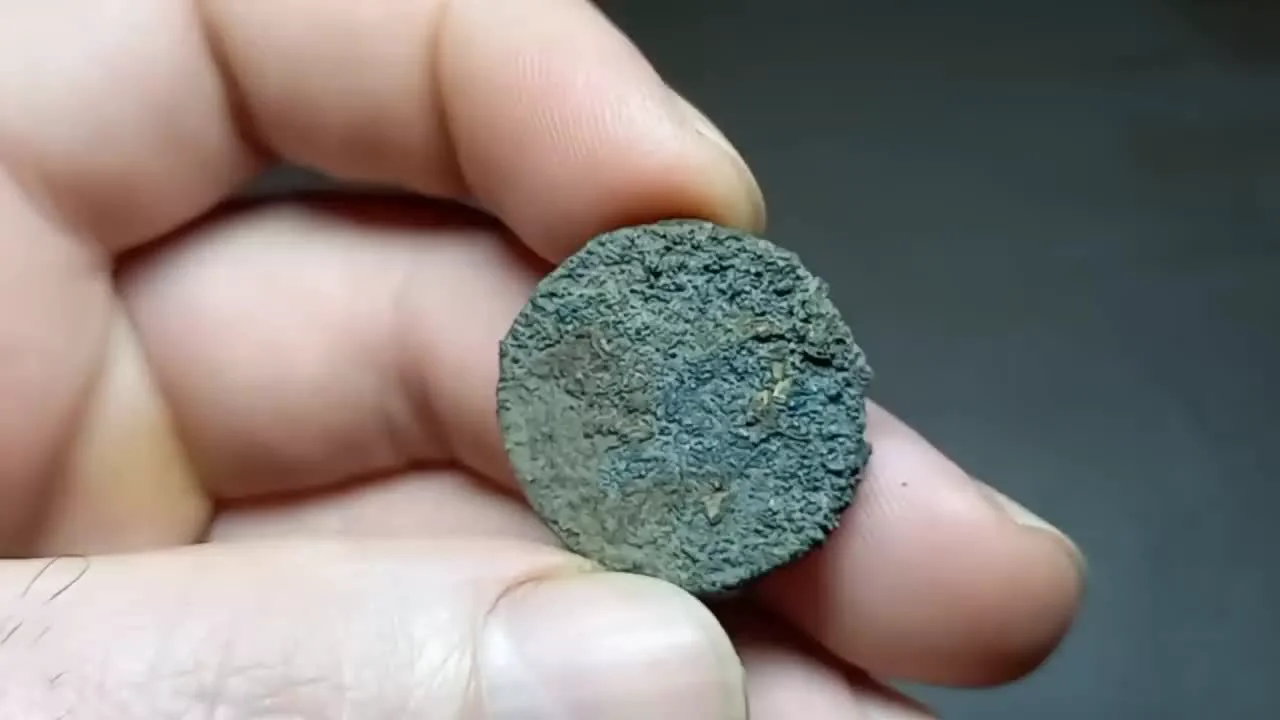
How to Clean a Heavily Oxidized Coin: From Solution to Patina
After being excavated, an ancient coin can be completely unrecognizable. It is often covered with a thick layer of organic deposits, dirt, and dense oxides that hide the relief and metal. In this condition, the artifact requires careful and systematic cleaning.
Top Sales of the Month
Read More →Personal Experience: Why Storing Proof Coins in Holders Can Damage Them
The story of this numismatic experience began back in the 90s, during my school years. The foundation of the collection at that time was Soviet commemorative coins in standard circulation quality and various foreign coins. At that time, the collection consisted of about ten Soviet commemorative rubles and several dozen coins from other countries.
Top Sales of the Month
Read More →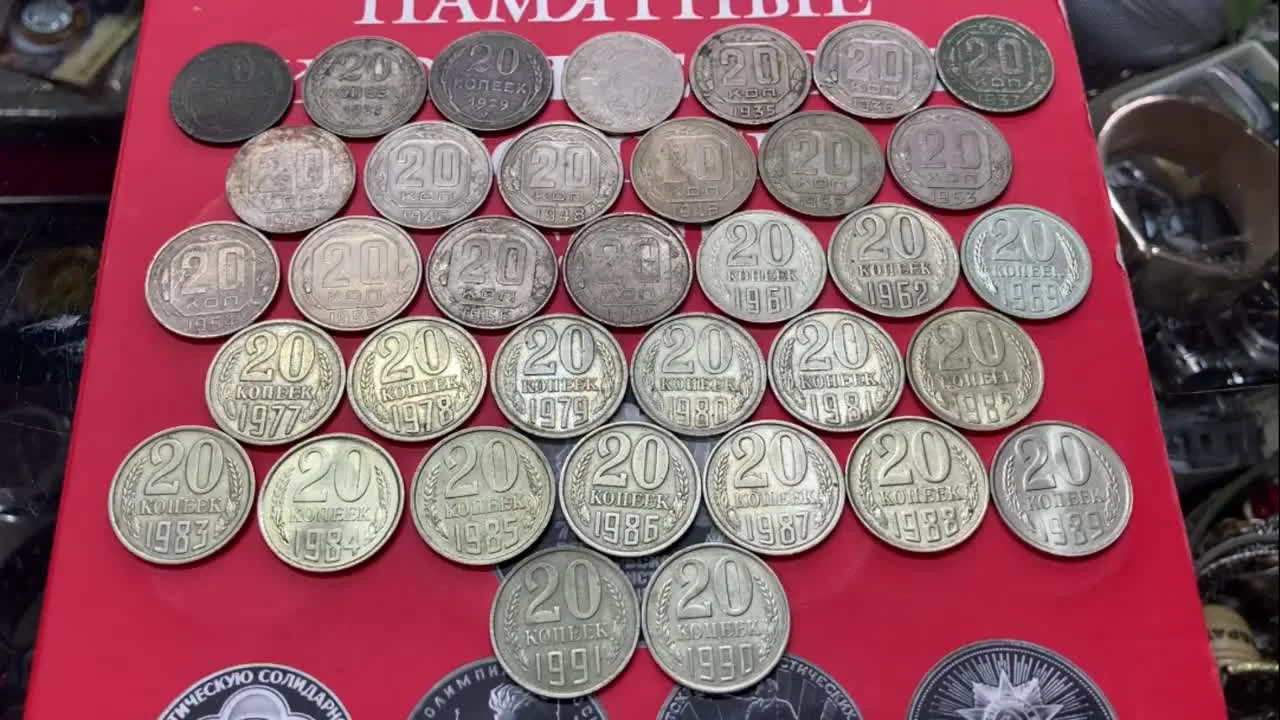
Valuable 20 Kopeks of the USSR: Which Coins Are Expensive?
Among the many Soviet coins with a denomination of 20 kopeks, there are specimens that can be of significant value to collectors. Such rare coins do turn up, and they can be found with a dedicated search.
Top Sales of the Month
Read More →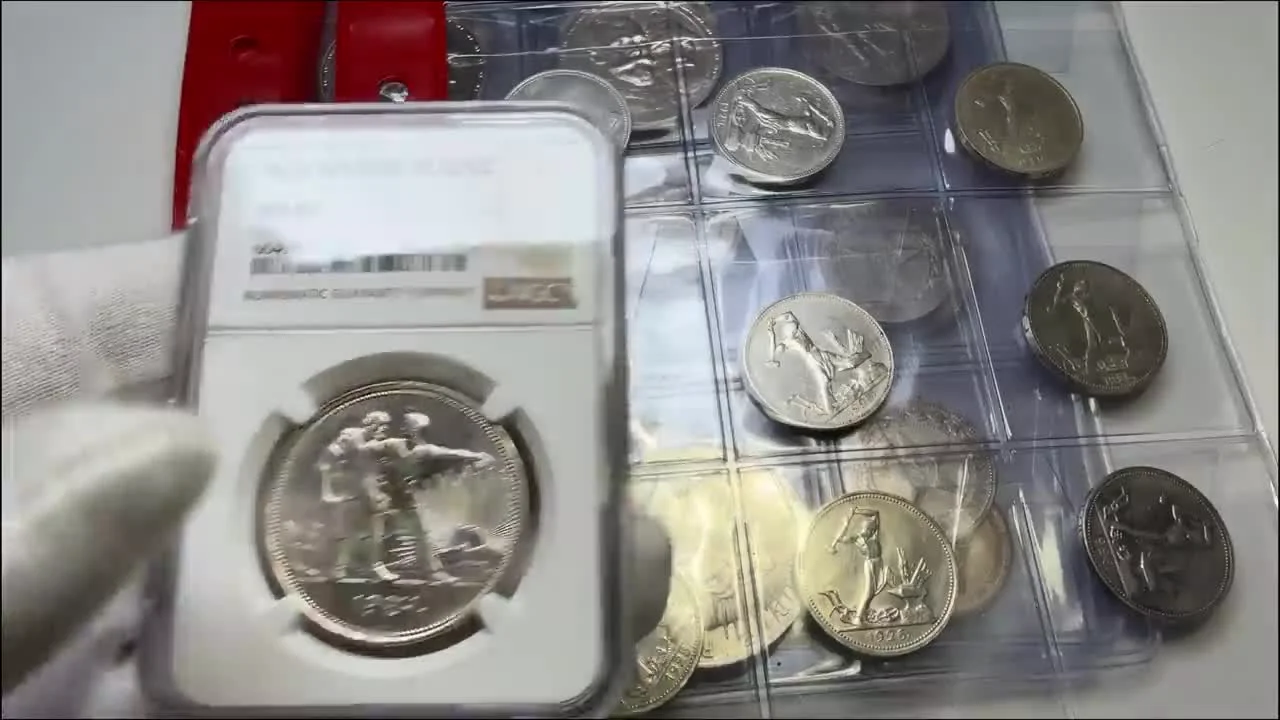
Collector's Mistakes: Why Cleaned Coins Are a Bad Investment
The path to serious numismatics often begins with mistakes. Initially, it might seem that collecting coins in special plastic capsules, or slabs, is an unnecessary expense. There was a belief that a true collector needed to hold a coin in their hands, to feel its metal and history.
Top Sales of the Month
Read More →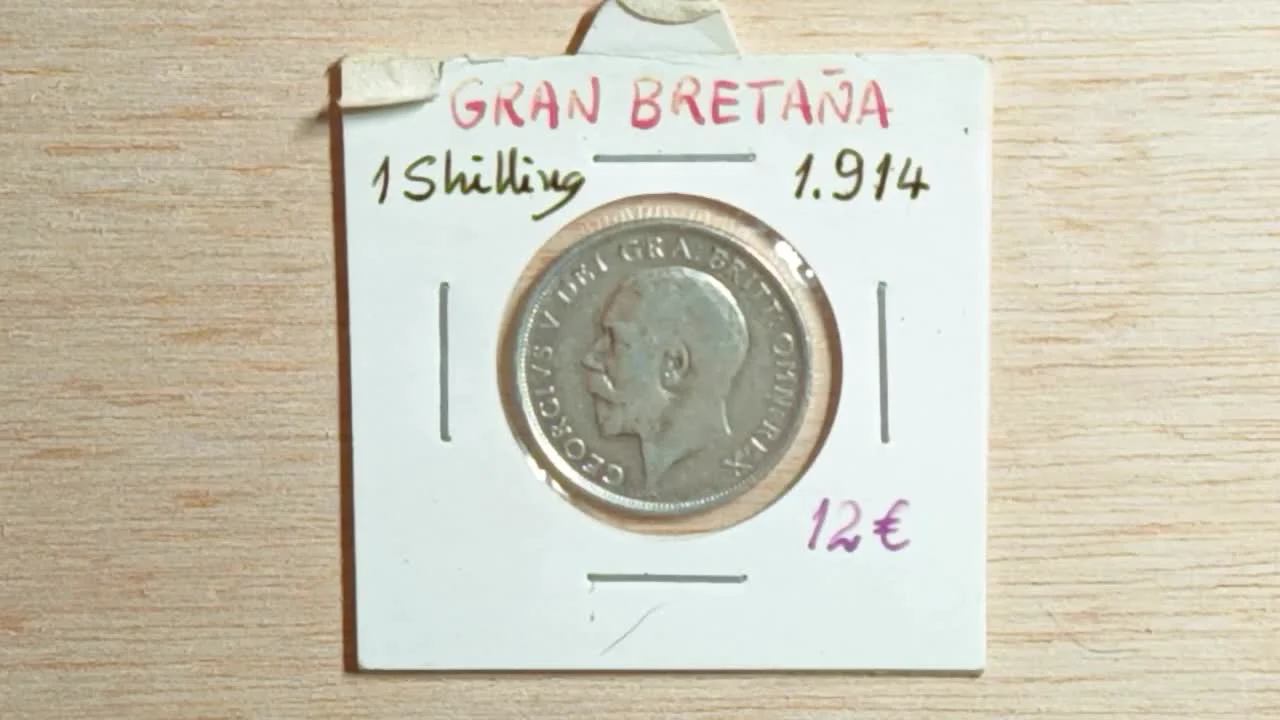
The 1914 British Shilling: From a Fair Purchase to a Value Assessment
The story of this coin begins at a weekly collectors' fair in Valencia. It was there that a 1914 British shilling was purchased. Initially, it was sold for 12 euros, but after some haggling, the final price was 10 euros.
Top Sales of the Month
Read More →Prussian Silver Coins of 1913: A Comparison of the 2 and 3 Mark 'Crowd' Coins
Purchased on the 'Meshok' marketplace, the 1913 3 Mark coin, known as the 'Crowd,' arrived in secure packaging. The seller ensured its preservation by placing the specimen in a special foam cutout inside a cardboard box.
Top Sales of the Month
Read More →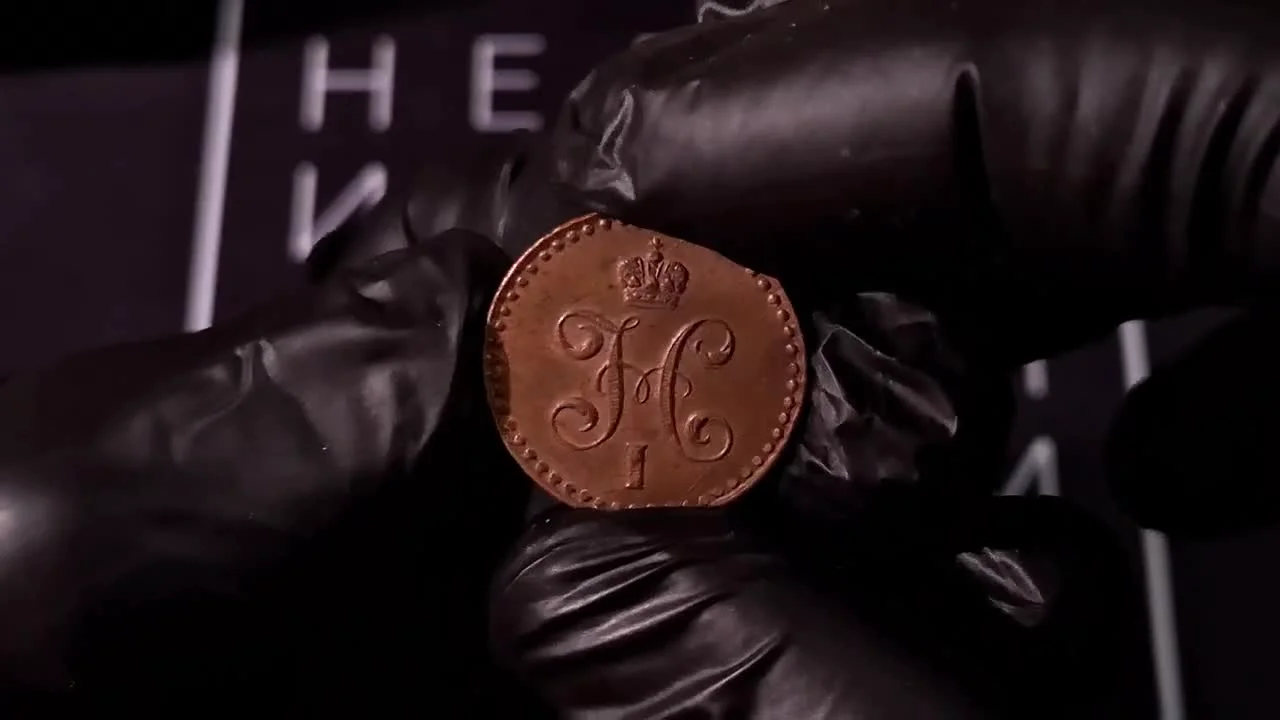
A Collector's Luck: The Story of a 1/2 Kopek in Silver Coin from 1842
The hobby of searching for old items, or 'metal detecting,' often yields unexpected finds. One such find was a 1/2 Kopek in Silver coin from 1841, minted at the Saint Petersburg Mint (SPM). Although it was the best specimen found in the ground, its condition was far from ideal.
Top Sales of the Month
Read More →