
Auction School
Practical guides on participating in auctions. Bidding psychology and analysis of successful strategies.
Articles (16)
Page 1 of 1

The Future of Auctions: Technologies Transforming Bidding
Auction houses, once considered bastions of conservatism, are actively entering the digital age. Today, participating in auctions no longer requires a physical presence in the room. Thanks to mobile apps and online platforms, one can bid on art, antiques, or collectible cars from anywhere in the world with just a smartphone.
Auction School
Read More →
How is the starting price for a lot determined?
The starting price of a lot at auction is rarely pulled out of thin air. It is based on an estimate—a preliminary valuation of the item determined by the auction house's experts. This is not the exact sale price, but rather a projected range within which the lot is expected to sell.
Auction School
Read More →
The Role of the Auctioneer: More Than Just a Person with a Gavel
In the minds of many, an auctioneer is just someone who talks fast and bangs a gavel. In reality, their role is much deeper and more complex. They are a key figure on whom the success of the auction and the final price of a lot directly depend. They are not just an intermediary but an active participant in the process, managing the dynamics and mood of the room.
Auction School
Read More →
Closed and Charity Auctions: A Guide to Participation
Beyond the classic public auctions where dozens of participants compete for a lot, other, less publicized formats exist. These include private sales and charity auctions. Each of these formats has its own unique characteristics, objectives, and rules of participation, attracting a diverse audience.
Auction School
Read More →
What is a 'Dutch Auction' and how does it work?
A Dutch auction, also known as a reverse auction, fundamentally changes the usual logic of bidding. Instead of participants raising their bids, the auctioneer starts with a deliberately high price and gradually lowers it in specific increments.
Auction School
Read More →
Commissions and Fees: Hidden Costs of Buying and Selling at Auctions
Participating in an auction can be thrilling, but the euphoria of winning a lot often gives way to surprise when you see the final bill. The price at which the auctioneer's hammer falls (the hammer price) is far from the final amount you will have to pay. There is a whole system of additional fees that significantly increase the final cost.
Auction School
Read More →
The World's Largest Auction Houses: Christie's, Sotheby's, Phillips, and Others
Christie's, founded by James Christie in London in 1766, is rightly considered one of the pillars of the global art market. Over its more than 250-year history, the house has earned a reputation as a guardian of tradition, specializing in the sale of the highest class of artworks. It is here that world record prices for paintings and sculptures are often set.
Auction School
Read More →
How to Sell Your Collection at Auction: From Choosing a House to Getting Paid
The first and one of the most important steps towards successfully selling a collection is choosing the right auction house. Not all auctions are the same: some specialize in Old Master paintings, others in contemporary art, and still others in numismatics or antique furniture. It is important to find a house whose specialization matches the profile of your collection.
Auction School
Read More →
Participating in Your First Auction: A Step-by-Step Guide for Beginners
The journey to your first auction purchase begins with formalities. To gain access to bidding, you need to complete the registration process on your chosen auction platform. This process typically requires providing accurate personal data and contact information, which will be used for communication and document processing if you win.
Auction School
Read More →
Winning Strategies: How to Bid to Win a Lot at the Best Price
Success at an auction is rarely accidental. Behind every profitable purchase lies cold calculation, an understanding of psychology, and a well-chosen bidding strategy. Knowing different tactics allows you not only to control the bidding process but also to exert psychological pressure on rivals, making them doubt and retreat.
Auction School
Read More →
Auction Psychology: How to Control Emotions and Avoid Overpaying
Auctions create a unique environment where rational thinking often gives way to emotions. Organizers and auctioneers skillfully use psychological triggers to push participants toward higher bids. The two most common traps are the endowment effect and competitive arousal.
Auction School
Read More →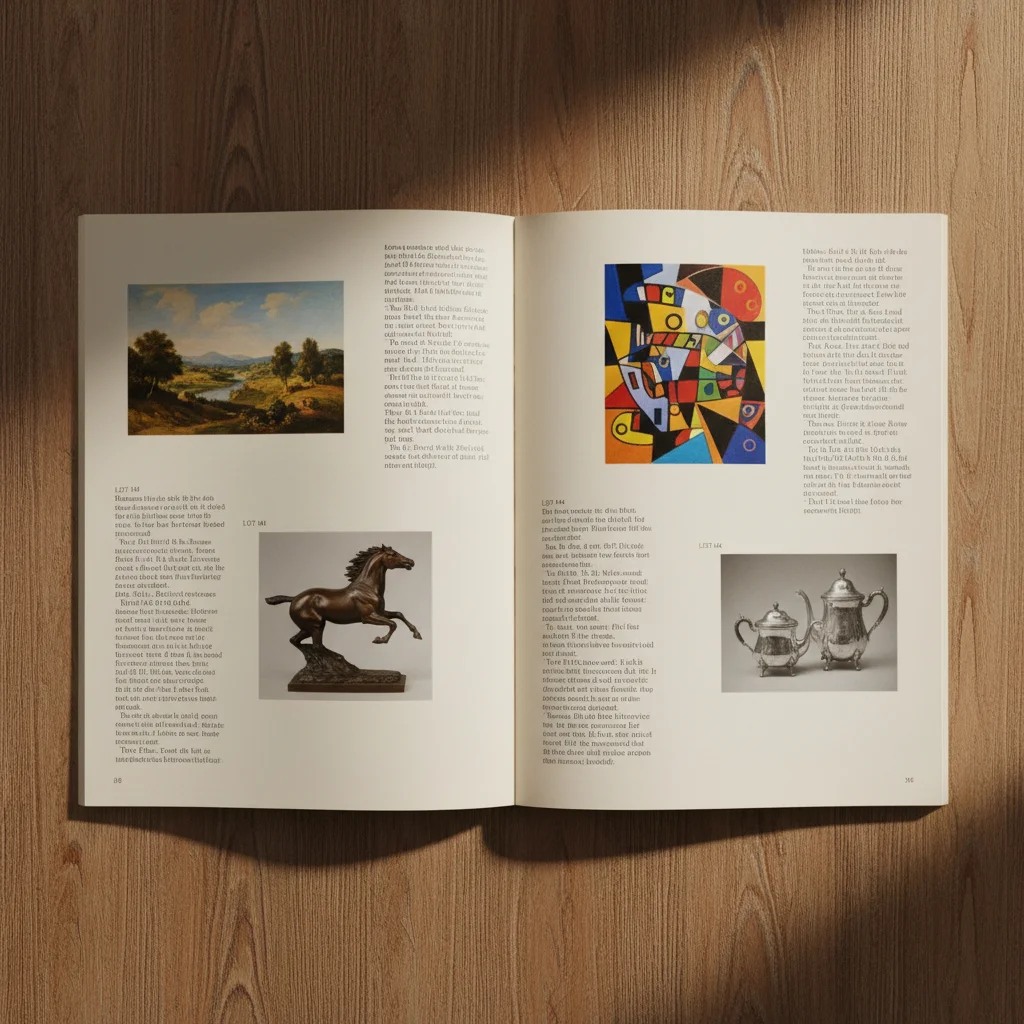
How to Read an Auction Catalog Correctly: What to Pay Attention To
Many people see an auction catalog as a glossy magazine with beautiful pictures, but its primary function is entirely different. In essence, the catalog is a legal document that establishes the terms of the transaction between the auction house and the buyer. All descriptions, estimates, and terms presented in it form the basis of the sales agreement.
Auction School
Read More →
Online vs. Offline Auctions: Pros, Cons, and Participation Strategies
Traditional offline auctions attract with their unique atmosphere. The tension in the room, the sound of the auctioneer's gavel, and the opportunity to inspect lots in person create a unique experience. Being there in person allows you not only to examine the item up for bid in detail but also to observe the behavior of other participants, reading their intentions and level of interest.
Auction School
Read More →
Auctioneer's Glossary: Estimate, Bid, Hammer Price, and Other Terms
Diving into the world of auctions begins with understanding the three concepts that underpin the entire bidding process. These are the pre-sale estimate, the bid itself, and the final price. Without a clear distinction between these terms, it's easy to get confused and make a wrong decision.
Auction School
Read More →
The Anatomy of an Auction: How Bidding Works from A to Z
The journey of any item to auction begins long before it appears in a catalog. First, the owner contacts an auction house, where expert specialists conduct an initial appraisal. Their task is to determine the item's authenticity, origin (provenance), cultural and historical value, and current condition.
Auction School
Read More →
Numismatic Dealer School: The First Lesson for Beginners
Many collectors consider turning their passion for coins into an additional source of income. For those who wish to try their hand at being a seller, a special training course has been created to help them take their first steps into the world of numismatic dealing.
Collector's GuideAuction School
Read More →