Precious Metals Market: Why Prices Are Rising and Which Asset Is Undervalued - AUCBURG | AUCBURG
Precious Metals Market: Why Prices Are Rising and Which Asset Is Undervalued
Amid global uncertainty and geopolitical tensions, precious metals are becoming increasingly attractive to investors. In 2025, the market is showing record-breaking performance, with gold's rise to all-time highs drawing particular attention.
Amid global uncertainty and geopolitical tensions, precious metals are becoming increasingly attractive to investors. In 2025, the market is showing record-breaking performance, with gold's rise to all-time highs drawing particular attention.
As of mid-November 2025, despite a recent decline, prices have shown strong growth since the beginning of the year. The dynamics are as follows:
Gold has risen by 50%
Silver and palladium have increased by 60%
Platinum has shown a growth of 70%
The key reason for the rise in gold prices is the intensification of trade wars between the US and China, which creates uncertainty and increases demand for safe-haven assets. An additional factor is the expectation of the Fed easing its monetary policy, making debt securities less attractive and steering investors towards gold.
The rise in silver and platinum is also linked to demand for safe-haven assets, but is exacerbated by a market supply deficit that has persisted for several years. This creates additional pressure on prices.
Price Correlation and the Undervaluation of Silver
Indicator
Gold : Silver Ratio
Geological content in rock
1 : 18
Current market price ratio
1 : 80+
All precious metals show a high degree of correlation, meaning that positive or negative news affecting one metal impacts the entire sector in one way or another. However, despite general trends, silver currently appears significantly undervalued compared to gold.
This discrepancy is evident when comparing geological reserves with market value. In the Earth's crust, there is approximately 18 times more silver than gold, which could be considered a fair ratio. However, in the market, it takes over 80 ounces of silver to buy one ounce of gold.
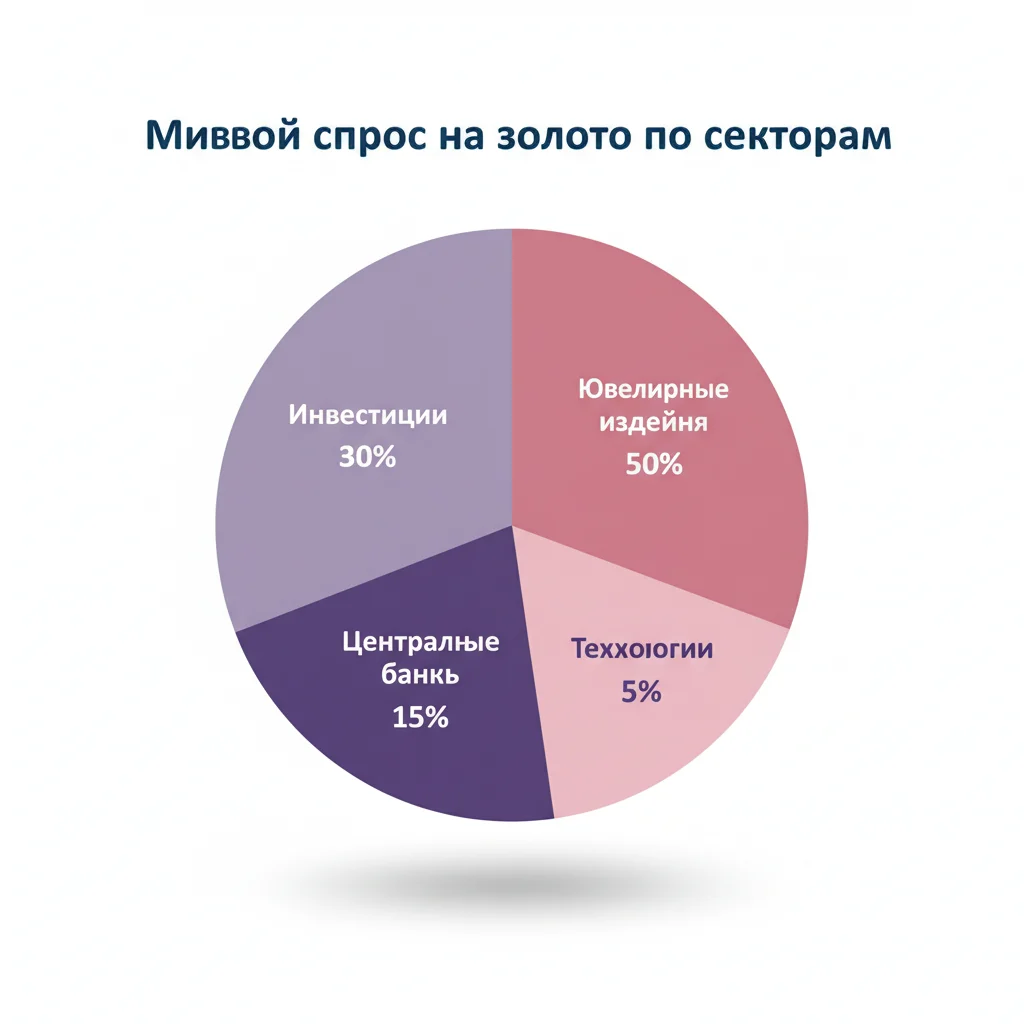
The difference in valuation is largely explained by the structure of demand. Gold is mainly used in the jewelry industry and as an investment tool. In the third quarter of 2025, global gold demand was distributed as follows: jewelry—33.3%, investments—42.7%, central banks—17.5%, and technology—only 6.5%.
Meanwhile, silver is a key industrial metal. Its demand structure is different: industry—60%, jewelry—20%, investments—15%, and other—5%. High demand from technology companies, electronics manufacturers, electric vehicles, and renewable energy provides strong fundamental support for silver.
Price Correlation and the Undervaluation of Silver
Analysts' Forecasts for the Price of Gold
Leading analysts offer several scenarios for gold prices. For example, Goldman Sachs considers three possible outcomes:
Base scenario: the price will reach $4,000 per ounce.
Medium-risk scenario: growth to $4,500 per ounce.
High-risk scenario: the price could rise to $5,000 per ounce.
These forecasts are based on the conflict between the Fed and the U.S. presidential administration. Pressure to lower interest rates could lead to rising inflation and uncertainty, which in turn would reduce the yield on government bonds and push investors to buy gold. For the high-risk scenario to materialize, it would be sufficient for holders of U.S. debt to transfer just 1% of their assets into gold.
The forecast from Morgan Stanley is also optimistic: analysts expect the price of gold to reach $4,500 per ounce by mid-2026. Current trends support this optimism: there is an increase in gold purchases by central banks and a significant rise in investments from ETF funds.
Analysts' Forecasts for the Price of Gold
Prospects for Silver, Platinum, and Palladium
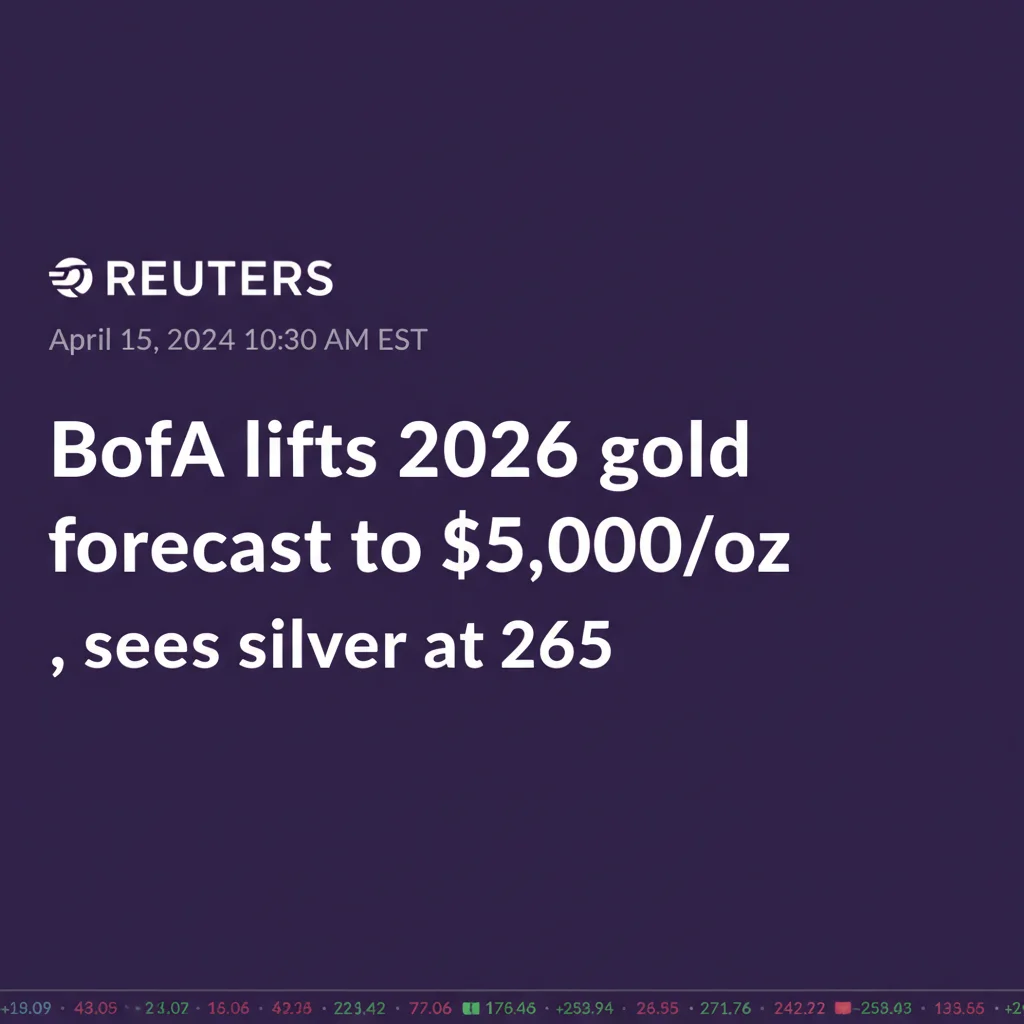
Forecasts for silver are also positive. Bank of America expects the price to rise to $65 per ounce at its peak, with an average price of $56 per ounce next year. The main growth drivers remain the market supply deficit and constantly growing industrial demand, especially in the electrical engineering, renewable energy, and artificial intelligence sectors.
Platinum-group metals also have good prospects. According to Trading Economics forecasts, the price of platinum, currently trading at $1,517 per ounce, could rise to $1,741 in the long term. Palladium, with a current price of $1,430, could increase to $1,646 per ounce.
High demand for these metals is supported by the automotive industry, where they are used in catalytic converters. The growing popularity of hybrid vehicles and tightening environmental regulations worldwide will contribute to increased consumption of platinum and palladium. Additionally, platinum is a rarer metal than gold, which also supports its value.
Prospects for Silver, Platinum, and Palladium
Investment Methods: From Physical Bars to Digital Gold
Term
Description
Unallocated Metal Account
A bank account where precious metals are recorded in grams without specifying individual characteristics of the bars (purity, number, etc.).
For Russian investors, there are several ways to invest in precious metals. The most obvious is buying physical metal in the form of bars or investment coins.
The advantage of this method is that the investor physically owns the asset. However, there are significant disadvantages: a large spread (difference) between the purchase and sale price, the need to ensure secure storage, and the risk of damage (scratches) or oxidation, especially with silver.
An alternative is to open an unallocated metal account. This banking product allows you to buy metals in grams. The main disadvantages are that such accounts are not insured by the DIA, and income from the sale is subject to personal income tax if held for less than three years. The advantages include high liquidity, a low entry threshold (from 0.1 grams), and ease of transactions.
Investment Methods: From Physical Bars to Digital Gold
Exchange-Traded Instruments and Cryptocurrencies
You can also invest in precious metals through exchange-traded instruments, which offer convenience and transparency.
Exchange-Traded Funds (ETFs). These funds track the value of precious metals. For instance, the Moscow Exchange lists the GLDRUB_TOM index, which is tracked by ETFs from major brokers (SBGD, GOLD, AKGD, TGLD). The advantages of this method are no storage problems and a small spread.
Stocks of gold mining companies. Investing in shares of companies like Polyus, for example, allows you to earn not only from the rise in metal prices but also from dividends. Polyus is distinguished by one of the lowest production costs in the world and is constantly increasing its output.
Stablecoins. Another option is to purchase stablecoins backed by physical gold. These cryptocurrencies are similar to stablecoins pegged to national currencies, but their price is correlated with the value of real gold.