The Cameo Service: A Masterpiece of the Sèvres Manufactory for Catherine II
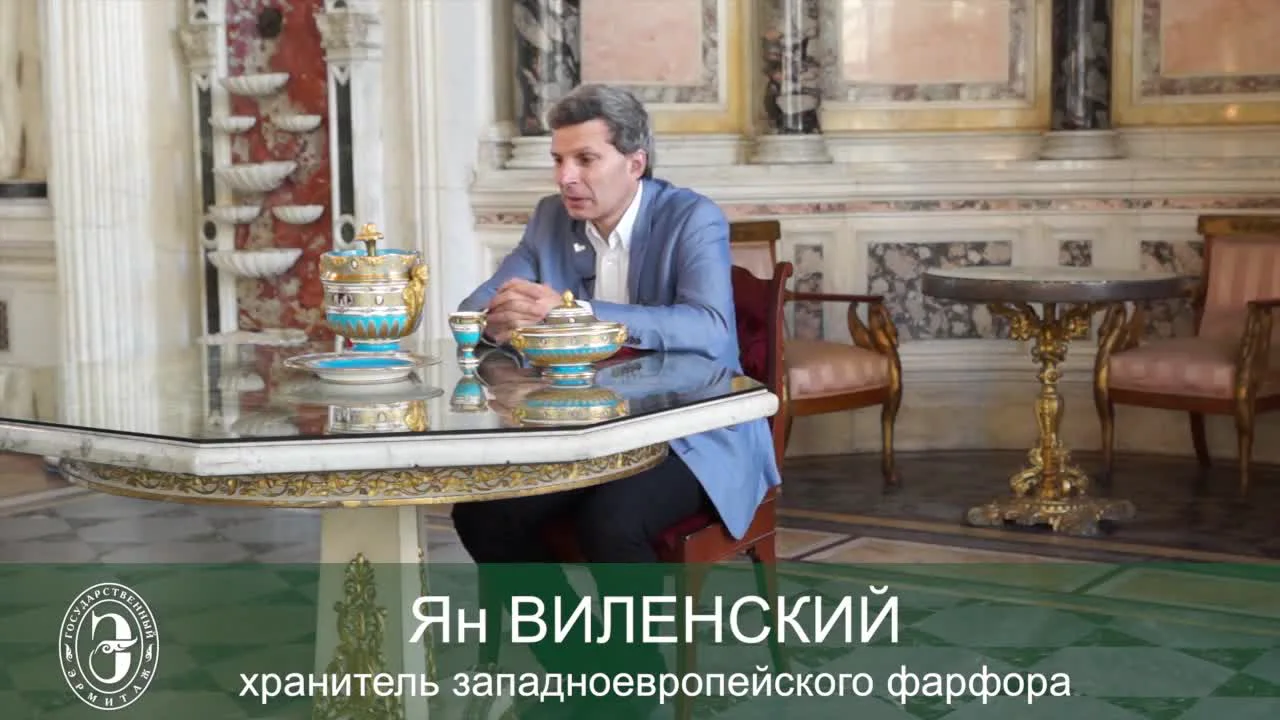
This famous porcelain service has several names, each of which reflects a certain stage of its history. In Russia a hundred years ago, it was called the 'Blue Service,' while in late 18th-century France, it was known as the 'Russian Service'.
The Many Names of a Single Masterpiece
This famous porcelain service has several names, each of which reflects a certain stage of its history. In Russia a hundred years ago, it was called the 'Blue Service,' while in late 18th-century France, it was known as the 'Russian Service'.
Today, it is most often called the 'Cameo Service' due to its characteristic decoration. Abroad, the name 'Catherine the Great's Service' is also common. Each of these names is fitting, but none of them indicates the true recipient of this luxurious gift.
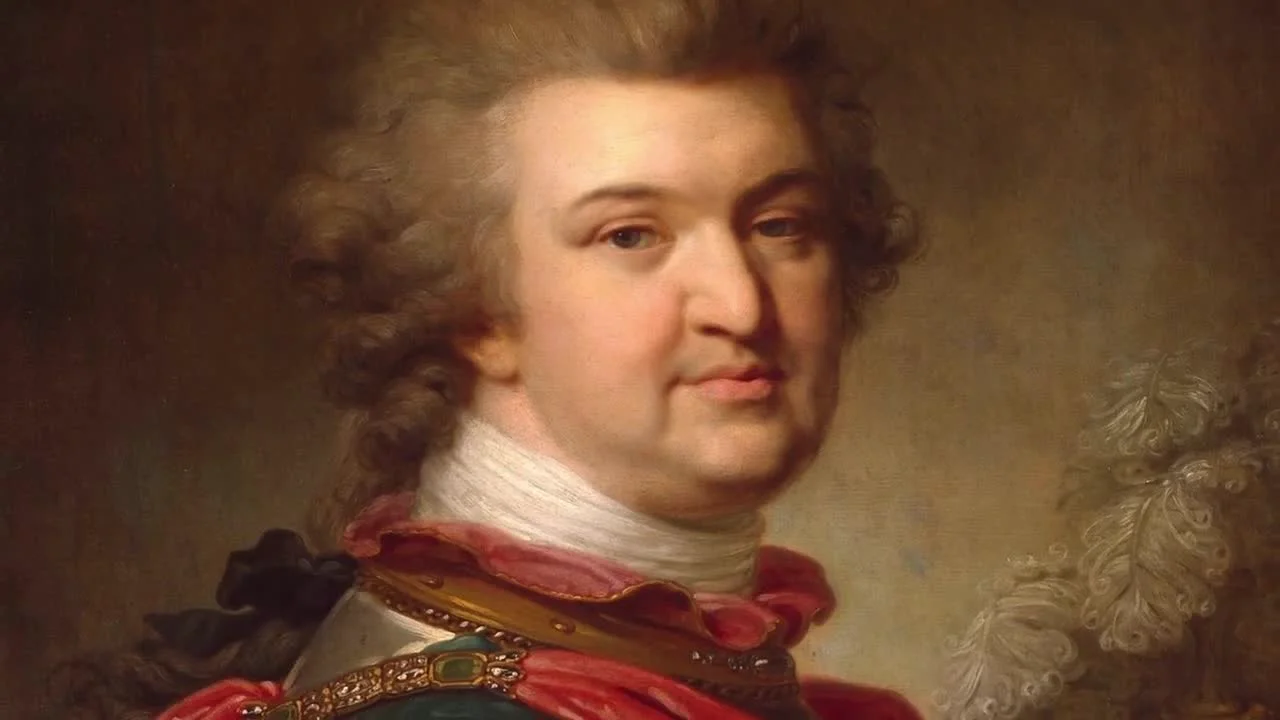
In reality, the service was intended for Prince Grigory Alexandrovich Potemkin, a friend and associate of Empress Catherine II. His personality became key to the creation story of this unique work of art.
The Imperial Commission and Catherine's Cunning
The order for the service was placed in France in 1777. To ensure the work was executed to the highest standard, Catherine II resorted to a clever ruse. In March 1778, she wrote to her regular correspondent, Baron Melchior Grimm: 'I have ordered a Sèvres service for the world's greatest nail-biter, my dear, beloved Prince Potemkin. And to ensure the service would be the best, I said it was for me.'
This wise move by the Empress worked: for a year, almost all the masters of the Sèvres Manufactory worked on creating the 'Russian Service'. Prince Potemkin himself knew about the gift being prepared for him and in the summer of 1777, sent his wishes to the Russian ambassador in France, Prince Ivan Baryatinsky.
- Use the finest and newest style.
- The Empress's monogram must be present on every piece.
- The pieces should be made based on antique models.
- The decoration must include images of cameos.
- Completely exclude any openwork elements.
The Transition from Rococo to Neoclassicism
This commission became the first project of such scale for the Sèvres Manufactory, requiring the creation of entirely new forms and decorations. The familiar Rocaille silhouettes and drawings in the style of François Boucher, which had inspired the masters for forty years, were no longer suitable.
The graceful and intricate style of the era of Louis XV and Madame de Pompadour had to give way to elegant and austere antiquity. As a result, new forms inspired by classical models were invented.
For example, the ice cream cup resembles an antique vase, and the plate has a very wide rim, like a Roman patera. The gilded frieze decorating the plate was created based on the decor of the Theatre of Marcellus in Rome.
Secrets of Sèvres Porcelain: Color and Material
| Type of Porcelain | Feature |
| Soft-paste porcelain | Contains no kaolin, has a low-melting glaze, allowing for bright background colors and thick gilding. |
| Hard-paste porcelain | Contains kaolin, used in European and Eastern production. |
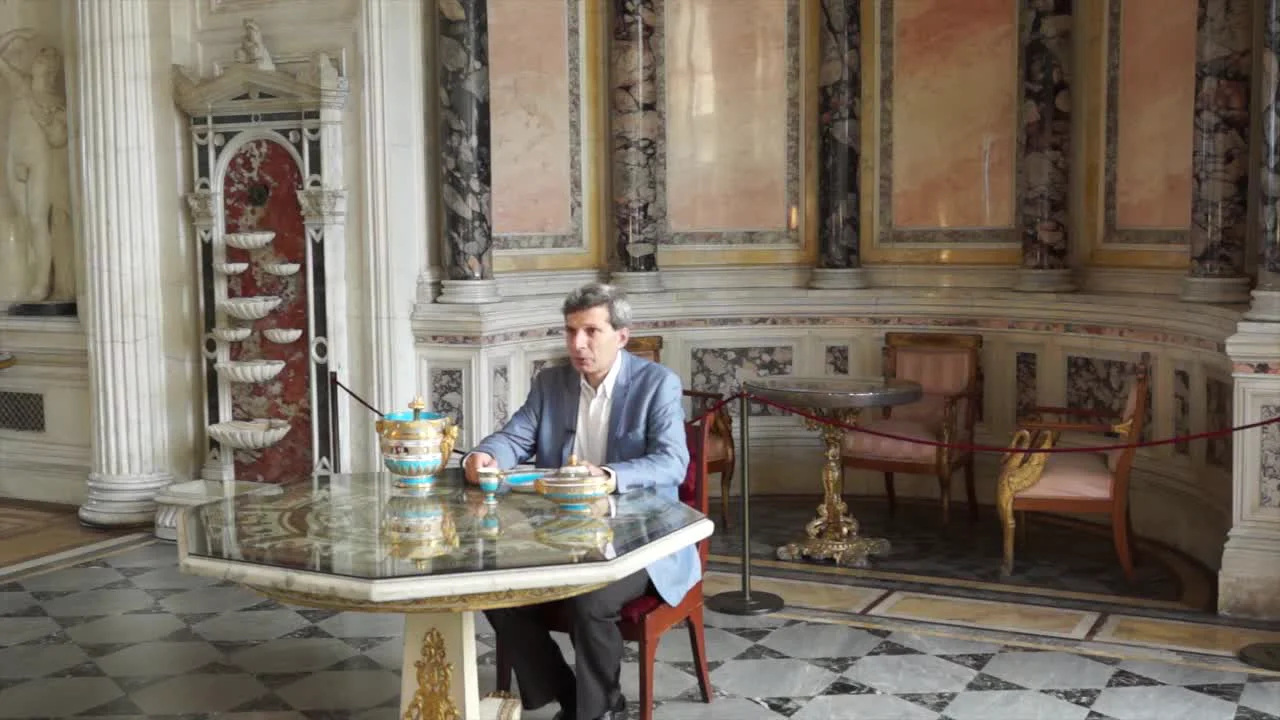
At Catherine II's request, a celestial blue color with a turquoise tint was chosen for the service. To achieve such a rich background, the masters had to use a material traditional for Sèvres—soft-paste porcelain.
Unlike hard-paste, soft-paste porcelain did not contain kaolin, which made its glaze low-melting. This limited the color palette for painting but allowed for surprisingly bright and deep background hues. Furthermore, the gilding on soft-paste porcelain was distinguished by its particular thickness and brilliance.
Although by the time of the order, kaolin deposits had already been found in France and the manufactory had learned to work with hard-paste porcelain, the decorative features of the 'Russian Service' required the use of soft-paste porcelain.
The Art of Creating Cameos
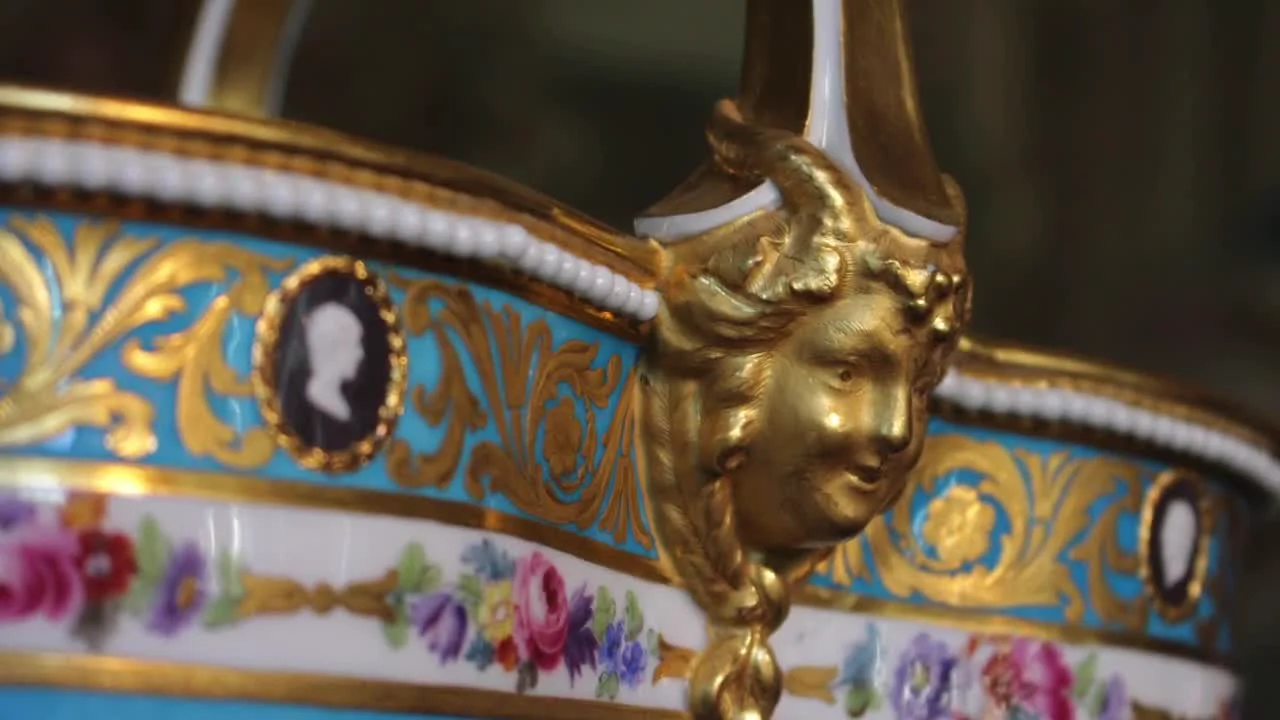
A special workshop was organized at the Sèvres Manufactory for the production of porcelain cameos. King Louis XVI personally visited it and, convinced of the high quality of the work, provided his personal collection of carved stones—one of the best in Europe—for models.
The process of creating the cameos was complex and painstaking. First, a base was created from brown kaolin clay after sifting and polishing. A bas-relief carved from soft-paste porcelain was carefully applied to it, after which the piece was sent for firing.
The only non-porcelain detail in the decoration was an elegant rim of gilded bronze. With its help, the finished cameos were attached to the service pieces. The skill of the Sèvres sculptors and carvers was so great that it was not inferior to the works of ancient masters.
Harmony of Antiquity and Natural Motifs
In addition to cameos, the service is adorned with about two thousand small oval cartouches with scenes from Greek and Roman mythology. The author of these paintings was the head of the painting workshop, Jean-Baptiste Genest. The decor was also influenced by Catherine II's personal passion for carved stones, which she called 'cameo fever'. Her collection numbered over 10,000 specimens.
Despite the strict neoclassical style, the Sèvres masters could not completely abandon their old traditions. For instance, gilded streams seem to have spilled over and frozen on the edges of the ice cream cups, and the lid for the ice cream cup was modeled after a simple French peasant skillet.
On every piece of the service, among the antique cameos and Roman vignettes, one can see masterfully painted garlands of modest wildflowers. Surprisingly, they are in perfect harmony with the austere antiquity. Even the Empress's monogram is composed of floral garlands.
The Price of Perfection
The creation of the service required the labor of almost all the manufactory's workers. In the autumn of 1778, Ambassador Baryatinsky even suggested extending the production time by another year. The financial records of the Sèvres Manufactory have preserved the exact cost of the order.
The service, which included dinner, dessert, coffee, and tea sets, as well as table decorations, cost the Russian treasury 245,168 livres. At the exchange rate of that time, this is equivalent to more than 12 million modern euros—a huge sum even by today's standards.
For comparison, the cost of making one cameo for the service was 96 livres, while a dozen faience plates cost only 3 livres. The Empress found the price to be inflated, and the Russian envoy had to initiate an investigation. The manufactory's management managed to justify the costs by pointing to the complexity of the work and the cost of materials. For example, gilding just one head on the handle of an ice cream cup required over 30 grams of pure gold.
The Fate of the Service and Its Legacy
A legend arose around the high cost of the service, according to which payments were stretched out over 20 years, and the final installment in 1792 saved the manufactory from liquidation during the French Revolution. However, archival documents show that Catherine II had fully paid for the order by 1782, with a significant portion of the sum paid in advance.
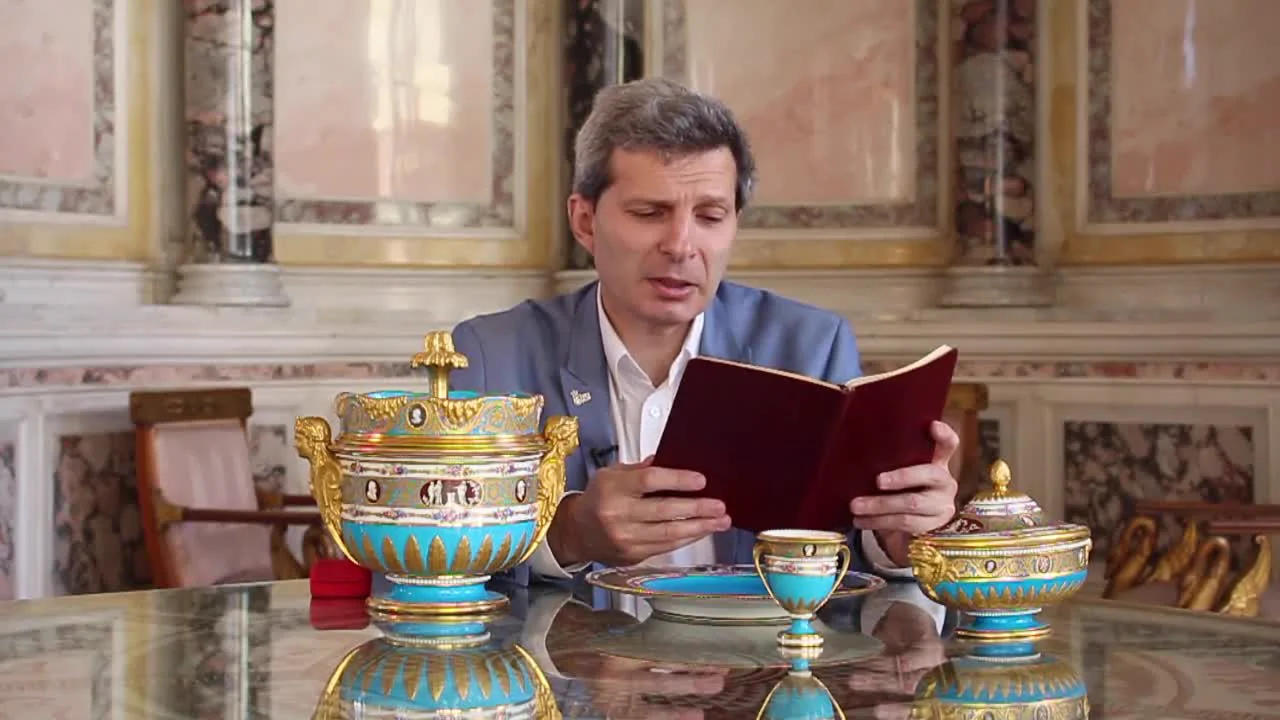
By May 1779, the service, consisting of more than 700 pieces, was ready. It was supplemented with table decorations made of biscuit (unglazed porcelain), including the central group 'The Russian Parnassus'. After being inspected and approved by King Louis XVI, the service was sent to St. Petersburg. In July 1782, it was delivered to the Winter Palace.
In the 19th century, the 'Blue Service' was used during the most solemn receptions. In 1910, by personal order of Emperor Nicholas II, it took its rightful place in the newly created Porcelain Gallery at the Imperial Hermitage. And today, the 'Cameo Service' remains a highlight of the State Hermitage Museum's collection and any exhibition dedicated to the era of Catherine the Great.