Investing in Antique Wood Carvings: From Europe to Asia - AUCBURG | AUCBURG
Investing in Antique Wood Carvings: From Europe to Asia
Wood carving is an ancient art form widely represented on different continents. Despite the geographical diversity, the main differences lie in the motifs, subjects, and methods of craftsmanship, whether for figures, panels, or tableware.
A fully plastic figure, finished on all sides for viewing in the round.
Halbplastisch
A semi-plastic figure where the back is unfinished, as it was intended to be placed against a wall.
Wood carving is an ancient art form widely represented on different continents. Despite the geographical diversity, the main differences lie in the motifs, subjects, and methods of craftsmanship, whether for figures, panels, or tableware.
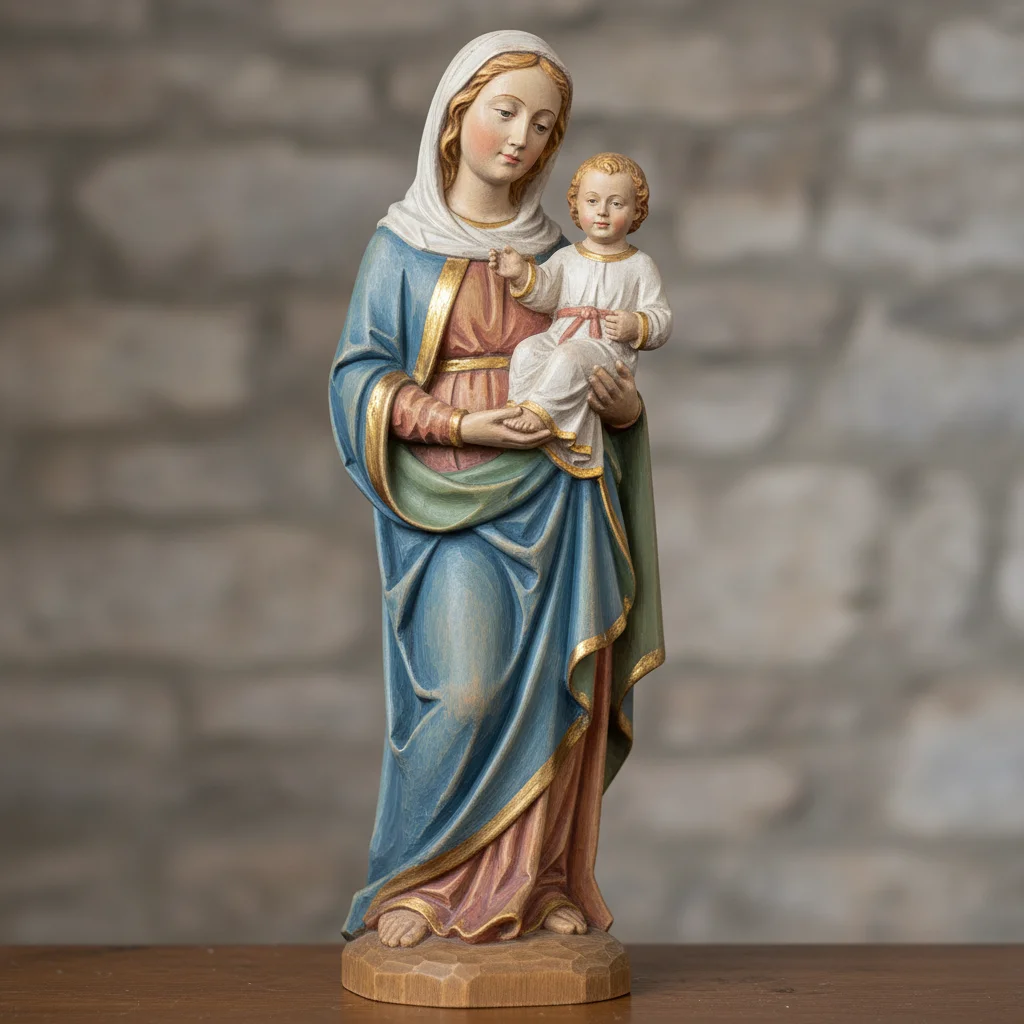
In Germany, for example, religious sculptures are very common, comparable in significance to icons in Russia. These pieces were traditionally created in workshops associated with large churches and chapels. They were made both to order and for general sale.
When appraising such items, it is important to understand their classification. There are different types of sculptures that determine their purpose and value.
How to Determine the Age of a Wooden Sculpture
It is possible to determine whether a wooden figure is antique or modern by several signs. One of these is the presence of craquelure—a network of fine cracks in the paint layer. The wood processing technology also indicates the age of the piece.
Before the 18th century, craftsmen would first carve the figure, then cover it with chalk as a primer, and only then apply paint. For particularly old pieces, such as those from the 18th century, the technology was even more complex: a layer of fabric based on egg yolk was applied to the wood, then a chalk primer, and only then the paint.
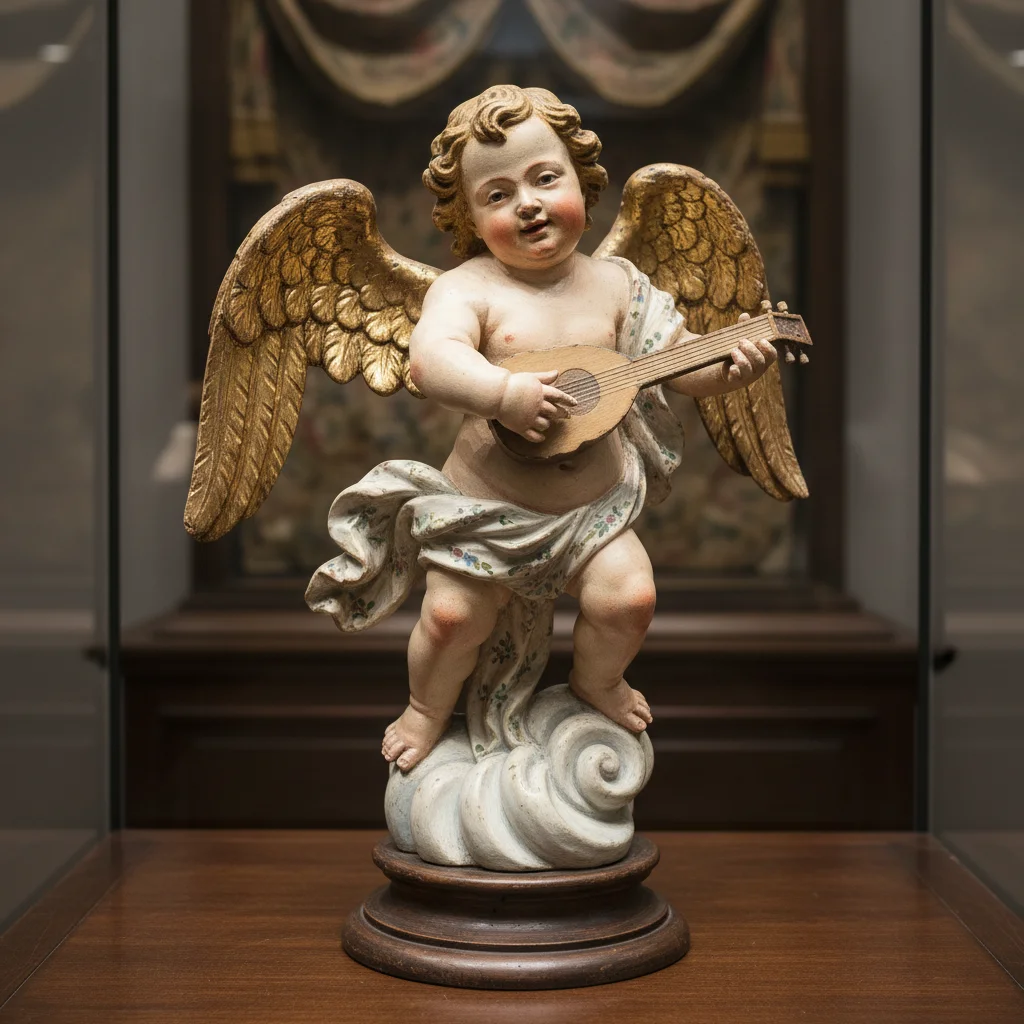
An example of such antique work can be seen in figures of putti (cherubs) from the mid-1700s. The cost of such a pair in Germany can be at least 700–800 euros. Larger and more complex figures, such as a fully plastic sculpture from the early 19th century, can be valued much higher, sometimes exceeding 1000 euros.
How to determine the age of a wooden sculpture
Materials and Masters
Various types of wood are used for carving, each with its own characteristics. The most popular are:
Linden
Ash
Maple
Beech
Oak
Figures made from linden are warm and pliable. Some masters leave a mark on their work, which helps to identify their origin. An example is the stamp 'Kunstschnitzerei Bierling, Oberammergau' on a figure from the early 20th century.
Besides wood, other materials can be used in the finishing. Gilding, done with gold leaf (Blattgold)—the thinnest sheets of real gold—is often found. This significantly increases the value of the piece.
Materials and Masters
Wood Carving in Asia and Africa
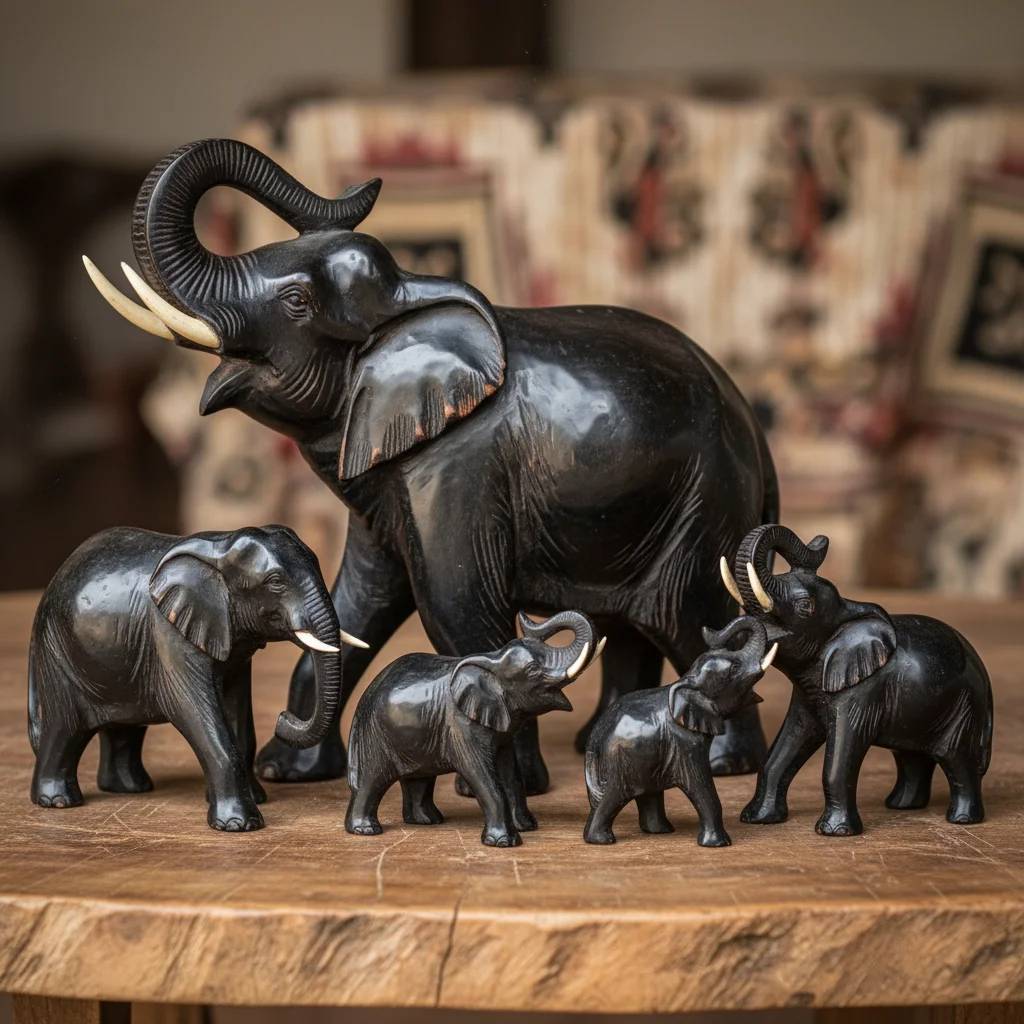
The traditions of wood carving are strong not only in Europe. Asia and Africa use their own unique materials and subjects. For example, African sculptures are characterized by the use of ebony (Ebenholz)—a very dense and heavy material.
Figures of elephants or ritual heads made of ebony may be relatively simple in execution, but their value lies in the material itself. Bone is often used for details such as tusks.
In Asian tradition, especially in Buddhist art, finesse and detail are highly valued. Sandalwood or suar wood are often used to create figures of saints (for example, Gesha). Even relatively modern pieces can have high value due to the exceptional quality of the carving.
Wood Carving in Asia and Africa
Decorative Panels and Boxes
In addition to sculpture, wood carving is widely used in the creation of decorative items such as panels and boxes. An example is a 19th-century box made of beech, covered with the popular 'Chinese black lacquer' of the time. It is important to distinguish such items from those made of real ebony.
Historical events are also reflected in the subjects. On a mid-19th-century Chinese gong, one can see the defaced faces of saints—a consequence of the Cultural Revolution in China. Such details make the object a unique testament to its era.
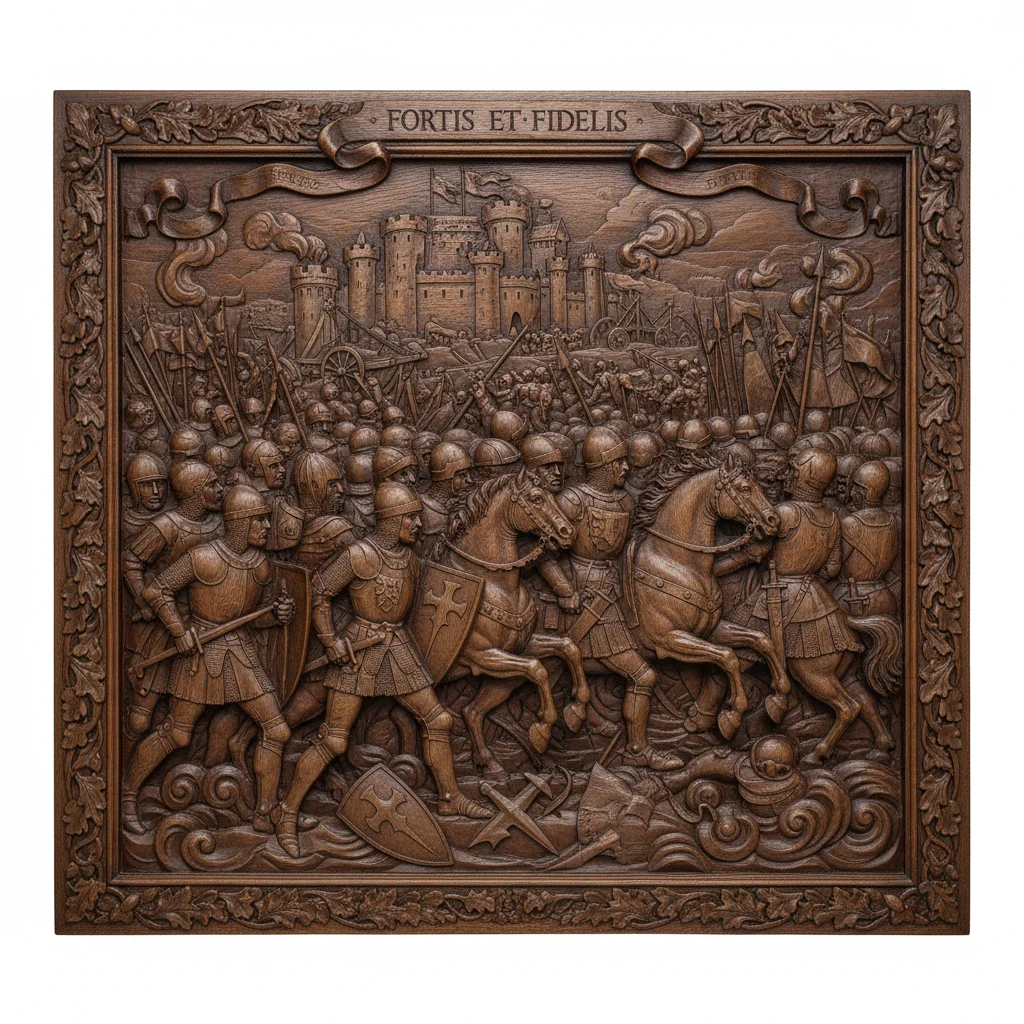
A large carved oak panel, brought from France, depicts a scene with uhlans and hussars, which points to the early 19th century. The presence of original forged hangers further confirms its age and historical value.
Decorative Panels and Boxes
Evaluation Criteria and Investment Appeal
When considering wood carving as an investment, several key factors should be taken into account. It is these factors that determine the value of a piece.
Age. The older the piece, the more valuable it is. Items from the 17th-18th centuries are of particular interest, even if their execution seems primitive.
Quality of work. If a piece is modern, it must be executed at the highest level. The quality of the carving and finishing plays a crucial role.
Presence of a mark or signature. Any signs that allow for the identification of the master or workshop (a stamp, a carved signature, a paper label) significantly increase the value.
Provenance. The history of the item, its origin, and its previous owners also affect its value.
Material. Rare and expensive types of wood, such as ebony or sandalwood, are a value factor in themselves. The weight of the piece is also important: over time, wood dries out and becomes lighter, which can indicate its age.